
Humans of Warwick - Professor Felicity Boardman
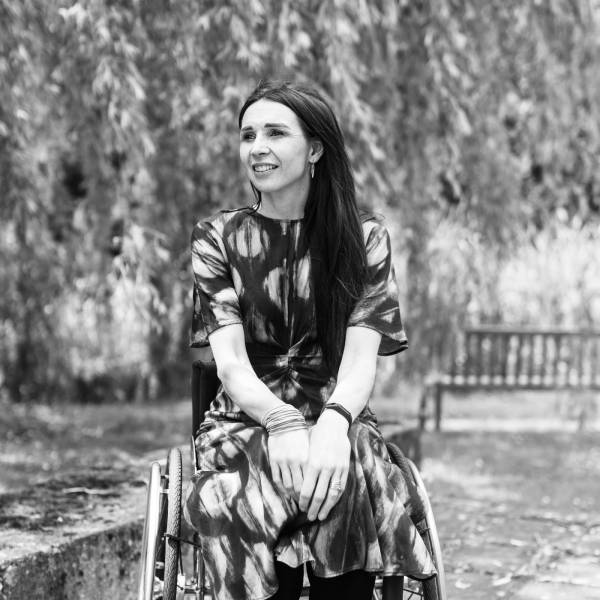
Professor Felicity Boardman
Applied Health Directorate, Warwick Medical School
“I want other disabled people to see me and think, this is possible. It can be done."
“I’ve been at Warwick for 15 years now, and honestly, it’s been quite a journey! Coming into academia as a disabled person was tough. It’s had its challenges, but it also has things that make it positive, like flexibility. What we need though is more visibility, there aren’t many of us in this position which is why I think it’s so important that we stay visible. You can’t be what you can’t see.
I developed generalised torsion dystonia when I was a child, which is the reason I use a wheelchair. At age seventeen I had to have two major brain operations to implant a deep brain stimulator, which was pioneering and risky surgery at the time. My disability had been stable, but I’ve had to have six major surgeries in the past two years in fairly quick succession. It’s been hard, probably quite an understatement, but the support of my colleagues has been incredible. Everyone around me stepped up for me at my lowest moments, and I hope they all know who they are and that I would do the same for them.
All this experience has helped shape my research. I always knew I wanted to be a mum, but with my condition being genetic, that raised some big questions. What if my child inherited it, how do we decide what makes a life worthwhile? This led me to do a PhD on prenatal testing and how society values lives affected by different types of disability.
Since joining Warwick Medical School, I’ve continued and expanded my focus on the social and ethical implications of genomics. I’ve spoken to disabled people and their families because their voices are often missing from these debates. Lived experience matters.
Along the way, I have become a mum to two boys. Parenting as a wheelchair user has its difficulties, but also some amazing and rewarding moments. When they were little, the engineering team at Bath Institute of Engineering designed an attachment for my chair so I could take them out. Now I’ve got a power attachment that turns my chair into a scooter so I can keep up with them on bike rides, they love it!
I was asked by a very insensitive health visitor, while I was pregnant, about whether I was worried my child would be bullied at school because of my disability. Recently, my youngest son wrote a school piece about who inspires him, and he chose me, while the rest of his classmates went for celebrities. When he read it out in school assembly it was very emotional. He said that I work hard despite everything that I’ve had to go through. I wish I could find that health visitor now and show them that he wasn’t embarrassed or ashamed, but that he was proud of me. It was a complete vindication for me after all the questions on how I would be able to parent. Oh, he also said he wants to be a researcher as well, we’ll see if he follows me down that path!
In 2021, I became a professor, a milestone I doubted I’d reach. It was in lockdown as well so the wrong time to celebrate. My disability has posed challenges, but it’s also given me insight that enriches my work. I want other disabled people to see that senior roles are possible. When I was younger, I didn’t have those role models. I hope my story helps change that and proves that disabled people can inspire. We’re a pretty tenacious bunch, we overcome barriers every day.
Outside work, I’m a history geek. If I wasn’t in the medical school, I’d probably be in a history department! I love exploring castles with my kids, even if accessibility makes it tricky, I mean they didn’t tend to consider it in their design did they! Life isn’t without obstacles, but I also know it’s full of possibilities.”