
News & Events

New Research Project: "Understanding the Experiences of Female Detainees in Police Custody"
COPR researchers Professors Jackie HodgsonLink opens in a new window and Vanessa MunroLink opens in a new window in Warwick Law SchoolLink opens in a new window are investigating the experiences of female detainees in police custody. Working with academic colleagues (Dr Layla SkinnsLink opens in a new window, Sheffield and Dr Roxanna DehaghaniLink opens in a new window, Cardiff) and Katie Kempen (Chief Executive, Independent Custody Visiting AssociationLink opens in a new window), they have carried out a pilot study to investigate the needs and experiences of female detainees and the different ways in which these are met. This has involved speaking to detainees directly, as well as those managing Independent Custody Visiting schemes in five different areas of England and Wales.

The findings of this preliminary investigation will be presented in the spring in order to gain feedback and suggestions from a range of practitioners and policymakers, including the police themselves, with a view to conducting a larger scale study in collaboration with several police forces.
Final Report on the Impact of Forensic Property Marking on Public Confidence and Crime Reduction
In January 2019, the Centre for Operational Police Research (COPR) released their final report on Public Confidence and Crime Reduction: The Impact of Forensic Property Marking.
The full text can be accessed here:
Public Confidence and Crime Reduction: the Impact of Forensic Property Marking (Final Report)
This project was completed in co-operation with West Mercia Police and assessed a field trial involving over 20,000 households in the Telford area. It evaluated the impact of interventions such as Smartwater to establish whether they are likely to improve public confidence and reduce offending.
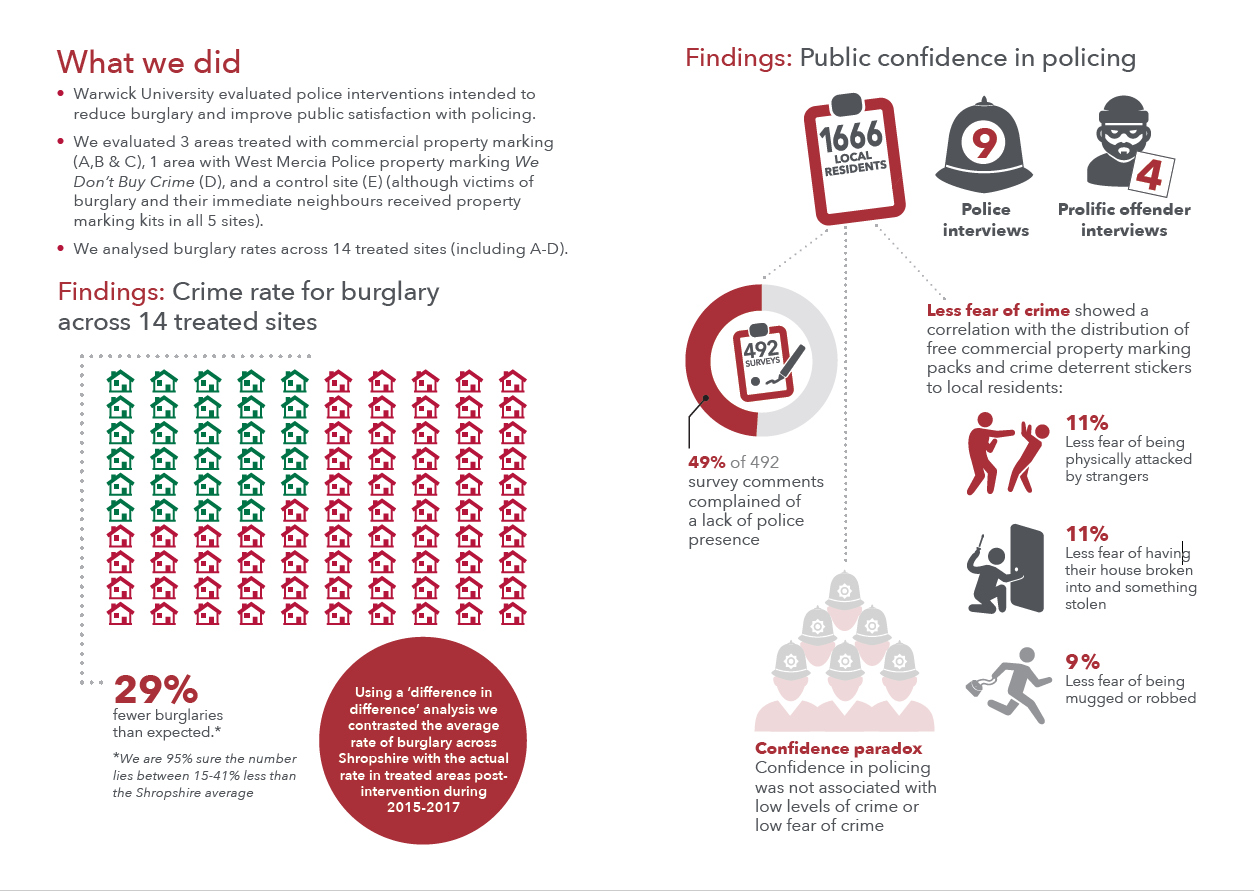
The interim report launched in September 2017 discussed the preliminary findings on public confidence in policing. This included the responses from surveys completed by 1,666 Telford residents as well as interviews with police offers, Police Community Support Officers and public offenders. Since then, the COPR team have analysed crime figures from 14 sites treated with commercial property marking. The results are presented in the final report and suggest that such interventions could be beneficial in helping police to reduce crime.
The overall findings are also displayed in the infographic shown below, which is also available to download here:
Infographic from Final Report.
COPR launches new report on public confidence in policing to police, PCCs and academics
On 25 September 2017, the Centre of Operational Police Research (COPR) launched their interim report on Public Confidence and Crime Reduction: The Impact of Forensic Property Marking. Full text of the interim report may be accessed here:
Public Confidence and Crime Reduction: The Impact of Forensic Property Marking
The project was an independent assessment of a field trial with West Mercia Police involving over 20,000 households across five sites in or near Telford. It evaluated the impact of Smartwater technology and other preventive interventions on public confidence in policing and crime reduction to help establish whether forensic property marking is likely to reduce crime, improve public confidence, and increase victim satisfaction. It included surveying 1666 residents, interviews with senior police officers, Police Community Support Officers and prolific offenders.
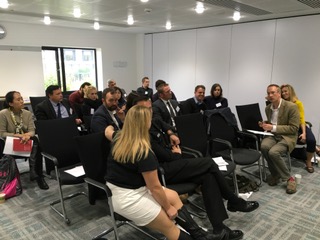
Members of COPR were joined by representatives from West Mercia and Warwickshire Police, the Met Police, West Midlands Police and Crime Commissioner’s Office, the College of Policing, SmartWater, members of the Society for Evidence Based Policing, as well as colleagues from Sociology, Psychology and the Centre for Interdisciplinary Methodologies (CIM). Presentations on the report’s preliminary findings were given by Professor Jackie Hodgson, Professor Neil Stewart, Dr Kim Wade and Natalie Kyneswood. Speakers also included Superintendent Tom Harding, who outlined the nature of the property marking interventions and the importance of working with COPR to provide evidence based policing and Dr Frank Pike from the College of Policing who discussed ways of using research to assess and inform the impact of interventions on policing.
View the Slides from the Launch Event
The COPR team also produced an infographic highlighting some of their preliminary findings:
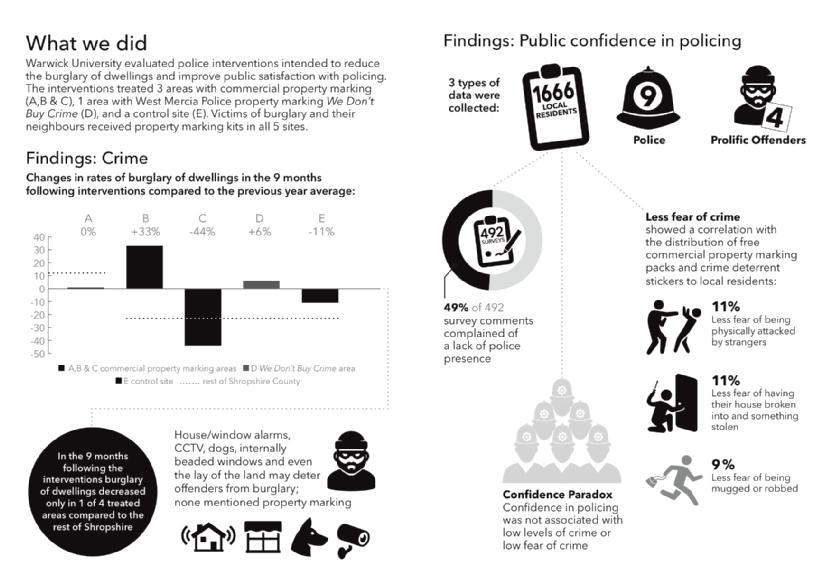
The above infographic is available to download here:
Infographic from Interim Report
The final report, including an analysis of crime data, is forthcoming in 2017.
Further enquiries to n dot s dot kyneswood at warwick dot ac dot uk
New report: "Public Confidence and Crime Reduction: The Impact of Forensic Property Marking"
Further enquiries to n.s.kyneswood@warwick.ac.uk
Kim Wade at ALSO and Latitude Festivals
Kim Wade will present her research on false memory at ALSO Festival, as well as Latitude Festival this summer.
“I will discuss how and why our memories become distorted and the most recent developments in false memory science. You may be surprised to learn how malleable your memory is, but don’t worry, you’ll also discover why memory distortions, often, are a very good thing.”
Westminster Forum event - Crime and policing in London
Crime and policing in London - next steps for crime prevention, addressing key crime trends and improving police performance
Morning, Thursday, 19th October 2017
Central London
THIS EVENT IS CPD CERTIFIED
This seminar will focus on the future of crime and policing in London.
It is scheduled to discuss priorities for the implementation of London’s recently published Police and Crime Plan - due for publication shortly - which sets out the Mayor’s strategic priorities for making London a safer city.
Planned sessions focus on key challenges and opportunities presented by the Mayor’s proposals to establish “real neighbourhood policing”, looking in particular at how the use of locally set priorities might inform future crime prevention strategy, as well as the impact of the proposed delivery of two dedicated Police Constables in every London ward by the end of 2017.
Delegates will also have the opportunity to discuss latest trends and emerging threats in city-wide crime - including fraud, cyber-crime and terrorism - as well as what will be needed from police, local boroughs, communities and criminal justice partners in tackling high-harm crimes that impact on vulnerable groups - such as violence against women and girls, hate crime and knife crime.
As national Government considers options for reforming the police funding formula and the Capital Cities Grant, further sessions will consider what more the Metropolitan Police can do to improve efficiency and effectiveness in policing at a time of budgetary constraint - looking in particular at options for improving public confidence, and key issues around diversity, skills and the future use of technology.
The conference is expected to bring together key policymakers with frontline stakeholders from across policing, prisons, probation and court services as well as private security companies and service providers, local authorities, community groups, businesses, consultants and commentators.
Book your place at: http://www.westminsterforumprojects.co.uk/conference/crime-and-policing-London-2017
Divya Sukumar wins Warwick Three Minute Thesis® competition
Congratulations to COPR member Divya Sukumar who won the Warwick Three Minute Thesis® competition during the live final last night (7 June)!
Divya's presentation got the highest score from a panel of specially appointed judges drawn from senior University staff and an external guest judge. She also won the People’s Choice Award from the audience. She now gets the chance to enter the national 3MT competition.
Melissa Colloff and Divya Sukumar win the 2016 Psychology PhD Student Publication Awards
Congratulations to Melissa Colloff and Divya Sukumar for winning the 2016 Psychology Student Publication Awards! The awards worth of £100 were announced and presented on Friday 19 May, during the closing session of the Psychology Postgraduate Research Day. Melissa is supervised by Kim Wade and Divya is jointly supervised by Kim Wade and Jackie Hodgson.
This is what the judging panel said about the award-winning publications:
Colloff, M. F., Wade, K. A., & Strange, D. (2016). Unfair lineups make witnesses more likely to confuse innocent and guilty suspects. Psychological Science, 27(9), 1227-1239.
"The study used a sophisticated and careful experimental design to examine an important real life issue from a theoretical perspective. An impressively large sample size gives more strength to the study's results which potentially will have important practical implications for improving the lineup construction practices in the police force."
Sukumar, D., Hodgson, J. S., & Wade, K. A. (2016). Behind closed doors: Live observations of current police station disclosure practices and lawyer-client consultations. Criminal Law Review, 12, 900-914.
Call for proposals - Improving Police/Public Relations and Police Diversity
The Open Society Initiative for Europe has published a call for proposals on Improving Police/Public Relations and Police Diversity.
The call for proposals is now closed.
National Custody Forum - 16-17 May 2017
We are hosting the National Custody Forum in May and look forward to welcoming police officers and staff to campus!