
Faculty of Social Sciences News
Winners of the 2025 Warwick Research Celebration
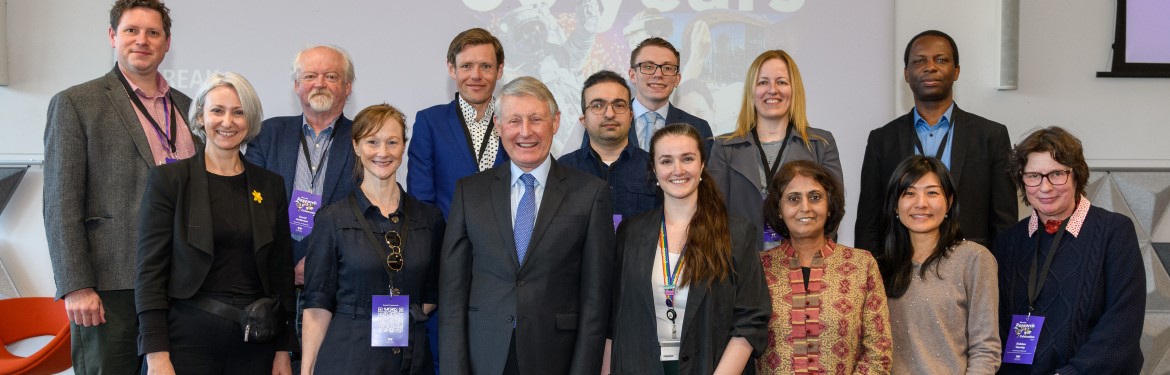
Congratulations to all winners of this year's Research Celebration event, including Prof Ravi Thiara (Sociology), Prof Vanessa Munro (School of Law), Prof Olympia Palikara (Education Studies, SELCS) and Prof Steve Mann (Applied Linguistics, SELCS).
Meet the winners: Warwick Research Celebration 2025 Winners
WIHEA Fellowship 2025 Nominations Now Open!
The Warwick International Higher Education Academy’s annual call for Fellowship nominations is now open until 5pm on Monday 16th June.
Fellowships at Warwick offer staff (3 years) and students (1 year) the chance to make a meaningful contribution to learning and teaching across the University. Fellows lead or support projects, policy development, and learning communities, while also participating in governance and sharing best practice across departments. The role offers opportunities to develop expertise, influence institutional change, and shape the student experience. Learn more by going to WIHEA Fellows Selection Process
You can also get involved by becoming a WIHEA Member—a flexible way to stay connected and contribute.
European language policy and practice for all
Strategies to strengthen European linguistic capital in a globalised world (MultiLX)
2025 will see the launch of a new Horizon Europe research project which examines language policy and practice in digital, multilingual Europe. The project brings together scholars in nine universities, across eight countries, to ask how inclusive policy can be developed and implemented to support all the languages of Europe.
Increased mobility of people across territories has altered the linguistic make-up of Europe, while rapid developments in AI and other digital technology have revolutionised the way people communicate. There is an urgent need for language policy to keep pace with these changes. A key challenge in an increasingly diverse, digital and multilingual Europe is to put in place language policy to shape a future for young people which is inclusive, democratic and equitable. The new research project, which runs for three years from January 2025, will address this challenge by providing policy makers with comprehensive evidence of the communicative practices and language ideologies of young people in Europe.
In this multi-site, team ethnographic project research teams will observe the communicative practices of young people in contexts where speakers are concerned with language endangerment (Norway, Switzerland), where people are investing in revitalisation of languages (Spain: Galicia, Catalunya), and where the prevalence of migrant languages renders multilingualism the norm (Germany, Italy). By conducting ethnographic observation in Barcelona, Berlin, Lucerne, Oslo, Santiago de Compostela, and Turin academics will gain a comprehensive knowledge of the everyday languaging practices of young people. With this evidence they will make recommendations for equitable language policy in Europe which reflects young people’s semiotic repertoires.
The research project will be supported by an Advisory Board of 17 experts from sectors including language policy, politics, academia, arts and media. Collaboration with the Advisory Board will ensure that research outcomes are scaled up to European decision-makers, and will provide a sustainable legacy of the project.
MultiLX is led by Professor Angela Creese at University of Warwick, and is a collaboration between nine universities in eight countries: University of Warwick (Adrian Blackledge and Angela Creese); Universitetet i Oslo (Pia Lane); Fundació per a la Universitat Oberta de Catalunya (Maite Puigdevall Serralvo and Joan Pujolar Cos); Albert-Ludwigs-Universitaet Freiburg (Katharina Brizic); Università degli Studi di Torino (Gerardo Mazzaferro); University of Glasgow (Bernadette O'Rourke); Jyväskylän yliopisto (Sari Pietikäinen); University of Limerick (Helen Kelly-Holmes); Pädagogische Hochschule Luzern (Edina Krompák).
For further information please contact Professor Angela Creese: angela.creese@warwick.ac.uk
IER’s gender equality efforts pay off: Successful renewal of the Athena Swan Bronze Award
Our recent renewal of the Athena Swan Bronze Award shows that IER has progressed on all gender equality indicators since its last award. This progress is just one of the positive results from the renewal. Progress is especially seen in the area of staff work-life balance, which was a key issue in the previous application. Nearly all staff now respond favourably to their work-life balance situation now compared with only one in three in 2018.
Recognition of its efforts to promote gender equality, progression and representation through the renewal of its Athena Swan Bronze award is a significant achievement for IER. It is a success for all IER staff and a testament to all the hard work from everyone involved in making the submission, not least Dr Jamelia Harris, Professor Trine P. Larsen and Catherine Vassallo, IER’s Administrator, who led the submission with support from the Self-Assessment Team.
Director of IER, Chris Warhurst, said:
“I’m delighted that we’ve been successful again in securing the Athena Swan Bronze Award. We strive to make IER a good place to work where everyone feels valued. There’s always more to do and I look forward to the next phase of work within the Institute to further promote gender equality.”
The Athena Swan panel commented:
"… an Institute that really cares about its staff and student communities and is invested in gender equality work regardless of awards.”
In the coming years, IER will build on its successful gender equality efforts and continue to improve gender equality in policies and procedures through shared ownership. This commitment is evident in the Institute’s new Athena Swan Action Plan and the dedicated team of staff that will implement it. Over the next few years, we will focus on addressing and increasing the visibility of “hidden” work, which is often cited as an important factor contributing to gender inequalities, and strengthen the existing sense of community within the Institute.
Coventry HDRC: Collaborative Knowledge Exchange Accelerator Funding Call
Coventry HDRC: Collaborative Knowledge Exchange Accelerator Funding Call
Up to £1000 available to support local collaborative projects involving Coventry City Council and focused on the wider determinants of health
As part of the Coventry Health Determinants Research Collaboration, the Universities of Warwick and Coventry have come together to invite policymakers and researchers to apply for up to 1k funding. This funding is available to support ongoing conversations and collaboration about integrating research into areas of the wider determinants of health. Examples include but are not limited to housing, transport, education, and access to green spaces. Groups should have a long-term vision to apply for research funding.
The application must include at least one Coventry City Council policymaker, at least one University of Warwick and/or Coventry University researcher, and, where possible, at least one third-sector organisation.
There will be two webinars where you can learn more and ask questions about the funding and the process. We recommend joining one before completing the application with your collaboration.
Monday 11 November, 10 am - 11 am
Monday 11 November 1 pm - 2 pm
Please see website for details on additional information and development sessions.
What are the next steps?
- Visit the Warwick University website to understand the criteria for applying
- Gather members of your collaborative team
- Attend one of the two webinars to find out more and ask questions
- Complete the 1-page application form before 5pm on Friday, 29th November
- Propose 6 months of activity from January until June 2025
Warwick applicants are encouraged to contact Research Development and Impact Manager India Holmes (india.holme@warwick.ac.uk) to discuss their proposal.
Education Fund call open
IATL and WIHEA are pleased to announce the launch of a new joint Education Fund for staff-led strategic projects that support the new Education and Student Experience Strategy. Applications are due by Wednesday 13 November 2024 at midday (12pm UK time). The Education Fund website has guidance and a link to register for the online consultation session on Wednesday, 23 October at 12-1pm (online).
This is an excellent opportunity to enhance our work in teaching, learning and student experience in the faculty of social sciences. If anyone is interested in putting together a proposal and would like additional support (refining your idea, linking up with others, understanding fit with the education and student experience strategy), please do get in touch with Dr Karen Simecek, Deputy Chair of Faculty (Education), Social Sciences: k.d.simecek@warwick.ac.uk
Advocacy Strategy: Knowledge Exchange Workshop
Advocacy Strategy: Knowledge Exchange Workshop
This workshop will be led by Mike Podmore, CEO of STOPAIDS and visiting fellow, and Meg Davis, Professor of Digital Health and Rights, from the Centre for Interdisciplinary Methodologies (CIM). It draws on real-life cases and provides a hands-on introduction to advocacy strategy planning: including analysing power, identifying achievable goals, developing a problem-driven research agenda, and crafting a theory of change that participants can use to guide their own project plans. The workshop facilitators will provide tools and worksheets for later use.
The workshop is open to all academic staff and PGR students, and will be of special interest to those working in international development, sustainability, global health, climate change, and other areas of policy impact.
The session will cover:
- Advocacy strategy – core concepts
- The theory of change
- Long-term vision and milestones
- Risk and assumptions
- Analysing power and messaging
Participants are asked to come prepared with two print-outs of a one-sentence vision statement that answers the question: “As a result of your project, how will the world have changed by 2044?”
Date: Tuesday 22 October 2024
Time: 14:00 - 15:30
Location: Oculus, OC0.01
This event is open to academic staff and PGR students.
Please register to attend here: Registration - Advocacy Strategy Workshop (warwick.ac.uk)
Year One Celebration Event
ESRC Impact Acceleration Account 2023-28:
Year One Celebration Event
Your Research Impact team are delighted to invite you to celebrate the successes and developments from the first year of our ESRC Impact Acceleration Account:
Details:
- Weds 9 October
- 10:00 - 15:00
- Scarman Conference Centre
- REGISTRATION ESSENTIAL – click here for event webpage, schedule, and registration form
Join us on Wednesday, 9 October to hear from some of the projects facilitated by the IAA and to explore the broader programme of events and initiatives that have been launched to enhance skills and culture around knowledge exchange within Warwick's Social Science community. We will also be formally launching the ESRC IAA Policy Hub, and hearing from the ESRC about UKRI Policy Fellowship opportunities.
We look forward to seeing you!
Please get in touch on esrcimpactaccount@warwick.ac.uk with any questions or for further information.
Get Involved – Do you want to share your passion for Social Science with the public?
On Saturday 26 October, the Warwick Institute of Engagement will be heading to the Royal Pump Rooms in Leamington Spa for a collaborative event to celebrate Social Science. As part of a collaboration with the ESRC Festival of Social Science, staff and students are invited to deliver a range of drop-in activities linked to any Social Science discipline or related activity. Examples could include a hands-on tabletop activity, a workshop, a video, a read a-long for children in the library, or even a creative way to engage with the exhibitions at the venue. We can help you create your activity (for an audience of all ages, with many aged 5-11 years), rehearse and source any kit you might need. If you have a piece of research or knowledge you’d like to share, get in touch and we’ll help with the rest! Express your interest here.
We are pleased to announce the launch of the Policy Support Fund 2024-25, providing internal grants for strategic projects working towards enabling evidence-based policy making.
The University expects to receive an allocation of funding from Research England for its 2024-25 Policy Support Fund. Subject to confirmation of this allocation, awards of up to £50,000 are available for research and impact projects delivered in conjunction with external partners that can fully spend by 30 June 2025, with bids on a short application form invited by 17:00 on Monday 16 September 2024 to research_impact@warwick.ac.uk.This call is open to all faculties/departments.
Eligible projects should focus on contributing to policy change - whether this is at the local, regional, national, or international level - and might encompass work with parliament, central government, devolved administrations, local government, health and education bodies, the justice system, service providers or specific industry sectors, and a wide range of regulatory organisations.
There will be three streams of funding to apply to, depending on how developed the project is and the nature of the policy activity. PIs can select the stream they wish to apply to, or they can put in an open application and the committee will place them in the most appropriate stream.
Emerging/early-stage policy engagement, awards up to £25,000
This stream supports projects at an earlier stage in their policy engagement journey. Examples of fundable research and activity could include, but are not restricted to:
- New research activity working in partnership with policymakers - particularly to better understand local, regional or national challenges
- Policy engagement and networking events designed to build policy networks
- Primary data collection and/or analysis to inform policy
Follow-on policy funding, awards up to £50,000
This stream supports projects at a more developed stage in their policy engagement journey. The expectation is that these projects will have established partnerships in place and well-developed policy plans with clear impact outcomes. Applications from projects which have received previous Policy Support Funding, and which are ready to develop further, are encouraged.
Policy capacity building, awards up to £50,000
- Facilitating the use of existing research and the exchange of knowledge between universities and policymakers
- Activity and training to better equip academics - including postgraduate and early career researchers - to communicate effectively with policymakers
- The creation of resources to engage policy stakeholders with research and/or to improve their capacity to effectively utilise research
We recommend that prospective applicants reach out to their respective Research Impact Manager to discuss their proposals in advance of submission:
- Dr Rob Hollingworth - Faculty of Science, Engineering and Medicine (School of Life Sciences; Mathematical Sciences and Statistics; Psychology, and Warwick Medical School)
- Grace Prewett - Faculty of Science, Engineering and Medicine (Chemistry; Computer Science; Engineering; Physics, and WMG)
- Emma Roberts - Faculty of Arts
- Dr Helen Ackers - Faculty of Social Sciences (School of Education, Language and Communication Science; the Department of Sociology; the Institute for Employment Research, and Warwick Business School)
- Dr Kathryn van de Wiel - Faculty of Social Sciences (Economics; School of Law; Politics and International Studies; Philosophy)
Further information about the fund – including the application form – can be found on the webpage.
National Teaching Fellow success for FSS Colleagues Jane Bryan and Isabel Fischer
Advance HE have announced the winners of the National Teaching Fellowship - and we're thrilled to see colleagues Prof Jane Bryan and Dr Isabel Fischer recognised for their outstanding contribution to excellent teaching!
A Professor of Law and Principal Fellow of Advance HE, Jane Bryan has devoted her career to creating a more just and inclusive higher education, empowering all students, particularly those from marginalised communities, to find their voice and use this to drive change in HE and beyond.
Jane qualified as a solicitor in 1995, joining Warwick Law School in 2009. Jane’s belief in the transformative strength of dialogue to redress power imbalances, connect and develop others, and build and repair community bonds has driven her far beyond her formal roles. Jane has been a champion and change-maker for student voice, peer dialogue on teaching, and dialogue-based conflict resolution institutionally, nationally and internationally.
Isabel Fischer is an Associate Professor of Responsible Digital Innovation and Education at the University of Warwick Business School. Her teaching and research focus on the intersection of digital innovation, social inclusion and pedagogy. Isabel spent over 20 years working in technology innovation and digital transformation at American Express and Visa, and was a regular guest speaker at her local university before transitioning into academia full-time in 2015. Her teaching reflects this industry experience bridging the gap between classroom learning and real-world application to support engagement and employability. Her use of innovative assessment methods such as scholarly blogs, allow students to publish their work on LinkedIn and enhance their professional online presence. Isabel also collaborates with the Warwick incubator as part of her interdisciplinary modules to embed entrepreneurship.
Isabel is deeply committed to education as a tool for social change. By 2022 she had developed an AI-based formative feedback tool to provide personalised, formative feedback on students’ assessment drafts, enhancing their academic writing skills and overall learning experience. This personalised support levels the playing field for students who may not have a strong academic support network, e.g. first-in-family, care experienced students, or international students.
Call for early career researchers to join a workshop exploring wellbeing
We are inviting research assistants, PhD candidates and postdoctoral researchers to register their interest for a workshop aiming to explore and prioritise the challenges related to the wellbeing of early career researchers. We want to gather your opinions that will help us to inform the development of a project that aims to address some of the identified challenges.
If you are interested, and available on Friday 14th June from 13:00 – 15:00hrs, please register your interest here.
Refreshments will be provided, and a £25 voucher given as a thank you for your time and participation. Due to the interactive nature of the workshop, places will be limited to 20 and will be confirmed via email.
If you have any questions, please contact Marie Sams, Head of NCRC, marie.sams@warwick.ac.uk
UKRI Funding Opportunity
|

|
|

|



Distinguished Africa Lecture
LMI for All Webinar Series: Predicting Future Skill Needs
 Bookings are now open for the next webinar on Predicting Future Skill Needs. Tickets for the event on 7 May, 10-11.30 am are available via Eventbrite.
The webinar will commence with a presentation on quantitative skills forecasting from Ben KriechelLink opens in a new windowLink opens in a new window from the Economics & DataLink opens in a new windowLink opens in a new window. Ben is one of the leading skills forecasters in Europe. He will demonstrate the value of skills forecasting and how it can be used to deal with labour market uncertainties and disruptions.
This will be followed by a presentation from Effie AmanatidouLink opens in a new windowLink opens in a new window, Honorary Senior Research Fellow at the Alliance Manchester Business School, who will draw on her extensive experience of conducting foresight studies to reveal how this type of approach can inform the identification of future skills demand and needs.
Each presentation will be around 20 minutes long with time for questions after each session and a Q&A session at the end. IER’s Terence Hogarth will introduce the participants to the topic and chair the webinar.