
EN2G4/EN3G4 Literature, Theory and Time
Overview
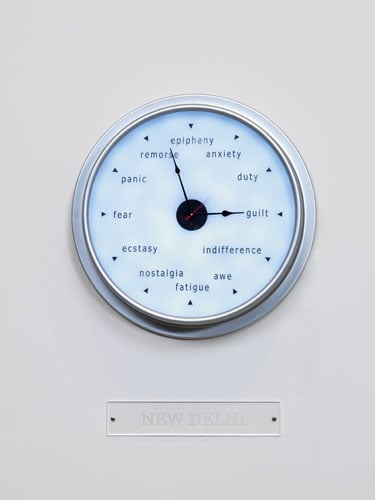
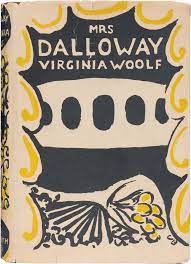
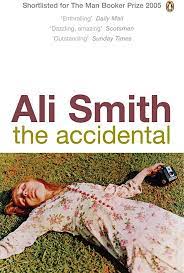
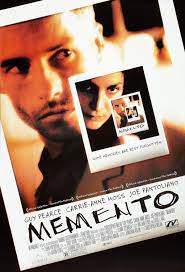
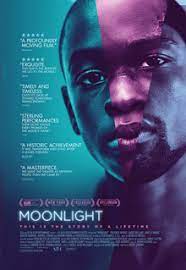
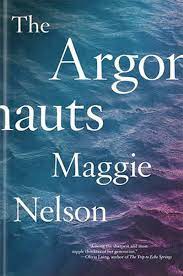
This course, open to second and third year students, introduces students to theories and philosophies of time in relation to some literary and cinematic texts that involve themselves closely with temporality (Woolf's Mrs Dalloway (1924); Ali Smith's novel The Accidental (2005); Marion Coutts' illness memoir The Iceberg (2014); Maggie Nelson's work of 'autotheory' The Argonauts (2015); Christopher Nolan's film Memento (2000) and Barry Jenkins' film Moonlight (2017).
We will be thinking about how time is represented in these narratives: how narrative helps us imagine the past and the future; how tenses and other languages of time create affect; how space and time are brought into relation via narrative structures, concepts, images, metaphors. We will consider the relatively recent history of standardized time, and the effects of this on patterns of work and leisure and on concepts of the self and political identity. How were ideas of the past and the future invented? We will think about subjective experience of time in relation to emotional states such as anxiety, boredom and desire, and how time is experienced in states of mental disorder. We will think about time in relation to the body, illness, chronic conditions, bereavement and the temporality of (health) care.
We will also think about our own experiences of time, in the recent pandemic, in our experiences of illness and grief, in relation to our identities and different experiences and transitions between life stages, in relation to race, sexuality and age; in relation to the planet and the non-human.
The critical and theoretical tools you will learn in the first few weeks of the module will be valuable in helping you 'read' works on this module but also on your other English modules (and almost any module that engages with texts, narratives, history, psychology or philosophy).
...the infinitely variable gearbox that links the told to the ways of its telling, ...how the narrative discourse works to subvert, replay, or even pervert the normal passages of time.
(Peter Brooks in the brilliant Reading for the Plot on what Genette reveals to us about narrative)
NB. It will be helpful to you to have read at least the first few chapters of Woolf's novel Mrs Dalloway before the start of term. The first 100 pages or so at least. If you can't get hold of a copy, there is a Project Gutenberg version freely available online. But it would be best for you to purchase the OUP or Penguin versions for the term's work if possible.
Think about the depiction of time in the book. How much time is passing? How do past, present and future relate to each other? What is the relationship between time and emotion? How do altered mental states affect the perception of time? There will be a light-hearted quiz in the first week (on more superficial, factual matters than these) so you can evaluate how much you've picked up from the novel so far.*

Think too about the reading and watching (and other cultural consumption) you're doing this summer -- are you being made particularly aware of time in any aspect, and if so how? It would be nice to hear about these experiences in our discussions.
Do have a look at the module's past padlets for a range of quotations, gifs, memes, allusions to time (and illness), from the sublime to the -- not-so sublime: Literature, Theory and Time padlet (1); Illness Time.
A critical 'reading package' will be distributed to you in or before week 1 with the key theoretical readings for term 1.
A further overview of some of the texts we will be reading can be found in the Oxford Research Encyclopedia entry on Literary Theory and Time.
Introductory video for the module
Assessment
Intermediate Years:
- 1 x 3000 word essay (40%) Term 2, Week 1
- 1 x 3500 word reading journal (60%) Term 3, Week 2
Final Years:
- 1 x 4000 word essay (40%) Term 2, Week 1
- 1 x 4500 word reading journal (60%) Term 3, Week 2
Reading journal
4 entries
Each entry will pair ideas about time from one or two of the theoretical sources with a piece of fiction, literary non-fiction, film, or other cultural artefact, and make a reading of the 'text' in relation to the idea(s) in question. One of the four entries can be (but doesn't have to be) applying the theory we've looked at (or other time-oriented theory) to your own lived experience.
The entries can vary in length to make up the allotted word count (+/- 10%), but shouldn't be less than 500 words or more than 1500.
Below are some anonymized samples from previous years:
Syllabus
Full Syllabus - identifies reading required, slides and any extra resources available for each week.
Essay Writing: A List of Points / Resources
These are some aspects of essay writing (and writing in general) that I've noticed trip people up repeatedly, and feature in lots of my feedback:
- The most important thing for me, as you'll become aware from my feedback, is to know -- and to write -- a good paragraph. Andrew Frayn's blog (links below) is good on this and a host of other essay-writing issues.
- There is a growing tendency for people to use subordinate clauses as stand-alone, independent sentences. They are only half a sentence -- see below for an explanation of such clauses (which must be part of a larger sentence with a main clause involving a conjugated verb).
- Lots of people this year have fallen foul of the dangling modifier... Follow the link below to find out what they are, and for advice on avoiding them.
- Frayn is also good on how to write a good introduction to an essay -- that's something that has made essays stand out too this year (for good or ill...).
Referencing
Choose ONE of these two referencing styles, become familiar with it and learn it, and make sure you reference the materials you quote or draw directly on in the body of the text through in-text citations or footnotes so your reader knows exactly where to go and find the material:
- Guide to MHRA referencing (warwick.ac.uk)
- Guide to MLA referencing with in text citation (warwick.ac.uk)
You might also want to do this very good Moodle about referencing and avoiding (inadvertent) plagiarism. (I’m not suggesting you would ever plagiarise, but this is a good general training in referencing appropriately):
Convenor:
Professor Liz Barry

Moodle not in use
Contact Details:
