
News & Events

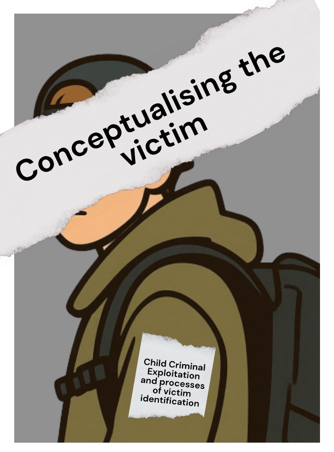
Join us for an IN-PERSON celebration and launch of Dr. Hannah Marshall’s book Conceptualising the Victim (Routledge).
 WHEN: Wednesday 30th of September 2026 at 3.00-5.00pm
WHERE: S0.10, Ground Floor. Social Sciences Building, University of Warwick CV4 7AL
Discussants:
- Dr. Jack Spicer(University of Bath)
- Dr. Marian Duggan(University of Kent)
- Prof. Henrique Carvalho(University of Warwick)
The event will include an introduction of the book by Hannah Marshall and will be followed by 3 short interventions by the discussants. The event will close with a drinks and snacks reception.
Author description:
Dr. Hannah Marshall is Assistant Professor at the Sociology department with a background in critical criminology. Dr Marshall’s research examines how victim status is constructed and conceptualised within criminal justice systems. Hannah is particularly interested in the experiences of young people and their intersecting experiences of victimisation and offending.
Book description:
Drawing on empirical research that examines how processes of victim identification unfold in relation to cases of child criminal exploitation in the UK, the book explores four different qualities of the concept ‘victim’. Specifically, the book provides ways of thinking about the concept of ‘victim’ as: incorporeal, in that efforts to convert victim recognition into meaningful impact are often extremely difficult to realise; binary, in that the victim is defined and constructed in opposition to the figure of the offender; relational, in that its emergence is heavily influenced by interactions; and precarious, in that the category ‘victim’ is often time-limited and subject to ongoing scrutiny.
These insights demonstrate that the social construction of victim status is fraught with frustration, resistance, and exclusion. Existing research and advocacy work has often followed the assumption that the solution to this is that more people need better access to the label ‘victim’. But what if there are fundamental flaws within the conceptual category of ‘victim’ itself? Accordingly, this book considers possibilities of moving beyond the category ‘victim’ and finding alternative approaches of acknowledging and responding to harm in meaningful ways.
This book will therefore be of interest to students and scholars of criminology and victimology and social scientists more widely. It will also be useful resource for professionals in policing, youth justice and victim support.