
Combatting Antimicrobial Resistance: Building Partnerships in India
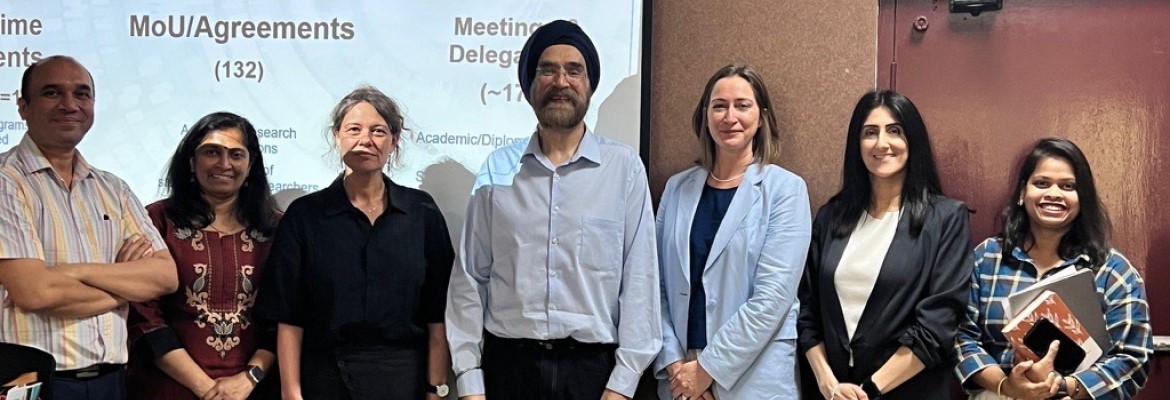
This joint research project between the University of Warwick and the Indian Institute of Science, Bangalore addresses one of the most serious global health challenges of our time, antimicrobial resistance (AMR). Funded by Warwick’s International Partnership Fund, the project brings together expertise from both institutions to strengthen collaboration, share knowledge, and build lasting partnerships focused on understanding and combating the growing threat of drug-resistant infections.
Led by Professor Meera Unnikrishnan from Warwick Medical School and Professor Amit Singh from the Indian Institute of Science, Bangalore, the project aims to expand collaborations across institutions to develop innovative solutions for AMR. AMR occurs when bacteria and other microbes evolve in ways that make infections harder to treat with existing medicines. This can lead to longer illnesses, higher healthcare costs, and increased risk of death. The problem is particularly acute in low- and middle-income countries, where infectious diseases remain common and access to new treatments can be limited.
The project titled “Combatting Antimicrobial Resistance: Building Partnerships in India”, focuses on creating strong scientific links between Warwick and leading researchers in India. Rather than centring on a single experiment or dataset, the project concentrates on building the foundations needed for sustained and impactful research. This includes sharing expertise, aligning research priorities, and developing future studies that reflect the real-world challenges of antimicrobial resistance in diverse healthcare settings.
Professor Meera Unnikrishnan is a microbiologist whose research explores how bacteria cause disease and how they develop resistance to treatment. Her work combines laboratory science with an understanding of clinical and global health contexts, making it well suited to tackling a problem that crosses national boundaries. Professor Amit Singh is an expert in microbial physiology and host-pathogen interactions, with extensive experience studying infectious diseases, particularly tuberculosis, in environments where antimicrobial resistance poses an urgent threat.
Together, they are using the International Partnership Fund to create opportunities for collaboration between Warwick and the Indian Institute of Science. This includes exchanging ideas, planning joint research activities, and identifying areas where combined expertise can deliver the greatest impact. The partnership recognises that antimicrobial resistance cannot be addressed in isolation and requires coordinated international efforts that reflect different healthcare systems, patterns of infection, and antibiotic use.
By focusing on partnership building, the project lays the groundwork for future research that can attract larger external funding and deliver long term benefits. It also supports the training and development of early career researchers, helping to build capacity in antimicrobial resistance research across both institutions. These relationships are essential for translating scientific discovery into practical solutions that improve patient care.
Warwick’s International Partnership Fund plays a crucial role in enabling this collaboration. As a seed funding scheme, it allows researchers to establish and strengthen global partnerships that might not otherwise be possible. In this case, the funding supports meaningful engagement between Warwick and the Indian Institute of Science, ensuring that future research is informed by shared expertise and mutual understanding.
This project demonstrates how international collaboration can help address complex global challenges. By bringing together leading researchers from the United Kingdom and India, the project shows how shared knowledge, trust, and long-term cooperation are essential to tackling antimicrobial resistance and protecting public health for future generations.