Reflections from the Guild Gender and Diversity Working Group
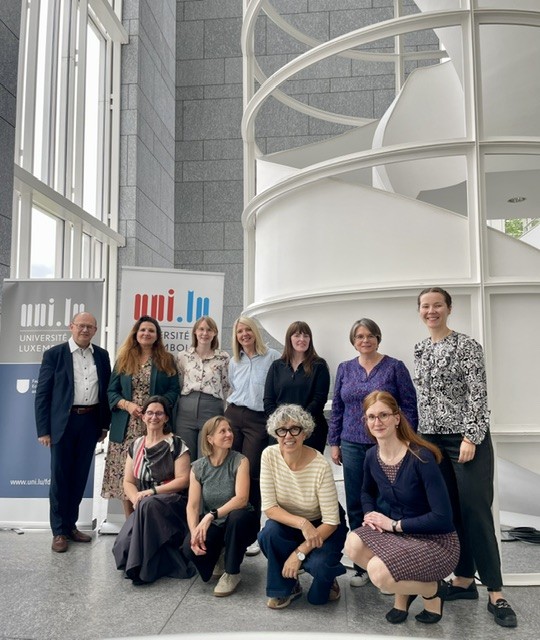
In June 2026, I had the opportunity to attend the Guild Gender and Diversity Working Group meeting in Luxembourg, representing the University of Warwick as a member institution. The visit brought together colleagues from across Europe to share perspectives on embedding gender dimensions within research systems, an area that continues to evolve in both policy and practice.
At the meeting, most of the discussion focused on whether institutions are able to integrate gender dimensions into research with genuine conviction, rather than in response to compliance requirements. There were challenges and opportunities shared amongst members on how this could be achieved. In the UK, there are clear examples of conviction-led practice, particularly in health and biomedical sciences, where the consideration of sex and gender is recognised as fundamental to research quality and impact. However, in other areas (especially where the relevance of gender may seem less apparent), approaches can feel more procedural - shaped by funding expectations rather than a deeply embedded understanding of gender and intersectionality in the research process.
This tension is also evident in European frameworks such as Horizon Europe. While efforts with the Gender Equality Plans have successfully raised baseline awareness, they do not always lead to meaningful integration throughout the research lifecycle. A recurring theme was the need to move beyond “tick-box” approaches towards outcome-focused evaluation, placing greater emphasis on how gender is embedded throughout, rather than primarily at the proposal stage. Suggestions included stronger discipline-specific guidance, greater investment in capacity-building and training, and compliance requirements at project reporting phases. The role of publishers was also identified as a key, in reporting implications for gender and intersectionality as a mandatory requirement in research papers.
That evening, we attended a public lecture by Laura Bates, founder of the Everyday Sexism Project and author of The New Age of Sexism: How the AI Revolution is Reinventing Misogyny. Her talk was a powerful reminder that gender inequality is not only a structural issue within society, but one increasingly mediated through the technologies we design and adopt. As AI becomes more embedded in research and everyday life, there is a real risk of reproducing and amplifying existing biases unless we are deliberate in how these tools are developed and used. For universities, and those of us working in research culture, this raises important questions about responsibility, ethics, and future direction.
The second day shifted focus to mentoring through eument-net (the European Network of Mentoring Programmes for the Advancement of Equal Opportunities and Cultural and Institutional Change in Academia and Research). Discussions explored how mentoring can act as a lever for both equality and excellence. Particularly resonant was the focus on “men as allies”, an area closely aligned with my own research interests and one that remains critical to driving meaningful organisational and cultural change.
Across these events, a consistent message emerged: meaningful progress requires more than policy alone. Active engagement across all levels is essential to achieving lasting cultural change. The role of the Guild of European Research-Intensive Universities will be crucial in this respect, in lobbying for further policy developments, sharing best practice and learning from collective experience across diverse national and institutional contexts.
Bringing these reflections back to Warwick, the discussions reinforced the importance of ensuring our research is genuinely responsive to gender dimensions in practice, not just in principle. This is reflected in our growing emphasis on public, patient and community involvement - embedding diverse perspectives throughout the research lifecycle. We also need to consider how we provide support for building awareness on gender dimensions to researchers through development, review, and ethics processes. Collectively, these approaches help to move beyond compliance, strengthening the quality, relevance and integrity of research, and enabling us to better demonstrate meaningful impact across the communities we serve.
Dr Marie Sams, Head of Research Culture Centre