
Departmental news
WLS colleague awarded Howard Journal of Crime and Justice Best Article Prize for 2022
We are delighted to announce that Dr Henrique Carvalho, Associate Professor in the School of Law, and co-author Dr Anastasia Chamberlen have been awarded the Howard Journal of Crime and Justice Best Article Prize for 2022.
University of Warwick scientists create virtual marmite for World Marmite Day – with ground-breaking potential for Alzheimer’s diagnosis

Scientists at WMG at the University of Warwick have produced virtual flavours of marmite and vegemite from scratch, using technology that can replicate the flavour of almost any food or drink and is being used in a new taste test to help with early Alzheimer’s diagnosis.
WMG’s Professor of Visualisation, Alan Chalmers has created the virtual flavours for World Marmite Day (28th September) and can, through taking samples of a food and analysing it, accurately simulate a real flavour by extracting its tastes, aromas, and mouthfeel.
The analysis is done by New-Food Innovation, a high-tech food company. Once analysed the virtual flavours are created to accurately match the real flavour using UK Food Standards Agency approved food-safe chemicals.
The analyses/ investigations are all part of Professor Chalmers’ research, together with West Midlands company Superlunary Labs, into how people perceive taste and smell.
He is also investigating whether a poor performance on the new ‘taste test’ that he has developed, may be an early warning signs for diseases including dementia. This could lead to a much earlier diagnosis of diseases such as Alzheimer’s Disease, well before any memory loss starts to occur.
Professor Chalmers describes the flavour making process as the same as using a recipe – by accurately simulating the different components of a flavour, food such as marmite can be replicated with a taste indistinguishable from the real thing.
He commented: “We recreated the health drink rooibos tea and even the chief taster of a rooibos manufacturer in South Africa could not distinguish between the real and virtual rooibos.
“I first thought of creating the samples of marmite and vegemite for a bit of fun during the Ashes cricket tests this summer as people kept asking - what is the difference between them?
“It goes back to the serious work we’re doing which shows that people’s taste and smell can give us clues what’s going on in a person’s brain years before symptoms such as memory loss start”.
Malcolm Barnes from Superlunary Labs added: “We work alongside Professor Chalmers to ensure virtual flavours are delivered from an easy to use, hygienic and highly calibrated device for Chalmers’ team to analyse.’
The full paper on the technology behind this process can be found here.
Read more about WMG’s Visualisation research here: Visualisation (warwick.ac.uk)
WMG welcomes delegation from the Indian Mission on Design and Advanced Technologies to the United Kingdom
On Wednesday (20th September) Professor Robin Clark, Dean of WMG, was pleased to welcome guests from the Indian Mission on Design and Advanced Technologies to the United Kingdom. The visit had been arranged through the Confederation of Indian Industry (CII).
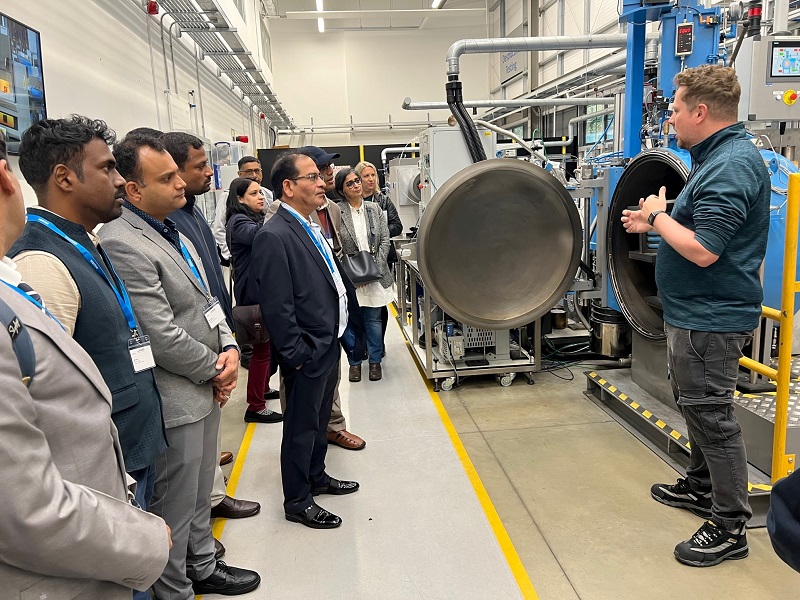 The delegation was made up of representatives from the Department for Business and Trade, and a number of companies including Tata Steel; Dynamatic Technologies Limited; Metrochem Metal Powers; DRDO; Norton Motorcycles; TVS Motor UK; Maruti; Bucket Design; Carborundum Universal Ltd; Two Design; Godrej Consumer Products, Ghaison Bikes plus attendees from IIT Roorkee.
The guests were particularly keen to hear more about WMG’s research and education programmes and partnerships, with a clear focus on skills – including upskilling and reskilling.
Introductions were made from Dr Debashish Bhattacharjee, Vice President, Technology and R&D Tata and Chairman, CII National Task Force on Advanced Materials; and Udayant Malhoutra, CEO and Managing Director Dynamic Technologies Ltd and Chairman, CII National Task Force on Advanced Materials.
Mikhil Gandhi, Business Development Manager for Advanced Manufacturing at the West Midlands Growth Company then explained more about how and why the region has already attracted some of India’s biggest companies; before Professor Robin Clark, Dean of WMG, provided the guests with an insight into WMG’s key strengths, and opportunities for further collaboration.
Finally the guests were shown the Energy Innovation Centre (EIC) the home of WMG’s battery research, before Professor Claire Davis led a tour of the Advanced Steels Research Centre.
Professor Robin Clark, Dean of WMG, explained: “It was a pleasure to welcome representatives from the Indian Mission on Design and Advanced Technologies to the United Kingdom to WMG. Our relationship with India is long standing, and one that we value very highly.”
Read more about the CII’s initiatives here: https://www.cii.in/
The University of Warwick celebrates 200 engineering internships in manufacturing to mark National Manufacturing Day
The University of Warwick is celebrating a new milestone for its engineering internship scheme, with over 200 internships now completed.
The milestone will be celebrated at a special event tomorrow on campus to mark the UK’s National Manufacturing Day – Thursday 28th September.
The internship scheme, which was established by the University’s WMG in 2013, places students in engineering internships at manufacturing businesses across the Midlands.
The scheme has been a hit with both students and businesses, with 75% of businesses experiencing increases in productivity and 95% saying they had noticed a positive cultural change thanks to the interns.
Most businesses who hired one intern through the scheme returned in the future, with around 70 interns now having been offered full time positions as a result of their internships.
The scheme was established to address the skills gap, with businesses needing more engineers than are available. Research suggests this gap is likely to get worse as demand increases, particularly for ‘green’ engineering roles.
Febry Wardhana, an Engineering Project Management postgraduate, recently completed his internship at Midtherm Flue Systems. They were so pleased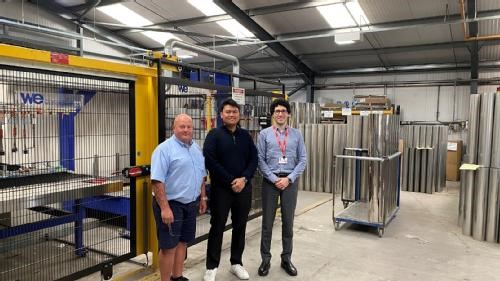 with his work Febry now works for the company permanently.
Michael Whale, Midtherm’s Training and Development Manager said: “Febry’s work has opened up a lot of new doors for us and he has done a great job, so much so that we offered him a full-time position as a process engineer.”
Other interns have gone into a range of high-profile roles in both small and large organisations. Warwick graduate Sam Woodcock who undertook an internship at Pashley Cycles is now working at Arup as a mechanical engineer. He said:
“My internship with WMG and Pashley helped me to become comfortable in not knowing the answer to every problem I faced, and therefore taught me how to persevere and overcome engineering challenges.”
Dr Mark Swift, Director of SME Engagement at WMG commented:
“Our internship programme is hugely important for us. It has supported over 200 manufacturers while tackling a range of important projects in their businesses and proves that young engineers can add real value. It is critical that we kick start the careers of our future engineers so that they can get onboard to deal with the manufacturing challenges of both today and tomorrow.”
Economics Job Market Candidates Success
The Department of Economics would like to congratulate its job market candidates who have secured a role following the completion of their PhD.
The following 2022-2023 job market candidates from the Department have accepted an offer for a post:
- Eleonora Alabrese, Postdoctoral Researcher at Leibniz Institute for Financial Research SAFE; followed by Lecturer at the University of Bath
- Giulia Vattuone, Assistant Professor at the Swedish Institute for Social Research (SOFI) Stockholm University
- Raghav Malhotra, Lecturer at the University of Leicester
- Livia Paranhos, Research Economist at the Bank of England
- Gianni Marciante, Postdoctoral Researcher at the University of Bologna
- Jian Xie, Assistant Professor at the Southern University of Science and Technology Business School
- Diego Calderon, Economist Program at the International Monetary Fund
- Ceren Bengu Cibik, Economic Advisor at Ofcom
Professor Manuel Bagues, Director of our MRes/PhD Programme, has commented:
“Placement of our students in the best economic departments around the world is a priority for us at Warwick and we offer tailored job market support for each of our PhD students, which includes assisting them with their job application process and providing them with a financial package to travel to job market meetings and interviews. Year on year, our Job Market Candidates do extremely well in securing positions at top ranking universities and I’m particularly pleased and proud of this year’s cohort of students. I congratulate them and wish them success in the future”.
Self-driving cars will be part of the future – but researchers fear we are leaving the disabled behind
 Self-driving cars will be part of the future, but researchers fear people with disabilities are being left behind in the development of the technology.
Over the past two decades, transportation has become more accessible, but people with disabilities still face significant barriers to accessing these services. While self-driving cars (also known as autonomous vehicles) have the potential to dramatically improve the lives of those with disabilities, helping them to travel independently, experts fear their views are being neglected in the development of the new technology
To address this, researchers from WMG at The University of Warwick and leading disability charities have considered the impact of self-driving taxis on people with disabilities, an area that has seen limited improvement over recent years.
They found that the absence of a driver was strongly correlated with feelings and perceptions of increased travel freedom, indicating that autonomous taxis could provide greater accessibility for those with disabilities – without the limitations or biases associated with their current experiences with traditional taxis and drivers.
The team also considered current issues people who have disabilities face with transport – particularly in booking taxi journeys. Participants expressed concerns about driver attitudes and behaviour as negative experiences with traditional taxis.
Lead author Shravani Sharma, PhD Researcher, WMG, University of Warwick, said: “Our research highlights the current issues those with disabilities face when booking taxis – with many reporting that their trips have been cancelled due to their use of a wheelchair. Drivers might feel the extra time wheelchairs add to journeys would reduce their earnings. While there are laws in place preventing black cab drivers cancelling journeys for those with wheelchairs – there are no such laws for other companies.
“Self-driving taxis could provide those with disabilities more freedom and reduce fear of discrimination. So, it’s crucial we listen to their opinions in developing the technology.
“We worked with charities including CASBA (Citizen Advocacy South Birmingham Area), which supports people with learning difficulties, Royal National Institute of Blind People (RNIB) and Cerebral Palsy Midlands to name a few, providing a wide range of voices and expertise. This represented many different visible and non-visible disabilities – including blindness, mobility problems, hearing loss, cerebral palsy and ADHD amongst others. The perspectives of more than 39,000 different organisation members were included.
“Alongside the current problems those with disabilities face when booking taxis, we highlighted their concerns for future, self-driving taxis. The main concern was the availability of human assistance to meet specific user needs throughout the journey.”
Examples of concerns for future, self-driving taxis:
- The challenges faced by individuals in wheelchairs when attempting to enter a car without assistance are multifaceted. Tasks include placing their wheelchair inside the car, securing themselves within it, disassembling and carefully navigating the wheelchair upon departure.
- For those with visual impairments, the struggle lies in identifying their vehicle within a crowded setting, such as a bustling railway station.
- The loss of social interactions and the light-hearted atmosphere during journeys. Many individuals with disabilities unfortunately contend with feelings of loneliness and isolation, making everyday conversations a vital source of companionship and comfort throughout their journey.
Shravani added: “It is also important that manufacturers consider the wide range of disabilities and the intricate needs for passengers – remembering that not all disabilities are visible.”
Dr Roger Woodman, Head of Human Factors, at the University of Warwick, said: “Self-driving vehicles will open up driving to people that have never been on their own in a vehicle before. It has the potential to transform their lives – with reduced reliance on others to help them get from A to B.
“Driving is a very complex task to complete, so self-driving cars could enable someone with a disability, for example, cerebral palsy or tremors, to simply press a button and go.
Ginny Cullen, CEO of CASBA, added: “CASBA exists to ensure people with learning disabilities speak up for themselves, express their views, make their choices, and are valued as citizens. We were therefore delighted to have had the opportunity to be included in this research on new autonomous vehicles to ensure driving is accessible to all.”
CASE STUDIES – both available for media interviews upon request
Jen Brown
“I have a lot of trouble with the buses. I use a walker and they don’t lower the bus, making it very hard for me to get on and off.
“I had a lot of stress with a taxi company. I often travel from Kingstanding to Northfield. The taxi company didn’t want to take the job and sometimes cancelled, leaving me stressed and late for work. Sometimes I was not able to get home from work.
“I went to a food show in November, when I got to the station the lift was out of order. I walked round the station looking for staff to help, no one and there was no one in the office. I phoned mom and dad see if they could find a number. I had to end up putting my walker on the escalator which was very dangerous.
“I nearly got locked on the train once. I have regular visits to the Severn Valley Railway and am used to the journey. When got to Snow Hill the train stopped, and I thought it was waiting for the signal. People started to get off the train, and I didn’t know why, I decided to get off and just as I did the lights went off and the doors closed. It said on the screen it was cancelled and with my hearing impairment I couldn’t hear the announcement.
Jen added her thoughts on what difference self-driving taxis would make to her life. She said: “When I finish work, I feel very tired and don’t want to talk. I just want to relax on my way home. Also, with my hearing impairment if the windows are open, I can’t hear the driver and just guess as what he is saying. Self-driving taxis would cause me less stress and worry as I wouldn’t have to worry about what the driver is saying to me.”
Michaela Mooney
“I think some people misjudge invisible disability. I may look like I can do things like everyone else but it has a high energy cost for me; my joints hurt and sometimes dislocate so when there's no seats on a bus it can be a struggle. I fall over a lot, sometimes slam doors by accident and when people don't understand what happens it can be hard mentally and physically. I think a self-driving car would mean more independence as you don't have to depend on someone to get around.”
Notes to Editors
Shravani’s research also highlights:
- This is the right time to involve many such organisations that work with people with disabilities to understand user needs via consultations, pilots, and testing.
- Presently, autonomous vehicles and other transport related studies primarily focus on addressing physical disabilities. This emphasis is evident even in signage, consistently featuring wheelchair symbols. However, the breadth of this spectrum encompasses a wide array of conditions. Consequently, it is imperative for brands to acknowledge and cater to these varied requirements and this research can be a basepoint for such engagements.
- This type of research of understanding user-specific needs and requirements will be useful for many such emerging technologies for the equitable rate of adoption to reach the overarching goal of inclusivity and accessibility.
- Future research will also consider more intelligent human machine interaction that can have a social touch to it, for example, personalised conversation nuances, or even adding diverse accents to computer generated voices.
Taskmaster's Alex Horne to be awarded honorary doctorate for pioneering widening participation initiative
Warwick Law School is delighted to witness Alex's well-deserved recognition for his commitment to education and his pivotal role in growing the "School Tasking" initiative.
Warwick Law School ranked in Top 10 of two UK league tables
We are delighted to see Warwick Law School ranked 10th in two UK league tables: The Times Good University Guide 2024 and The Guardian University Guide 2024.
Welcome to Economics
We look forward to welcoming our new students to the Department of Economics in September 2023.
We are delighted that you have chosen to study here and we look forward to welcoming you this academic year. Your first few weeks have been designed with a series of activities and events enabling you to settle in and adapt to student life at Warwick.
Claudia Rei, Deputy Head of Department in Teaching and Learning, has a welcome message for all incoming students:
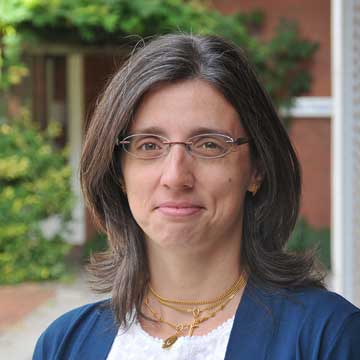
"Welcome to the Department of Economics at the University of Warwick. Please take some time to read the information about your Economics Programme below. There is a lot of information here so do not hesitate to contact your programme team if you have queries (economics.ugoffice@live.warwick.ac.uk or economics.pgoffice@warwick.ac.uk). I look forward to meeting you at various welcome events over the next few weeks!"
All the information you need to prepare is in the induction pages below for your specific cohort:
Undergraduate Programmes
(BSc Economics, BSc Economic and Industrial Organisation, BSc Economics, Politics and International Studies)
Diploma
(Diploma in Economics)
MSc Programmes
(MSc Economics, MSc Economic and International Financial Economics, MSc Behavioural and Economic Science (Economic Track))
We look forward to meeting you in person at one of our departmental welcome events.
WMG Professor made Fellow of the Royal Academy of Engineering
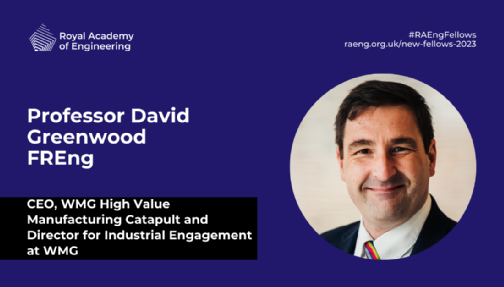 WMG at the University of Warwick’s Professor David Greenwood has been elected a Fellow of the prestigious Royal Academy of Engineering.
Professor Greenwood is CEO of the High Value Manufacturing Catapult and Director for Industrial Engagement at WMG.
Professor Greenwood has been elected as part of a group of 73 leading figures in the field of engineering and technology to the fellowship.
The group consists of 60 Fellows, eight International Fellows and five Honorary Fellows, each of whom has made exceptional contributions to their own sector, pioneering new innovations, leading progress in business or academia, providing high level advice to government, or promoting wider understanding of engineering and technology.
The new Fellows will be formally admitted to the Academy at a special ceremony in London on 28 November, when each Fellow will sign the roll book. In joining the Fellowship, they will lend their unique capabilities to achieving the Academy’s overarching strategic goal to harness the power of engineering to create a sustainable society and an inclusive economy for all.
Professor Greenwood commented: "I am truly honoured to be elected as a Fellow of the Royal Academy of Engineering. The UK has tremendous capability in engineering and manufacturing and the work of the Royal Academy is pivotal in helping to achieve its full potential. I look forward to playing my part in that."
Professor Sir Jim McDonald FREng FRSE, President of the Royal Academy of Engineering, said:
“Engineering is everywhere, but nowhere the same, and our new Fellows represent the great breadth and diversity of engineers who are striving to address some of the world’s most complex challenges – benefiting society and the economy in the process. From next generation power networks and water systems to quantum computing and artificial intelligence, our new Fellows are shaping the future.
“We live in an era of rapid change across our communities, our country, and of course our planet. Today we welcome to our Fellowship an inspiring group of people who are harnessing their creativity, courage and commitment to drive positive change in the world around us and we look forward to their contribution to our work.”
View the full list of 2023 fellows here.