
Departmental news
EMECC - IAS Visiting Professorship: Professor Dena Goodman (University of Michigan) - 6th-10th June
Between 6 and 10 June the Early Modern and Eighteenth-Century Centre and Department of History are hosting an IAS Visiting Professorship: Professor Dena Goodman (University of Michigan)
- Lunchtime talk: ‘Peace Dividends: Collective Kangaroos for Science, Public, and Nation During the Peace of Amiens’ (post attached), discussant Michael Bycroft, 6 June, 12-2pm, FAB 2.43.
- Postgraduate and Early Career Discussion ‘Understanding the American Academic System’, Tuesday 6 June, 3-5pm, FAB 5.01.
- Conference, ‘Sociability in Politics, Food and Travel in the Early Modern Era’ (see attached poster), Keynotes from Rebecca Earle (Warwick) and Dena Goodman (Michigan), 8-10 June.
The Early Modern and Eighteenth-Century Centre at the University of Warwick, together with GIS Sociabilités/Sociability network in France, aims to explore the intersection of sociability with the themes of food, politics and travel in the early modern period (1550-1850).
Historical research on sociability has been developing for several decades. It has been enriched by theoretical frameworks for understanding networks and the rise of public spheres. Sociology and cultural anthropology have been especially helpful for conceptualising how, why and the conditions under which people interact in specific ways. Recent studies of emotions – individual and collective – have thrown light on various forms of sociability. Although there is a rich literature on the topic to draw from, the aim of this conference is to home in on how sociability was imbricated in other cultural phenomena. We are especially interested in exploring the relationship between sociability and political culture, food and drink studies, and trade, travel, and overseas exchange.
Conference programme here: https://warwick.ac.uk/fac/arts/history/ecc/eventsnew/sociability_politics/.
To register, email EMECC@Warwick.ac.uk indicating the days you wish to attend.
For further details about these events please contact Naomi Pullin naomi.pullin@warwick.ac.uk and Charles Walton charles.walton@warwick.ac.uk
The impact of COVID-19 on India’s rural youth
Research from Warwick economists and collaborators, published in the World Development journal, has revealed the impact of the COVID-19 pandemic on young migrant workers from rural areas in India.
Bhaskar Chakravorty, Clement Imbert and colleagues followed a cohort of 2,260 young workers from rural areas in the states of Bihar and Jharkhand who had participated in a national vocational training scheme that provides trade-specific training to disadvantaged rural youth and places them into formal salaried jobs, often in other states. They interviewed the same individuals three times after the first national lockdown in 2020, between June 2020 and December 2021.
They found that nearly a third (32%) of respondents who were in salaried jobs before lockdown lost their jobs, and half of those who worked out of state returned home shortly after the lockdown. Respondents also reported higher levels of anxiety and lower life satisfaction compared to the pre-lockdown period.
There was a stark difference between men and women: while many men who lost their jobs took up informal employment, most women dropped out of the labour force.
Using a randomised control trial, the researchers also studied the effectiveness of an app-based job platform used by several state governments in India to help trainees find work. However, they found that it led to no increase in job searching or employment rates.
Commenting on the results, Dr Chakravorty said: “Governments increasingly look to digital tools as low-cost interventions to engage job seekers but there is relatively little literature to date on how online platforms impact employment rates. Our findings suggest that bridging the gap between rural young workers and formal jobs requires more active and targeted policy interventions, especially for female workers.”
Read the full paper: Impact of the COVID-19 Crisis on India’s Rural Youth: Evidence from a Panel Survey and an Experiment, by Bhaskar Chakravorty, Apurav Yash Bhatiya, Clement Imbert, Maximilian Lohnert, Poonam Panda and Roland Rathelot, was published in the World Development journal in May 2023.
A version of this article was published in July 2022 when the research was published in the Warwick Economics Research Paper series.
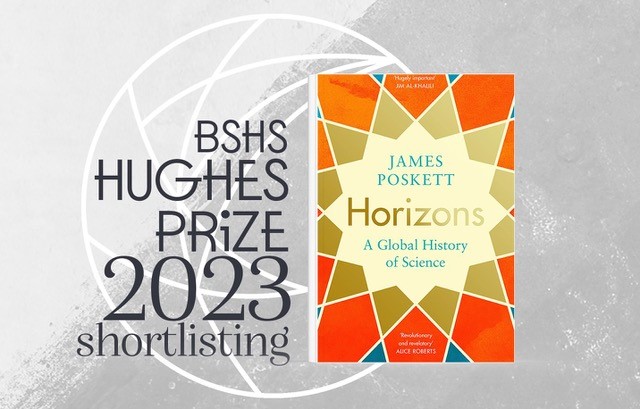
Horizons shortlisted for the 2023 BSHS Hughes Prize
Horizons: A Global History of Science (Penguin, 2022) by Dr James Poskett has been shortlisted for the 2023 British Society for the History of Science Hughes Prize.
The Hughes Prize "is awarded every two years to the best book in the history of science (broadly construed) published in English which is accessible to a wide audience of non-specialists.”
Uki Goñi, ‘The Real Odessa: How Nazi War Criminals Escaped Europe’ - Report
Generously sponsored by the Humanities Research Centre, the School of Modern Languages and Cultures, the School of Law, and the European History Research Centre.
The large influx of fugitive Nazis and collaborators in post-WWII Argentina created an environment that normalized the presence of such heinous criminals in society and by doing so facilitated the crimes of Argentina's own genocidal dictatorship in 1976-83. “If you're a neighbour to Adolf Eichmann or Josef Mengele, or just a random German that you knew did bad things during the war, what does this do to you? It means that once these things start happening in your own country, society has acquired the habit of coexisting with evil,” says Goñi. A witness to the erasure of truth as a measurable reference, of the moral decay and the normalization of violence that preceded Argentina's 1976 military coup, Goñi sees alarming parallels with the extreme views and abusive behaviour in current political discourse. The author believes the dictatorship survival skills he acquired under Argentina's military junta could prove useful in such an environment.
Uki Goñi is best known for his book The Real Odessa: How Nazi War Criminals Escaped Europe, augmented edition, Granta Books, London, 2022, resulting in numerous appearances in documentaries on the topic by the BBC, Discovery, NatGeo and PBS. As a journalist he was written a series of stories on human rights and the environment for the Guardian, op-eds for the New York Times and essays on authoritarianism and racism for the New York Review of Books. Born in the US to an Argentine family, he was raised in Dublin where he lived until the age of 21. He resides in Buenos Aires.
Report
Uki Goñi, investigative journalist for several international newspapers of record, spoke on 15 May 2023 about the expanded edition of his book The Real Odessa, to an audience of 30 students and staff at Warwick. Rather than reprising the content of his book, he explained the reasons why he wrote it. He offered unique and important insights into the origins of the Argentine dictatorship in the 1970s and 1980s, recalling for example his childhood in Dublin as the son of the Argentine ambassador in the late sixties welcoming some of the military representatives who would go on to declare and wage a bitter cultural war against the left in Argentina – initiating a cultural attack comparable to the cultural wars discussed today. He traced the origins of this mentality to Nazi Germany and connected it to the role of Argentine President Juan Perón in enabling the escape of Nazis to South America at the end of World War Two. Goñi’s vision thus looked back from the Argentina of the junta to the legacy of WWII while also demonstrating the relevance of exposing such public discourses today. He also explored the process of locating, accessing and divulging sources, narrating instances of lost and burned documents, and those difficult to access because of official policies. Goñi’s forensic research has been used in legal trials in Argentina, illustrating the value of the ethical investigative approach that he employs The audience was thus treated to an excellent discussion of methodology and the value of challenging prevailing policies as they influence access to materials. Questions covered the dilemma for a journalist of being called to testify in public, which for Goñi comes down to his commitment the truth held in concealed and hidden archives, the responsibility of the researcher in relation to individual and highly charged stories, and his future book plans.
Goñi also exchanged thoughts with a group of researchers in the School of Modern Languages and Cultures, deepening the discussion about strategies for accessing archives which officialdom may wish to keep out of reach and offering his views of journalism and the problems of so-called media ‘balance’ in the era of ‘fake news’. The conversation was an especially valuable insight, from a professional and practice-focused angle, into questions which concern academia at present, but also opened up a discussion about how they might be navigated.
Objectives
The aim of this visit was to give students an insight into how to research and manage materials relating to multiple archives and contentious historical topics. It also brought together students from a variety of disciplines (Languages, Law, History, Creative Writing) with research overlaps but who may not always come together to discuss them, as well as the wider university in an exchange about research ethics. In this sense, the objectives were met. Goñi met a number of researchers working on Latin America for whom this connection could be helpful in the future, and the visit put Warwick firmly on the map of interdisciplinary scholarship in how to manage contested pasts. Goñi will also speak in London (introduced by Guardian journalist Jonathan Freeland) and Dublin, with acknowledgement of Warwick in enabling his trip. While there are no immediate outcomes, the connection should bear future fruit and is reputationally important.
CILT accreditation for WMG Master’s Programme
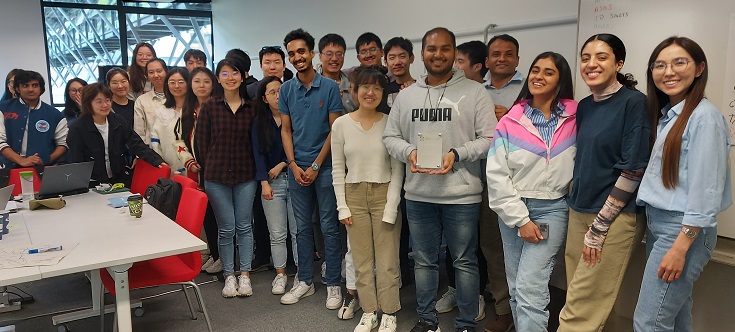 The Supply Chain Logistics Management (SCLM) MSc Programme at WMG, University of Warwick, has received accreditation from the Chartered Institute of Logistics and Transport (CILT).
The programme originally received accreditation in 2012. This was renewed again in 2017, and after receiving very positive feedback, from all of the panel members, this has now been recommended for a further five years.
This will allow all students, upon graduation, to be automatically approved for CILT membership, a great benefit as they begin careers in supply chain.
Gary Bilsbarrow, Senior Teaching Fellow at WMG and MSc Supply Chain and Logistics Management lead for CILT accreditation, explained: “A strong relationship with the CILT as our industry’s leading professional body is key to continued recognition of our programme.
“This reaccreditation, along with strong positive feedback, recognises the potential benefits to employers of a SCLM MSc graduate and builds on the recently established academic partnership with CILT. This active partnership enhances employability and recognises the fusion of academic excellence with industrial relevance.
“Focused content is combined with the opportunity for industrial visits and industry guest speakers to provide an insight into current practice and the challenges of the future."
The MSc in Supply Chain and Logistics Management is a well-established course at WMG and has a current intake of 180 students.
Find out more about WMG’s Postgraduate Programmes here: WMG (University of Warwick) Full-time Master's (MSc) Programmes
In this blog post, Charlotte, Lizzie and Maddie reflect on running the conference Territorial Bodies: World Culture in Crisis, which took place in February 2023.
A Conversation between the Conference Organisers: On the Day (Featuring Comparative Literature PhD
Writing about web page https://warwick.ac.uk/fac/arts/hrc/confs/territorialbodies/
In this blog post, Charlotte and Maddie reflect on their experience organising the conference Territorial Bodies: World Culture in Crisis, which took place in February 2023.
A Conversation between the Conference Organisers: The Build–Up
Writing about web page https://warwick.ac.uk/fac/arts/hrc/confs/territorialbodies/
WLS Visiting Fellow attends conference on 'Ukraine's Recovery'
Dr. Aisel Omarova, BA Fellow at the University of Warwick, was invited as a delegate to the conference "Ukraine’s Recovery: Rebuilding with Research", which took place earlier this week on the 15 May 2023 in London.
In memoriam: Professor John Forty
I have to report the very sad news that Professor John Forty, the founding professor of the Department of Physics, passed away on Sunday 14th May aged 94.
The leading position that the Department holds today is due, in no small measure, to the vision and leadership that John showed in setting up the Department in the 1960s, from his choice of staff and their research areas to the design of a building that has remained "fit for purpose" for many decades, despite the many changes in use that have occurred.
More information will be provided when available.
Mark Newton
Head of Department