
Meet the researchers who inspired the Poetry Trail
To explore how these works of art came to life, we spoke to three of the researchers whose work inspired the poems.
Jeanette Selby
Genomics Technical Specialist, School of Life Sciences
Jeanette has been part of the Warwick community for over 20 years, specialising in DNA sequencing. She loves the University for its environment, technology and friendly colleagues.
When she spoke to the poet about her work, Sujatha was inspired by the fact that most organisms share many of the same genes.
Not quite sure what to expect at first, Jeanette was pleasantly surprised by the finished poem and trail. She could spot links to her work, including references to the double helix, shared DNA across species and the zebrafish used in genomic research. Fun fact: Zebrafish share 70 per cent of genes with humans, which makes them excellent models for studying human disorders and testing drugs.
Rather than simply explaining the science, the poem tells a story, blending facts with creativity. For Jeanette, it’s been a rewarding experience and a lovely way to see science viewed through a different lens while out walking around campus.

Hydrosapien Neuropathy, ///reward.both.gatherLink opens in a new window

Cytoskeleton of a Spell, ///orange.traps.metroLink opens in a new window
Dr Darius Koester
Associate Professor, Biomedical Sciences, Warwick Medical School
Darius joined the University eight years ago and now works across both teaching and research. He really values his colleagues, as well as the great lab spaces and research infrastructure that support his work.
One of the big reasons Darius chose Warwick was the campus itself. He loves the green spaces and often takes walks through Tocil Woods, enjoying the fresh air and taking time to listen to the sounds of nature.
The poet was inspired by Darius's research into the actin cytoskeleton - a network of protein filaments inside a cell that allows it to move, change shape, divide, and attach to its neighbours.
He hopes the poem inspires others to explore connections between science, art and nature, and that the project will continue to spark new ideas and collaborations in the future.
Dr Aparna Ratheesh
Associate Professor, Centre for Mechanochemical Cell Biology, Warwick Medical School
Aparna's research looks at collective cell migration - how groups of cells communicate, stick together and sometimes split apart. She remarked that the most beautiful example of this is when cells move together to heal wounds. This reminded the poet of migrating birds, and she references starlings' murmurations in the poem.
Aparna really enjoyed working with Sujatha and found it refreshing to speak creatively about science while exploring new metaphors. She says working creatively - much like when she explains scientific ideas to her children - brings out better questions, better analogies and often a deeper understanding.
Discover more
Why not explore the poetry trail in your next lunch break? Or you can organise your next walking meeting around the beautiful lakes and woodlands.
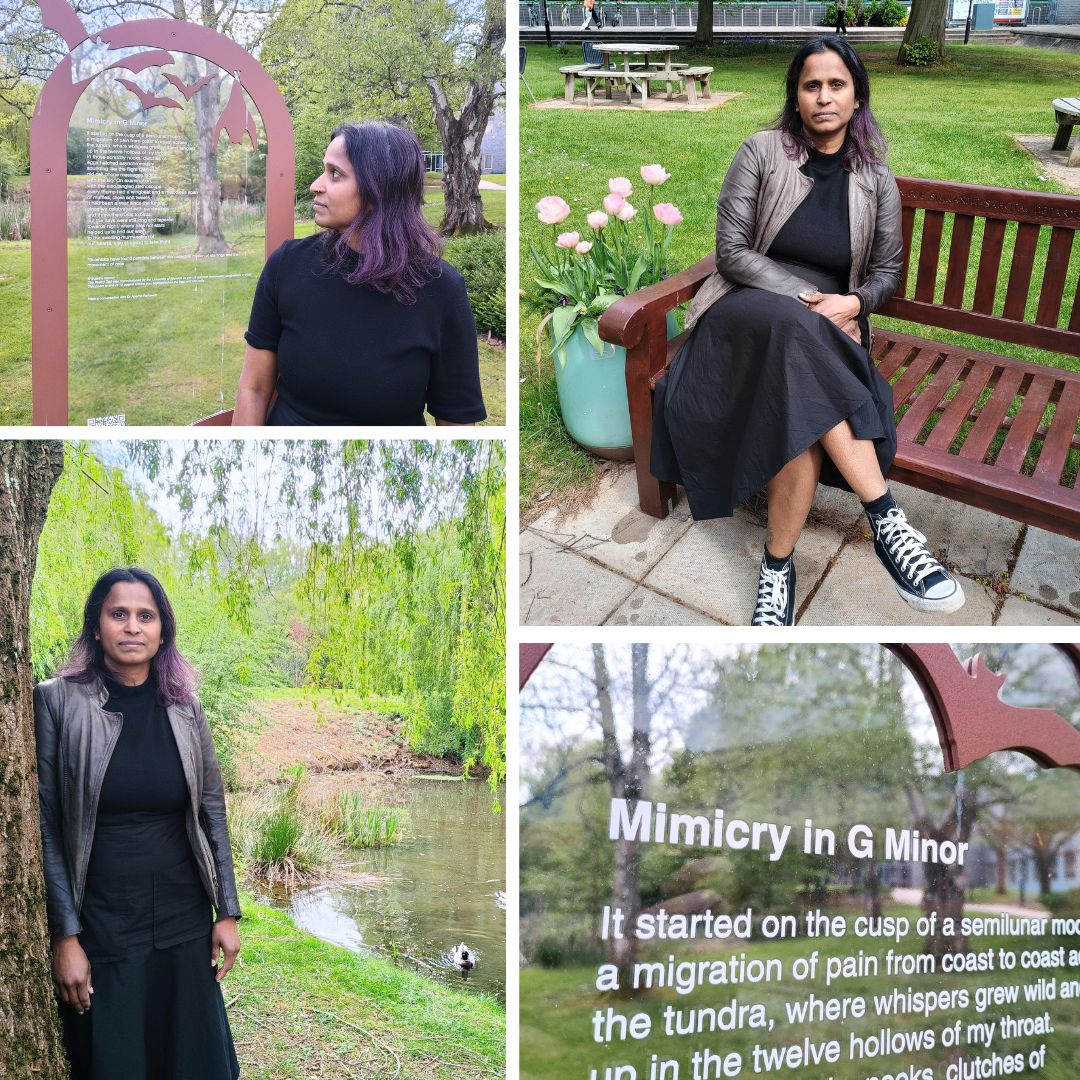
Mimicry in G Minor, ///dangerously.smart.trapsLink opens in a new window
Have you explored the trail yet? What was your favourite poem? Let us know in the comments below.
Messages should respect our community guidelines on commenting.Link opens in a new window