
What the Warwick Venice Centre means to me
As History of Art celebrates 50 years of its Venice Programme we spoke to Chiara Croff, our only permanent member of staff at the Warwick Venice Centre, about what it's like to work there.
Venetian Chiara started her role back in the 1990s after an 'unforgettable' interview with Historian Professor Humfrey Butters at the iconic Caffè Florian on St Mark's Square.
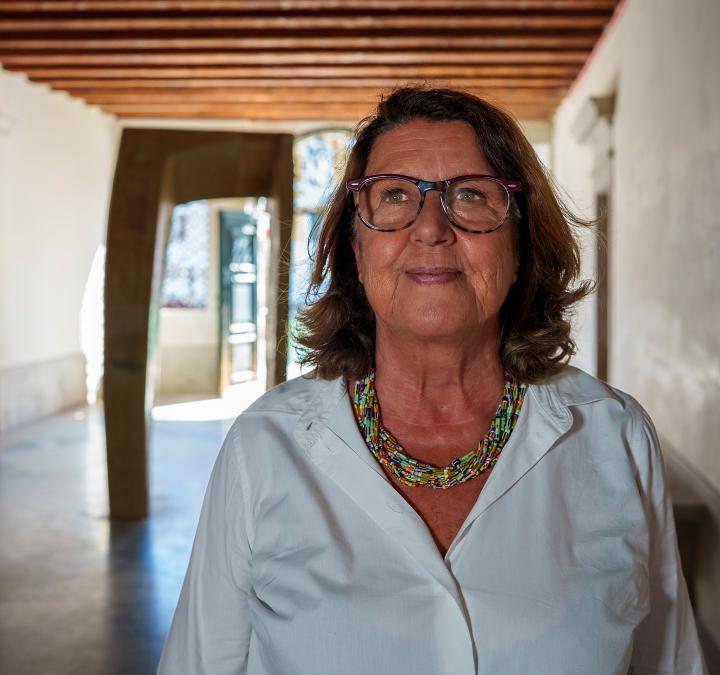
“At the beginning my role was to coordinate the Autumn teaching term of History and History of Art students at the Fondazione Querini Stampalia. Then the University had a brilliant idea to find a new venue for the whole academic year. We first occupied the Palazzo Pesaro Papafava in Cannaregio, and later, in 2023 moved our Venice home to its current location, in the Palazzo Giustinian Lolin on the Grand Canal.
We started to have not only the teaching term, but also international conferences and other events organised by other departments. This increased my engagement and the engagement of the University with the city, which is very important.
During the summer I live on the Lido, an island close to Venice, so I am lucky to come work by boat. It’s a very nice commute from Alberoni, through the lagoon to the water door of the Palazzo Giustinian Lolin on the Grand Canal, a very nice start to a working day!
My job needs organisational skills, and I love this. I work with various staff members coming to Venice, many of them professors and I have always had a very good relationship with them, which makes me feel very lucky.
I love being in my office to hear the students have their seminars and then spread out around the city to see the places they are studying. One stunning location they visit is the Palazzo Ducale or Doge’s Palace, which is important for both History and History of Art students.
I really try to help everyone coming to the Centre to have a nice experience and obtain what they are looking for. Sometimes there can be unusual requests!
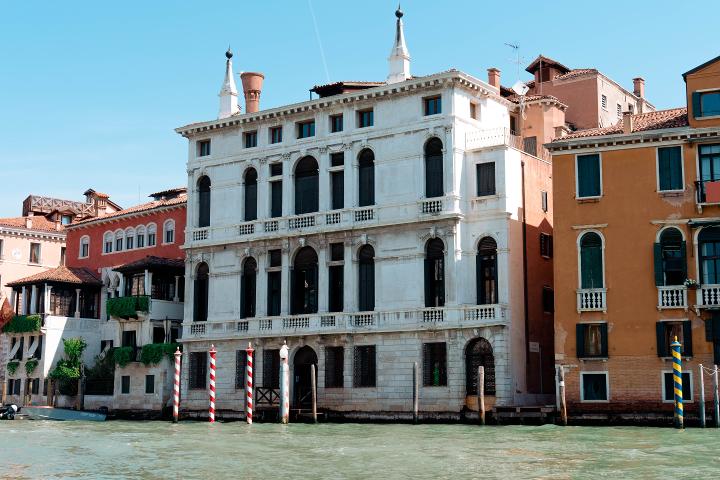
One of these happened many years ago while we were in the previous venue. We had to organise an honorary degree ceremony for Lady Clarke and Professor Michael Mallett. It was not possible to take the ceremonial mace from Warwick to Venice, so I was asked if there was anything similar. After racking my brain, I finally had the idea to ask the Reale Società Canottieri Bucintoro for the flagstaff of the Dodesona, a 12-oared Venetian ceremonial boat. They agreed, so we finally had a very nice and important ‘mace’, and one that was very Venetian!
I am proud to work for the University of Warwick because I think more and more that it’s very important for Venice to have visitors, (not just the tourists), but professors, students, and scholars — interacting with the city and the inhabitants and sometimes, it has happened, they stay in Venice and becoming new Venetian citizens. I always say that this is something which enriches Venezia!”