
Life Sciences News Feed
School of Life Sciences News
North Sea ‘Lost World’ had habitable forests thousands of years earlier than thought
Forests were growing on the now-submerged landmass of Doggerland thousands of years earlier than previously believed, according to a major new sedimentary ancient DNA (sedaDNA) study led by Professor Robin Allaby
The findings suggest that Doggerland may have provided a surprisingly hospitable refuge for plants, animals, and potentially humans, thousands of years before forests became widespread across Britain and northern Europe.
Published in Proceedings of the National Academy of Sciences (PNAS), the research reveals that temperate trees such as oak, elm, and hazel were present more than 16,000 years ago, and even detected DNA from a tree genus thought to have vanished from the region 400,000 years ago. The findings also show that parts of Doggerland survived major flooding events, including the Storegga tsunami around 8,150 years ago, and parts of the landscape remained above water as late as 7,000 years ago.
New study overturns long-held model of how plants coordinate immune responses
Plants mobilise their immune defences far earlier than scientists have believed for decades—and through a previously overlooked early signalling mechanism—according to a new study published in Nature Plants.
Professor Murray Grant and his team, including Emily Breeze and Erin Stroud have discovered a rapid, jasmonate-driven, early immune response in plants. A breakthrough live-imaging tool has allowed them to visualise immune signals moving out of infected leaves and across into uninfected leaves in real time.
(Image shows Temporal spatial dynamics of luciferase activity in JISS1:LUC plants following DCavrRpm1 challenge, initiating at 3 hpi. 3.20 hpi, 3.50 hpi and 4.30 hpi images capture the systemic spread of the signal over time. Credit: Gaikwad, T., Breen, S., Breeze, E., Stroud, E. et al. Nature Plants (2026). https://doi.org/10.1038/s41477-025-02178-4)
Dave Chandler on the Instant Genius: The future of Food Podcast
As part of a four-part miniseries, Future of Food, Dr Dave Chandler, a crop researcher and agricultural scientist based at the University of Warwick, Warwick Crop Centre tells the podcast how current global food production practices are one of the most significant drivers of environmental damage and biodiversity loss, how climate change is threatening our ability to grow fresh produce to put on our plates and details some of the current thinking on how we can ensure the future of food production worldwide.
Recent UN data tells us that currently 670 million people around the world are going hungry. There’s little doubt that food security is one of the most serious problems that the human race is facing. How have we reached this point of crisis and what solutions can we put in place to make sure everyone on the planet has enough nutritious food to eat without causing further harm to the environment?
As part of our four-part miniseries, Future of Food, we’re joined by Dr Dave Chandler, a crop researcher and agricultural scientist based at the University of Warwick.
He tells us how current global food production practices are one of the most significant drivers of environmental damage and biodiversity loss, how climate change is threatening our ability to grow fresh produce to put on our plates and details some of the current thinking on how we can ensure the future of food production worldwide.
New antibiotic for drug-resistant bacteria found hiding in plain sight
Prof Chris Corre, Prof Greg Challis and Dr. Lona Alkhalaf from the University of Warwick and Professor David Lupton rfrom Monash University have discovered a promising new antibiotic that shows activity against drug-resistant bacterial pathogens, including MRSA and VRE.
In a new study published in the Journal of the American Chemical Society (JACS), researchers from the Monash Warwick Alliance Combatting Emerging Superbug Threats Initiative have discovered a promising new antibiotic - pre-methylenomycin C lactone. The new antibiotic was found ‘hiding in plain sight’ as an intermediate chemical in the natural process that produces the well-known antibiotic methylenomycin A. When tested for antimicrobial activity, one of the intermediates, pre-methylenomycin C lactone, was shown to be over 100 times more active against diverse Gram-positive bacteria than the original antibiotic methylenomycin A. Specifically, it was shown to be effective against S. aureus and E. faecium, the bacterial species behind Methicillin-resistant Staphylococcus aureus (MRSA) and Vancomycin-resistant Enterococcus (VRE) respectively.
Importantly, the researchers could not detect any emergence of resistance to pre-methylenomycin C lactone in Enterococcus bacteria under conditions where vancomycin resistance is observed. Vancomycin is a “last line” treatment for Enterococcus infection, so this finding is especially promising for VRE, a WHO High Priority Pathogen.
With its simple structure, potent activity, difficult to resist profile, and scalable synthesis, pre-methylenomycin C lactone represents a promising new candidate that could potentially help to save some of the 1.1 million people who are the victims of AMR every year.
"How different mushrooms learned the same psychedelic trick" - The Conversation
jimmiev, CC BY-SA 3.0, via Wikimedia Commons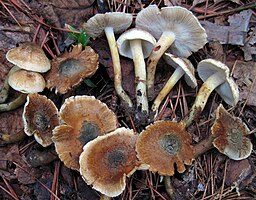

Dr. Fabrizio Alberti has written the article "How different mushrooms learned the same psychedelic trick" for The Conversation on a new discovery that two different mushrooms have evolved the ability to make the psychedelic psilocybin, the first time that convergent evolution has been observed in two organisms from the fungal kingdom.
SLS welcomes new MRC Career Development Fellow to explore how cells communicate with each other
Dr Iqbal Dulloo, currently a molecular cell biologist at the University of Oxford, has been awarded a prestigious five-year Medical Research Council (MRC) Career Development Award. He will join the University of Warwick’s School of Life Sciences in late September 2025 to launch his independent research group.
Dr Dulloo’s research explores how cells send and receive signals to maintain healthy function. When this communication breaks down, it can lead to diseases like cancer or neurodegenerative conditions. His recent discovery showed that an enzyme complex, previously thought to carry out a routine task, also plays a role in regulating gene activity by releasing a key messenger protein inside cells.
At Warwick, he will investigate how widespread this hidden signalling pathway is and how it may be exploited by viruses during infection.
Dr Dulloo said: “I am honoured to receive this award and delighted to be joining the University of Warwick. Understanding how cells communicate could unlock new ways to tackle disease. This fellowship will allow me to pursue fundamental questions in an exciting area of cell biology that remains under-explored but full of promise. I look forward to building a collaborative team and contributing to the vibrant scientific community at Warwick.”
Professor Miriam Gifford, Head of the School of Life Sciences, said: “We are delighted to welcome Dr Dulloo. His pioneering work will be a fantastic addition to our cell biology and host-pathogen research directions, and we are excited to support the next stage of his career.”