
From Reuse to Results: The Sustainability Hub Story
Transforming an unused campus space through collaboration, creativity and reuse
What happens when a tired, underused space is given a new purpose - without starting from scratch? The Sustainability Hub is the result of collaboration and co-creation between teams across the University. It demonstrates what is possible when we think differently about the value of materials, furniture and equipment, and make the most of what we already have. The result is more than a refreshed campus space. It is a practical example of how environmental sustainability can go hand in hand with social and financial sustainability - creating a welcoming space for students and staff while reducing waste, reusing existing resources and saving money.
From former café to Sustainability Hub
The space has had several lives. Previously a café, it was later a student common room and then remained unused for some time. When the opportunity arose to bring it back into use, the space was dark and tired. Large parasols restricted the available natural light, and the existing lighting and finishes needed attention. The Sustainability Hub vision was for a flexible environment that combined study space with opportunities for collaborative projects and engagement, creating a place to take action and welcome everyone to become part of our sustainability community. Crucially, the team wanted the refurbishment itself to demonstrate the principles of sustainability that the Hub would promote.
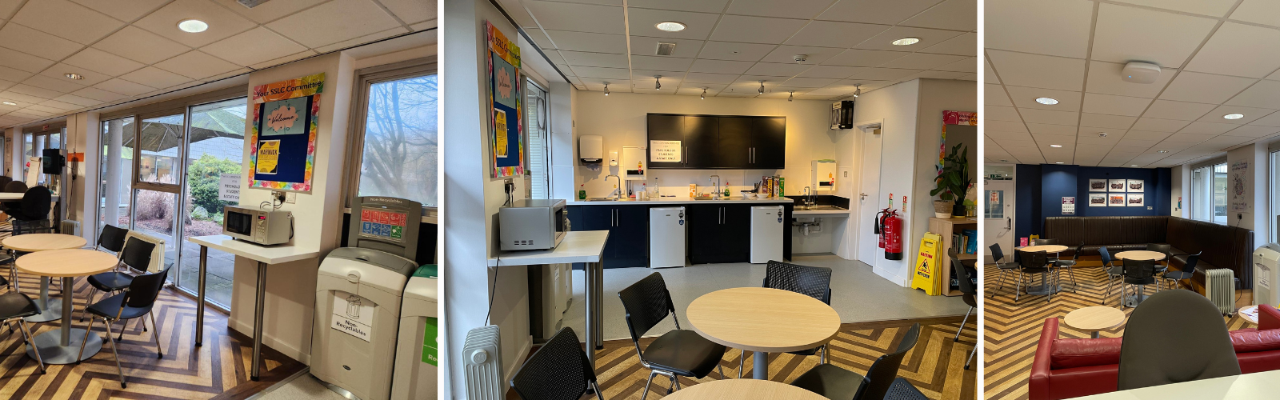
Photographs of the space before refurbishment
Collaboration at the heart of the project
The refurbishment was delivered by the University's Minor Works Team, established to deliver small and medium-sized projects across campus. For Minor Works Manager Nick Cadden, the Sustainability Hub provided an opportunity to trial a new approach to project delivery while bringing together expertise from across Estates and other University teams.
The Energy & Sustainability team had an ambitious target: to have the Hub ready to welcome visitors in Term 1. That meant a tight turnaround and some unexpected challenges along the way. A specialist contractor was brought in to undertake the necessary mechanical works, including upgrades to the ventilation and air-conditioning. The project coincided with a particularly busy period of works across campus, putting additional pressure on timescales.
Despite these challenges, teams across the University worked together to keep the project moving, and the Hub was ready to welcome students and staff at the start of the new academic year.
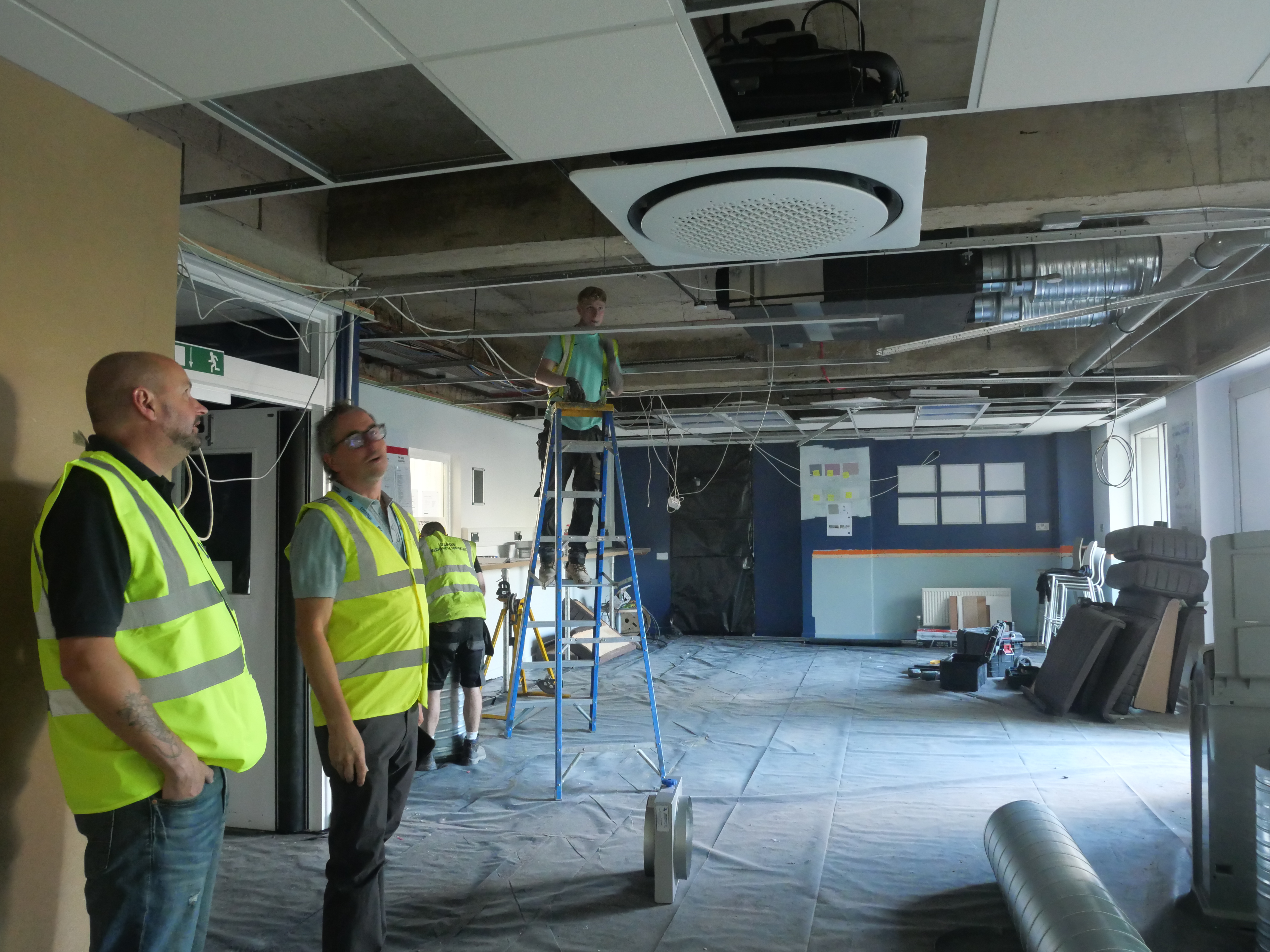
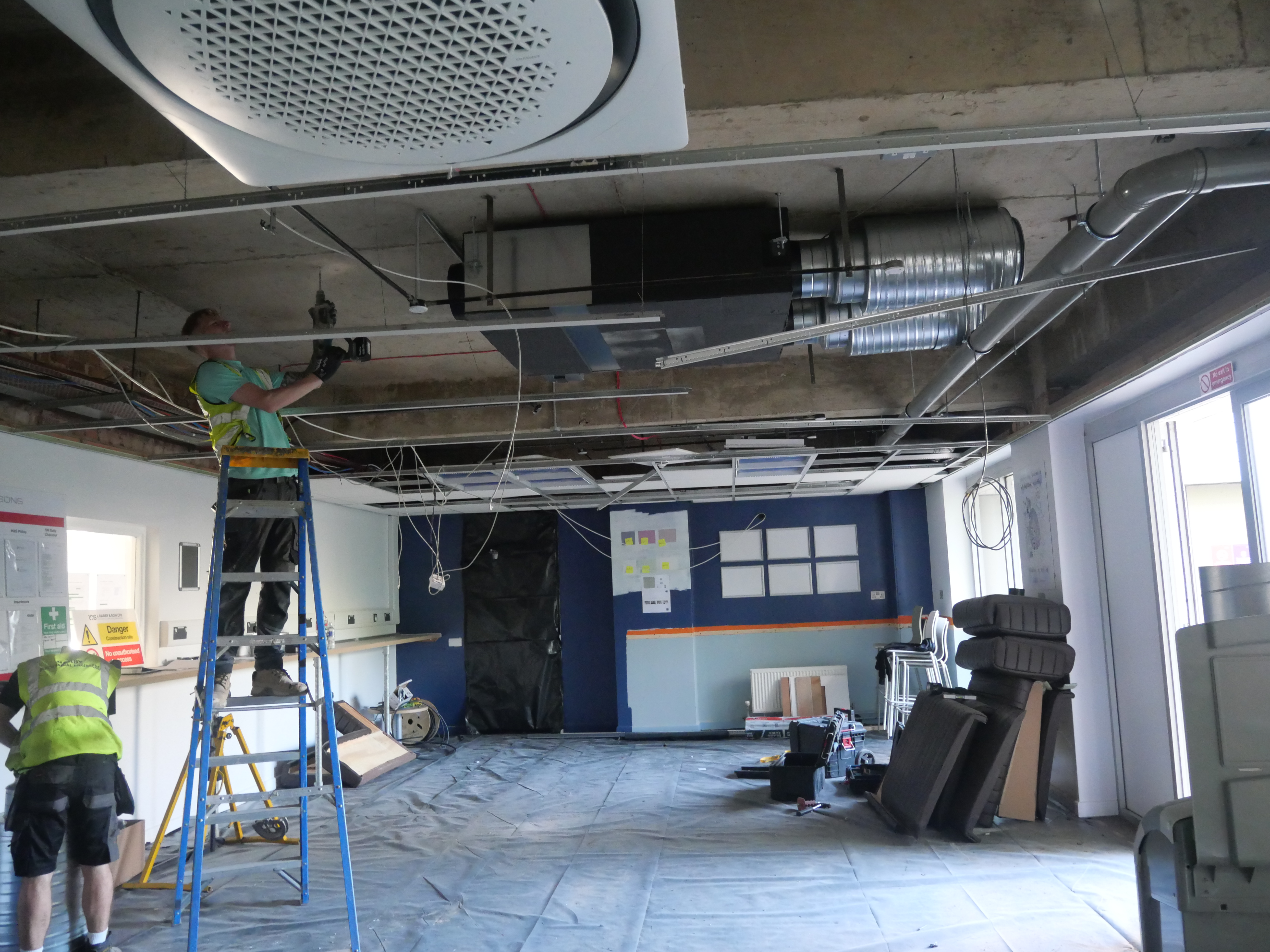
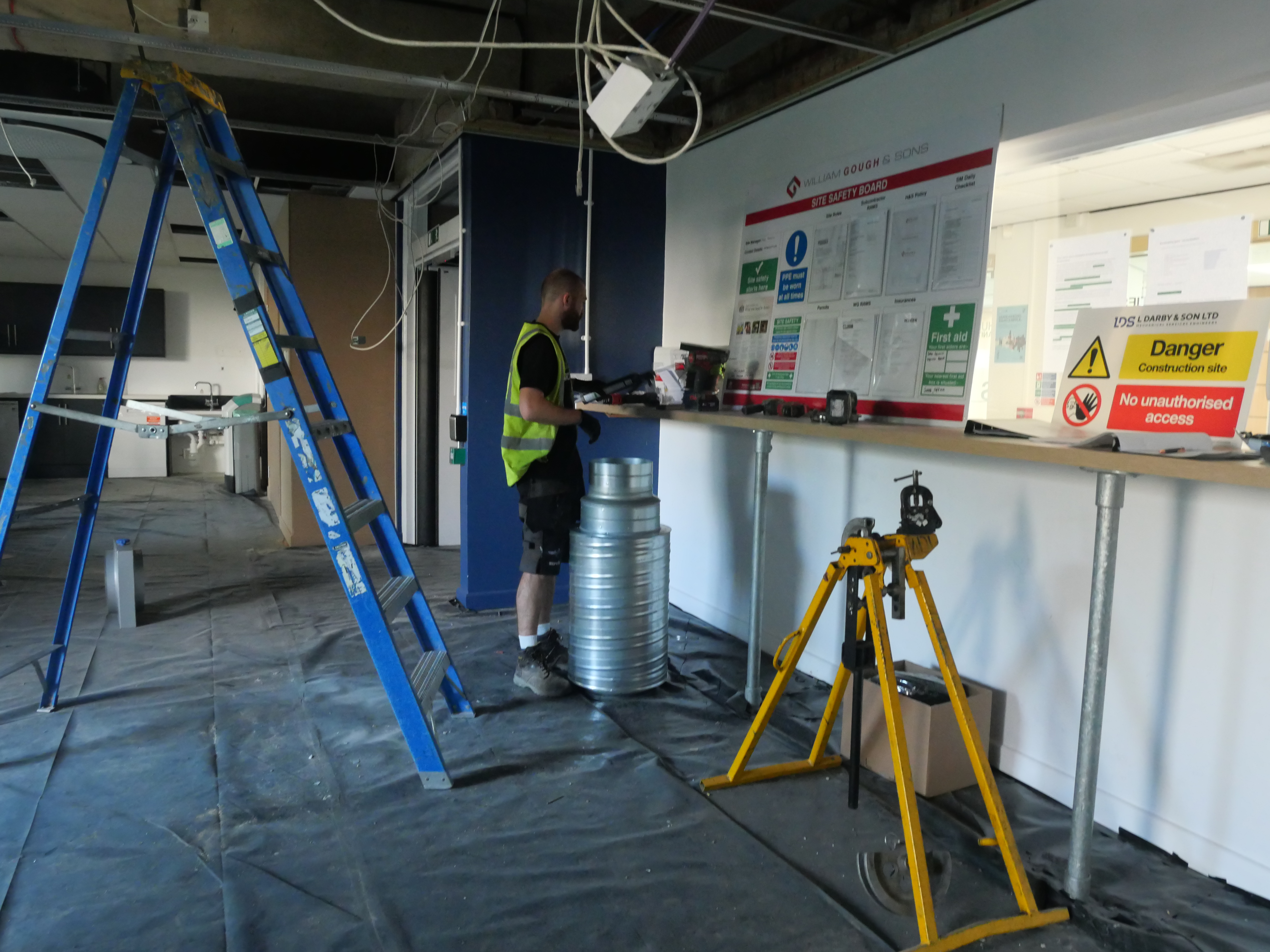
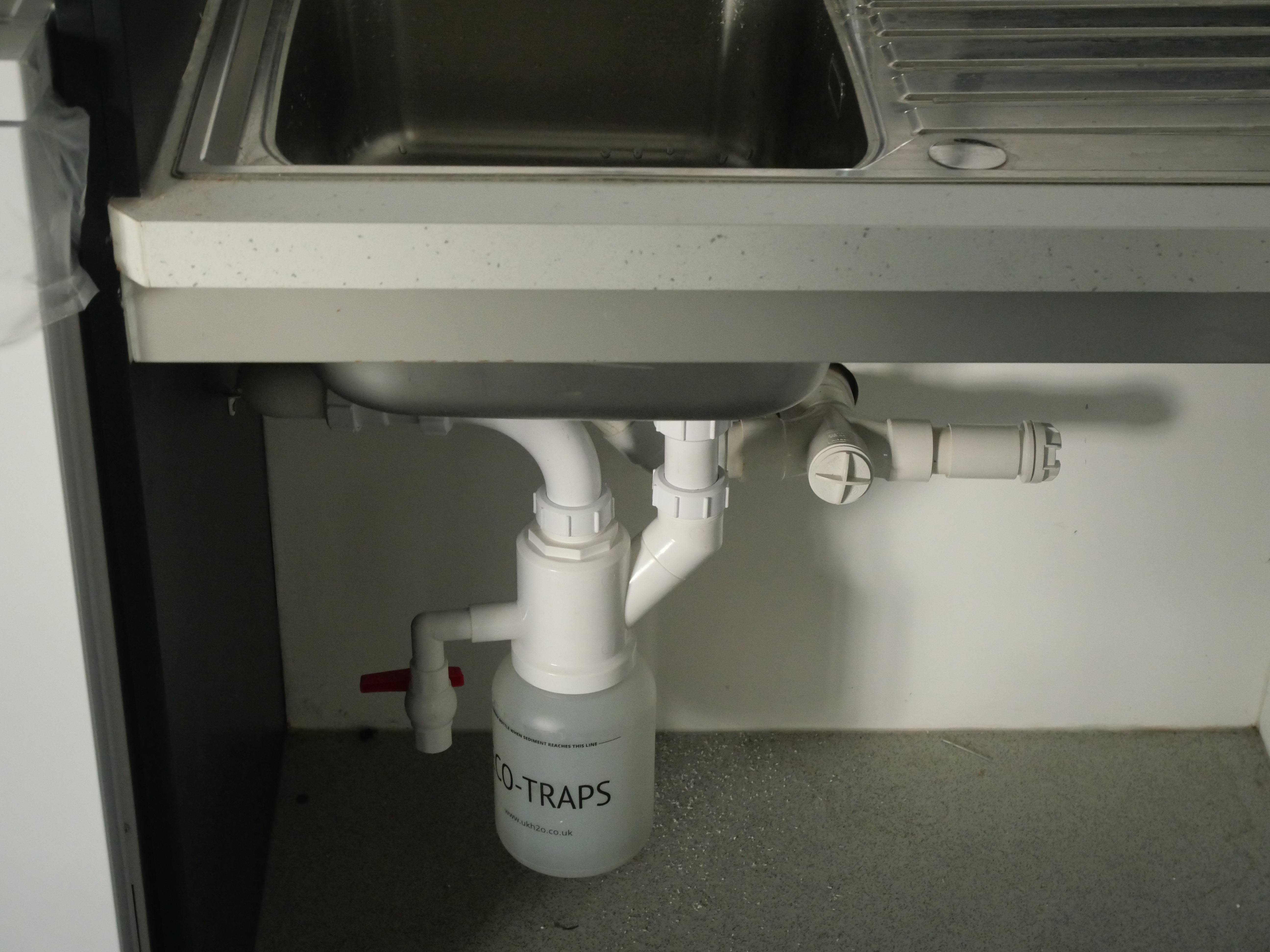
Photographs of the space during the refurbishment
Nick Cadden, Minor Works Manager, Minor Works Team, said:
“The project proved that reusing existing campus assets is a practical alternative to buying new. By working closely across teams and planning early, we were able to reduce waste, make better use of existing resources and successfully deliver the project while trialling a more circular approach to refurbishment.”
Reusing what we already have
Circular economy thinking was embedded throughout the creation of the Sustainability Hub. Rather than automatically replacing existing assets with new ones, teams looked for opportunities to reuse, repair, repurpose and source materials from elsewhere on campus.
Lighting with a new lease of life
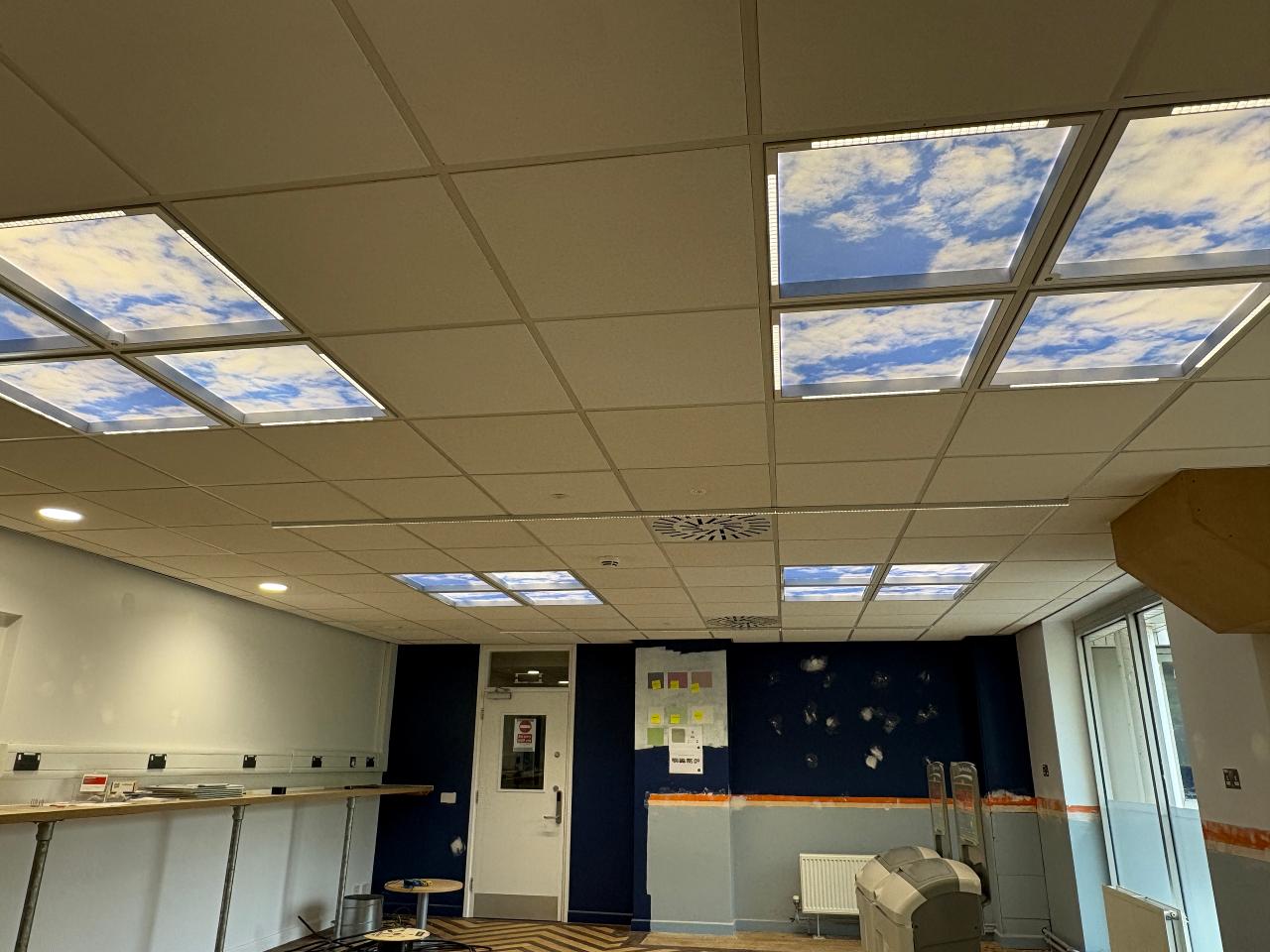
One of the most significant examples was the lighting. The existing lighting was old, inefficient and overdue an update. However, instead of purchasing new fittings, the Electrical Core Team sourced lighting from surplus stock left over from another campus project. This decision avoided the need to buy new equipment and saved more than £15,000, as well as avoiding 6.7 tCO2e. The team worked quickly to install the lighting, creating new lighting zones so that the space could adapt to different uses; from studying, to presentations, workshops, meetings and film screenings. The approach demonstrates how surplus materials from one project can become valuable resources for another.
Giving surplus materials a new purpose
The University's Carpentry Team also played a key role in turning unwanted materials into bespoke features.
Drawers and vintage rulers that were destined for waste were transformed into a unique bookcase, giving them a completely new purpose while creating a distinctive feature for the Hub. An old fence panel, which had been abandoned at a scrapyard, was similarly given a second life. The carpentry team transformed it into a practical room divider for the Hub. The team used unwanted furniture to create a laptop stand, extending the life of valuable solid table tops. These features are more than decorative. They make the principles of reuse and resourcefulness visible to everyone who visits the space.
Scroll to see the great upcycling work delivered by the Carpentry Team.
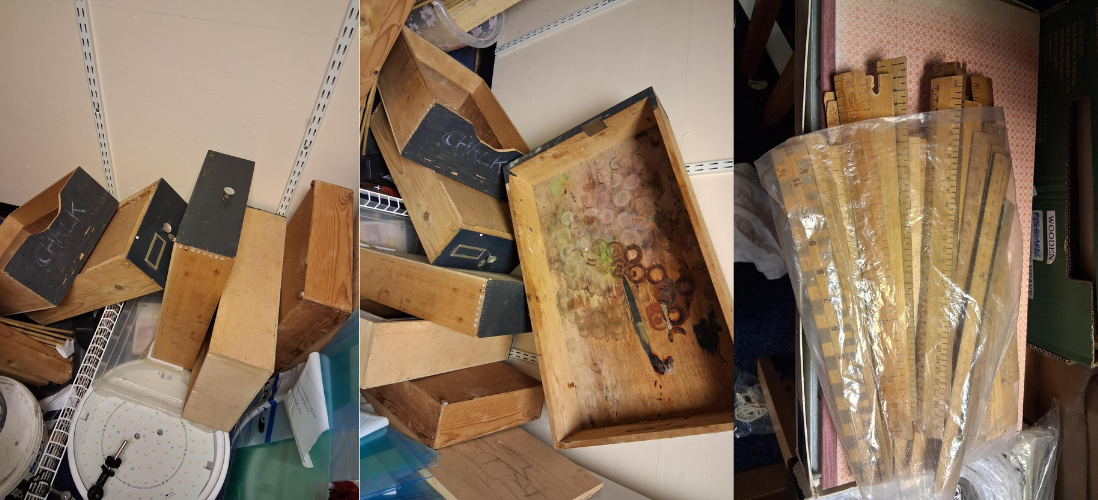
Drawers and vintage rulers that were destined for waste
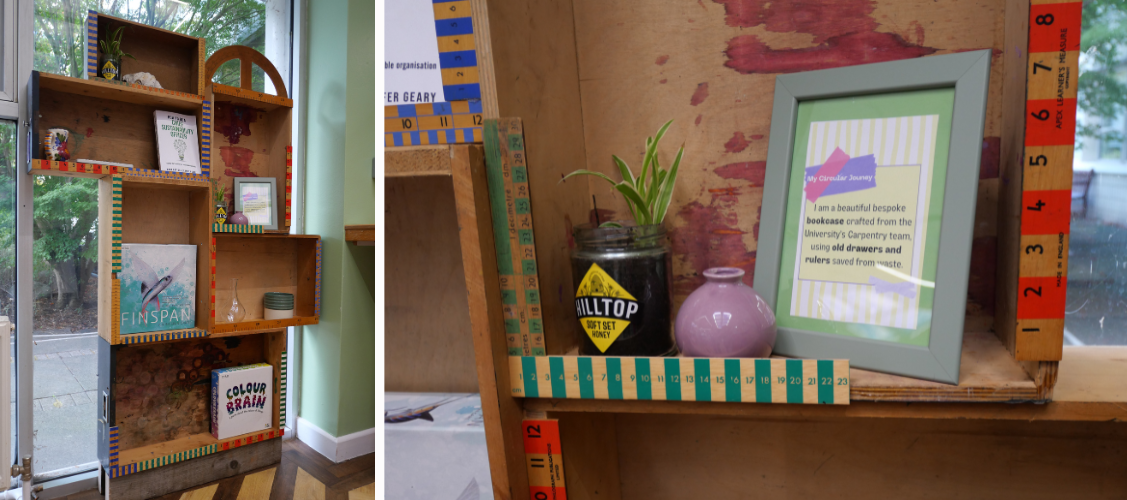
The 'new' book case
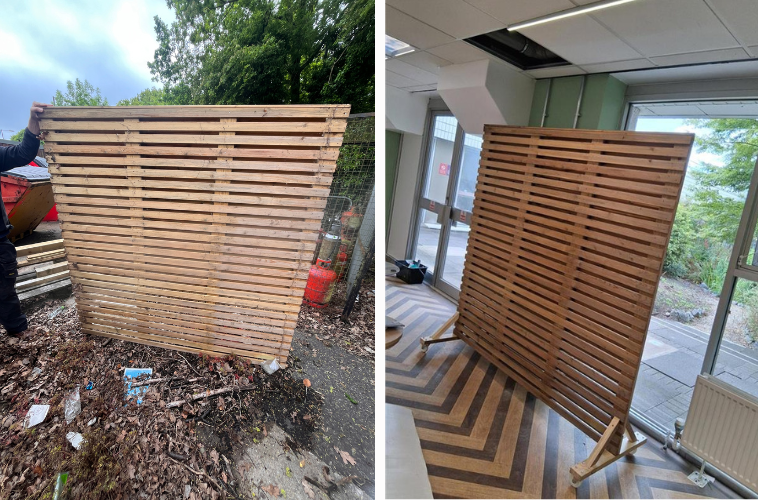
An old fence panel was transformed it into a practical room divider for the Hub
Furniture from across campus
The University's Interior Design, Furniture and Equipment team helped to source a wide range of pre-loved furniture from across campus.
The Hub now includes reused:
- Comfortable chairs
- Two sofas
- Shelving
- Coffee tables
- Worktables
- Stackable chairs
- Pin boards
- Stools
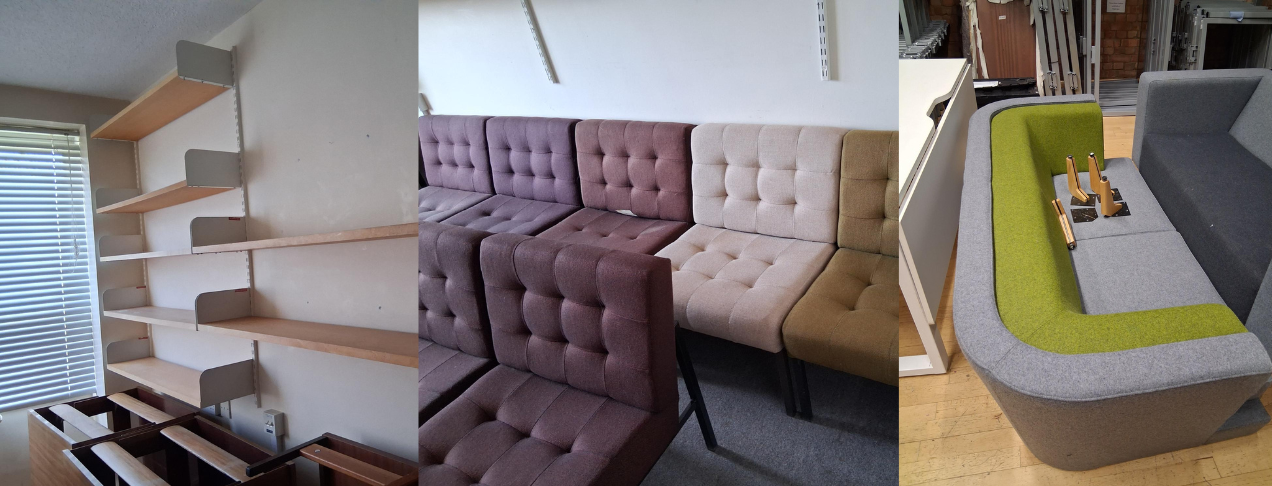
Repurposed furniture
Even the sofa had a second chance. Missing a leg, it could easily have been discarded, but the carpentry team repaired it and returned it to use. Based on the costs for buying all the above items new, we have saved approximately £18,000 on furniture. That also equates to avoiding 8.95 tCO2e in carbon emissions from refusing new and embracing pre-loved. The result is a flexible, welcoming space without the environmental and financial cost of buying entirely new furniture and fittings.
Pre-loved technology
The University's Audio Visual (AV) team also helped the project make the most of existing resources by sourcing pre-loved technology, including a data projector, ceiling speakers, amplifier and HDMI sender/receiver. Even the control panel is made up of reused equipment. A new screen was required to work with the space, but wherever possible, existing equipment was reused rather than replaced.
A team effort
The physical transformation required contributions from many different teams.
With the ceiling largely removed to enable the mechanical and electrical works, the project provided an opportunity to coordinate several areas of work.
The Electrical Core Team installed the new lighting and completed associated wiring. Surplus ceiling tiles were also reused to replace damaged or yellowed tiles, helping to freshen the appearance of the space without replacing the entire ceiling.
The Carpentry Team created bespoke storage and furniture solutions, while the Building Fabric Decorating Team carried out a focused programme of redecoration to completely refresh the appearance of the space ahead of opening. Key internal surfaces were prepared and redecorated, transforming what had become a tired and dated former café into a brighter, cleaner and more welcoming environment.
The Flooring Team repaired and patched areas of existing flooring, retaining what was already there rather than replacing it.
Each intervention was relatively simple. Together, they created a significant transformation.
The final result
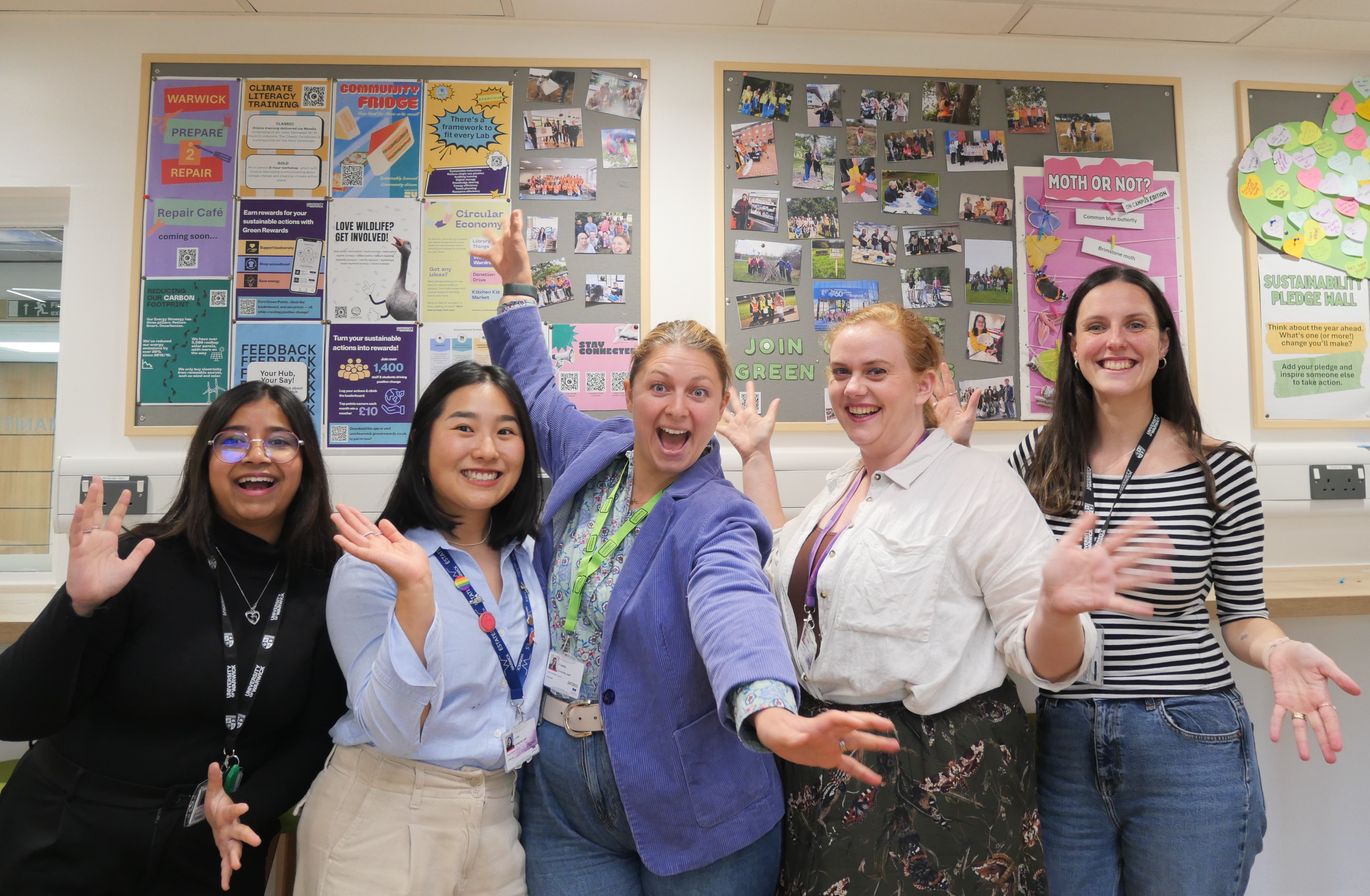
Following the completion of the works, the Energy & Sustainability team added the finishing touches. Information boards were decorated to celebrate our community and promote ways to get involved, while new storage areas were stocked with resources ready to support the Hub's programme of activities and events. Many of these items were reclaimed from waste elsewhere on campus or through projects such as the annual Donation Drive.
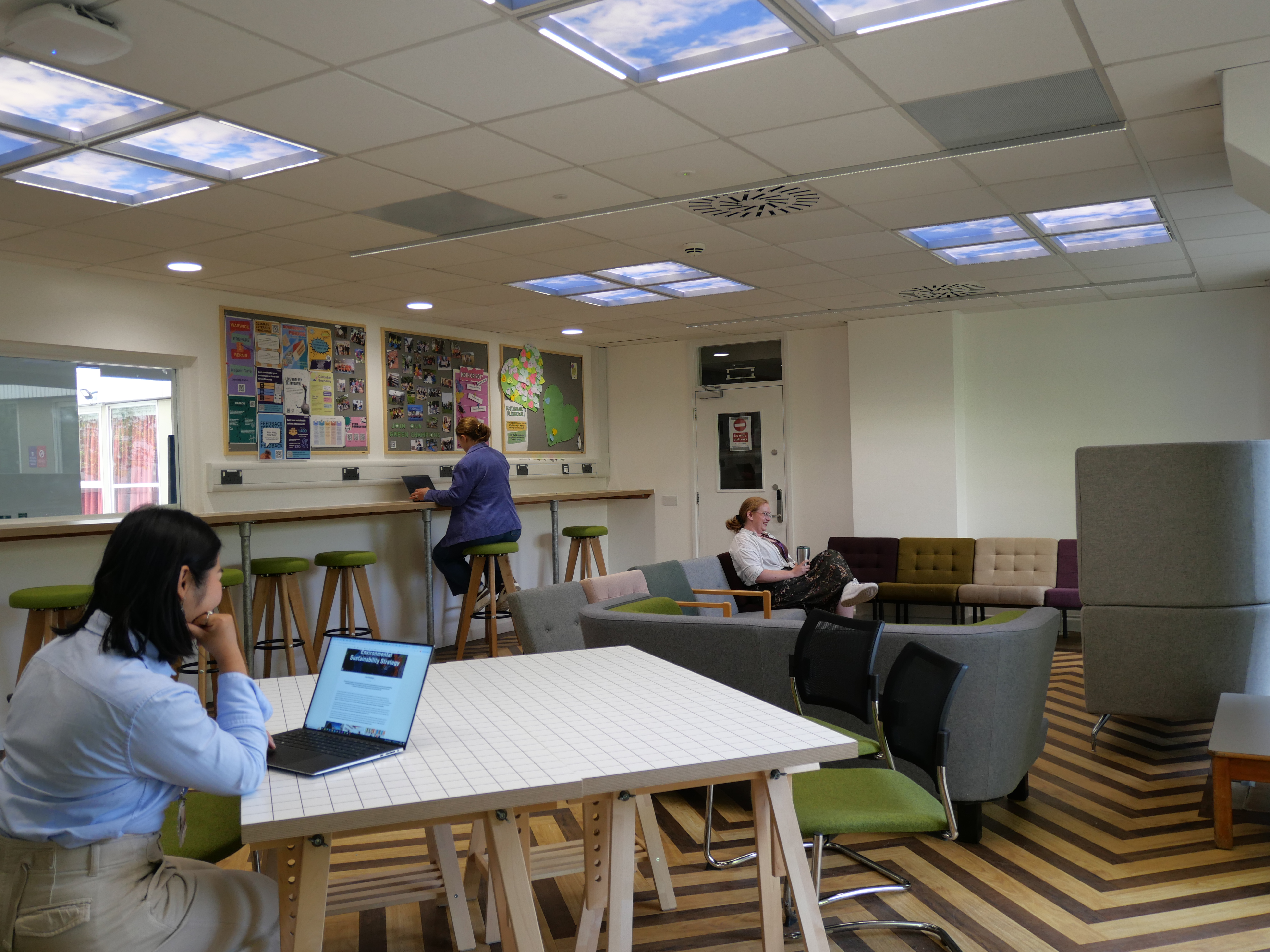
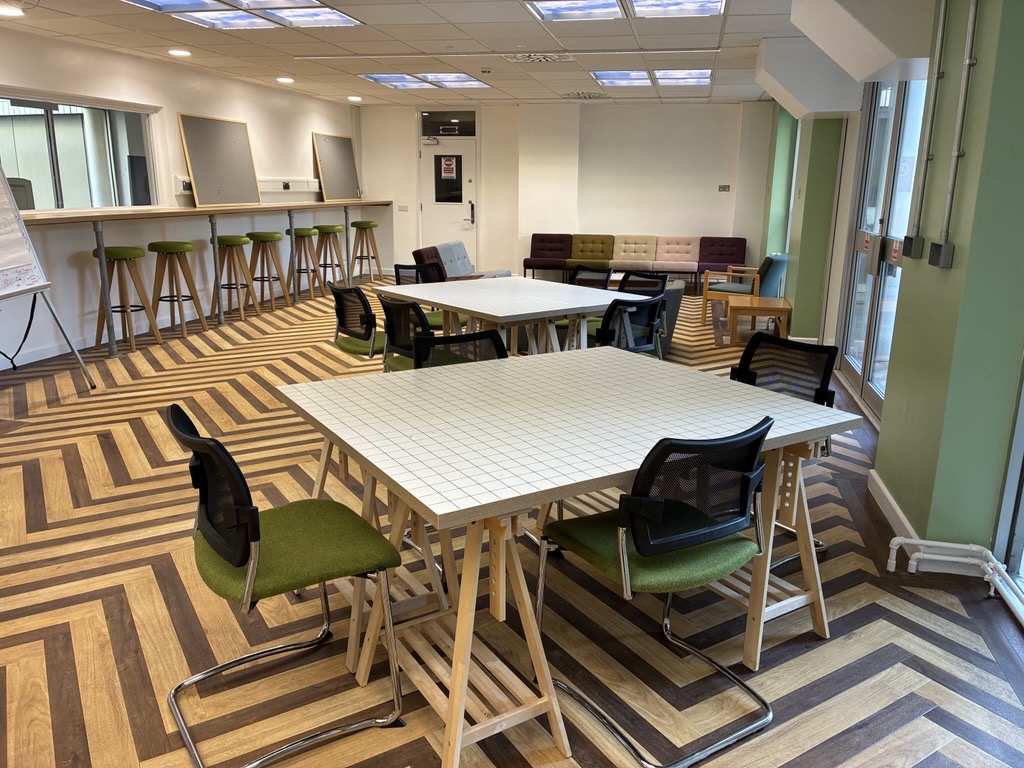
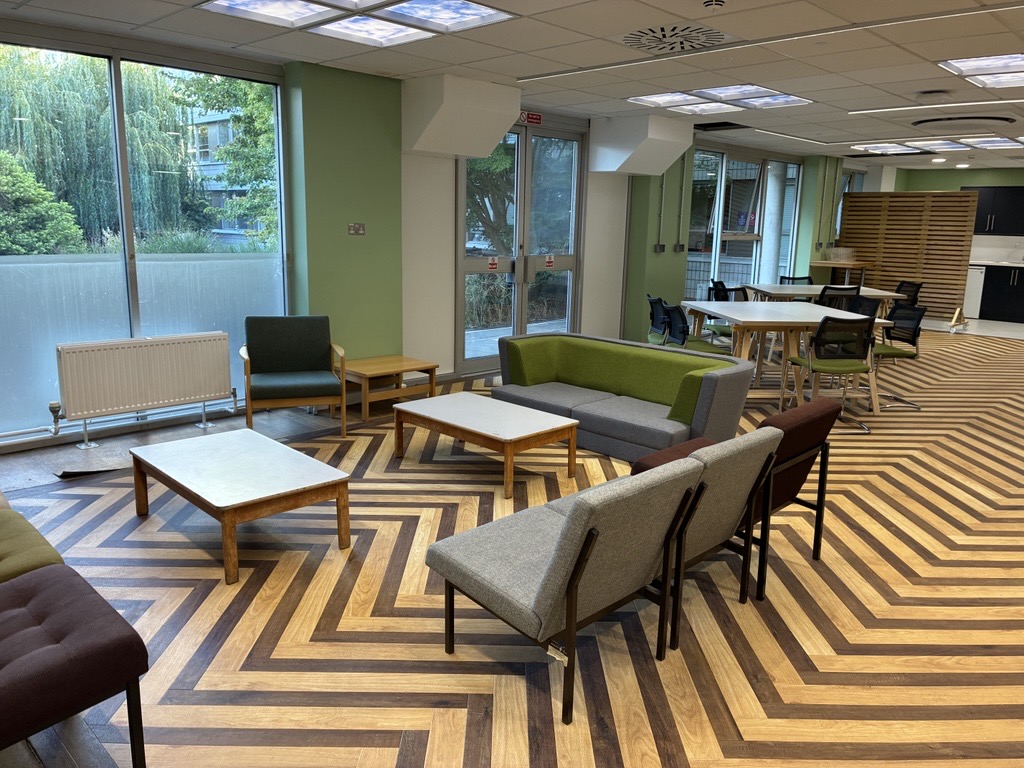
The finished Hub is now a flexible environment designed to bring people together, support learning and collaboration, and provide a physical base for sustainability activity across the University. Most importantly, the space itself tells a story. The furniture, lighting, fixtures and bespoke features demonstrate that creating something new does not always mean buying new.
Fran Nibbs, Sustainability Officer – Circular Economy said:
“The Sustainability Hub is a great example of what we can achieve when we look at resources differently. Rather than seeing old furniture, surplus materials or equipment as something to replace or dispose of, we asked how we could give them a new purpose. It’s been fantastic to work alongside colleagues across the University to turn that approach into a real, welcoming space. For me, the Hub demonstrates that circular economy principles can be practical, creative and cost-effective, while also creating a space that brings people together and inspires further action on sustainability.”
Scroll to see the final result of the Sustainability Hub
From project to platform
The Sustainability Hub is intended to continue evolving. The Energy & Sustainability team hopes to collaborate with departments and groups from across the University to introduce new activities and opportunities into the space.
Next steps include:
- Establishing a programme of events and activities for the academic year
- Promoting dedicated study slots for students
- Hosting sustainability projects and collaborative activities
- Continuing to showcase practical examples of reuse and the circular economy
And, of course, welcoming students and staff to come and experience the space for themselves.
A shared achievement
The Sustainability Hub would not have been possible without the expertise, creativity and commitment of teams across the University.
Our thanks go to:
- Maintenance Minor Works
- Building Fabric
- Assurance, Risk and Property
- Maintenance Electrical Core Team
- Interior Design, Furniture and Equipment
- AV Services
- Energy & Sustainability
- Green Champions Network
- Students' Union
- Zone Manager for Humanities
- Space Management Team
What's next?
The Sustainability Hub is only the beginning. As the space develops, we hope it will become a place where people can come together to share ideas, learn, experiment and take action, while continuing to demonstrate what can be achieved when we look at existing resources differently. From a former café to a collaborative community space, the Hub is proof that reuse can deliver real results. Come and see it for yourself soon!