
Warwick COP Dispatches
Over the next two weeks, we'll be bringing you highlights from our ten official delegates, including their contributions to discussions, events and research activities, insights from across the conference, and reflections on the key climate issues shaping this year's negotiations.
From global climate policy and scientific research to student perspectives and the role of universities in driving climate action, follow along to find out what our delegates are seeing, doing and contributing at COP31.
Check back regularly for the latest updates from Antalya!
And it's a Wrap
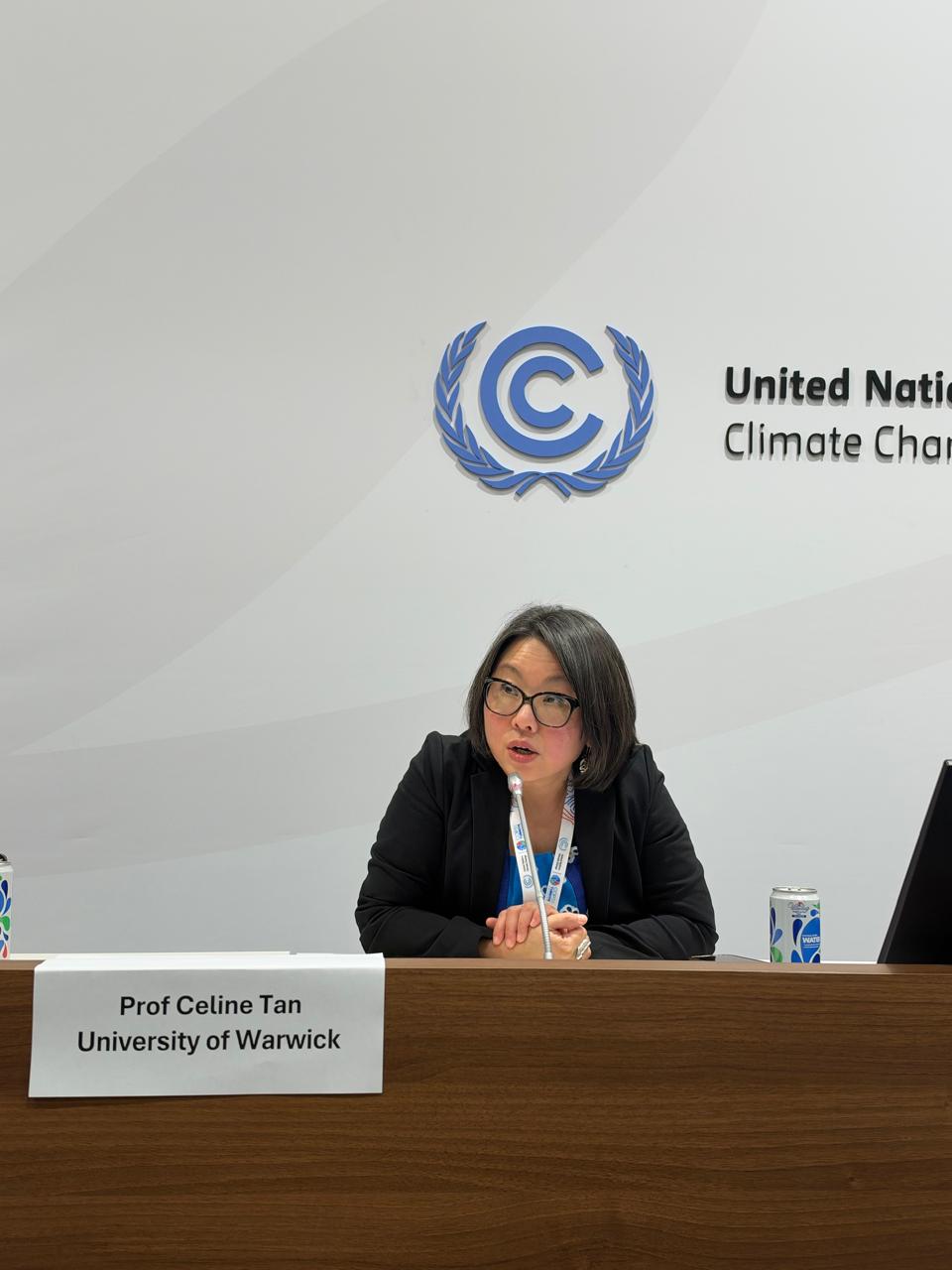
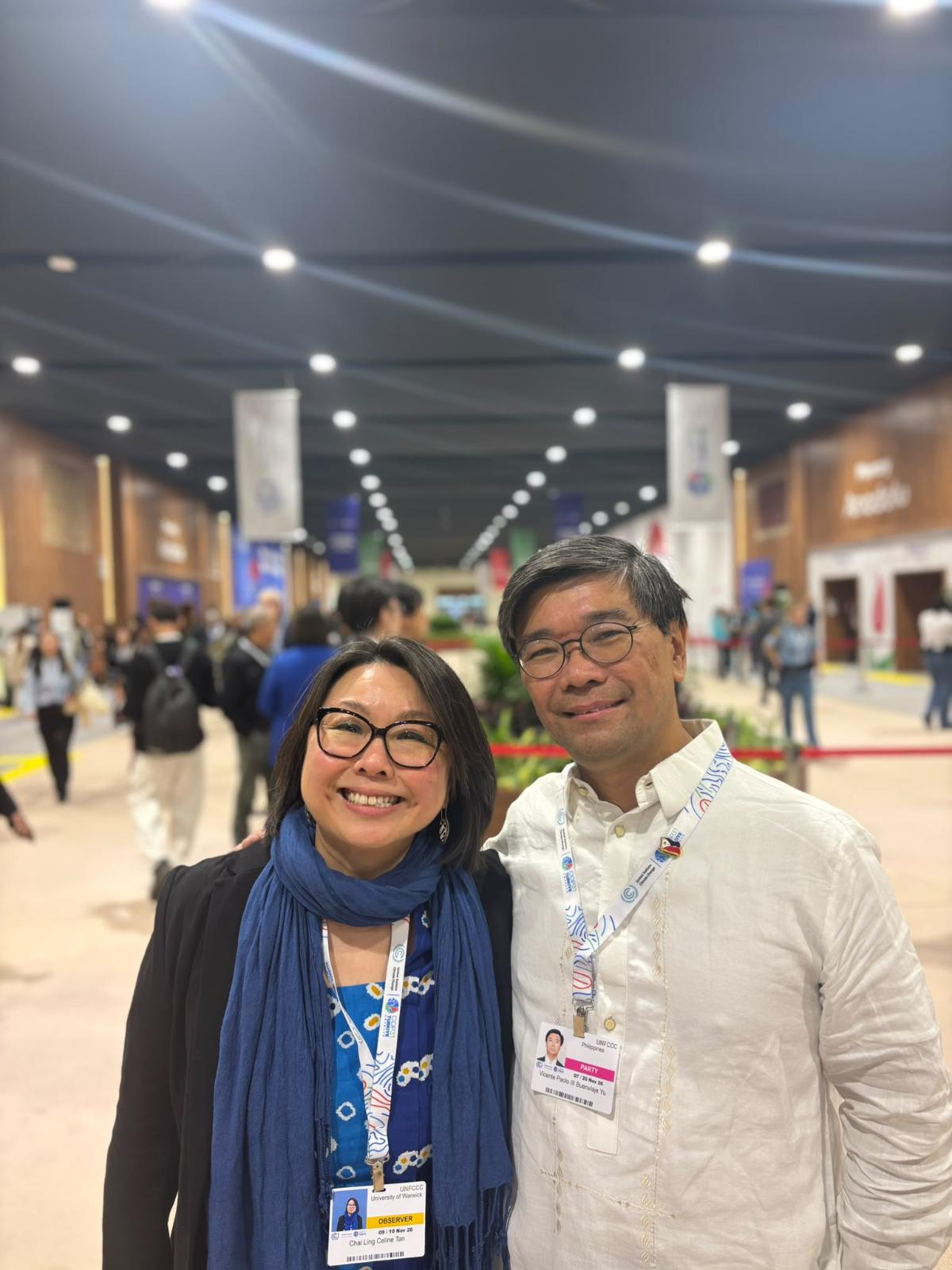
Professor Celine Tan
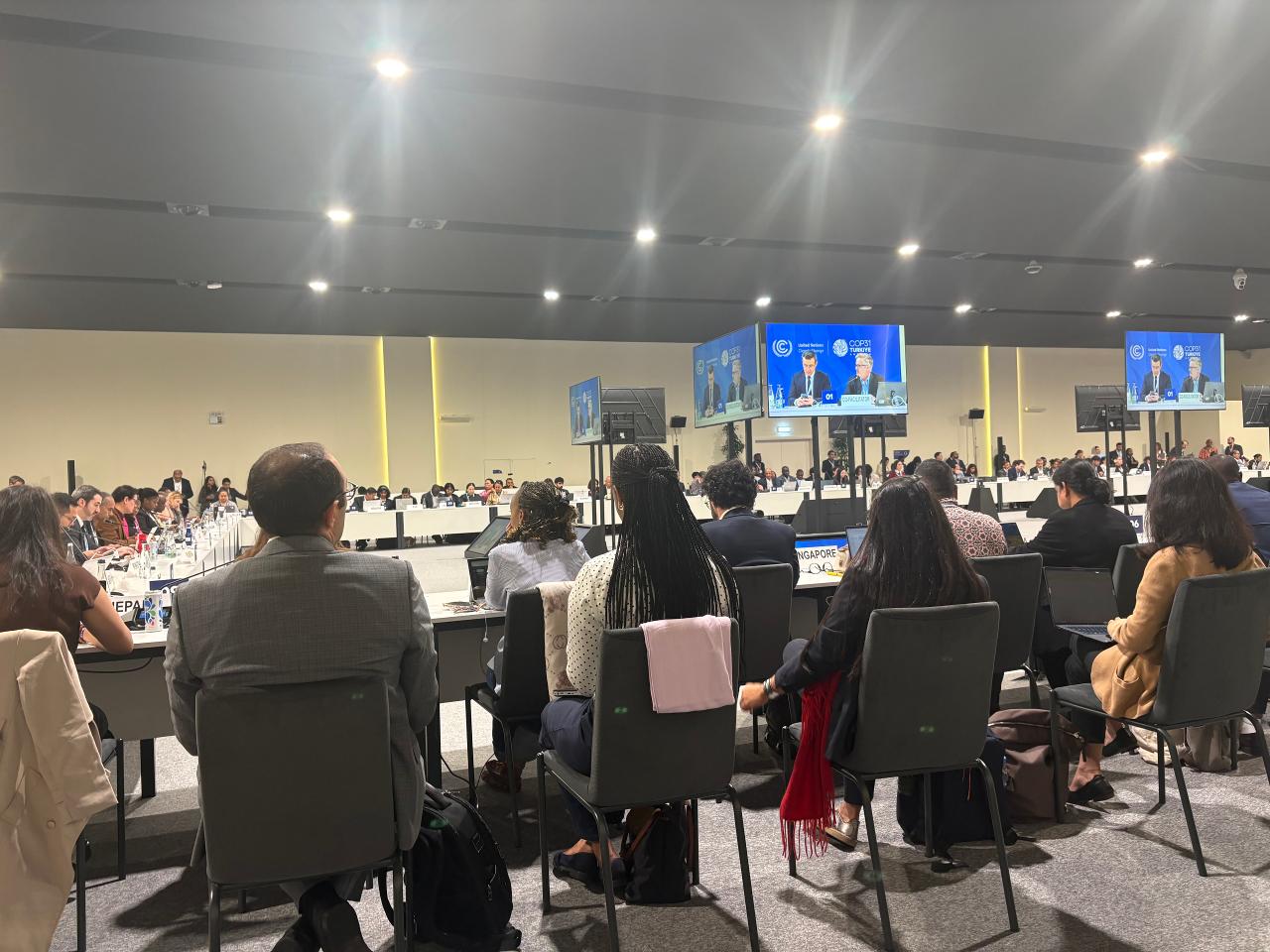
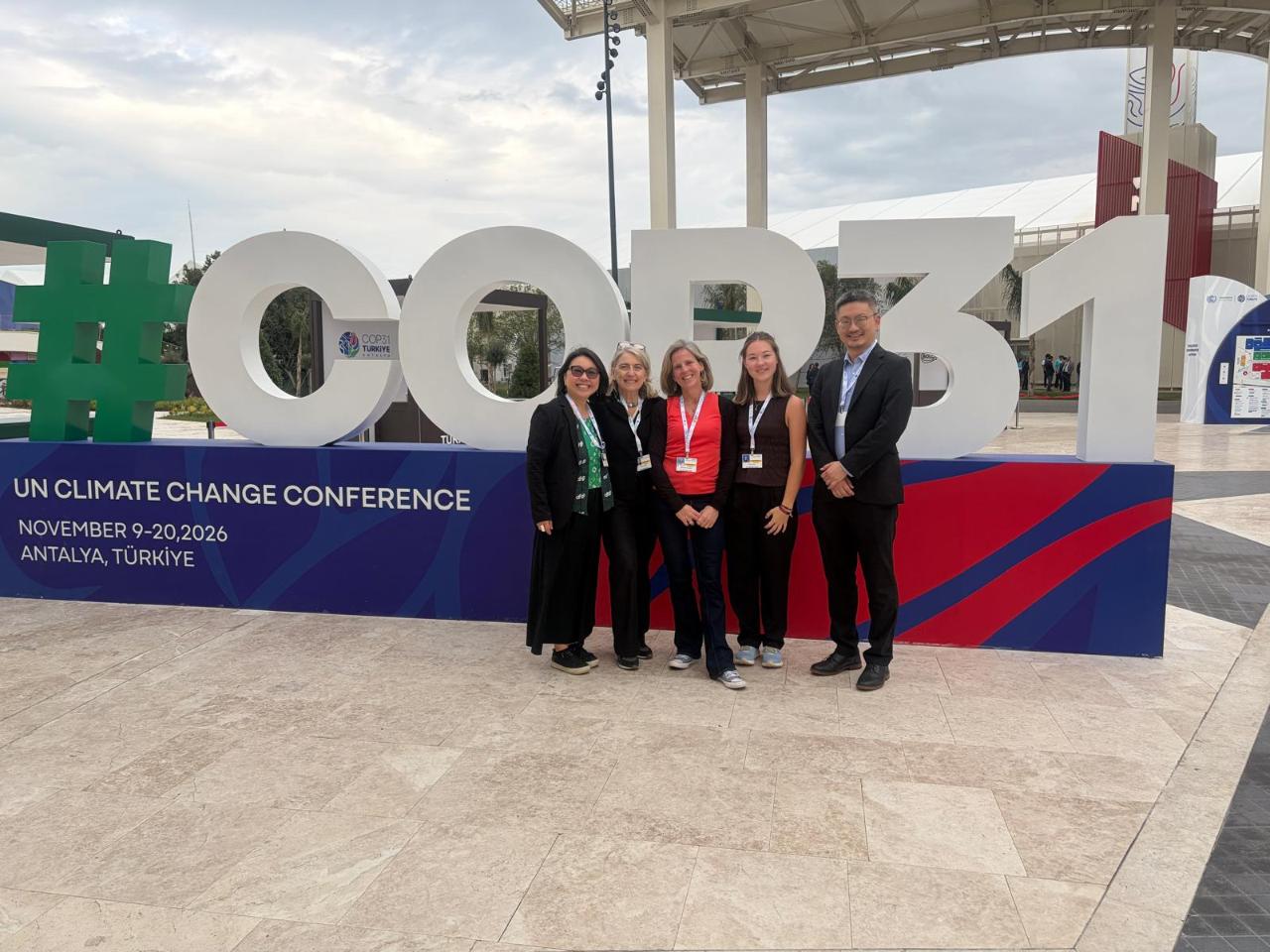
As the dust is settling over officially the longest COP ever and a closing plenary that spread out over 30 hours and three days with multiple suspensions, last minute consensus-building and high drama walkouts, it’s a wrap from the University of Warwick team.
Whatever your perspectives and positions are regarding the outcomes of COP (I certainly have mine having sat through the long hours of the closing plenary and the negotiations beforehand and this will be the subject of a separate longer piece outside this blog), the question remains as to what the purpose of COPs are and what are our roles as ‘observers’ in this process of international lawmaking.
As I have discussed in my dispatches of Monday, 19 November (‘An Ode to COP Negotiators’) Friday, 13 November (‘Why Observer Badges Matter’), COPs are fundamentally multilateral law and policy making spaces. We are accredited to attend to observe proceedings as non-governmental stakeholders to the process. Attending these negotiations are a privilege and a responsibility.
We may come to different interpretations as to the observed proceedings and the outcomes of COP31 – and believe me there are disagreements even within our delegation – the important thing to remember is the preservation of the inclusive, transparent and participatory multilateral space that we have the opportunity to engage in. This open space is not something we should take for granted because it is not mirrored in many other spaces of international law.
Certainly not within the international economic legal system where the main core of my expertise lies. Being able to witness law and policymaking in action is something we all should cherish, whether we like the outcomes or not. This openness and transparency is reinforced across the two weeks in the meeting rooms I attended where the co-facilitators of informal consultations, for example, would reiterate that the session is open to observers unless there are objections from parties. There have been none.
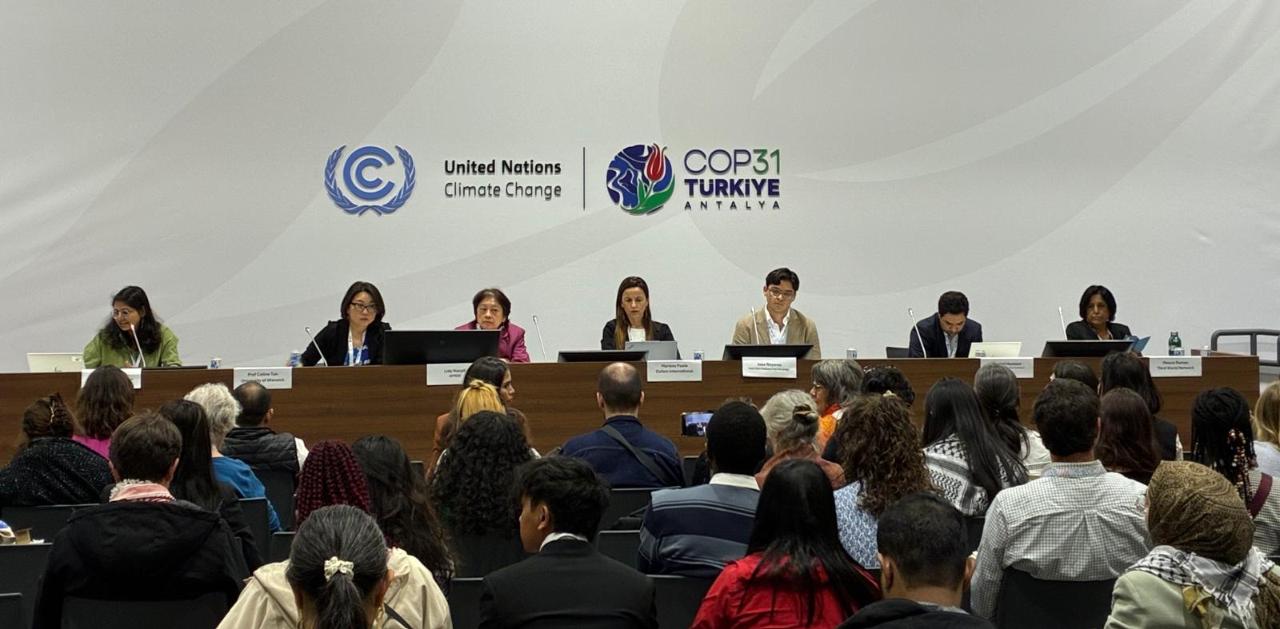
The reason we can say with some certainty how some parties behaved or not within negotiations is because there were witnesses to these behaviours and not based on conjecture. The opening and closing plenaries are also broadcast for public consumption so everyone can also see what transpired. I urge you to do so as an antidote to some of the mischaracterisation that is rampant post-COP31.
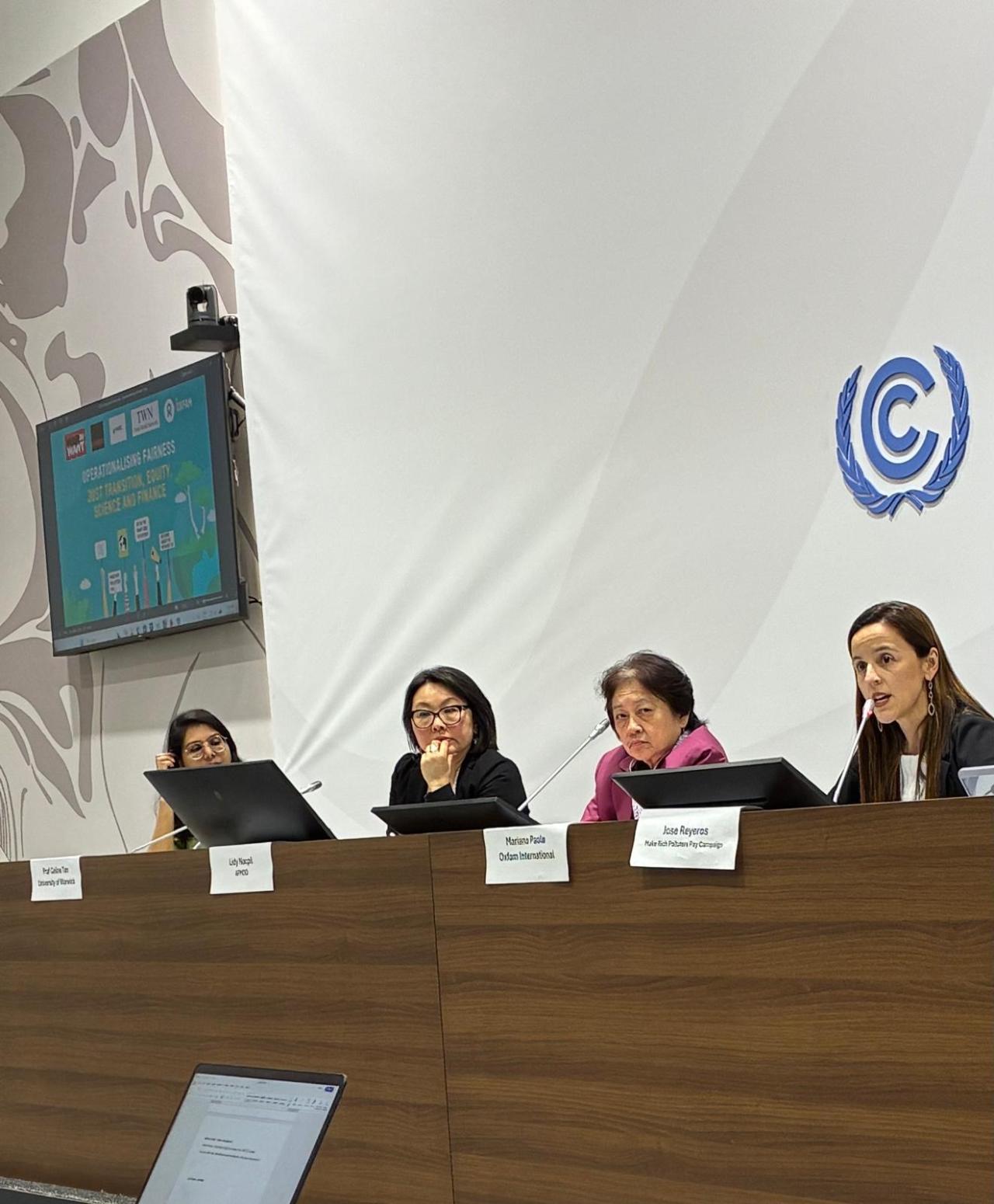
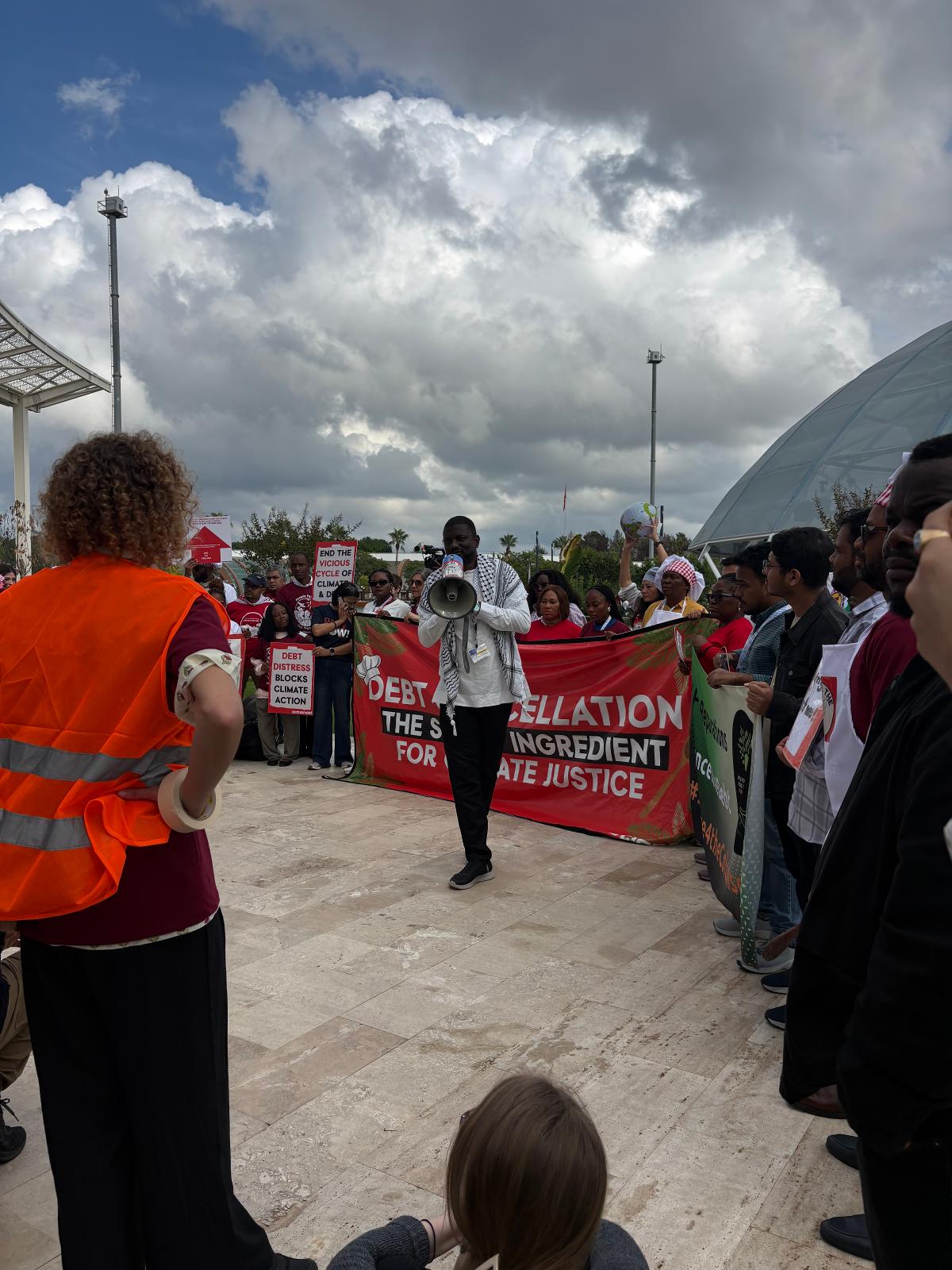
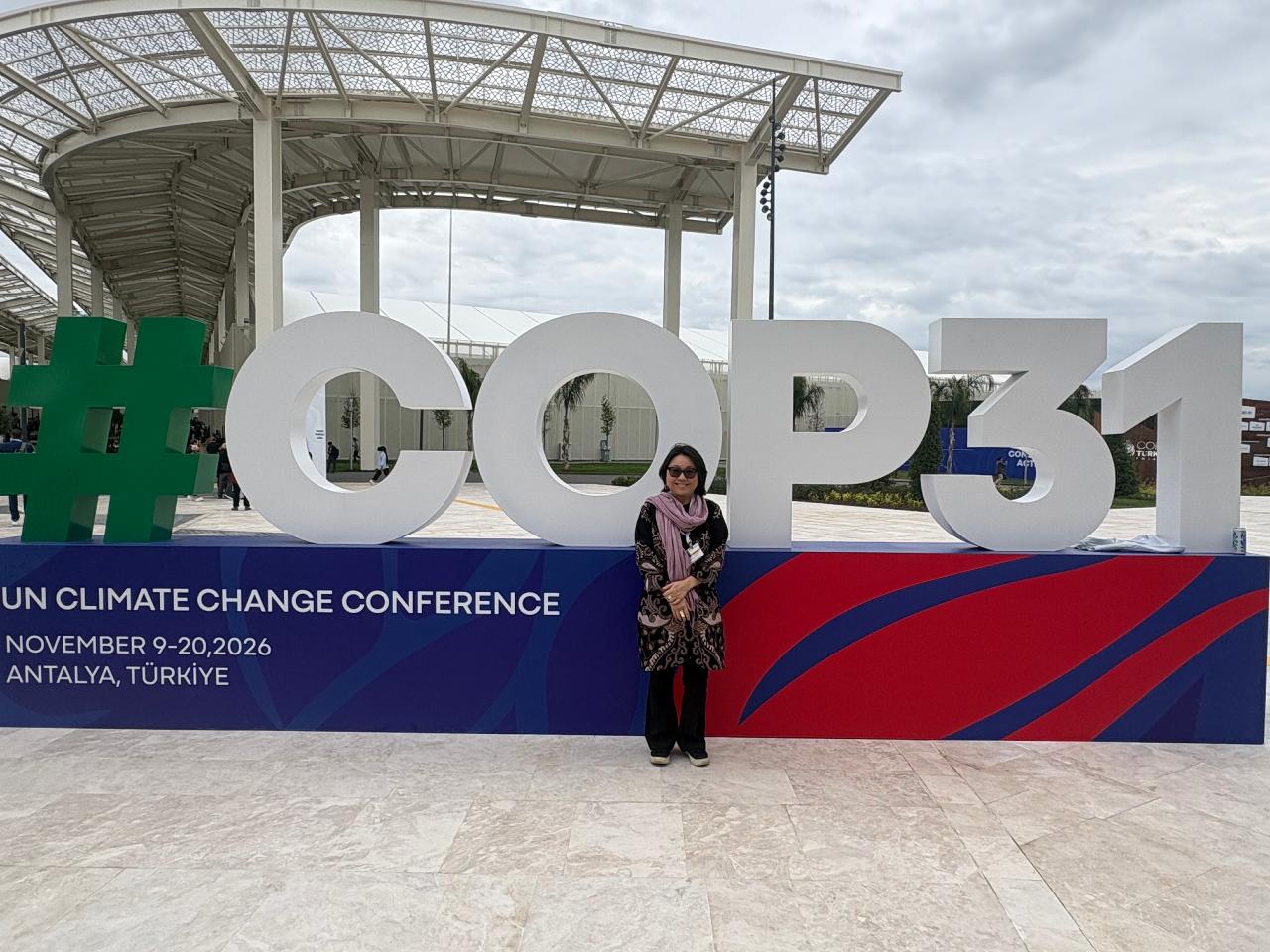
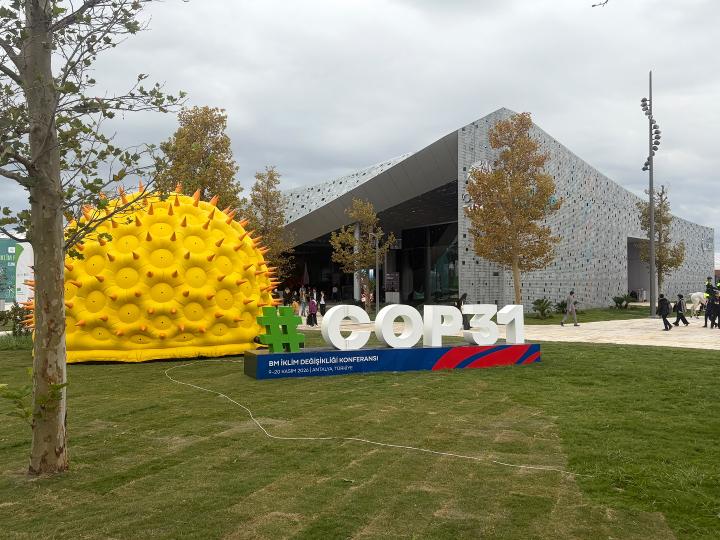
So, as the catering trucks pack up and the #COP31 signage is taken down, one has to reflect as academics what our roles are within the process. For me the value of engaging in COP is not the side events, the pavilions, the networking or collaboration (although that is all valuable), for me, the enriching part of being at COP physically and virtually is that of being an observer to history. It is rare to get insights into how international negotiations are carried out and to learn on the ground as it were.
This invaluable experience enriches our own research and teaching. I am a much better researcher and lecturer of international law having had front row seats to the operations of international lawmaking. We take advantage of our access to COP also to make connections with governments, civil society, business, academia and intergovernmental organisations to enrich our own understanding of the process and to ensure our research is relevant to policymakers, advocates, and industry.
Should we all be at COP summits? As someone who led the Warwick delegation to Antalya, yes for all the reasons I describe above but we may want to reflect on the purpose of being there, to question the emissions generated from travel, the waste (there is a ton of waste generated) and the sheer financial and logistical pressure on host countries (alongside some prestige).
And we have to ask ourselves, what did COP31 achieve for the global community and whether we achieved any semblance of climate and redistributive justice in the process. And these are the questions and issues we need to keep asking as we move to COP32 and reflect on our contributions to this journey.
However, as many delegates said at the closing plenary, we must always continue to commit to the process of multilateralism and to international cooperation. In our current world, we need international law more than ever, with its shortcomings but also with its great potential for uniting us as a global community.
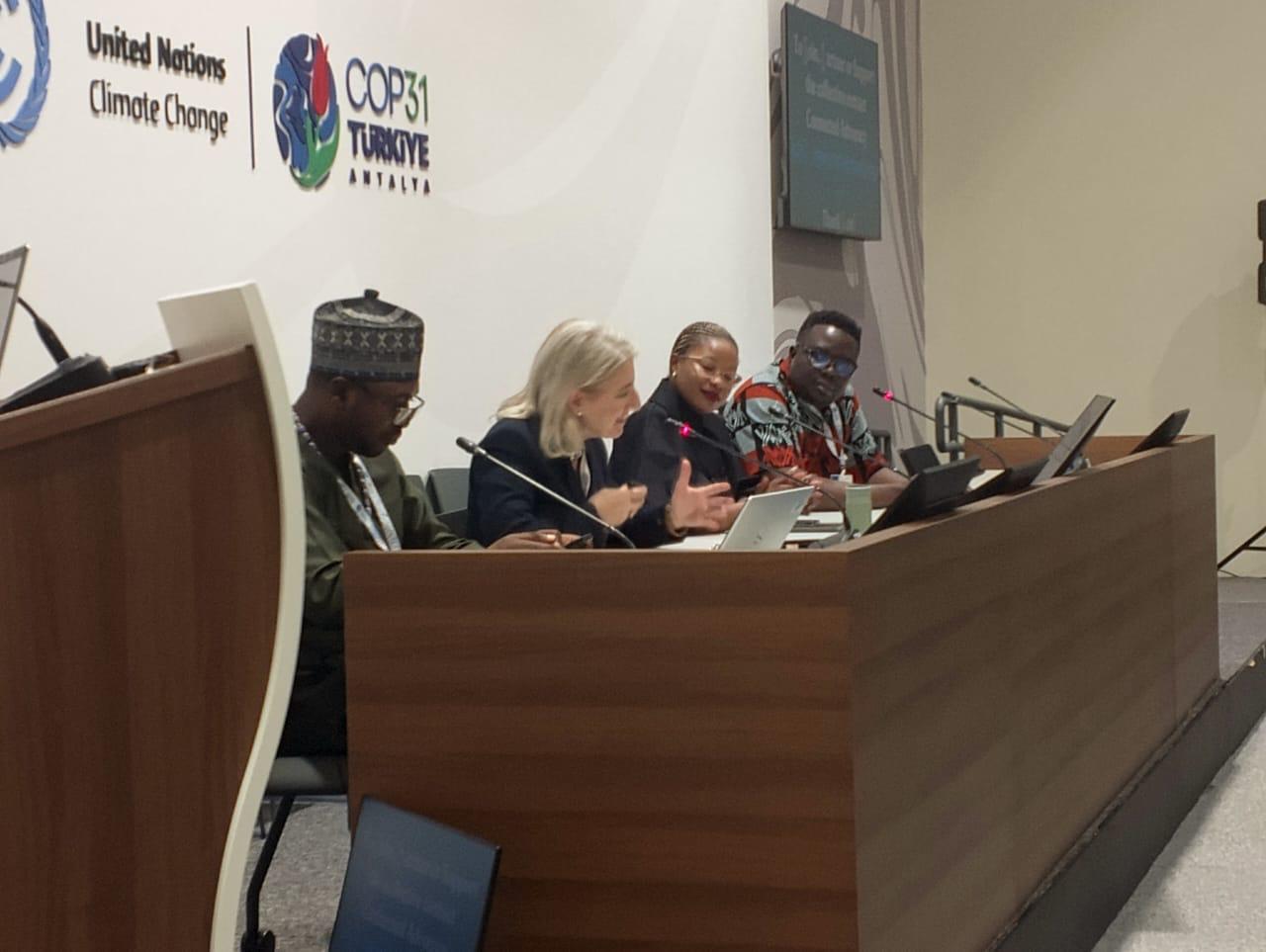
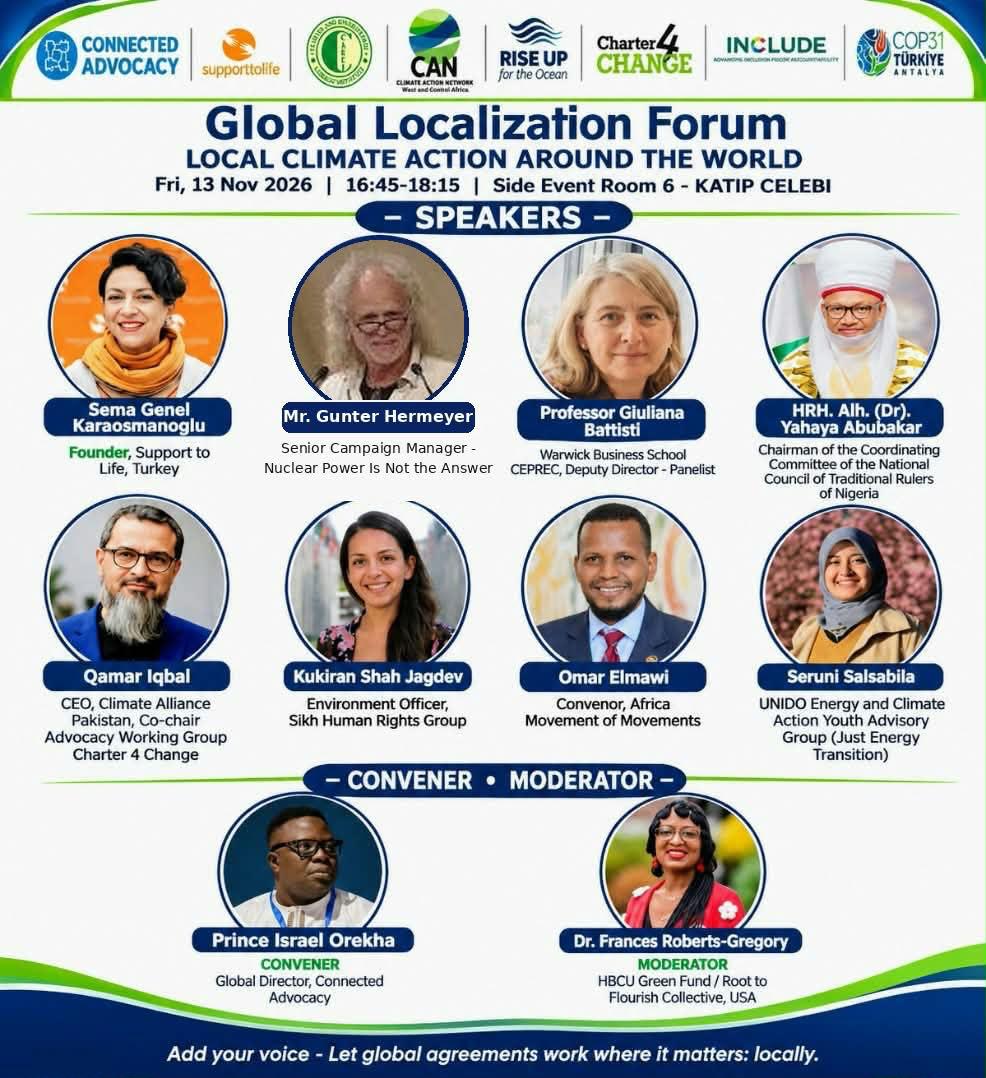
A huge thanks to the University of Warwick for facilitating our participation at COP31, to Professor Stephanie Panichelli-Batalla for co-leading this team and process with me; to our colleagues, Dr Tom Ritchie, Professor Giuliana Battisti, Dr Feng Mao, Dewan Hafiz Nabil, Maddison Willetts, Beth Stephens, Millie Cater and Mithuna Mulloth for all your contributions on the ground at COP31 and Professor Christine Schwöbel-Patel, Dr Mücahit Özden, Dr Jess Savage, Stephanie Lee You Voon and Anaya Nabeel for participating online. And gratitude to the wonderful people behind the scenes, Hopi Sen, Evelin Sanderson-Nichols and the Environmental Sustainability team.
It’s a wrap until next year!
What My First COP Taught Me
Beth Stephens
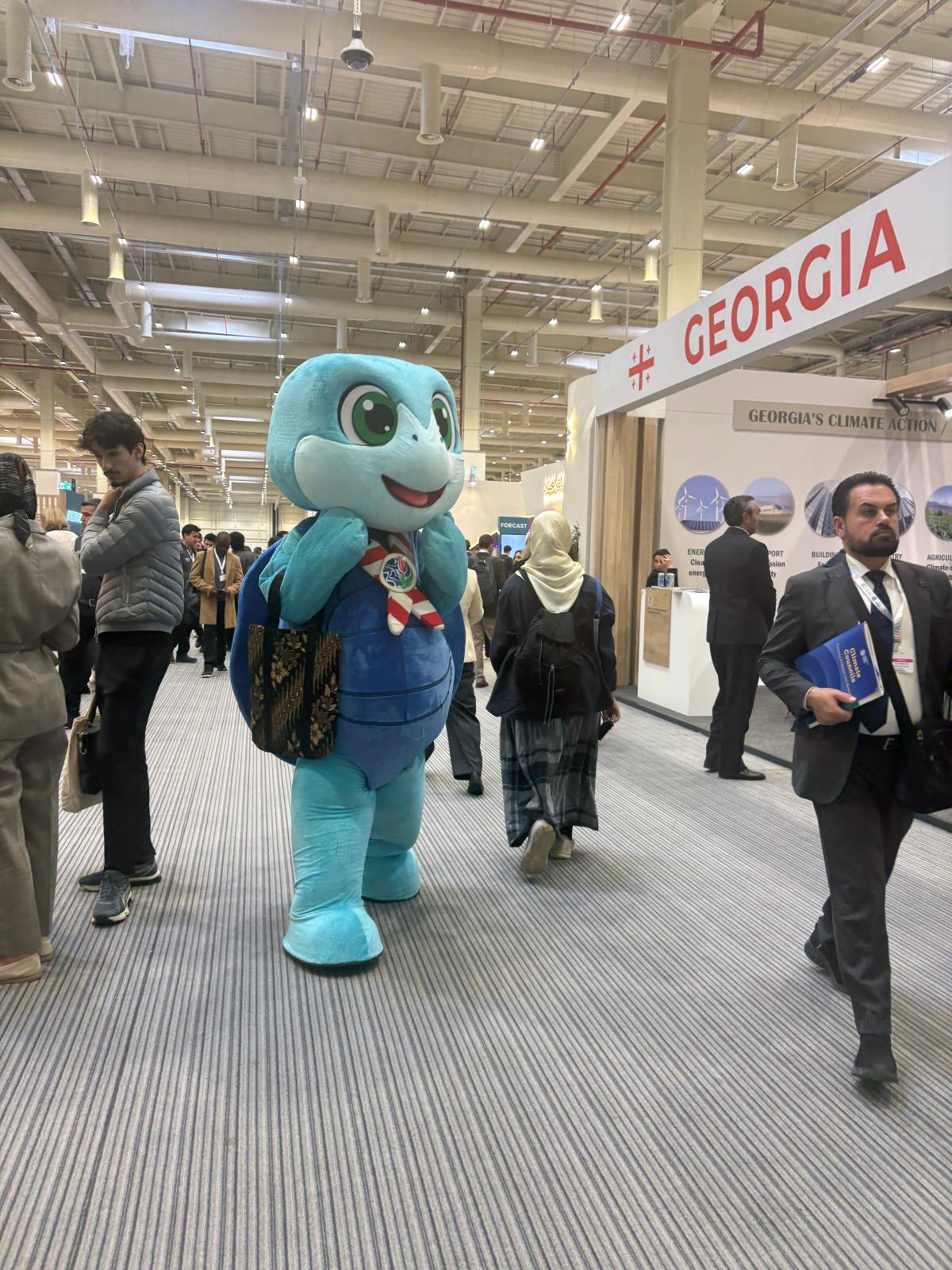
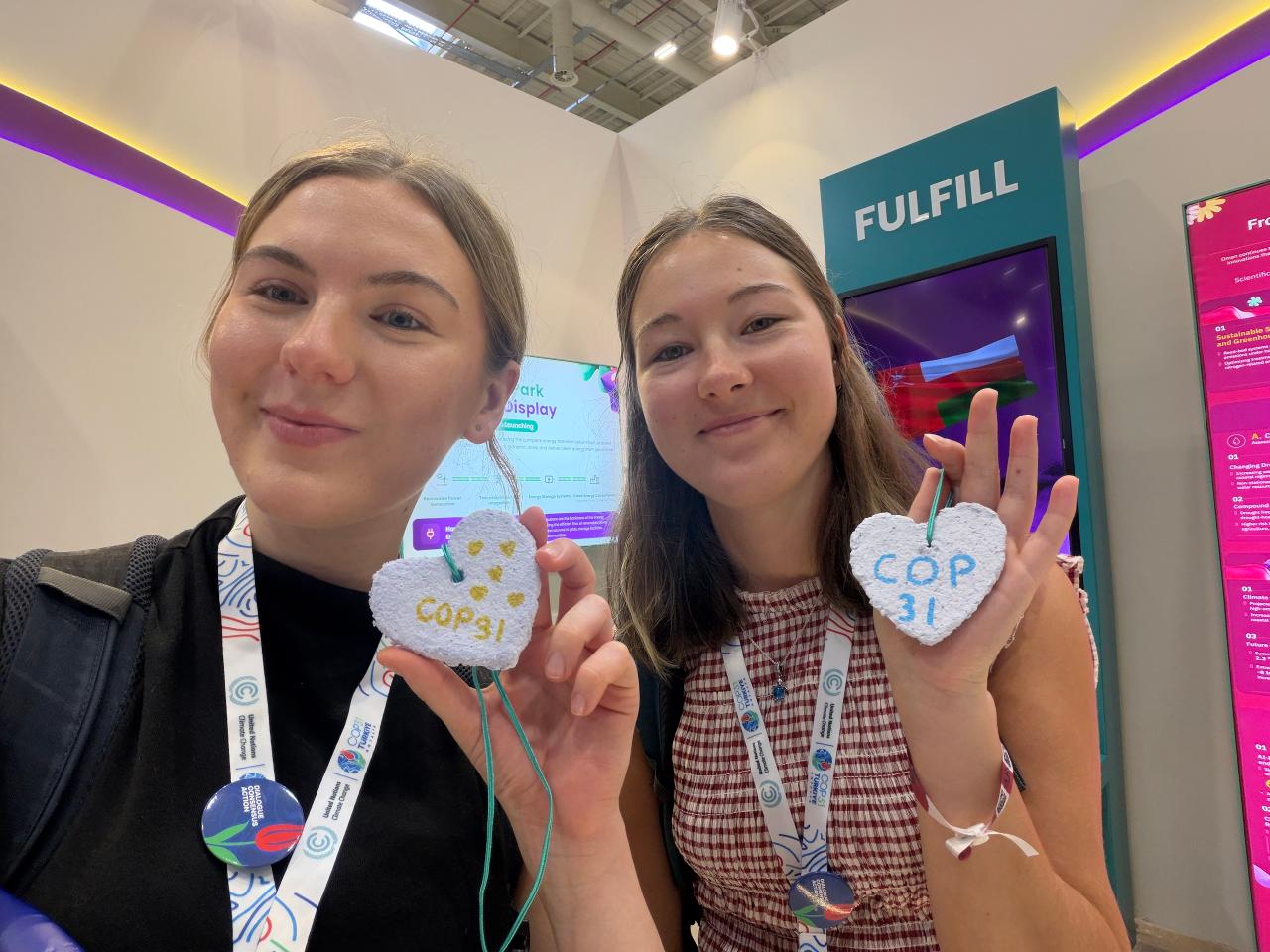
When I first arrived at COP, I turned to Stephanie and said it looked like “Disneyland for adults”. Shuttle buses were bringing delegates into the venue, queues stretched outside security and thousands of people from across the world moved around, speaking different languages. The scale was unlike anything I had experienced before. From the moment you enter, there is a sense that COP is somewhere important, where decisions shaping the future of climate policy are being actively discussed.
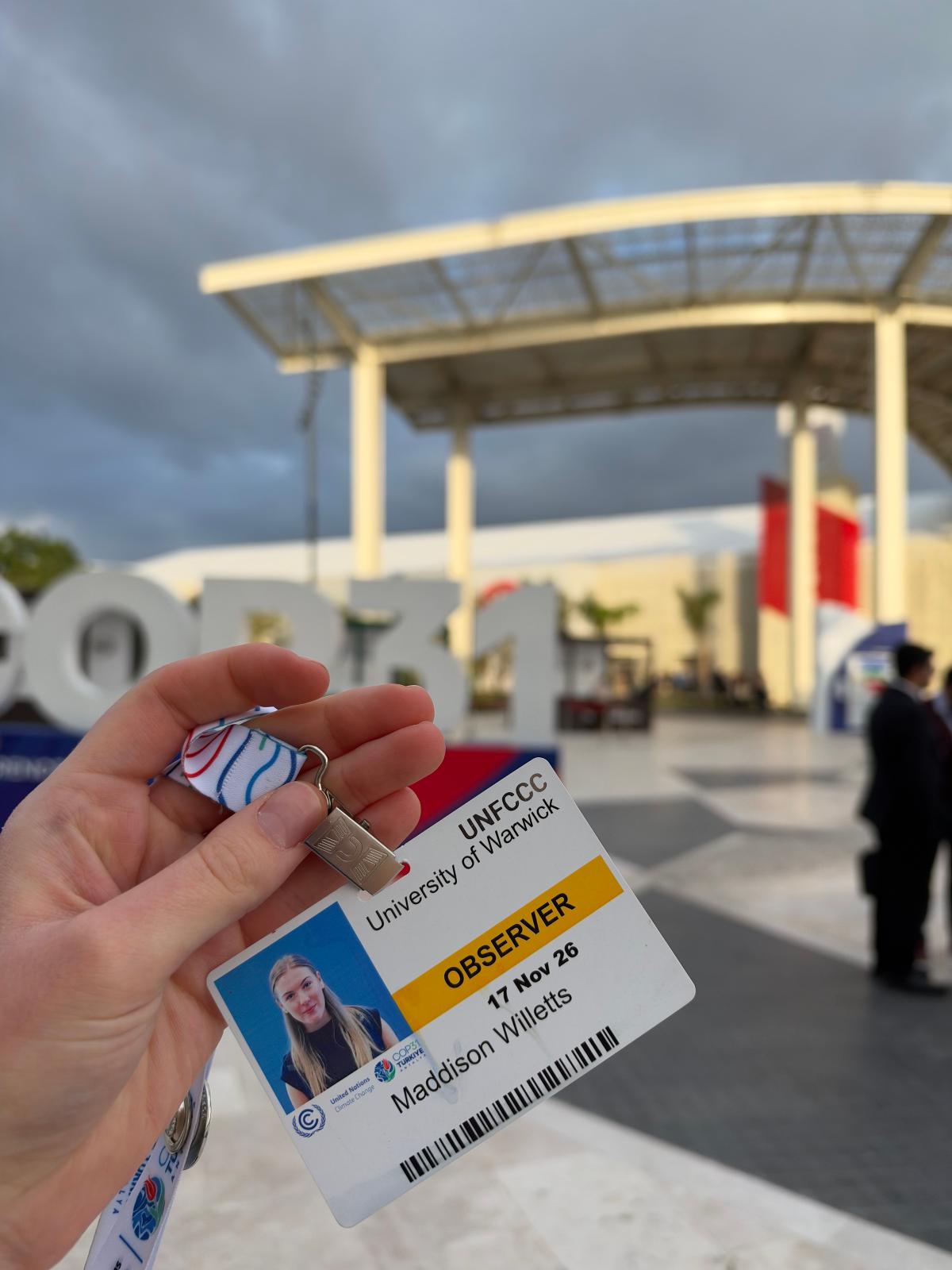
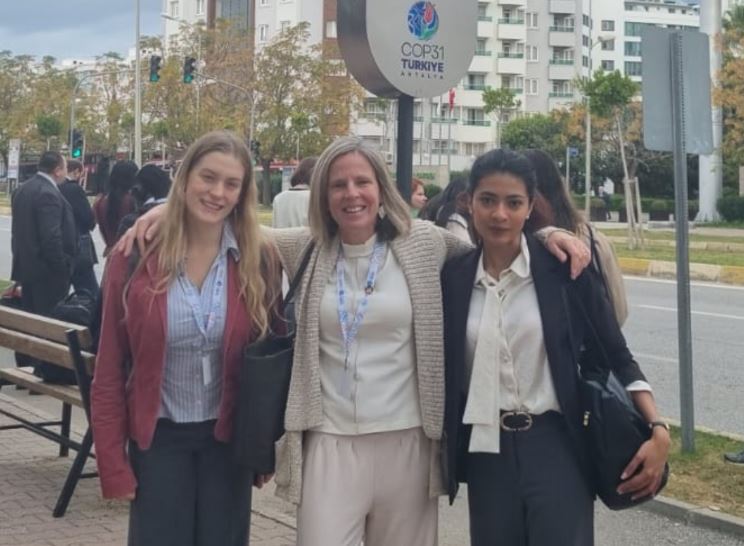
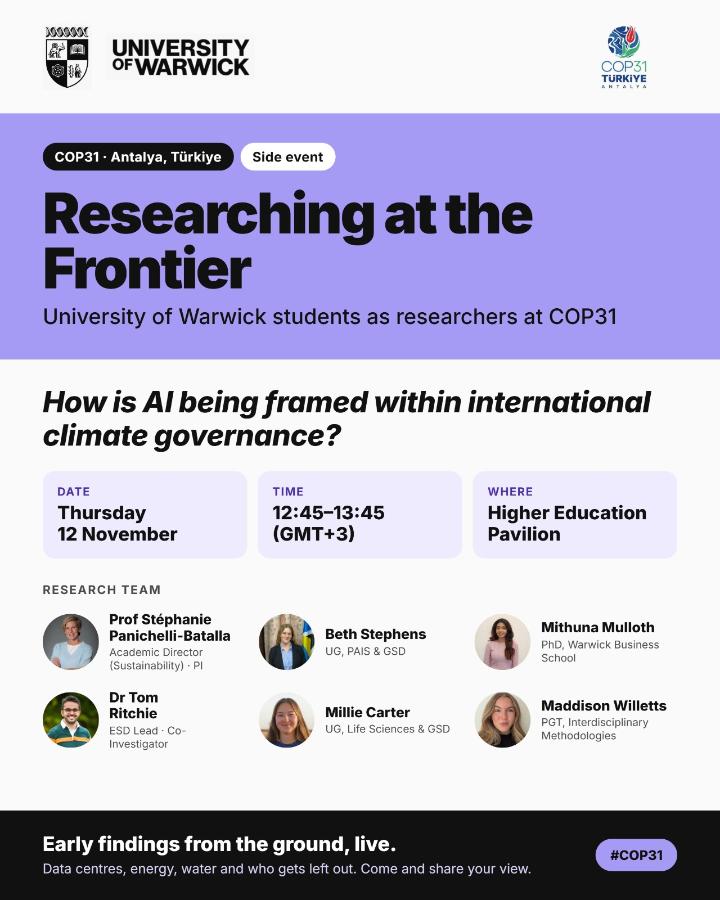
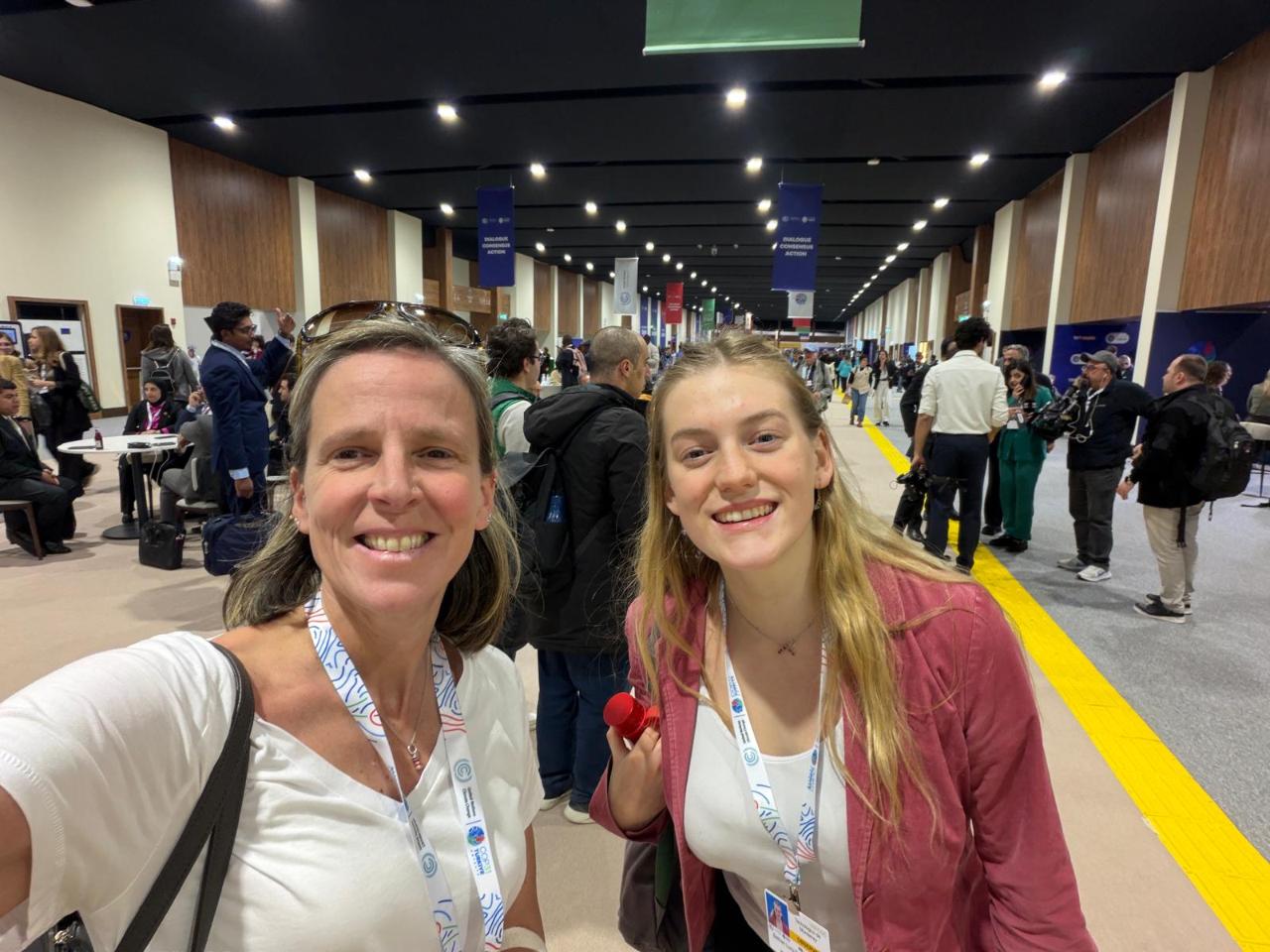
This year, the University sent student researchers to COP for the first time to conduct qualitative research into how AI is framed in multilateral decision-making. Within the Warwick delegation, I was fortunate enough to have access to the Blue Zone for four consecutive days. As an undergraduate researcher with a yellow observer badge, I had the opportunity to speak to people from a range of backgrounds, including international policymakers, venture capitalists, regulators, community advocates and academics. Almost every conversation became an opportunity to ask how someone understood AI and what role they thought it might play in their sector, so I quickly learnt how to explain our research in the space of a few seconds. I was surprised by how willing people were to engage. Despite the prestige of many attendees, people were receptive to questions, even in the middle of a busy conference schedule, and often went out of their way to make time to engage.
One of the things that struck me most was the calibre of people you could encounter within a very short space of time. I could leave one conversation and find myself listening to a panel involving people responsible for managing funds and assets worth trillions. I attended a keynote with the Australian Prime Minister and unexpectedly saw Gavin Newsom and Tim Walz leaving a panel at the American pavilion. The opportunity to move between conversations involving people working at such different levels of influence was unlike anything I had experienced before.
At the same time, the atmosphere was not always quite what I expected. Some panels with very senior speakers attracted audiences of around twenty people, with perhaps half the seats filled. People would often be on their phones, messaging contacts or arranging their next meeting. It revealed how much of the conference happens outside the formal programme, too. At COP, almost any moment could become a networking opportunity, whether on the shuttle bus, in the queue for security or simply sitting next to someone during a panel.
Working on our research also gave me a particular way of navigating the conference. AI is increasingly relevant to almost every industry represented at COP, but the way people understood its role varied considerably. I was interested in the differences between conversations with people working in climate science, finance, regulation and community advocacy. The same technology could be discussed as an opportunity for innovation, a regulatory challenge or a source of further inequality. I found myself thinking about why some of the more critical perspectives I encountered in individual conversations were less visible in the formal discussions taking place on stage.
Attending during the first week, which coincided with the Leaders’ Summit and major announcements, also gave me an impression of just how difficult it is to follow everything happening at COP. The conference is so large that you could spend an entire week following your own interests without engaging with much of the wider conversation. I often abandoned my planned schedule and wandered between talks, which led to some of the most interesting moments of the four days.
One question I was asked during the conference has stayed with me. Someone asked how much I had paid to attend COP. My attendance had been facilitated through the University, so it was not something I had personally had to arrange or fund. Until then I had not given much thought to how I had come to be there. The question made me reflect on how access to these spaces often depends on institutional support, resources and opportunities that are not available to everyone.
I felt incredibly fortunate to have spent four days in the Blue Zone, but the question also made me think about who gets to attend, and whose voices are missing from these discussions, particularly when so many people are directly affected by the decisions being made.
When Climate Negotiations Became Personal
Anaya Bari
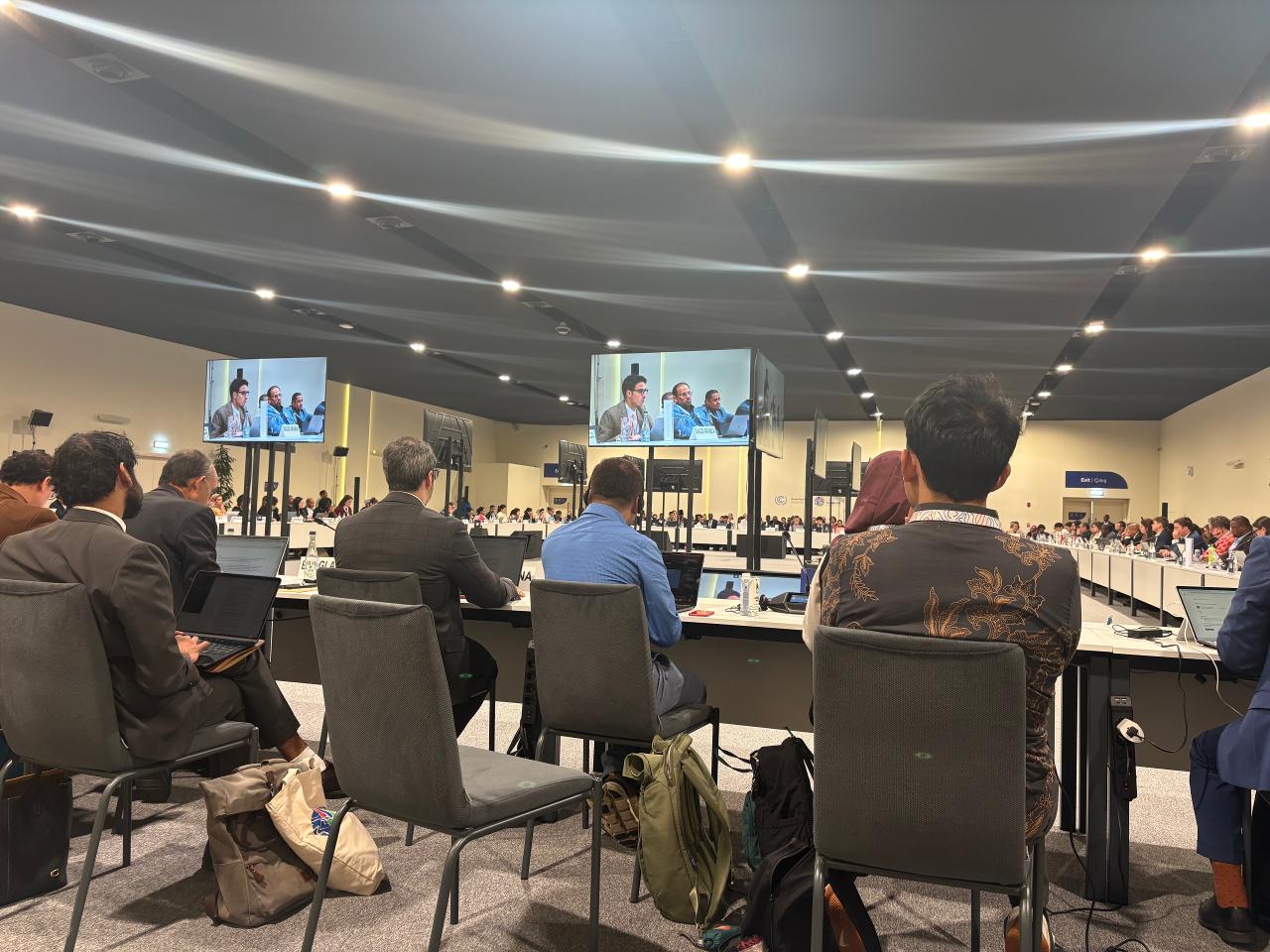
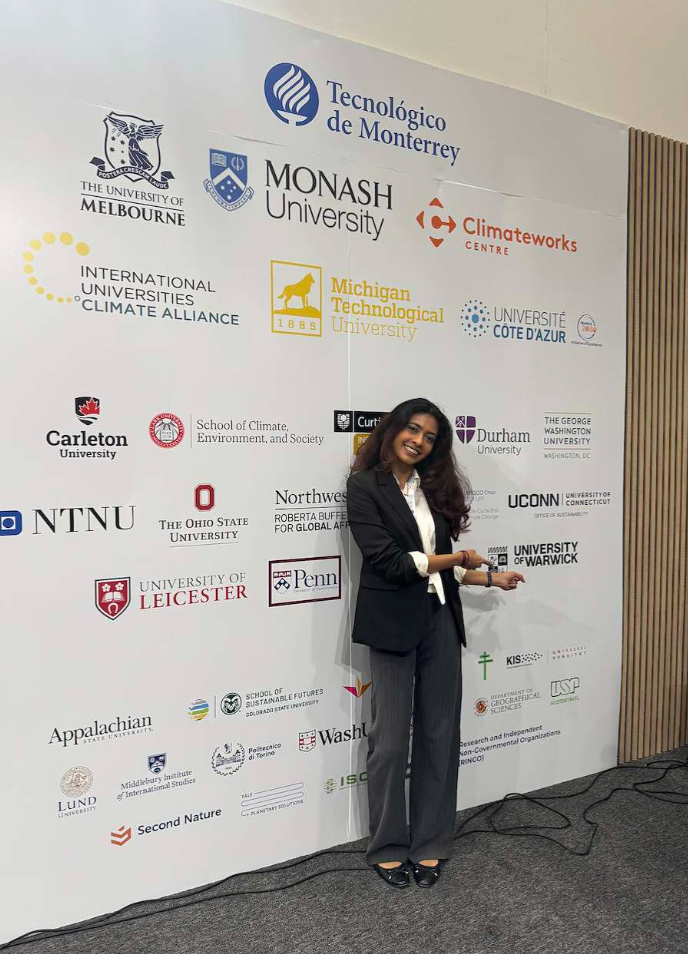
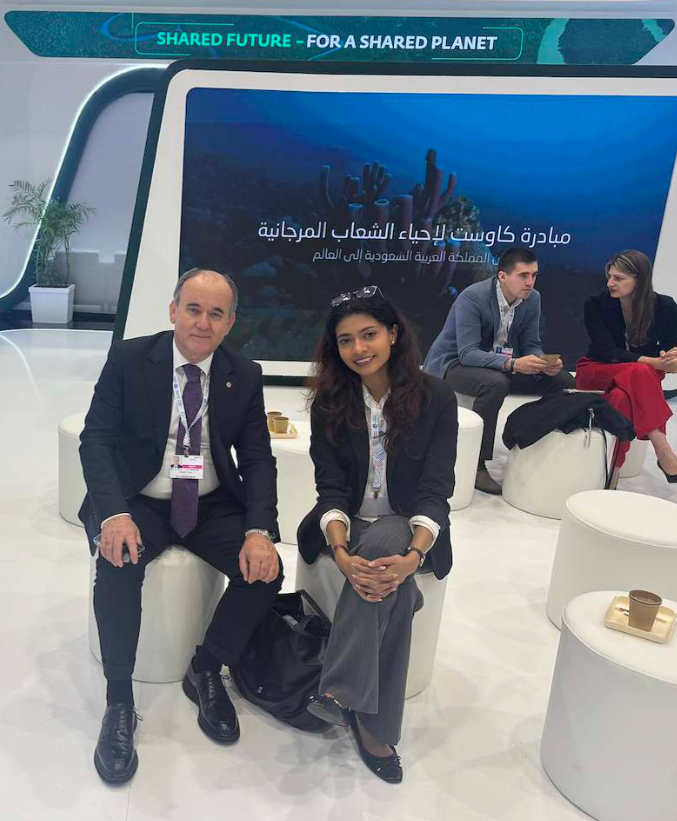
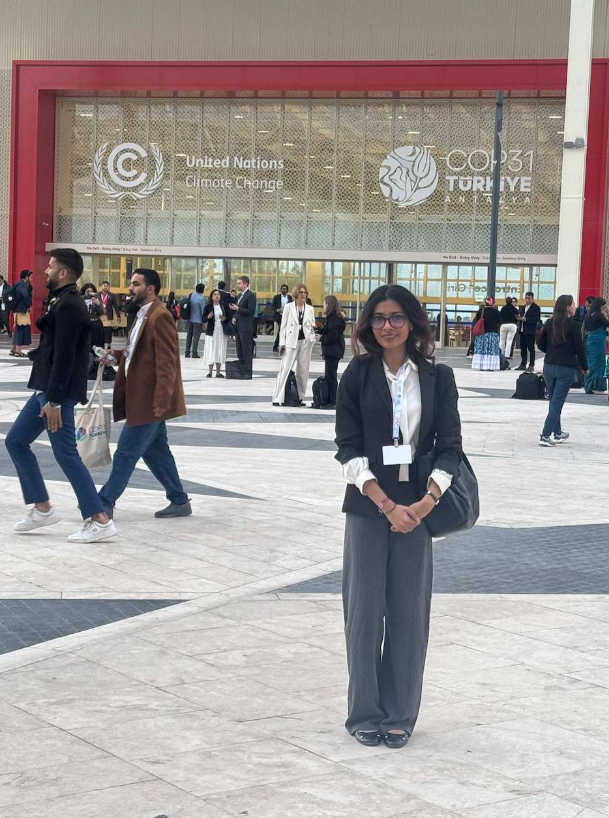
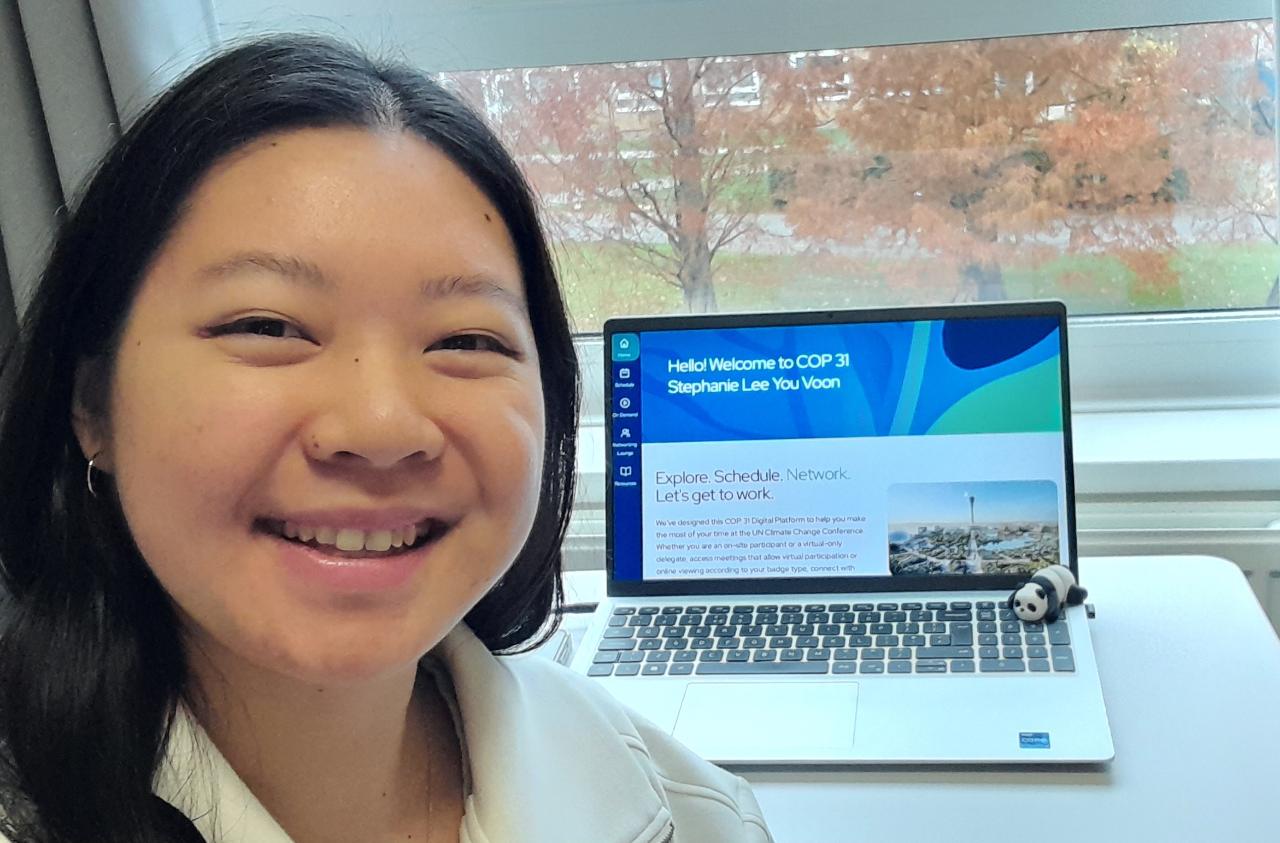
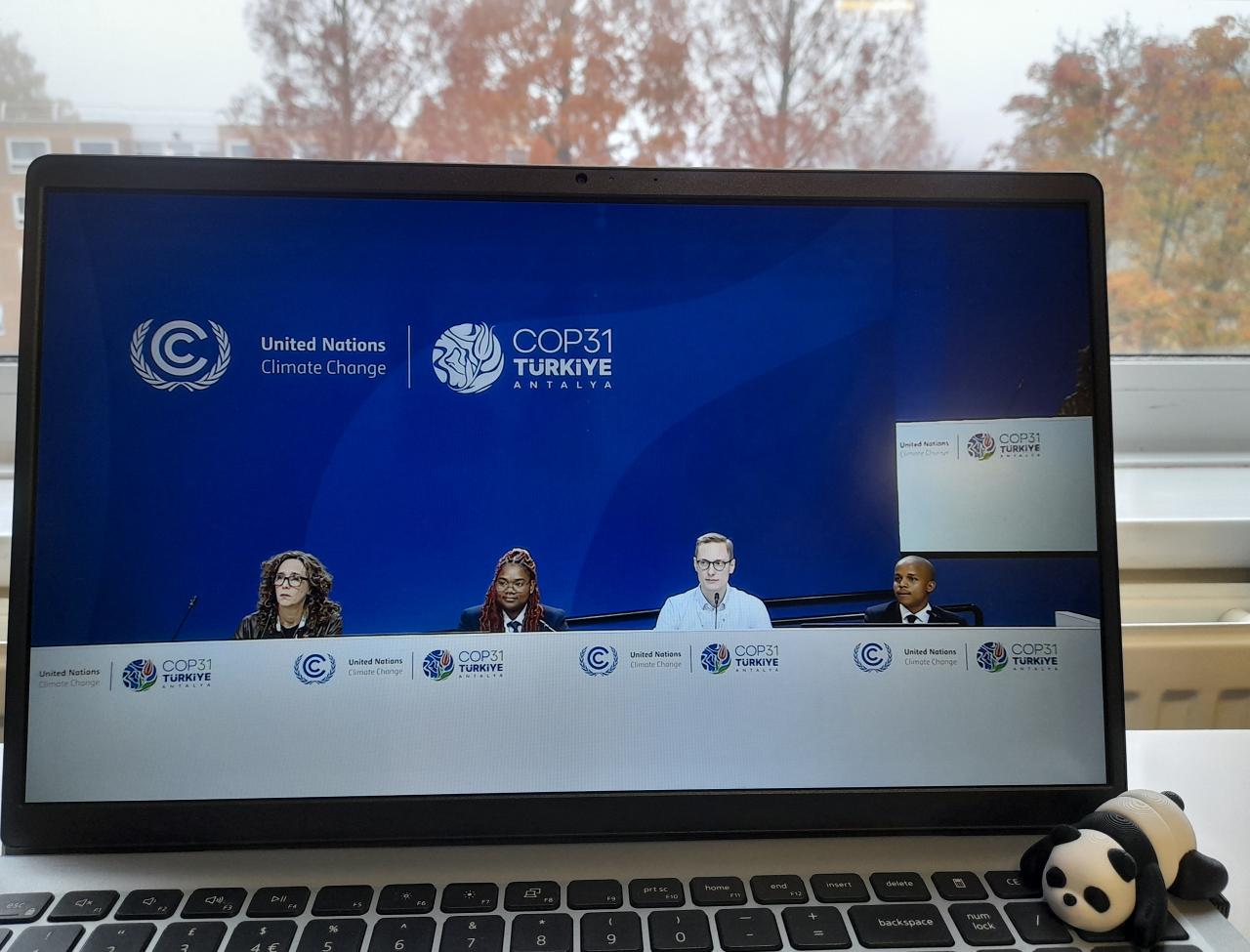
COP31 was my first COP and even though I had an online badge I felt more involved than ever before and I think the biggest reason for that was the pre-COP sessions we had at Warwick. Vincent Yu walked us through the procedures and people who had been to COPs before shared their own stories from the rooms.
One of these stories stayed with me. Vincent spoke about the Pakistani delegations' support for the Loss and Damage fund and that it wouldn’t have been possible without us. As a Pakistani that felt very personal. It made a process that can seem distant feel like something my own country had helped shape. However, it also made the ending land harder. After talks ran well past their deadline, the COP ended without an agreement. It would be easy to read that as a reason to give up but I felt the opposite. In moments like this it matters even more to show up in these spaces and keep working on climate solutions.
I came away from COP31 even more motivated to contribute through my own studies and research, and I hope to be there in person one day. Being part of a COP had always been a dream of mine, and I am very grateful to Warwick for this opportunity.
Sustainability Matters Now - The Pavilion Sessions Podcast
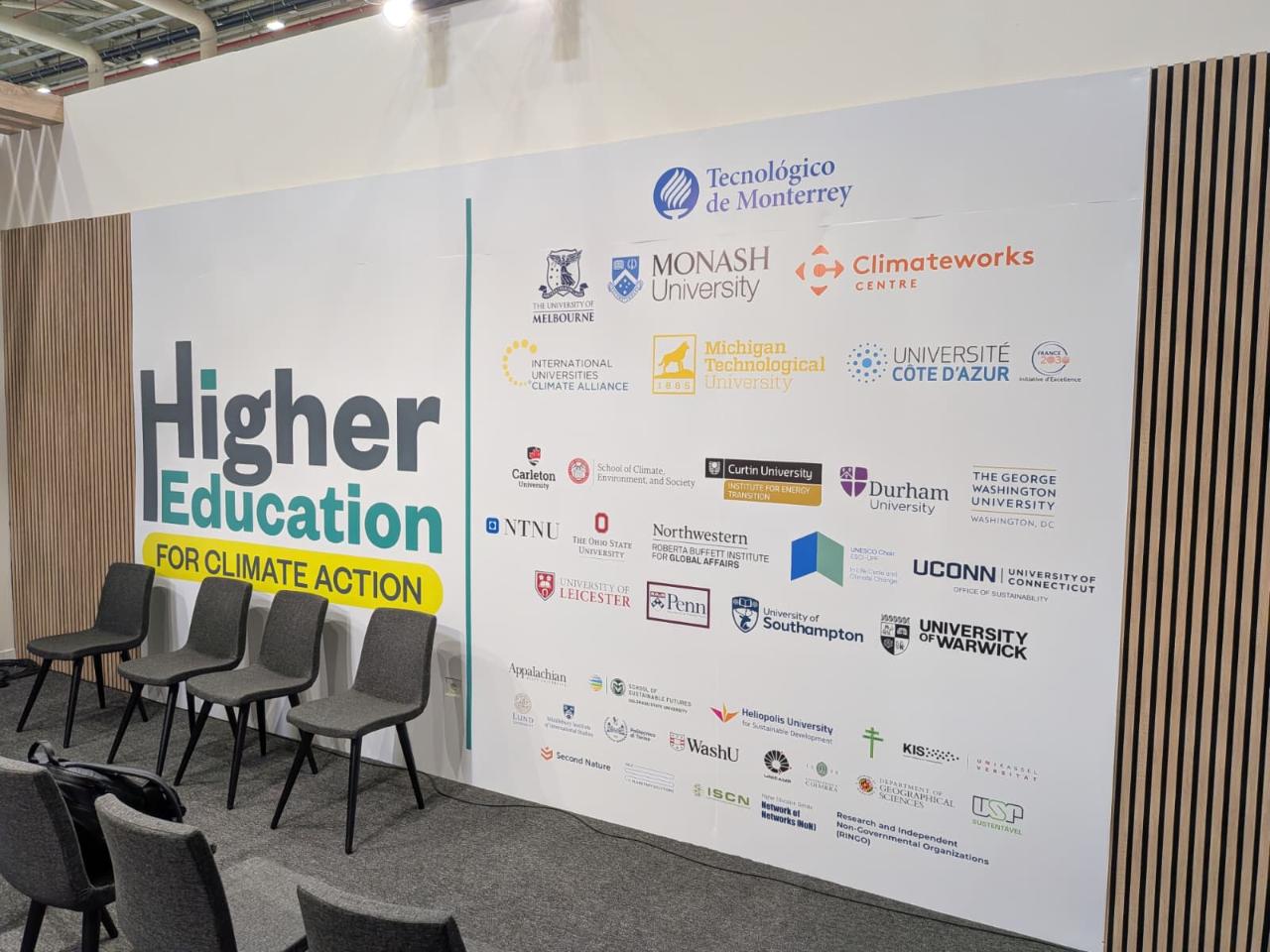
Produced in partnership with the Higher Education for Climate Action Pavilion and Environmental Sustainability at Warwick, the series brings together researchers, students and university leaders from around the world to explore the role of higher education in driving climate action at COP31.
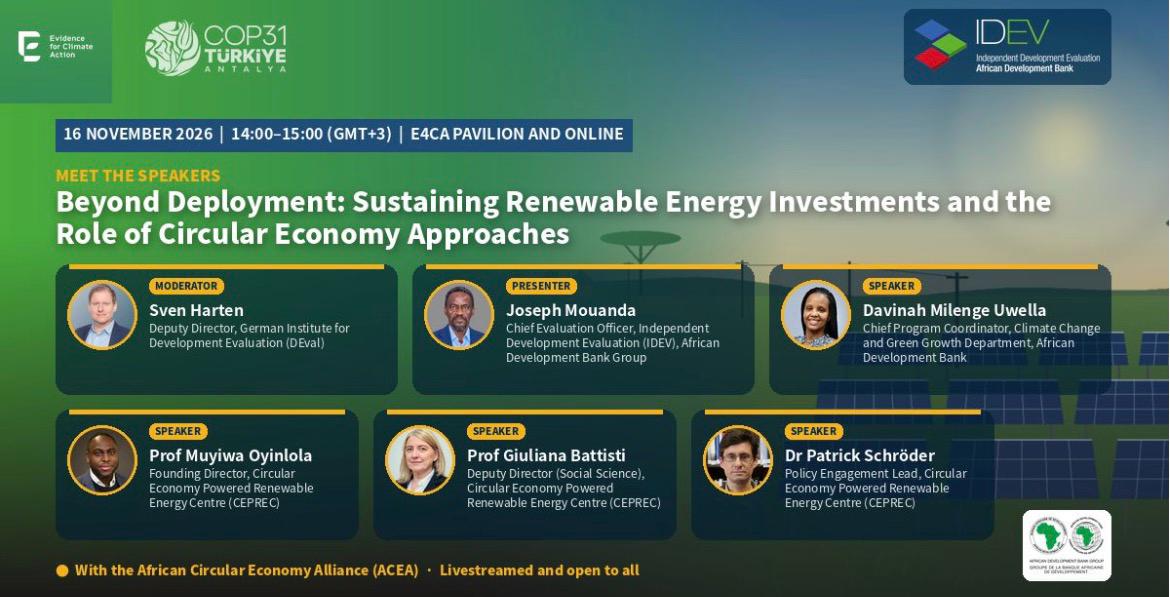
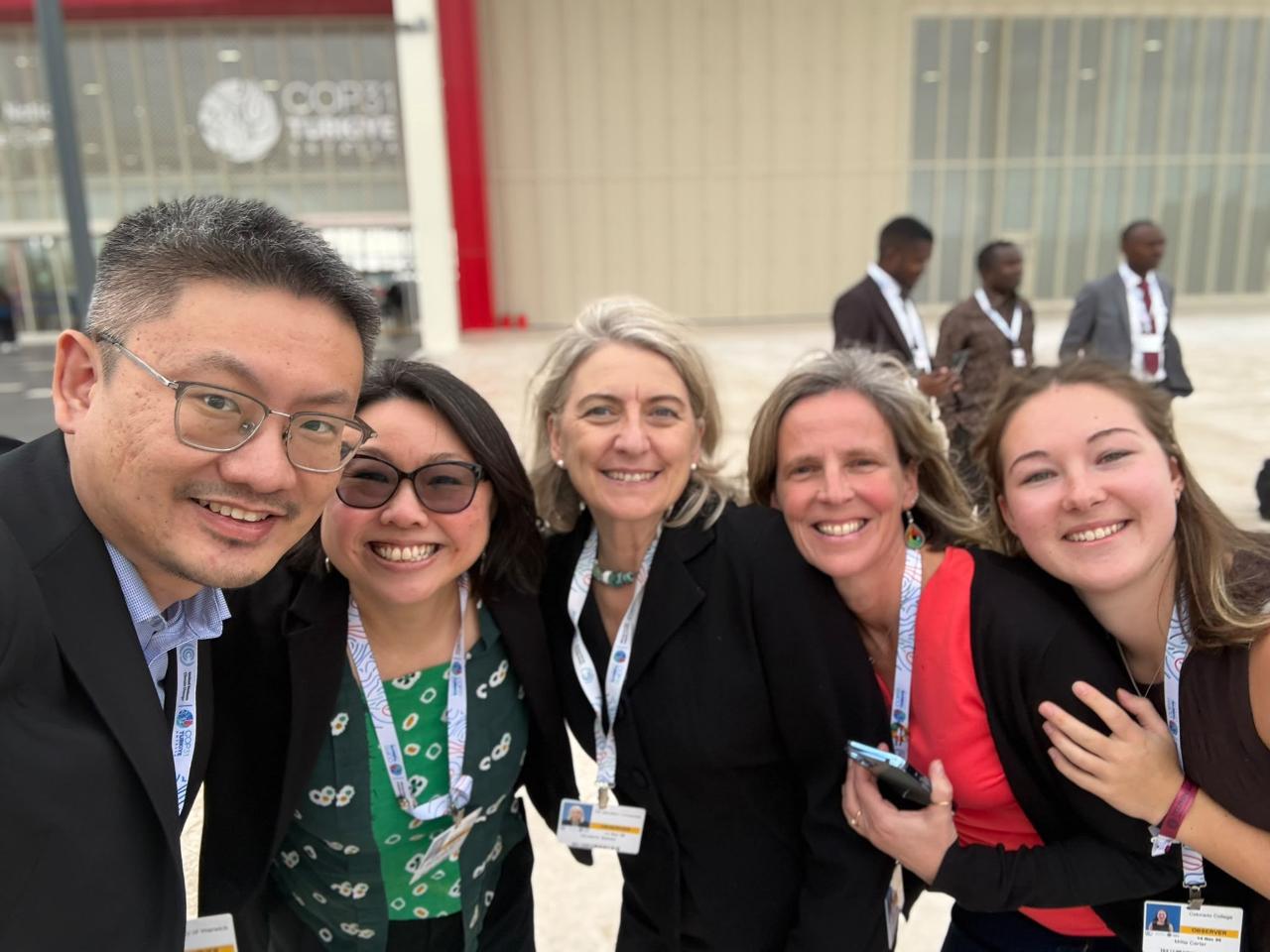
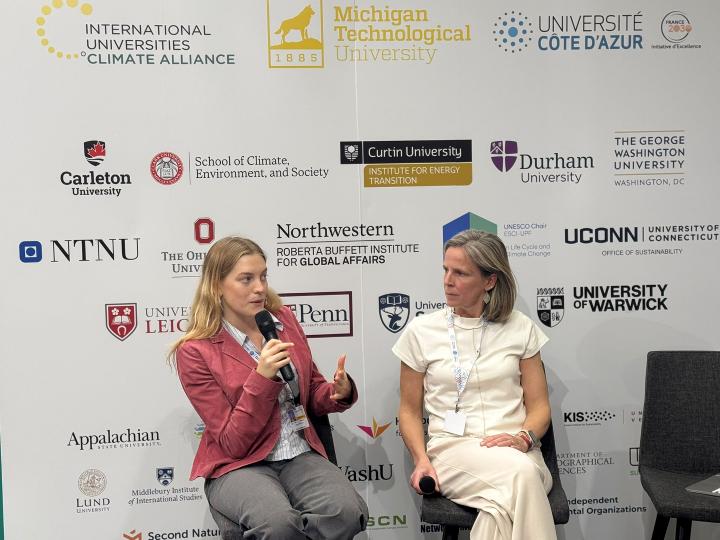
In this opening episode, Dr Tom Ritchie and University of Warwick undergraduate Millie Carter are joined by representatives from Tec de Monterrey, the International Sustainable Campus Network and the University of Melbourne to discuss why universities belong in the COP Blue Zone, the importance of protecting climate science and who gets to shape the evidence informing global climate negotiations.
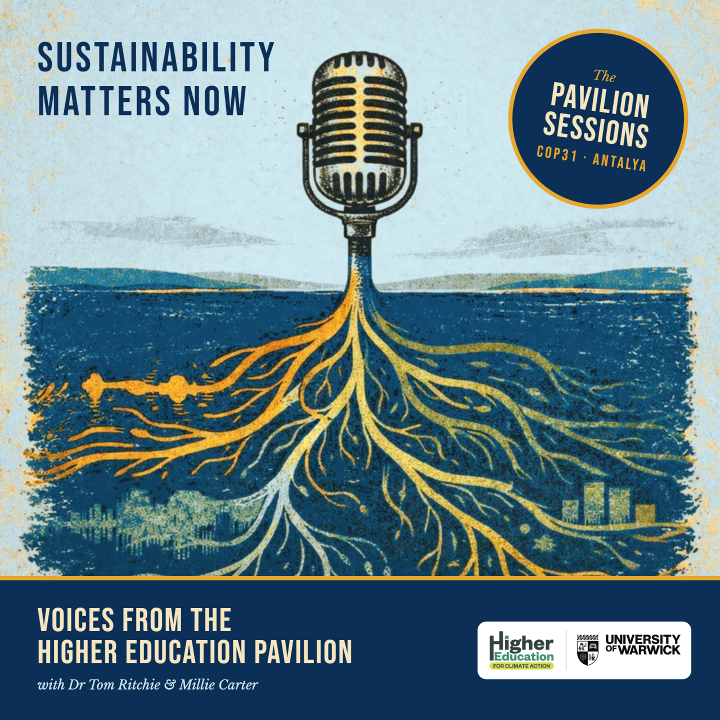
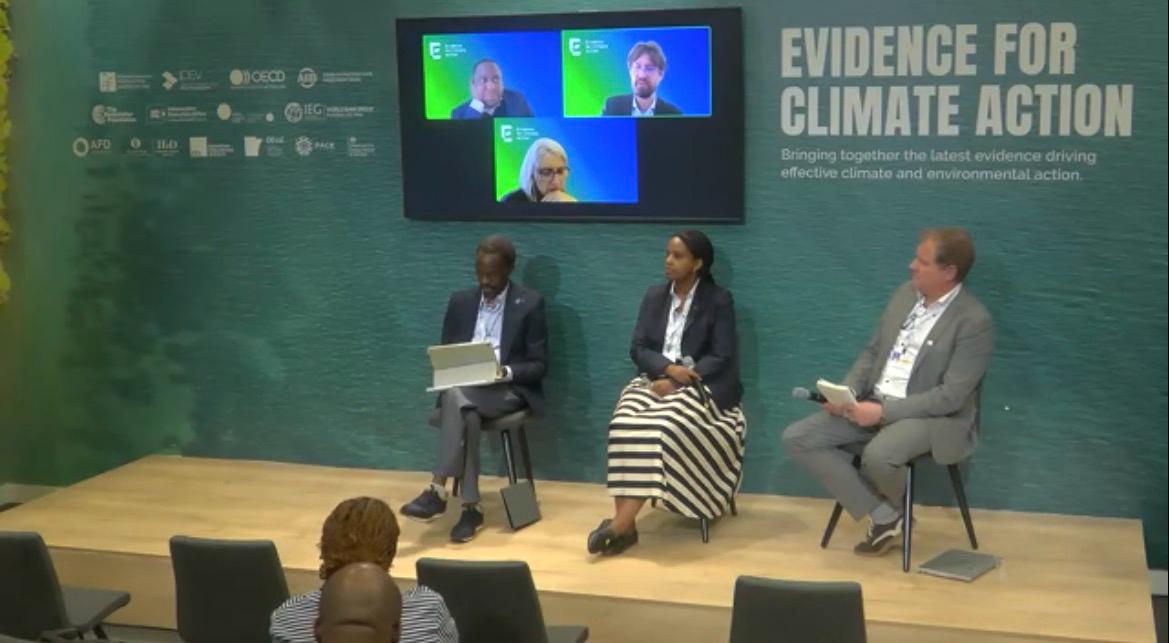
Why should universities have a place in the Blue Zone at all? The Pavilion Sessions opens with three of the people behind the Higher Education for Climate Action Pavilion at COP31. Dr Tom Ritchie and co-host Millie Carter, a Warwick student researcher at COP31, are joined by Karina Ruiz of Tecnológico de Monterrey, Victoria Smith of ISCN and Professor Jacqueline Peel of the University of Melbourne. They talk about why the Pavilion matters, what credibility looks like for universities with footprints of their own, and why trusted, evidence-based voices matter at a COP where climate science is under pressure.