
Project News
Conference Highlight
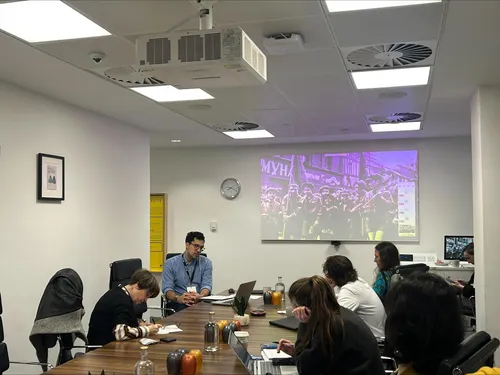 The three-day symposium and workshop Global Childhood(s) and the History of Science, Technology and Medicine took place at the University of Leeds on 16–18 November 2026, bringing together researchers working at the intersection of childhood studies and the history of science, technology, and medicine.
Tom presented a paper entitled ‘Psychology and Subjectivity in Early Soviet Moscow’s Institutions for Homeless Children’, examining 86 autobiographical accounts written by homeless children (besprizorniki) and collected by Soviet teachers Olga Kaidanova and Anna Grinberg in state institutions in 1920s Moscow. Published in two volumes alongside the teachers’ commentary, these accounts sought to challenge the perception of homeless children as ‘morally defective’ and demonstrate their potential to become committed Soviet citizens. Tom explored the diversity of the children’s narratives and their relationship with the ideological interpretations imposed by educators, considering how the suffering experienced during the revolutionary period was understood, narrated, and invested with meaning by both children and specialists.
Anna presented ‘Early Soviet Psychiatry, Trauma and the Problem of Child Nervousness’, exploring the emergence of childhood traumatisation as a significant area of psychiatric research following the October Revolution. Her paper examined how the mental hygiene movement and social psychiatry connected children’s psychological distress to the traumatising conditions of their social environment. It also traced changing approaches to children's mental health during the Stalin era, particularly the growing prominence of constitutional explanations in the 1930s. Anna argued that, despite shifting ideological and scientific priorities, attention to the social environment remained an important feature of treatment practices in Soviet children's institutions.
Together, the papers highlighted the importance of childhood experiences and institutional responses to psychological suffering in understanding the development of Soviet approaches to trauma and mental health.
Further information about the symposium is available on the Global Childhood(s) conference website.Link opens in a new window