
Tears, laughs, messy kitchens, and bad audio: how body-worn camera statements may shape verdicts and credibility
Caterina Gattinara
PhD student in legal psychology, University of Sydney
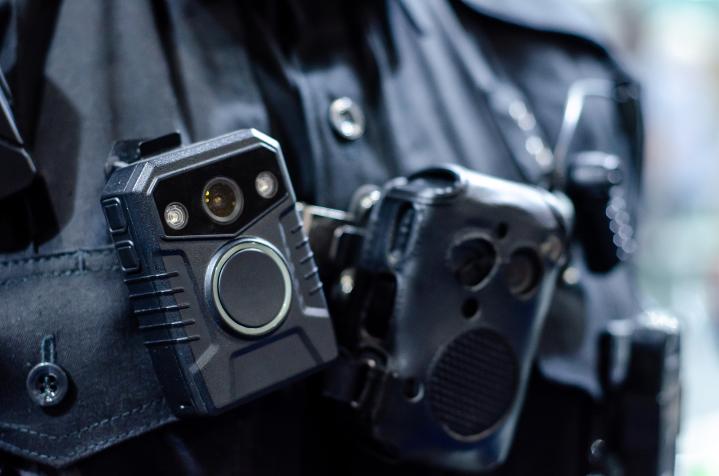
Body-worn cameras (BWC) are now widely used across police forces in many countries, including the United Kingdom, Australia, and the United States (Lum et al., 2020).
Once largely considered inadmissible because of hearsay, BWC footage is increasingly being used as evidence at trial, especially in cases involving domestic violence. Since 2015, several Australian jurisdictions have allowed complainants’ statements recorded at or near the scene of an incident to serve as their main evidence at trial, a practice that has also been implemented in New Zealand (Iliadis et al., 2024; Walton et al., 2021). Although there is no specific legislation in England and Wales, such recordings are sometimes used in a similar way under hearsay exceptions when a complainant is not available to testify (Cann, 2026).
Recording statements this way has several advantages. It is quick and transparent, and it captures the account while memory is fresh. It can reduce the re-traumatisation victim-survivors may experience when giving evidence in front of the accused, and police can proceed even if a complainant later withdraws (Katirai, 2020; New South Wales Police Force, 2025; Women’s Legal Service NSW, 2025).
However, BWC footage also introduces extra-legal factors: elements unrelated to what happened that are visible or audible in the recording and would not be present in traditional testimony.
What else the camera captures
Three such elements stand out. The first is emotion: how complainants express it (Nitschke et al., 2019; van Doorn & Koster, 2019), and how fact-finders react to it (Georges et al., 2013; Nuñez et al., 2015), which can change observers’ perceptions of how reliable the complainant seems. The second is the complainant’s surroundings. Statements are usually taken at the scene of the incident, often in the complainant’s home. The camera may capture unrelated details that shape observers’ inferences about their character and reliability (Roberts & Ormerod, 2021; Smith et al., 2019). The third is technical quality, such as camera angle, lighting, and sound. These can all affect how easy it is for observers to follow a person, and how they come across (Bowen & Thompson, 2013; Bandes & Feigenson, 2020). Our project—funded by the Australian Research Council—tests all three factors. In a series of experiments, jury-eligible participants view mock BWC statements that depict an actor, named Sophie, recounting her experience of domestic violence as she is interviewed by officers in her home. Participants subsequently provide a verdict, rate how guilty they find the accused, and how credible they find the complainant.
Emotion: tears, aggression, and laughter
Research on the emotional victim effect suggests that visibly distressed victims tend to be believed more readily than emotionally neutral ones (Ask & Landström, 2010; Nitschke et al., 2019; van Doorn & Koster, 2019). But not all victims display distress: some appear detached, angry, or even laugh nervously. While these are all common responses to trauma, they do not fit the “ideal victim” stereotype (Bosma et al., 2018).
In our first study, 403 participants watched one of four versions of a mock BWC-recorded statement in which the complainant cried, was verbally aggressive, stayed neutral, or laughed. Crying did not make the complainant more believable than staying neutral, so we did not find a straightforward emotional victim effect. Crying complainants, however, were rated as more credible than aggressive ones, and laughing complainants as less credible than crying or neutral ones. A laughing complainant also led to fewer guilty verdicts and lower guilt ratings for the accused than a crying one.
What mattered most was how participants perceived the complainant: the more distressed they judged her to be, the more credible they found her, and the more likely they were to find the accused guilty.
Compassion for the complainant helped to explain why some versions of the statement were judged more favourably than others; participants' general anxiety and negative mood largely did not. This matters in practice, as judges in England and Wales have considered a complainant’s perceived emotional state when deciding whether a recorded statement can be admitted as evidence (Cann, 2026).
Background: the messy kitchen
Earlier research suggests that a messy household background in virtual hearings can lower a witness’s perceived credibility (Muir, 2023). In our second study, 589 participants watched a statement recorded in either a tidy or a messy kitchen, with the complainant either distressed or neutral. Distressed complainants were not believed more than neutral ones, and the tidiness of the kitchen alone made no overall difference to credibility, guilt ratings, or verdicts. Exploratory analyses revealed, however, that messiness did matter.
A messy kitchen made the complainant seem less organised and of lower socio-economic status, both of which ultimately served to lower the perceived credibility of the complainant and the guilt ratings for the accused.
Beyond these effects, mess itself nudged credibility and guilt ratings slightly upwards, perhaps because a lived-in home feels more authentic, and overall, these opposing effects worked to cancel each other out. Importantly, complainants cannot see or control what the camera captures.
Audio: when the evidence is hard to hear
The idea for our third study came from our own observation in court, where a recorded statement was so difficult to hear that the judge requested a transcript. Because body-worn cameras are held by the questioning officer, complainants who stand further away may be harder to hear in the recording. Earlier research suggests poor audio quality can make witnesses appear less credible, even when their words do not change (Bild et al., 2021). One possible reason is what psychologists call processing fluency: when something is harder to process, the extra effort can leave a more negative impression of the speaker, often without people realising why (Alter & Oppenheimer, 2009). To test this, we showed participants the same statement with clear audio, poor audio for the complainant only, or poor audio for both the complainant and the officer.
Data collection is in progress but we have some preliminary results from 69 participants in Australia and 298 in England and Wales. In both samples:
complainants tended to be rated as less credible with poor sound than with clear sound. In England and Wales, participants were also less likely to find the accused guilty with poor sound, while in Australia verdicts looked similar across versions.
What this means
Across all three studies, the content of the complainant's statement was identical. This means that any differences observed in participants’ perceptions of the complainant or the accused emerged from how the complainant appeared, her surroundings, or how well she could be heard, none of which indicates whether her account was true. Yet our findings suggest that participants’ judgements of credibility and guilt were influenced by this extra-legal information.
So, what can be done? Some solutions lie in how footage is recorded: standardising audio and camera position and, where appropriate, filming in a more neutral environment. Others lie in how these recordings are judged. Simply telling jurors to ignore such cues does not seem to work (Salerno, 2021; Steblay et al., 2006). Educational directions explaining how trauma can shape the way people present may be one alternative, but the evidence is mixed and untested in domestic violence cases (Nitschke et al., 2023).
Where next
Next, we will test whether other legal stakeholders, including judges and prosecutors, are also influenced by such extra-legal cues. They play key roles in deciding whether BWC evidence is used and how it is weighed. We will also interview them, to understand how their beliefs and attitudes compare with how they make decisions, and we hope to work with a wide range of legal stakeholders to develop practical ways to reduce the influence of these cues.
Body-worn cameras were introduced to make evidence more transparent and to spare victim-survivors from reliving events in court. But a recording shows more than a statement: it shows emotions, a room, and how well someone can be heard. To keep this evidence fair, we need to understand what viewers do with all of it.