
Departmental news
SLS researchers contribute to UK Parliament report on horticulture
On 6 November, the House of Lords published a report entitled ‘Sowing the seeds: A blooming English horticultural sector’. The report looks at the development of the horticultural sector in England and includes citations from Professor Richard Napier and contributions from Professor Rosemary Collier and Alex Kelly.
WMG research helps develop new generation of graphene composites
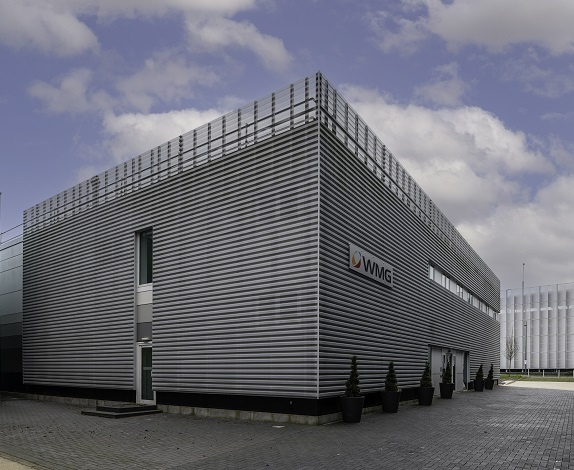 Researchers at WMG, University of Warwick’s, International Institute for Nanocomposites Manufacturing (IINM) have been working with the team at Versarien plc on a new comprehensive portfolio of graphene and related nanomaterial based thermoplastic polymer compounds and masterbatches.
The new PolygreneTM compounds are expected to have potential commercial applications in areas as diverse as sports equipment, construction products, aerospace and automotive components.
Since 2018, Versarien subsidiary 2-DTech Ltd (2DT), Composites UK member, has funded PhD and postdoctoral researchers to understand the use of its Nanene™ graphene powders and other nanomaterials in thermoplastic systems. Dr David Reinoso-Arenas, the first 2DT funded PhD student, with support from the EPSRC Doctoral Training Programme, worked with Versarien’s Nanene™ materials in thermoplastic elastomer (TPE) systems and joined Versarien full-time last year as part of the team at Versarien’s subsidiary Cambridge Graphene Ltd.
Dr David Reinoso-Arenas, explained: “The new PolygreneTM thermoplastics portfolio is a culmination of my PhD research, some of which is due to be published in peer-reviewed journals. Since then we’ve been able to further develop and test these materials using different nanomaterial fillers and process conditions to fully optimise the resulting product performance. My PhD experience at the IINM and WMG was really enjoyable and enabled me to work closely with industry to ensure that the outputs of my research could be validated and have commercial viability.”
David’s PhD was performed under the supervision of Professor Tony McNally, whose team has an established capability in incorporating a wide range of nanomaterials into bulk polymer systems.
Professor Tony McNally, who leads the Nanocomposites Research Group at WMG, University of Warwick, said: “Working with Versarien over the last few years has given the IINM and WMG access to alternative graphene materials that have shown interesting phenomena when blended in these TPE systems. By tuning the nanofiller loading and optimising process conditions, David’s research showed that exceptional gains can be achieved in mechanical properties across the board (tensile strength, modulus, elongation at break, toughness and abrasion resistance) without compromising any properties. The addition of graphene also highlights improvements in polymer processing which may offer lower energy usage and, therefore, improving sustainability.”
Professor McNally continues to work with Versarien by providing a funded PhD position in 2D material based rubber systems, making use of the IINM’s new state of the art rubber processing and testing capabilities With support from the High Value Manufacturing Catapult (HVMC), WMG has established a world class facility for the study of elastomers.
Dr Stephen Hodge, Versarien’s CEO, added: “We look forward to continuing our collaboration with the IINM and WMG in rubber processing and understanding the interactions of our graphene and other 2D materials in these more complex systems, and hope to be able to demonstrate significant benefits that can impact upon real-world applications.”
Find out more and download technical datasheets here: https://versarienproducts.co.uk/thermoplastics
Find out more about WMG’s Nanocomposites research here:https://warwick.ac.uk/fac/sci/wmg/research/materials/nanocomposites/
Expert comment from Professor Siddartha Khastgir
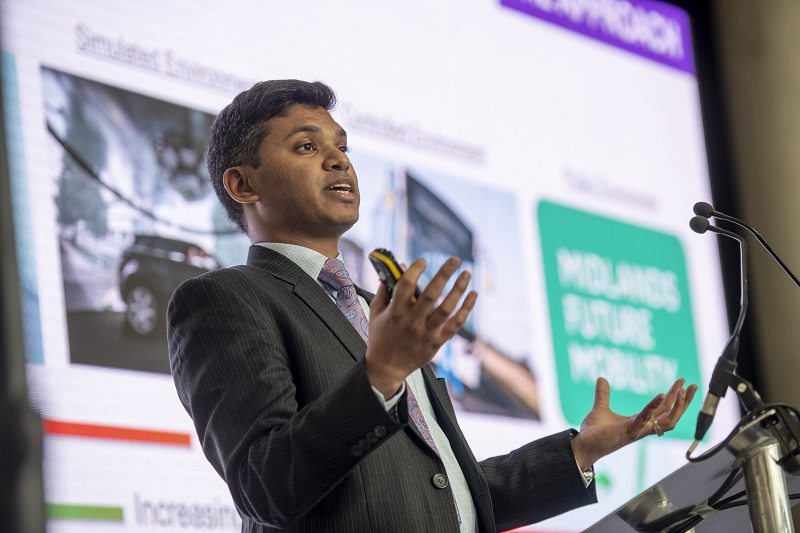 Professor Siddartha Khastgir, Head of Verification and Validation at WMG, University of Warwick, comments on the Government’s plans to introduce the primary legislation for automated vehicles in the upcoming parliamentary session, as announced in the King’s Speech today (Tuesday 7th November).
Professor Khastgir said: ‘‘We welcome the Government’s decision to introduce the primary legislation on automated vehicles in the King’s Speech today. Following on from the discussions at the AI Safety Summit last week, this very first legislation on AI-powered technology is an important step for the UK to reach its target of rolling out automated cars in 2025.
“Regulation is the key enabler for the safe introduction of automated vehicles on UK roads. Not only does it provide regulatory certainty for the industry, but it is also key to setting high safety thresholds and gaining the public’s trust. We urge the Government to ensure that the regulatory framework is robust and underpinned by strong research outcomes. International and national self-driving standards should be built upon when creating this legislation.
“We also urge the Government to speed up the secondary legislation on automated vehicles to provide more information on the engineering requirements. The Government needs to ensure public views are incorporated into this legislative journey and take future users’ viewpoints into account. As a result, along with the legislation, a public awareness programme should be introduced to ensure an accurate understanding of the capabilities and limitations of this emerging technology. The Government needs to act quickly to be at the forefront of this technology.
“WMG will continue to fully support the Government and the eco-system to develop research and evidence-based self-driving regulation in the UK.’’
Find out more about WMG’s Verification and Validation research here: https://warwick.ac.uk/fac/sci/wmg/research/cav/vandv/
PhD & PeerNet Symposium - Conference Report
Conference Report: PhD & PeerNet Symposium
School of Modern Languages and Cultures, Faculty of Arts Building
20-22 September 2023
We are pleased to report that the PhDnet & PeerNet Symposium: European and Literary Studies was a great success. We had 27 participants, including postgraduate students, postdoctoral fellows, and junior and senior researchers from seven different European countries, coming together at this symposium.
The two half- and one full-day conference hosted by the School of Modern Languages brought together for the first time in a combined event the members of the transnational PhD training programme, the PhDnet, and the newly established research network in European cultural and literary studies, the PeerNet. Both networks are based at the partner institutions, the Justus-Liebig University Giessen, the University of Graz, the University of Bergamo, the University of Helsinki, the Catholic University of Lisbon, Stockholm University, and the University of Warwick.* This conference was the kickoff event of this initiative and offered a great opportunity for institutional and cross-national exchange that will continue.
The symposium identified intersections between existing projects and developed common ground for collaborative work across the partner universities. Joint funding applications, specific concepts, theories and methodological approaches were discussed on the basis of papers, chapter drafts and project proposals. Individual projects presented in plenary in 10-minute slots on day one provided the participants with an overview of what is happening across the institutions. The second day was devoted to presenting pre-circulated papers, each of which was then commented on by a pre-selected respondent, followed by an open discussion with all panel participants. Two parallel sections ran on day one and two with balanced numbers of postgraduates, junior and experienced researchers in each section. The third day of the symposium was split into two groups again, this time offering a Masterclass to the PhDnet students on time management and productivity, while members of the PeerNet met to co-ordinate and discuss their collaborative research and current and prospective joint funding applications. It was great to have Sam Cole from Research & Impact Services offering this international audience information on the UK’s deal to associate with Horizon Europe, explaining what the deal implies and how it changes the current funding landscape.
The Masterclass was delivered by Warwick/Giessen Alumna of the PhDnet, Dr Anna Tabouratzidis, who also moderated a second event, the PhD/Postdoc/Alumni exchange, attended by members of the PhDnet and also offered to the SMLC and wider Faculty of Arts PGR and Postdoc community. This was a great opportunity for peer networking amongst postgraduates.
A keynote lecture entitled “Nightmares in the Library. Real and Imaginary Books in J.S. Le Fanu's Carmilla (1872) and C.T. Dreyer's Vampyr (1932)” was given by SMLC colleague Fabio Camilletti in plenary but was also open to the SMLC community.
Since colleagues from our six partner universities were visiting the University of Warwick and the Midlands for the first time, we offered a guided City tour on the morning before the conference started and we took our guests on a trip to Stratford-upon-Avon on the last day, after the conference had ended. This visit included a visit at the Royal Shakespeare Theatre in the evening where we watched Macbeth. Participants expressed their excitement about this unique opportunity which further created a sense of community among these researchers, who had worked together intensively for three days.
On the academic side, participants discussed work in progress and reflected on aims, conceptual frameworks and methodological approaches and research foci with their international partners. The symposium fostered cross-cultural communication in European literary and cultural studies, and established new ideas for and standards in project development in this field.
The intellectual exchange and discussions between peer researchers, but also between junior and senior researchers during the three days of the symposium, created a culture of inclusivity within and across the two networks and proved to be highly productive. PGRs in particular, familiarized themselves with a range of different national academic cultures and traditions while at the same time observing how these manyfold and oftentimes diverse approaches and perspectives complement, speak to and interact with each other, creating a dynamic research culture that implements new ways of thinking and establishes innovative pathways in research. With this outcome, the overall conference’s objective was not only met but exceeded.
The intellectual outcome of this symposium will not be documented in a single volume or any other form of immediate publication, but it has already resulted, and will further materialize, in joint grant applications.
This symposium was one of a series of symposia, workshops, and conferences to follow which will be hosted in alternating order at one of the partner institutions. Two thematic conferences are planned for autumn 2024 and 2026. The outcome of these will be published in the form of conference volumes for which we will consider Warwick’s Series in the Humanities with Routledge as a valuable option.
We would like to thank the Humanities Research Centre and the School of Modern Languages and Cultures for the generous support which made this very successful symposium possible. The event has helped to put research at Warwick on the European map and to foster a vibrant intellectual community and sustainable culture across institutions.
*About the PhDnet and the PeerNet
Members of the PhDnet: European and Literary Studies pursue their doctoral studies at their home institution and one of the six partner institutions, where their projects are jointly supervised. Moreover, they are awarded bi-national degrees. As a complement to the PhDnet postgraduate training programme, the PeerNet offers its members, including researchers at all stages of their career, a platform for innovative forms of research collaboration across cultures, intellectual exchange. Peer-to-peer support is offered in face-to-face interaction in a creative and inclusive atmosphere – as opposed to anonymous peer review or informal exchanges on social media. The mission of the PeerNet is to promote international standards of excellence in the study of literature and culture, to assist its members in developing cutting-edge interdisciplinary research projects, and to foster transnational collaboration among participating individuals and institutions.
The Wheeler History of Travel Writing PhD Scholarship - 2024-25 entry
As part of the newly established Wheeler History of Travel Writing Programme, the Department of History is inviting applications for up to two PhD studentships, starting in October 2024, in the History of Travel and Travel Writing. The remaining PhD studentships will be available from 2025 onwards.
The programme seeks to attract talented researchers whose projects may focus on any period or region of the world. Candidates who adopt a global historical perspective and have the ability to work with sources in more than one language are particularly encouraged to apply.
Eligibility: Candidates can be of any nationality and must apply for a History PhD at the University of Warwick to begin in Autumn 2024.
Successful applicants will benefit from the wide-ranging expertise represented by Warwick’s Department of History and its Global History and Culture Centre as well as the range of training and development opportunities offered by the Department and Doctoral College. Candidates are encouraged to explain how their proposal fits within the department’s existing research profile.
Please visit The Wheeler History of Travel Writing Programme for full details and eligibility.
For further information, please contact Dr Guido van Meersbergen (Director of the Global History and Culture Centre) or Professor Mark Knights (Postgraduate Research Director).
Course Application Deadline – 23rd January 2024 at 23:59 (GMT)
Supporting Document Deadline – 5th February 2024 at 23:59 (GMT)
Will AI replace human jobs? We express our hopes and fears on AI and the future of work
As the leading AI countries, businesses and AI experts gathered this week for the first AI Safety Summit at Bletchley Park to discuss the global future of AI, we take the opportunity to reflect on the Economics Policy Talks event: AI and the Future of Work which we hosted earlier this term to debate the implications of artificial intelligence on the future of work.
Organised jointly by the Department of Economics at Warwick and three student societies - the Warwick Economics Summit, Warwick Economics Society and Warwick Women in Economics Society – the event took place at Warwick Art Centre’s theatre. Nearly 500 undergraduate and postgraduate students, mainly from the Department of Economics and other related disciplines like Politics, Philosophy and Computer Science, attended the fascinating debate.
The Chair, Dave Coplin, opened the event by introducing himself and our panellists:
- Dave Coplin (Chair), former Chief Envisioning Officer at Microsoft and founder of the Envisioners, who advises organisations and governments around the world to help inspire and drive technology-enabled transformations.
- Professor Carl-Benedikt Frey, a distinguished expert in the field of AI and its implications for the workforce, Director of the Future of Work Programme at the Oxford Martin School, University of Oxford.
- Dr Abigail Gilbert, a public policy researcher and expert in AI governance within the workplace, Director of Praxis, based at the Institute for the Future of Work.
- Gunisha Aggarwal (BSc Economics, Year 2)
- Joseph Brennan (BSc Economics, Year 2)
To start the debate, Dave Coplin gave a short introduction to the topic by acknowledging the potential that this new technology can bring in all aspects of our lives, and proposed looking into four big changes that AI will drive across our society and across our economy:
- Automation: instead of thinking about humans versus machines, we need to start thinking about what happens when we have humans plus machines and how this can elevate human capability.
- Skills: the skills that we need are not whether we can memorise the knowledge but instead whether we can use the knowledge that exists around us to find out what to do next.
- Big data: data is the fuel of artificial intelligence but the problem with data is that it’s generated by human beings, who carry unconscious biases which in turn prevent the algorithms from doing what they’re supposed to be doing.
- Accountability: our responsibility to add to the algorithm to get the right outcome.
The discussion that followed, which drew on questions submitted by students prior to the event, focused on how AI will transform roles in the current job market and how it will shape the jobs of the future; what ethical considerations and safeguards should be prioritised when developing generative AI systems; what policies would be crucial to ensure a fair and inclusive transition for workers and what skillsets and training would be of importance to prepare for this technological transition.
Here are some key issues and priorities our panellists have highlighted:
Reflecting on the potential benefits of AI, Dr Abby Gilbert said:
“Once we begin to deconstruct what AI is and what it can practically do, that will probably make us also more able to ensure that we’re targeting it towards things that enable better productivity gains and direct it in ways that are more socially purposeful.”
On hopes and fears it creates for current students, Joseph said:
“If an AI can be cheaper than a graduate then they’d go with the AI and that’s a kind of a fear for me, but also we see AI being used as a tool rather than a replacement which is quite hopeful, but it means that I have to become more technical as digital literacy becomes much more helpful, something I wouldn’t have needed 5-10 years ago.”
Asked about an ideal employer of the future, Gunisha said:
“I think my ideal employer would leverage this new technology as a force for good, to drive forward not just productivity but also innovation. So, I’m hoping that as AI permeates different sectors, jobs are going to evolve, and I hope that my employer would focus on human innovation, creativity and intuition while leveraging AI tools and providing me and other employees with training to face this new reality.”
Joseph’s comment on future employers’ plans to introduce more automation mentioned the need for transparency but also inclusivity:
“Companies should be inclusive and friendly about their plans, but also about not using AI in a negative way. There are lots of ways they could use it for surveillance or track your work movements which would create a negative work culture, and not treating me like a robot, but treating me like a human, which is the main thing I’d want from an organisation.”
Answering the question on future skills needed, Prof Frey said:
“In a world where you have a lot of algorithms competing against each other and making us more similar in terms of content we produce, I think in-person communication is something that has the potential to make you stand out and is worthwhile investing in.”
Dr Gilbert added the importance of developing critical thinking as a core skill of the future:
“Critical thinking and identifying the right questions are important, so my recommendation would be to start a reading group with your friends, read philosophy, be critical about what’s happening in politics, debate with each other and that would definitely set you in good stead.”
To find out more about this topical debate, please watch the event recording on our YouTube channel.
Economics Policy Talks - AI and the Future of Work, 10 October 2023Link opens in a new window
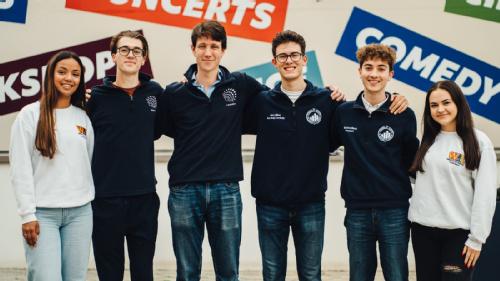 Photo: Co-organisers of Economics Policy Talks – AI and the Future of Work (from left to right)
Society executive members 2023/24:
Ananya Jain - Vice President Warwick Women in Economics Society, Charlie Atkins - Warwick Economics Summit Coordinator; Lancelot Wilson - Warwick Economics Summit Coordinator; Henry Milner – Econ Today Coordinator, Warwick Economics Society; Matthew Murray - President, Warwick Economics Society and Freya Sperinck, President of Warwick Women in Economics Society.
What Guy Fawkes can teach us about the sky at night
With bonfire night on the horizon, scientists reveal just why fireworks are differently coloured and what this can teach us about stars in space. (Photo by Ray Hennessy on Unsplash).
Publication success for Warwick Law School Alumnus
Congratulations to our former PhD student Professor Adithya Chinapanti who has recently published a new book titled Law, Development, and Regulatory Globalization: The World Bank's Impact on India's Electricity Sector.
Spotlight on Chemistry PhD student Fernando Conde Nodal
Fernando Conde Nodal, undergraduate turned PhD student, talks through his time in the Department of Chemistry and how his education and experience inspired him to study further.