
Departmental news
Warwick Medical School named hub university for Schwartz rounds in the Midlands
The NHS is investing £490,400 to help universities in the Midlands establish Schwartz Rounds for their health and social care students and staff. Fourteen Midlands-based universities have accepted the offer to begin working with the Point of Care Foundation to establish Schwartz Rounds, and Warwick Medical School has been named as the midlands hub university. To find out more about Schwartz Rounds and read the full news item click here.
WMG awarded funding for key battery research
WMG, at the University of Warwick, has been awarded a share of £29 million funding, from the Faraday Institution, to develop new insights into electrochemical energy storage.
The three WMG research projects are entitled Extending Battery Life; Battery Modelling; and Battery Safety - crucial research areas as the UK powers ahead with transport electrification.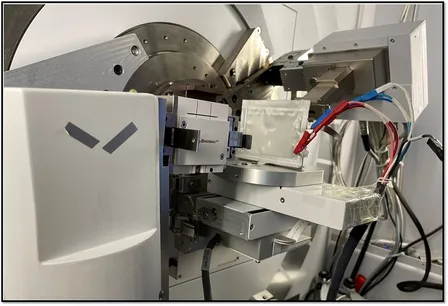
The Faraday Institution, a leader in energy storage research, has announced investment in a total of six key battery research projects aimed at delivering commercial impact. These existing projects on extending battery life, battery modelling, recycling and reuse, safety, solid-state batteries, and lithium-sulfur batteries, have been reshaped to focus on the areas with the greatest potential for success.
Professor Pam Thomas, CEO, Faraday Institution, commented: “The Faraday Institution is committed to identifying and investing in the most promising and impactful battery research initiatives. This project refocusing is an important part of that process, and allows us to direct even more effort towards those areas of research that offer the maximum potential of delivering societal, environmental, and commercial impact.”
Business and Trade Minister Nusrat Ghani said: “Growing the battery industry is vital to positioning the UK as the best location in the world to manufacture electric vehicles.
“This funding will help businesses become more innovative and productive, helping to create more skilled, high-wage jobs across the UK, future-proofing our economy and supporting our ambition towards a cleaner, greener future.”
The funding for these projects came from the Faraday Battery Challenge, delivered by Innovate UK for UK Research and Innovation.
WMG project details
Extending Battery Life
The Faraday Institution’s Degradation project, a centre of excellence in understanding degradation mechanisms in lithium nickel manganese cobalt oxide NMC811-graphite batteries, is expanding to investigate other systems of industrial interest. Researchers will apply their knowledge and new characterisation techniques to investigate the degradation of systems comprising silicon-rich composites and those using anode-free architectures. On the cathode side, the project will investigate the higher nickel content NMC, lithium manganese iron phosphate (LMFP), and tungsten-doped lithium nickel oxide (LNO). Tungsten-doped LNO is a promising material with high capacity that was developed by the Faraday Institution’s FutureCat project. Researchers will also investigate new electrolyte formulations compatible with the anode and cathodes under study and their impact on degradation.
The project will also include new pouch cell fabrication activity at WMG, which will allow researchers from across the project to access reproducible and reliable cells to perform degradation studies at more industrial-relevant scales. Pouch cells to be fabricated will include tungsten-doped LNO cathode developed at the University of Sheffield.
The project is led by Co-Principal Investigators Professor Dame Clare Grey, University of Cambridge, and Professor Louis Piper of WMG. The team also includes researchers from the universities of Birmingham, Newcastle, Oxford, Sheffield, Southampton, Imperial College London and UCL.
Battery Modelling
The Multi-scale Modelling project has been refocused to further develop parameterisation methods and techniques for next-generation models and modelling of batteries beyond lithium-ion. Researchers will focus on methods to determine accurate input parameters for models that define ageing and that accurately represent what happens at battery interfaces, which could support the growth of the Battery Parameterisation eXchange (BPX) standard being formed by the Faraday Institution.
Additionally, the project aims to grow the capabilities of PyBaMM, an open-source physics-based model, to enable better health and performance prediction at cell and pack level, linking to commercial software, and growing the PyBaMM community. The project will also develop ‘PRISM’, an industry-focused equivalent circuit model framework integrated with and complementary to PyBaMM, which will incorporate machine learning approaches.
The project is led by Prof Gregory Offer, Imperial College London, with additional researchers from the universities of Birmingham, Bristol, Oxford, Portsmouth, Southampton and Warwick.
Battery Safety (SafeBatt)
SafeBatt is investigating the science behind cell and battery failure using advanced instrumentation, imaging and high-speed techniques to characterise failure modes and investigate the interplay between cell ageing, degradation and safety. Cell-to-cell failure propagation is being studied and detection methods and mitigation strategies to prevent thermal runaway and propagation are being developed and demonstrated. A model that can predict thermal runaway and simulates the external flow of gas, heat and ejecta during failure will be developed, informing the design of safer battery systems.
The project will also conduct tests in larger format cells and at module level to help industry and other stakeholders understand how EV and micro-mobility battery packs and static energy storage systems fail in real-world scenarios. This builds on previous research that identified a potentially explosive vapour cloud, observed under certain conditions of lithium-ion cell failure. This research will continue to inform the project’s international dissemination activities (where SafeBatt researchers are playing a leadership role globally) and provide a central point of access for industry, government bodies and fire services seeking knowledge and engagement on lithium-ion battery safety related issues.
Led by Prof Paul Shearing of UCL, SafeBatt also includes researchers from the universities of Cambridge, King’s College London, Newcastle, Sheffield and Warwick.
Research in these areas will progress over the next two years to 31 March 2025.
Tiny materials have huge solar energy applications
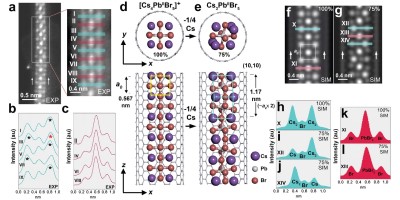
Tiny materials one hundred thousand times smaller than the width of a strand of hair could be used to improve solar cell technology. Read more...Link opens in a new window
AI triaging of shrapnel wounds developed through UK and Ukraine partnership
Researchers in the UK and Ukraine are teaming up to develop artificial intelligence (AI) that will help treat those wounded by shrapnel.
Scientists at WMG at the University of Warwick and the Kharkiv National University of Radio Electronics (NURE) in Ukraine are developing AI software that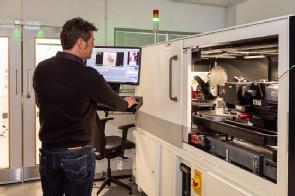 will help medics understand which patients require immediate treatment, due to life-threatening wounds that might not be obvious with the naked eye. The state-of-the-art technology enables users to feed data from a CT scan to a computer programme, which will help medics make quick decisions on which of the injured require most immediate treatment.
The project is one of 33 being discussed at the House of Lords this evening, to mark the one-year anniversary of the Twinning initiative – an institution-to-institution collaboration model which allows universities around the world to support their Ukrainian counterparts in real, concrete ways. It is funded by a £5m grant from Research England, administered by Universities UK International (UUKi).
Professor Mark Williams, WMG at the University of Warwick, said: “A huge problem for medics dealing with many severely injured people at the same time is the rapid identification of life-threatening injuries so they can prioritise who needs emergency surgery soonest. This is why we’re developing software with the team in Kharkiv to help address this issue. As well as being useful in other emergency situations such as earthquakes, the research is also applicable to doctors in trauma wards – already stretched by pressures experienced by the NHS – who need to triage patients quickly.
“For WMG’s part of the project, we will be creating phantom models using 3D imaging – replicas of human anatomy and shrapnel wounds. These will act as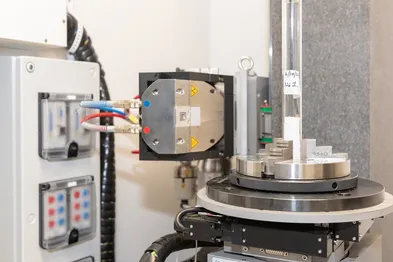 ‘test objects’, which experts in computer science can use to calibrate their technology and AI programme.
“It is very exciting to be able to bring our expertise in Additive Manufacture at WMG to deliver a rapid solution to such an important humane need, allowing us to truly exploit the incredible advantages in speed of response and material complexity offered by this technology.”
Anastasiya Chupryna, coordinator of Radio Electronics-Warwick Allied Research and Development (REWARD) project at NURE said: “We would like to thank our partner Warwick University for supporting us in joint research activities. Within this project NURE and Warwick University will be able to solve extremely important problems. We believe that practical results of these projects will demonstrate significant impact and innovation solutions for society.”
WMG is considered the leading international role model for successful collaboration between academia and the public and private sectors by successive UK Governments. The WMG specific research is funded by a £179k grant from UUKi.
More here https://www.ukri.org/news/research-england-invests-in-uk-ukraine-university-twinning-scheme/
Ends
University of Warwick press office contact:
Annie Slinn
Communications Officer | Press & Media Relations |
Email: annie.slinn@warwick.ac.uk
Spotlight on: Svenja Janke, Ramsay Memorial Trust Fellow
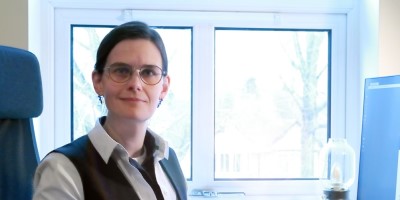
Dr Svenja Janke starts her Ramsay Memorial Fellowship to discover "A New Method to Simulate Absorption and Emission Spectra of Hybrid Organic-Inorganic Perovskites". Learn moreLink opens in a new window.
Professor Amy Grove appointed as new Head of Division for Health Sciences
Professor Amy Grove has been appointed as the new Head of Division for Health Sciences at Warwick Medical School following a competitive process. She will start her new role on 3 April. Read more about Amy, and the full news piece here.
Pathogen mapped for the first time – to understand evolution and potential treatments
A sleeping sickness parasite is the first pathogen to have its proteins located and mapped within its cells. These parasites have made large areas of Africa unsuitable for livestock production, costing rural farmers up to £3.7bn each year.
For the first time ever, scientists have developed a detailed “protein atlas” of a pathogen – a kind of biological map that locates proteins in cells. They conducted the research on Trypanosoma brucei (T. brucei), helping to understand where proteins are within its cells, providing functional insights that may ultimately help treat parasite infections.
Read the press release hereLink opens in a new window.
Access the resource here and read the full paper here.
Circulating effector γδ T cell populations are associated with acute coronavirus disease 19 in unvaccinated individuals
Severe acute respiratory syndrome coronavirus 2 (SARS-CoV-2) infection causes severe coronavirus disease 2019 (COVID-19) in a small proportion of infected individuals. The immune system plays an important role in the defence against SARS-CoV-2, but our understanding of the cellular immune parameters that contribute to severe COVID-19 disease is incomplete. Here, we show that populations of human effector γδ T cells are associated with acute COVID-19 in unvaccinated patients. We found that circulating killer-type γδ T cells were enriched in COVID-19 patients with acute disease. Surprisingly, SARS-CoV-2 infection did not alter the γδ T cell receptor repertoire, like in other viral infections. Thus, our work demonstrates a link between the systemic activation of effector populations of γδ T cells and acute COVID-19 in unvaccinated individuals.
Read the paper hereLink opens in a new window.
Pushing the limits of battery research with nickel-rich chemistries
New research has shown that understanding how oxygen participates in energy storage is critical for developing higher energy density batteries, in a new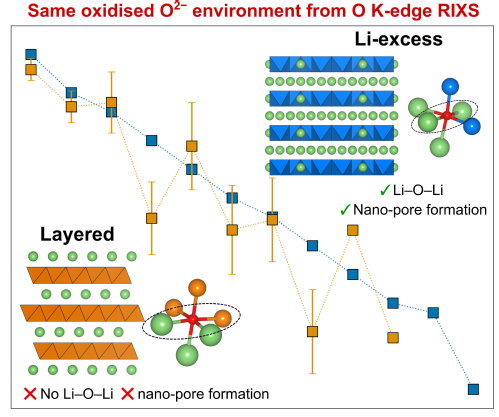 paper published by experts at WMG, at the University of Warwick.
Using advanced X-ray techniques, researchers at WMG, together with the Faraday Institution's FutureCat consortium, have obtained new insights into the oxygen redox activity in conventional ni-rich cathodes, which will help to deliver improved electric vehicle performance.
Range anxiety is a key concern of many potential EV buyers, but range is steadily improving as battery technology and research evolves. The Faraday Institution’s Next Generation Lithium-Ion Cathode Materials project, FutureCat, aims to develop understanding of existing and newly discovered cathode chemistries to deliver improved EV performance, whilst considering sustainability.
Professor Louis Piper, from WMG at the University of Warwick, who led the research explained: “Transitioning to electrification requires integrating advanced materials science into battery processing to develop cheaper, safer, faster and better batteries, which is the focus of our research.”
The battery field is moving to increasing nickel contents in cathodes to meet the Government’s stringent EV 2030+ targets. These roadmaps assume successful strategies in material development to allow cathodes like W-LNO to operate at high voltages without degrading. This work provides the platform towards realising that goal by better understand the redox mechanisms (i.e., the reactions that enable charging/discharging the battery) at high voltage operation.
The study employed advanced x-ray characterisation techniques at the Diamond Light Source in Oxford and at WMG. The team at WMG utilised novel in-house x-ray absorption spectroscopy which enabled researchers to look at the electrode redox process of the battery cathodes after careful disassembly. Researchers were surprised to find that the oxidised oxygen species had the same characteristics as another group of Li-ion battery cathodes, Li-excess transition metal oxides. Reconciling how the same oxidised oxygen environment exists in both conventional and Li-excess cathodes is critical for unlocking how to develop the next generation of cathodes.
Professor Piper adds: “This work highlights how large-scale collaborative fundamental studies are needed even for supposedly ‘known’ systems.”
WMG will be continuing with further studies in this field, supported by the Faraday Institution, for the benefit of cathode battery manufacturers.
A link to the published article can be found here:
https://journals.aps.org/prxenergy/pdf/10.1103/PRXEnergy.2.013005
New research led by the University of Warwick proposes a cross-domain safety assurance framework for automated transport
A new report led by academics at WMG at the University of Warwick, proposes a ground-breaking safety assurance framework that has the potential to be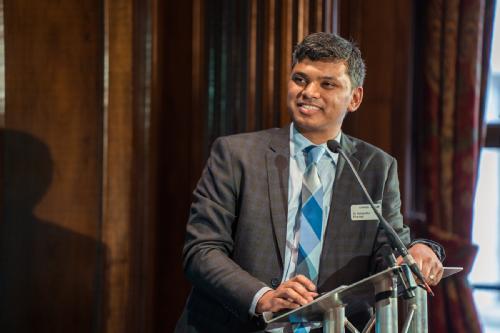 applied across automated transport modes.
The new report is the result of Warwick’s extensive safety research which has undergone 12 months of evolution, development and validation with key stakeholders across the transport domains of land, sea and air.
Over the past year, 35 organisations in industry, academia, government and regulation from the UK and internationally have contributed to the discussions which have been captured in the report. The report encourages Government policy to tackle similar challenges all three domains face to realise the safe introduction of automated transport systems, in a joined-up manner.
The Cross Domain Safety Report highlights the economic potential of the global automated transport ecosystem, which is projected to reach over £750 billion by 2035, with a UK market share of approximately 6% representing £42 billion and creating up to 38,000 new jobs.
When it comes to safety assurance of automated transport systems, the report suggests the need to not only establish the safety level of automated transport, but also to communicate the safety level to all stakeholders (society, regulators, policymakers, developers etc).
Communicating safety level is key as one of the main obstacles to the safe introduction and consumer acceptance of automated transport are safety and trust, according to this new research. The report contains a set of key recommendations which include standardised definitions, new processes for virtual test environments, a new scalable and manageable safety assurance framework, and the key role of independent organisations.
The report highlights that whilst there are differences between the safety assurance processes of autonomous ships, aircraft or vehicles there are also large elements of crossover. This can then be leveraged by governments, developers and manufacturers by aligning safety artifacts across the different types of transport, allowing for greater safety and consumer acceptance.
Ian Stewart MP, Chair of the Commons Transport Select Committee said: “It’s important that we look ahead and horizon scan at emerging technologies… We’ve got to look ahead to make sure the regulations are in place.
“It’s really interesting that this conference looked at these issues holistically because it’s very easy in the world of transport to look at each mode as if it existed in isolation, but there will be cross cutting issues”.
Professor Siddartha Khastgir, Head of Verification and Validation at WMG, University of Warwick, commented: “Safety of automated systems needs to be pre-competitive. At WMG, we are extremely grateful to all the contributors to the report who have come on this journey with us over the past 12 months.
"Capturing the collective intellectual output of the group, we have demonstrated in the report on cross domain safety assurance across land, air and marine, that there are a lot of synergies in the approaches across the transport domains. At the same time, there are certain aspects that will be very specific to the domains that should be tackled individually.”
The full report can be read here.