
Departmental news
Meet our researchers: John Walsh
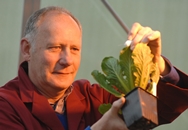 Professor John Walsh talks about his research into how viruses interact with agricultural crop plants, and how to improve vegetable crops’ resistance to viruses without using pesticides.
His food and agricultural research has helped to improve natural resistance to the viruses that infect plants, reduce the use of pesticides and improve health and welfare.
Complexity breakthrough by Dr Shuichi Hirahara
Sam Adelman discusses historic and contemporary injustices in recent Faculti interview
The Law School's Professor Sam Adelman discusses the historic and contemporary injustices caused by maldevelopment and neoliberal globalisation, climate change and ecological destruction in a recent interview with Faculti, an online reference tool which gives instant access to relevant and up-to-date academic and professional research insights. Watch the full interview.
Fireside Tales of Terror Conference report - Dr Jen Baker
Fireside Tales of Terror: the Gothic and Winter took place on 15-16 December 2022. The conference was sponsored by the Humanities Research Centre, the ELCS department, and the International Gothic Association. As well as a large number of online audience members who weren’t participating, there were 33 presenting delegates with papers ranging from Romantic period epics, to Victorian short stories, through to video games and film, to fashion and vintage postcards. The two keynote speakers were Dr Derek Johnston (Queen’s University, Belfast) on his work on televisual period drama at Christmas and the Gothic mode, and Dr Monica Germana (University of Westminster) on Boreal Gothic, folklore and travel in winter.
Our objectives were to bring scholars from around the world together to explore the environmental and affective traditions and departures between the Gothic mode and the winter season across different mediums in the arts and humanities. The conference itself was extremely successful in terms of exploring these topics, and forging new networks and the connections across papers, as well as new and innovative research being showcased.
The Nuclear Decommissioning Authority's (NDA) Annual PhD Bursary Student Best Presentation prize was won again this year by Elizabeth Sharp for the second time.
Elizabeth who works in the Ultrasound Group presented an update of her results to the NDA and the wider nuclear industry, showing how the pressure inside a welded steel container could be measured using non-contact acoustic transducers to excite and detect the natural resonant modes of the container via the electromagnetic Lorentz mechanism. The pressure inside the containers can increase due to radioactive decays and chemical reactions of the material inside the sealed containers, and it is important to be able to measure if the pressure becomes too high. Using a combination of Finite Element (FE) modelling, optical vibrometer and EMAT measurements, Elizabeth has proved that the resonant modes that she is experimentally measuring, correspond exactly to those predicted by the FE models, and that generally the frequency of those modes increase as pressure inside the container increases. Elizabeth plans to develop a prototype system for trials in the nuclear industry, under an EPSRC IAA project that she will start later this year.
Sociology receives an Athena Swan Silver Award
The Department of Sociology received a Silver Athena SWAN Award from Advance HE in recognition of its intersectional efforts to advance gender equality. The submission for this award can be viewed here.
Emeritus Professor David Whitehouse receives 'WOW' award
Our Emeritus Professor David WhitehouseLink opens in a new window who, through his internationally recognised work, promoting women has been promoting the name of University of Warwick, has recently won a ‘Wow’ AwardLink opens in a new window – the first of three such awards given to him by the Vice-Chancellor, Stuart Croft, in December 2022.
Crystallisation Day 2023 - A Chemistry Outreach Event
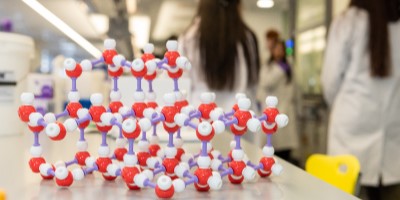
School kids get a taste of something a bit different to the conventional concept of Chemistry
Territorial Bodies in Context
Writing about web page https://warwick.ac.uk/fac/arts/hrc/confs/territorialbodies/
In the following blog post, organisers Maddie Sinclair and Charlotte Spear reflect on the inspiration behind their upcoming conference Territorial Bodies: World Culture in Crisis.
WMG students take part in training for UK's largest cyber competition
 Students at WMG at the University of Warwick, recently took part in training for Defence Cyber Marvel 2, Western Europe’s largest live-fire cyber exercise. The training was designed to give the students a taste of cyber competitions ahead of the main event due to take place in February.
WMG entered two teams with 21 students in total, and along with three other teams they formed part of an unofficial Blue Team. The Blue Team were faced with the challenge of defending a large network of machines with different operating systems from a Red Team.
The WMG teams had great success in the training competition, placing second and third overall.
Dr Harjinder Lallie, Discipline Group Leader for Cyber Security at WMG, University of Warwick said: “Both teams did really well and should be proud of their performance in the competition. Their approach and attitude was exceptional and acts as a testament to the exceptional students on the degree course.”
The Defence Cyber Marvel 2 training competition was a fantastic opportunity for WMG students, with the University of Warwick being the only university invited to enter.
The students have established themselves as leaders in Capture the Flag (CFT) competitions and their success at the training competition has led to some of our students being selected to take part in the main event for Defence Cyber Marvel. This is an international Blue Team competition (A Network Defence Competition) involving the best cyber defence teams within the UK and NATO. The competition will test the skills of the participants to stop potential cyber-attacks against the UK.
Here are some comments from some of the students who took part:
"We all had a lot of fun, and it was an excellent opportunity to develop blue-team experience".
“It was a great opportunity to test some of the skills and knowledge that we had learnt over the past three years, in a challenging and well-funded environment. We gained invaluable experience and hope to take part in more similar competitions in the future.”
Find out more about the WMG BSc Cyber Security here: BSc Cyber Security (warwick.ac.uk)
Read more about WMG’s latest cyber security news here: Latest News (warwick.ac.uk)