
Departmental news
Third blog post from Niels Boender - Veteran Poetics: An Interview with our Keynote Speaker Professor Kate McLoughlin
Writing about web page https://warwick.ac.uk/fac/arts/hrc/confs/homecoming/
In this third blog post for the HRC Conference on Homecoming after war, the co-organiser, Niels Boender interviews the keynote speaker, Professor Kate McLoughlin, Fellow at Harris Manchester College Oxford.
WMG in landmark battery development partnership
Researchers at WMG at the University of Warwick, are part of a unique four-way partnership, with Addionics, technology innovation catalyst CPI and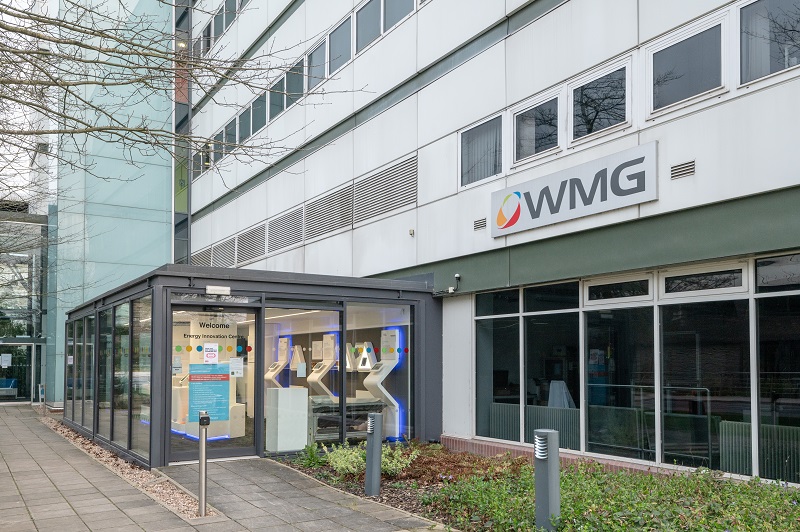 James Durrans Group, which will position the UK as a technology hub for global battery development.
Project Constellation is an extension of Project STELLAR which focused on improving battery power and cycle life. Project Constellation takes the research to the next level addressing improvements to battery performance, which will in turn lower development and production costs.
The team at WMG will use its expertise in pilot scale electrode production, cell manufacturing and electrochemical testing to support and de-risk rapid technology screening and accelerate the route to market.
Farid Tariq Ph.D, CTO and Co-founder of Addionics, explains:" Constellation builds on the success of Stellar taking it beyond basic tests and towards industrially relevant scales. We are excited because it provides a strong integration piece of our technology with world leaders in coating and fabrication, and active material fabrication (WMG, CPI, James Durrans) that can show how our very smartly designed and structured current collectors can fit into a viable battery ecosystem and provide benefits from our technology. This is readily transferable knowledge and will push the creation of new methods to overcome modern limitations of batteries and fabrication."
Mark Copley, Chief Engineer in WMG at the University of Warwick’s Electrochemical Materials and Manufacturing team said: “WMG is delighted to be a partner in the CONSTELLATION consortium. Utilising our experience in scaling up new technologies, from lab to pilot line, we feel that we will be able to further the development of Addionics’ current collector technology whilst coupling in Durrans’ graphite and formulation developments, as derived by CPI.
“The project goals fit very well with the ideals of WMG, which is to work collaboratively with industry to deliver high-quality, applied, research and development. We look forward to the results that will be generated through this funded collaborative effort.
Project Constellation is a two year project, funded by the UK Government’s Faraday Institution’s Faraday Battery Challenge Round 5 Innovation.
About the partners
Addionics
Addionics is a next-generation battery technology company revolutionizing battery performance through its chemistry-agnostic Smart 3D Electrode architecture. The company’s scalable, cost-effective manufacturing process combined with its AI-based optimization software significantly improves the performance of any kind of chemistry, achieving batteries with higher energy density, faster charging, and longer lifetime, at low cost. With the mission to accelerate an electrified economy and decarbonized future, Addionics is unlocking the full potential and accelerating the electrification revolution through its drop-in solutions.
CPI
We take great ideas and inventions, and we make them a reality. Born in the North East of England in 2004, CPI is an independent deep tech innovation organisation and a founding member of the High Value Manufacturing Catapult.
We're a team of intelligent people using advances in science and technology to solve the biggest global challenges in healthcare and sustainability. Through our incredible people and innovation infrastructure, we collaborate with our partners in industry, academia, government, and the investment community to accelerate the development and commercialisation of innovative products.
Our work ranges from health technologies, advanced drug delivery systems, and medicines manufacturing innovations for multiple modalities including small molecules, biologics, and nucleic acids; to developing sustainable materials for energy storage and packaging, as well as novel food, feed, and nutraceuticals, that are all underpinned by digital technology. We turn the entrepreneurial spirit and radical thinking of our people and partners into incredible impact that makes our world a better place.
Let’s innovate together: uk-cpi.comLink opens in a new window
Connect with us: LinkedIn TwitterLink opens in a new window InstagramLink opens in a new window FacebookLink opens in a new window
James Durrans Group
Long established family owned manufacturing company (1863) based in Penistone near Sheffield but with manufacturing sites across the globe. We provide pro-active solutions to our customer needs. Experts in carbon processing and technology and the manufacture of heat resistant coatings and graphitic dispersions.
Warwick - BrIAS Connections
In Spring 2023, Beat Kümin (Food GRP academic lead) & Pierre Purseigle from the Department of History will represent the University of Warwick as Fellows of BrIAS, the Institute for Advanced Study run jointly by the Université Libre de Bruxelles (ULB) and the Vrije Universiteit Brussel (VUB), where they will research projects, present talks and run workshops relating to its current theme of 'The Past, Present and Future of Food, Climate Change and Sustainability'. Full details of the Institute, programme and events appear on the Brias Homepage.
Sociology receives an "Excellence in Gender Equality Award"
hereThe Department of Sociology Athena Swan Self-Assessment Team (SAT), led by Professor Nickie Charles and Dr Maria do Mar Pereira, has received the inaugural "Excellence in Gender Equality Award", given by the University to recognise individuals and teams doing outstanding work to promote gender equality at Warwick. More information on the award can be found here.
New Book: 'Shakespeare's Strangers and English Law' by Professor Paul Raffield
Professor Paul Raffield's new book 'Shakespeare's Strangers and English Law' was published by Hart/Bloomsbury on 26 January 2023, his third sole-authored book on the subject of Shakespeare and the Law. Through analysis of five plays by Shakespeare (Measure for Measure, The Comedy of Errors, Troilus and Cressida, The Merchant of Venice, King Lear), Paul Raffield examines what it meant to be a ‘stranger’ to English law in the late Elizabethan and early Jacobean period.
Wellcome Trust Research Fellow
Applications are open for a Postdoctoral Research Fellow. Applications are open for a Postdoctoral Research Fellow. The successful applicant will work closely with the Primary Investigator, Professor Sharifah Sekalala, to provide research support and to deliver project objectives across data collection, analysis, and the dissemination of outputs on the Wellcome Trust funded project, ‘There is no app for this! Regulating the migration of health data in Africa,’ at the University of Warwick’s School of Law. Closing date: 26 February 2023. Find out more and apply nowLink opens in a new window
Hunterian Professor Award to Dr Hannah James
Dr Hannah James, Specialist Registrar in Trauma & Orthopaedic Surgery at UHCW and PhD graduate from Warwick Clinical Trials Unit has been awarded a very prestigious Hunterian Professorship by the Royal College of Surgeons for her ground breaking surgical education research work.
Dr James recently completed an outstanding body of research for her PhD on the impact of cadaveric surgical training on improving patient outcomes. She becomes the first female Trauma and Orthopaedic (T&O) surgeon to become a Hunterian Professor. Read the full article here
Professor Twigg-Flesner hosted meeting of “From Smart Technologies to Smart Consumer Law” project team
On 23 and 24 January 2023, the project team of the AHRC/DfG-funded research project “From Smart Technologies to Smart Consumer Laws” held a working meeting at the University of Warwick. The project focuses on a range of consumer challenges created by the Internet of Things (IoT), which is characterised by a complex integration of physical and digital products and services, e.g., in the context of smart homes, connected vehicles or consumer wearables.
World-class centre for single electron diffraction a UK first
A new centre based jointly at the University of Southampton and Warwick will become a game changer for chemical industries, including manufacturing, pharma and electronics.
Scientist Experience open for Year 12 female students
Launched in 2015, the XMaS Scientist Experience is a nationwide opportunity for any Year 12 UK Physics students who identify as female to join us on an all-expenses-paid 4-day trip to the ESRF in Grenoble, France at the beginning of July 2023. Our aim is to encourage students to consider science careers, foster a sense of community and encourage self-belief.
Find out more about the experience.
Watch the video that was made by the ESRF team in July 2017.