
Departmental news
Policy Support Fund success for Economics researchers
Congratulations to Dr Bhaskar Chakravorty. Dr Nikhil Datta, Dr Amrita Kulka and Dr Marta Santamaria on their success in the Policy Support Fund 2025Link opens in a new window round.
The Policy Support Fund is funded by Research England and administered by Warwick’s Research & Impact Services Link opens in a new windowteam. Grants are awarded for strategic projects working towards enabling evidence-based policy making.
- Dr Chakravorty’s project - Scaling Proactive Support Systems: Embedding Evidence-Based Practices into Migration Centre Operating Protocols – will explore how to better support young women from Bihar and Jharkhand who migrate for work by strengthening services offered through government-run Migration Support Centres in cities like Delhi and Bangalore. At present many young women who move to cities for work after graduating from training programmes focused on rural young people drop out and return home. Working with partners in India, Dr Chakavorty will evaluate interventions to improve the support offered to these young women and help them stay in their jobs.
- Dr Datta and Dr Kulka’s successful project - The Spatial Impacts of Large Infrastructure Projects: Evidence from London’s Elizabeth Line – builds on their existing portfolio of research into land use and housing markets with a focus on areas impacted by the Elizabeth Line, London’s East-West railway which opened in 2022. After analysing how the new line affected housing markets, spatial inequality, and residential amenities, Dr Datta and Dr Kulka will build an urban economics model able to simulate the impact of future transport projects. They hope this will be of great value to policymakers developing the London Infrastructure Plan 2050.
- Dr Santamaria’s project - Disunited Kingdom? Uncovering Domestic Frictions for consumer and firms – will use postcode-level data from customer and business transactions to investigate the extent and causes of domestic market fragmentation between the four nations of the United Kingdom, and will make recommendations on how to achieve a better-integrated domestic market, essential for UK-wide growth.
Head of Department Jeremy Smith said:
“Congratulations to Amrita, Bhaskar, Marta and Nikhil on winning these grants. I am glad to see the Department represented so strongly in the awards made this year. These short-duration projects are of great value in themselves and provide a very strong foundation for bids to external funders down the line.
“Given the highly competitive nature of the PSF, not every application succeeds. I would like to thank all colleagues who put time and effort into preparing bids.”
25 September 2025
Expert comment - Professor Thiemo Fetzer responds to the Government’s “Pride in Place” agenda
The government has announced a new “Pride in PlaceLink opens in a new window” programme – empowering communities to buy up boarded shops, reclaim derelict pubs, and restore local pride – which aligns closely with the findings of Professor Fetzer's researchLink opens in a new window into the political impact of high street decline.
Responding to the announcement, Professor Thiemo Fetzer said, “A lot of what we might consider to be local decline, in particular in the retail sector, away from brick-and-mortar shops towards remote consumption creates winners and losers. For many people going shopping involved going to a cafe and involved social consumption. These opportunities disappeared because the big shift to online commerce has killed or destroyed a lot of this high street ecosystem.
“People see shops are closing up and they feel like everything is going down. The High Street was a type of meeting place where older people in particular could chat and meet. There is a belief that the social side of the town centre has disappeared, it’s gone, when, in fact, it’s just capturing, to a certain degree, a changing economy. That perception of decline is vital to the populist backlash – the narrative that sits quite hard.
“Central government has to work with local stakeholders because they’re on the ground. They see how local change works and every local context requires a different solution.
“The Pride in Place programme offers a rare chance to combine community empowerment with structural adaptation – revitalising high streets, restoring social consumption spaces, and rebuilding the foundations of pride, resilience, and democratic trust.”
- Read a longer discussion from Professor Fetzer in The Conversation: To fend off Reform, mainstream parties must address the tangible decline of British towns
Warwick Economics ranked 1st in The Good University Guide 2026 - four years running
We are proud to announce that the Department of Economics has retained its position as the UK’s top-ranked department of economics in The Times and The Sunday Times Good University Guide 2026 – marking our fourth consecutive year at number one and continuing a decade-long record of consistent top-five national rankings.
Published annually each September, The Good University Guide evaluates UK universities across five core metrics: teaching quality, student experience, research excellence, entry standards and graduate outcomes, all weighted equally. Data sources include the National Student Survey (NSS), Research Excellence Framework (REF) the UCAS tariff and HESA data.
Warwick Economics’ top place (ahead of LSE, Cambridge, Oxford and St Andrews) was achieved with individual scores of 93.3% (7th) for graduate prospects, 89.1% (9th) for teaching quality, 88.4% (14th) for student experience 76.5 (2nd) for research quality and entry standards at 192 (8th).
Our continued success is reflected across other important league tables. In the QS Word University Rankings by Subject 2025, we were placed 36th globally for Economics and Econometrics. We also ranked 5th in the Complete University Guide 2026 and 6th in the Guardian University Guide 2026.
Professor Jeremy Smith, Head of Department of Economics, said:
“This recognition reflects the dedication of our outstanding students, the excellence of our teaching and research, and the strength of our academic community. A huge thank you to our faculty, professional services staff, alumni, and partners - and of course, our students. We remain committed to pushing boundaries in economic thinking and preparing the next generation of leaders and changemakers.”
Related items
Workshop Algorithms & Complexity @ Warwick
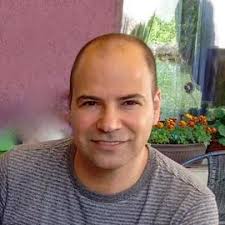

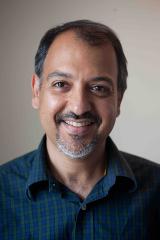
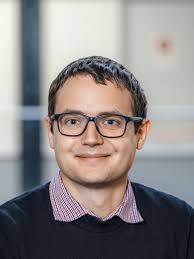
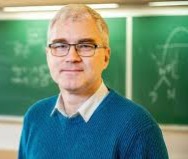


The workshop Algorithms & Complexity @ Warwick took place at the University of Warwick on September 22-23, 2025 (see https://sites.google.com/view/algorithmscomplexitywarwick2/home for more details).
The aim of the event was to highlight several recent exciting advances in the field of Algorithms and Complexity, to facilitate interactions within the research community, and to provide an excellent opportunity for Theory researchers (including academics, postdocs, and students) to connect and collaborate.
We had a fantastic list of invited speakers by renowned world experts: Albert Atserias (Technical University of Catalonia), Raheleh Jalali (University of Bath), Sanjeev Khanna (University of Pennsylvania), Tomasz Kociumaka (Max Planck Institute for Informatics), Michal Koucký (Charles University in Prague), Or Meir (University of Sheffield and University of Haifa), Rahul Santhanam (University of Oxford), Thomas Sauerwald (University of Cambridge), Roei Tell (University of Toronto).
Warwick Computer Science and Medical School researchers team up with Intelligent Imaging Innovation to develop smart microscopy tools
We are delighted to congratulate Dr Scott Brooks, a former DCS graduate (MEng, 2016–2020), on his new role as a Knowledge Transfer Partnership (KTP) Associate.
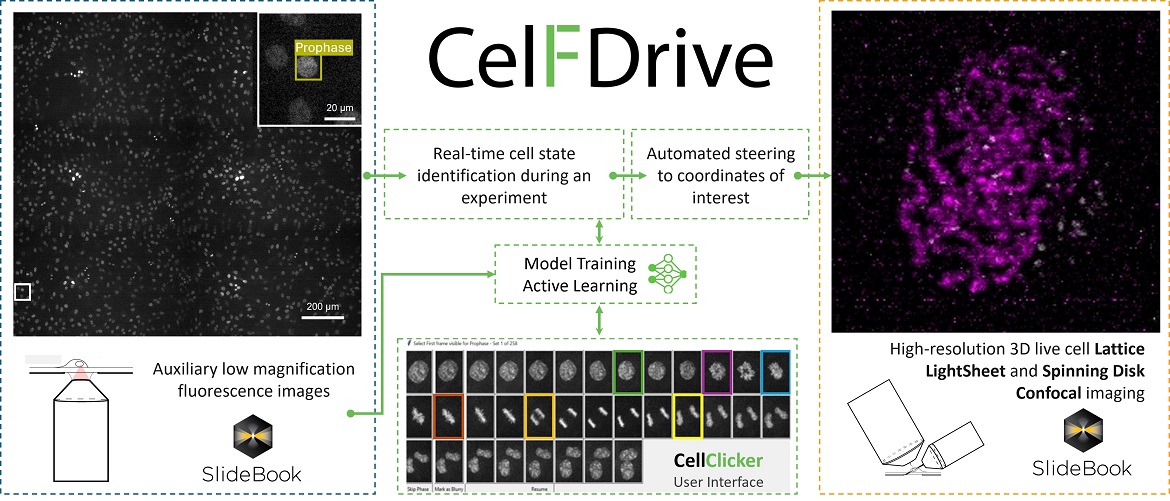
Following the successful completion of his iCASE PhD, supervised by Professors Till Bretschneider (DCS) and Andrew McAinsh at Warwick Medical School, Scott has been awarded a 30-month KTP position, funded by Innovate UK. In collaboration with Intelligent Imaging Innovations (3i), he will develop smart microscopy software (CelFDrive) building on the prototype tools he created during his PhD.
Scott’s work leverages machine learning to automatically identify cells with rare or subtle biological features, often missed by human observers, enabling faster and more accurate analysis. This innovation accelerates fundamental biological research and establishes a foundation for high-throughput drug discovery.
For more details, see the official announcement:
https://warwick.ac.uk/news/pressreleases/warwick_secures_ktp_for_AI_assisted_microscopy
Warwick secures Knowledge Transfer Partnership for AI assisted microscopy
University of Warwick researchers have secured a Knowledge Transfer Partnership with Intelligent Imaging Innovations (3i) to roll out a new AI-guided microscopy platform.
‘Designing defects’ in Graphene opens new possibilities for future tech
Recent research from Prof Reinhard Maurer and collaborators has developed a new process for growing graphene with controlled imperfection that will improve performance across a range of applications - from sensors and batteries, to electronics.
Welcomes & Farewells
As we prepare to welcome our new and returning students for Term 1, we would like to wish a warm welcome to our new colleagues, congratulations to staff commencing secondment opportunities, and a fond farewell to those we have had to say goodbye to.
Warwick Chemists win UKRI Future Leaders Fellowships
Two Warwick Chemists are among the 77 UK Research and Innovation’s (UKRI) Future Leaders Fellowships (FLF) winnersLink opens in a new window, taking a share of £120 million funding.
Official opening of the UK's most powerful NMR Facility
We are excited to share that the UK's first-ever 1.2 GHz magnet was officially opened this summer.
The event marked a milestone in NMR Spectroscopy as the most powerful magnet operational in the UK, and one of less than 15 similar magnets in the world. The facility will allow better resolution and increased sensitivity.