
Research Celebration Awards 2026
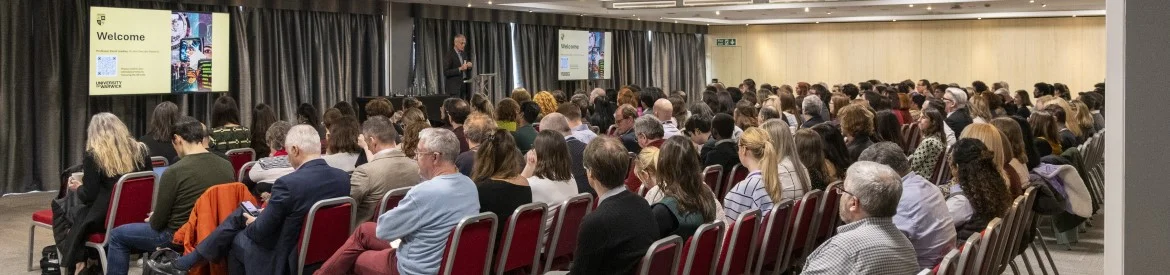
Research Celebration 2026
The Research Celebration Awards kickstarted our Research Culture Week, highlighting the importance of reward and recognition for a positive research culture, and underpinned by our commitment to Community and Connections.
The awards were presented by Neil Sachdev (Chair of Council) and Professor Kirstie Haywood (Deputy Pro-Vice Chancellor for Research Culture), with a special appearance from Dr Andrew Nelson and Jade Scott from the School of Life Sciences to present the Excellent Supervision category.
Thank you to all those who attended the event. Take a look at the event photography, or read all about our nominees and winners below.
Nominations are shared where permission has been granted by the nominator.
Jump to the nominations for each award category:
And the winners are....

Research Impact
- Bhaskar Chakravorty
- Charlotte Heath-Kelly
- Stephen Purcell
- Nikoleta Jones
- Biomedical Research Unit in Reproductive Health
- Jan Brosens and team
- The Supply Chain Research Group
- Alok Choudhary, Katie Sewell, Sube Singh, Carl Che, Manoj Babu, Hamid Moradlou, Alp Yildirim, Dimitrios Karagiannis, Srinidhi Karthikeyan, Nipun Goyal, Ondine Barry, Kristel McDade, Karen Macpherson, Charles Martin
View all our Research Impact nominations below.

Collaboration & Partnerships
- Christopher Strelluff
- Naomi Muggleton
- Bobby Smith
- #CovConnections Carbon Calculator
- You Wu, Russ Hall, Megan Clement
- Introduction to Sociology and Criminology HMP Course
- Anastasia Chamberlen, Ruth Bernatek, Henrique Carvalho, Silvia Gomes, Emily Gray
- Warwick Institute of Translational Medicine
- Charlotte Kershaw, Suhayl Mulla, Erin Greaves, Dan Lasserson, Andrew McAinsh
View all our Collaboration & Partnerships nominations below.

Research Communications & Publicity
- Alice Kelly
- Christian Stadler
- Tara Morton
- Christopher James
- CAGE Research Centre
- Bishnupriya Gupta, Mirko Draca, Nikhil Datta, Jane Snape
- Safe Autonomy Research Group
- Siddartha Khastgir, Gabbie Lau
View all our Research Communications & Publicity nominations below.

Research Enabler
- Elise Bennett
- Harriet Richmond
- Matt Higgs
- Miguel Afonso Oliveira
- R&IS Impact Team
- Cliona Boyle, Helen Ackers, Lesley Chikoore, Rachel Gilworth, Robert Hollingworth, India Holme, Thomas Jenkins, Nadine Faye Otting, Grace Prewett, Liam Thomas, Mandeep Tutt, Kathryn van de Wiel, Emily Woodruff, Rachel Wilmshurst
- WBS Research Office and Finance Team
- Lisa McNiece, Mandip Chahal, Vanshika Garg, Victoria Linnell, Michelle Tsang, Zoe Lottering, Joanne Noone, Punesh Puri, Carly Hegenbarth
View all our Research Enabler nominations below.

Research Culture
- Alan Dolan
- Elena Korosteleva
- Building Wellbeing Literacy Initiative
- Elena Riva, Tania Villanueva Cabello, Virginia Thomas-Pickles, Jath Pathmanathan
- The Ambassadors for Better Research Culture
- Amy Godfrey, Catriona Conway, Cerys Currie
- WBS Research Culture Team
- Haley Beer, Carly Hegenbarth, Katharina Dittrich, Helen Beven
- Working Parents/Carers Group
- Özlem Atikcan, Briony Jones, Vicki Squire
View all our Research Culture nominations below.

Excellent Supervision
- Dieter Wolke
- Gregory Epiphaniou
- Olalekan Uthman
- Paulo De Medeiros
- Tianhua Xu
- Briony Jones
View all our Excellent Supervision nominations below.
This category seeks to celebrate individuals and/or teams who have made significant contributions to achieving Research Impact at Warwick.
Research Impact for this purpose is defined as benefits to society, health, culture, the economy, public policy/services, the environment, quality of life - at regional, national and international scales, and beyond academia.
Team Nominees
Dr Jan Brosens and his multidisciplinary team have transformed understanding of recurrent miscarriage by identifying dysfunctional womb lining as a hidden cause and developing a novel diagnostic test to detect it. This work exemplifies the award’s values by combining scientific excellence with compassion, innovation and patient-centred care. By moving miscarriage from “unexplained” to diagnosable, the team has addressed a major unmet need in women’s health, reduced stigma, and enabled personalised clinical pathways that improve wellbeing and dignity for affected women and families. Dr Brosens and his team exceeded expectations by translating discovery science directly into a clinically usable diagnostic test, ensuring immediate relevance to NHS practice. Rather than stopping at publication, they actively shaped clinical trials, influenced care pathways, and engaged widely with clinicians and patients.
The Digital Health and Rights Project (DHRP) is led by academics, human rights lawyers, health advocates, and global/national networks of people living with HIV, who use a transnational participatory action research approach to study digital rights in Colombia, Ghana, Kenya and Vietnam. DHRP, hosted by UoW, has demonstrated exceptional impact, producing the largest study to date of digital rights of marginalised and stigmatised young people. The 2025 report, 'Paying the costs of connection', was noted in The Independent and BBC. DHRP has advanced inclusive methods: Young study participants sit on the consortium governance board and speak at high-level policy consultations. Since 2021, DHRP has engaged over 600 young people around the world as co-researchers and published numerous peer-reviewed articles, reports, toolkits. Building on learning and mobilization in the global HIV response, DHRP has explored barriers to digital access, threats faced by marginalized groups online, and the transformative power of community-led networks. The project has catalysed a new digital rights funding stream at the largest international funder for health, The Global Fund; sparked a new strategic initiative on gender, equity and rights at the WHO; and trained 50 youth leaders in the four focus countries. DHRP generates lasting impact through direct engagement, building knowledge and capacity in national civil society and peer-led organisations.
This investment, particularly in building youth leadership skills, will ensure a legacy of positive impact. DHRP’s innovative methodology is influencing researchers at Warwick and beyond, through papers, webinars, and technical assistance. At Warwick, DHRP has signed an MOU with the WHO to continue institutional collaborations, including work to inform WHO’s next Global Strategy on Digital Health in 2028. As a result of the DHRP project, Warwick is sought out to advise governments on strengthening gender, equity and rights in digital health strategies and policies. Meg Davis is exceptional by all accounts: not only is she a caring and supportive professional, she is also an internationally acclaimed and highly respected researcher. Working with global and local authorities in Africa, Meg dedicates her research to exploring the future of human rights and gender equality in the digital age, by collaborating with researchers, experts, lawyers and civil society groups. She focuses on structural power imbalances to mitigate inequality in less privileged communities, using digital means. Meg is simply outstanding in making an impact with her research on the future of human rights in a digital age. Her research uncovers inherent inequalities.
The Impact Team has made a significant contribution to enabling research impact at Warwick over the last year. As a newly expanded team, they have provided support to researchers at all levels to identify, articulate and develop impact from their research. Impact Directors have highlighted the team’s ability to use their expertise to empower researchers and translate research into lasting impact. Researchers have built strong and timely partnerships through improved funding application and delivery support.
Their work demonstrates outstanding expertise, strong relationships and a clear commitment to enabling excellence from Warwick’s research. The Impact Team has proactively identified barriers to inclusion responding with new initiatives to build capacity for researchers and professional service colleagues. This includes developing new expertise in policy impact and finding creative solutions to help deliver internally funded projects with unforeseen external obstacles as demonstrated by the excellent feedback from EPSRC on the IAA fund management and breath of activities supported. Even during a time of transition, the team has built trusted relationships with departments providing responsive support. Collectively, they are actively shaping our impact strategy and strengthening institutional and researcher readiness for future funding, REF and impact opportunities.
The lasting impact of the Impact Team’s work can be seen in stronger departmental engagement, improved confidence among researchers and research enablers through initiates like the Participatory Research cohort and Policy Fellowships. Their support has enabled academics to better evidence impact and recognise the value of their work beyond academia. By embedding expertise, building relationships and empowering researchers, the team has created foundations that will continue to benefit Warwick’s research community well beyond the past year, supporting long-term excellence in research and impact.
The Supply Chain Research Group (SCRG) demonstrates Warwick research translating into a sustained impact platform delivering economic, environmental and policy value. Impact was achieved through funded rigorous research (Innovate UK, EPSRC). Six high-impact projects with JLR shifted operations from reactive response to proactive, data-driven risk management covering SC mapping, supplier risk, climate disruption, compliance etc. Independent assessments demonstrate multi-million-pound risk reduction, strong ROI and embedded annualised savings, workforce capability gains. Impact and ROI were assessed by JLR and cited as key criteria in renewing and strengthening a further £1 million partnership. Additionally, circular-economy and resilience tools supported hundreds of firms. The reach of SCRG’s research spans regional, national and international levels through purposeful, Warwick-led diffusion. Regionally, Repowering the Black Country embedded circular economy and resilience capabilities across a cluster, engaging hundreds of manufacturers and strengthening sustainability. Nationally, collaboration with SMMT enabled dissemination of a Total Cost of Ownership tool to thousands of UK manufacturers, including SMEs, shaping sustainable sourcing decisions at scale. Internationally, frameworks are informing semiconductor supply chains in India, EV policy development in Malaysia, and SME capability-building in Mauritius. Going forward, partnerships with the Met Office, DESNZ, NESO are extending climate-risk analysis and hydrogen research into critical-infrastructure resilience. All impacts were delivered through innovative, inclusive methods grounded in rigorous funded research. SCRG leads a Living Lab model that brings researchers & partner organisations together to jointly develop and deploy research. Partners including JLR, SMMT and companies across India, Malaysia and Mauritius, were integral to problem definition, method development and application, ensuring research impact and capability transfer. Innovative methods data science, graph-based risk modelling, circular economy diagnostics, resilience and maturity roadmaps, were embedded within organisations. The legacy is an irreversible shift to data-driven, evidence-based supply chain decision-making, enabled by a globally scalable, co-created research model delivering sustained impact.
The team has delivered a transformative programme that significantly strengthens research culture at WBS. By developing practical toolkits, delivering training and salons, and conducting research on impact frameworks, they have created inclusive, accessible resources that support researchers’ confidence, integrity and capability. Their work addresses core research‑culture priorities by improving research training, promoting open and sound research practices, and supporting the well‑being and development of researchers engaging with impact. Through collaborative PSS–Academic leadership, they have built a culture where researchers feel more empowered, connected and supported across career stages, fully aligning with Warwick’s vision of a happy, creative and productive research environment. The team has exceeded expectations through a deeply co‑designed approach that brings together researchers, professional services staff and the wider engagement community to shape tools, events and resources. They identified clear evidence gaps around skills, confidence and understanding of impact, and responded with innovative, cross‑disciplinary spaces for dialogue, experimentation and shared learning. By embedding evaluation and reflective practice, they have ensured activities directly address research‑culture challenges such as training access, research integrity and researcher empowerment. Their proactive, inclusive and evidence‑informed work has created meaningful positive change across WBS’s research environment. The team’s work is establishing a lasting foundation for a stronger research culture at WBS.
Their toolkits, training and research outputs will continue to support researchers long beyond the project’s lifespan, becoming part of standard practice and easily replicable across centres and departments. Their PSS–Academic partnership model strengthens collegiality, reduces barriers to impact engagement and creates shared language and expectations that enhance research integrity and openness. By embedding sustainable practices, networks and resources, they are shaping a more confident, collaborative and inclusive research community and contributing to Warwick’s long‑term strategy for an open, supportive and flourishing research culture. The team has delivered an ambitious programme that strengthens research impact practice across WBS. They are developing practical toolkits, hosting well attended training events and salons, and advancing academic understanding of how contemporary frameworks conceptualise, measure and support impact.
Their work exemplifies PSS and Academic collaboration at its best, combining operational expertise with scholarly insight. Working collegially and purposefully, they embody WBS values of curiosity, excellence and community while raising the quality and visibility of impact work across the School. The team has exceeded expectations by combining operational delivery, strategic vision and academic research in a highly effective and innovative way. They have gone beyond traditional training approaches by creating spaces
Individual Nominees
Anant Sudarshan’s work has delivered highly significant impacts, notably by designing, piloting and evaluating the world’s first cap‑and‑trade scheme for particulate emissions in Gujarat, his work helped secure over 20% reductions in industrial pollution. The scheme reached the finals of Prince William’s 2025 Earthshot Prize. Anant’s reach spans governments, industry, academic users, and communities across India. Innovative and inclusive methods include partnership with Gujarat Pollution Board, stakeholder co-design of market mechanisms, and rigorous on‑the‑ground evaluation.
Anant Sudarshan translates rigorous research into transformative policy action. Beyond designing India’s first emissions trading scheme, he has championed scalable solutions for air quality and energy efficiency, influencing national and state-level strategies. His interdisciplinary approach—combining economics, engineering, and environmental science—has set new standards for evidence-based policymaking. He actively engages with governments, industry, and civil society, ensuring research impact is both practical and inclusive.
Anant has demonstrated vision and commitment that go far beyond conventional academic contributions, driving systemic change for sustainability and public welfare. Anant Sudarshan’s contributions have created a lasting legacy of evidence-based environmental governance. His pioneering work on emissions trading in India established a replicable model for market-based pollution control, and there is replication interest from Brazil. By combining rigorous research with practical implementation, he has transformed how governments and industries approach air quality and climate challenges. The frameworks and partnerships that have been developed through this work will continue to drive cleaner air, better health, and sustainable growth long after the initial interventions, shaping policy for decades to come.
Professor Anastasia Chamberlen is an internationally recognised scholar in theoretical criminology, prison sociology, gender and punishment, whose research has reshaped how we understand the embodied, aesthetic and cultural dimensions of imprisonment. Her monograph Embodying Punishment won the British Society of Criminology Book of the Year 2019) and her co-authored book Questioning Punishment (2024) has advanced critical penal theory. She has recently completed an AHRC-funded project exploring the intersection of art and incarceration, and her work has influenced academic discourse, public debates on penal policy, and interdisciplinary approaches to criminal justice research. Professor Chamberlen transcends traditional academic boundaries by integrating critical theory, empirical research, arts engagement, and public scholarship. Her research agenda, from investigating the lived experiences of people in prison to examining the role of arts in carceral contexts, positions Warwick at the forefront of innovative penal sociology. She articulates pressing societal concerns around punishment, vulnerability and state power, fostering collaboration across disciplines, with arts practitioners and incarcerated artists.
Professor Chamberlen’s work has reshaped conversations about the purpose, effects, and ethics of punishment both within and beyond academia. Her publications in leading journals, books, and public engagement activities (most recently at Warwick Arts Center, Oct 25) have become foundational references for scholars in criminology, gender studies, and sociology of punishment. Her commitment to inclusive research practice and public engagement ensures a lasting legacy of rigorous scholarship that informs policy debates, supports cultural partnerships, and deepens public understanding of the human dimensions of imprisonment. She has made a huge contribution to our knowledge and understanding about prisoner arts and raised the profile of these artists internationally.
Her Captive Arts project involves empirical fieldwork including interviews with prisoners, former prisoners, arts therapists working in prisons, and arts practitioners and educators in prisons. She has made a demonstrable impact on all of the above, and continues to build an international research community around them Ana led on an innovative exhibition of prisoner arts for the ESRC Festival of Social Science and the Resonate Festival (with colleagues from Law and Sociology) that provided an exceptional opportunity for people from our region to engage with this work. She constantly looks for new opportunities to work with people connected with prisoner arts. Her establishment, with colleagues, of the Justice Arts Network, ensures the legacy of Ana and her collaborators.
Dr Chakravorty’s research impact is underpinned by strong partnerships with the State Livelihood Promotion Societies of the Government of Bihar (BRLPS) and Jharkhand (JSLPS), India. The research aims to make vocational training more effective in tackling rural youth unemployment and has directly led to significant policy impact, resulting in reform of the DDU-GKY—a large-scale, government-sponsored training programme implemented across India. Since 2024 key interventions have been implemented in the Bihar and Jharkhand states, and a standard counselling protocol has been developed, reducing dropout rates and improving placement retention. The reach extends beyond end users to government and service-providers who received training to improve delivery. In 2025 The Ministry of Rural Development revised DDU-GKY guidelines to mandate these interventions across its programme nationwide.
Dr Chakravorty has secured a follow-on Policy Support Fund award to further build on this impact for both policy and practice in continued collaboration with JSLPS and BRLPS who requested the team develop an evidence-based SOP for their government-run Migration Support Centres (MSCs). This project supports young women from Bihar and Jharkhand who migrate for work by strengthening services offered through MSCs in cities like Delhi and Bangalore. The project aims to help women stay in their jobs longer, building confidence by delivering sessions covering workplace rights, how to address problems at work, and how to build peer support networks. Findings will be shared with state and national policymakers to improve MSC services and contribute to the national rollout of revised DDU-GKY policy, enhancing the government’s capacity to sustainably improve labour market outcomes for disadvantaged women across India. Programs like DDU-GKY aim to equip young people—especially rural youth and women from low-income and Scheduled Caste/Tribe (SC/ST) backgrounds—with technical and soft skills for semi-skilled urban jobs. Both JSLPS and BRLPS have testified that the interventions implemented due to Dr Chakravorty’s research has reduced dropout rates and improved job retention outcomes.
In addition, the impact has led to enhanced capacity among training providers and government officials to deliver evidence-based counselling to support these stakeholder communities and influenced wider adoption of these interventions at a national level. Based on research undertaken at Warwick, Bhaskar has generated significant international policy and public service impact by embedding rigorous experimental evidence within one of the world’s largest government-run vocational training programs. His research demonstrated that structured, low-cost counselling substantially improves training completion and job retention among disadvantaged rural youth.
Professor Charlotte Heath-Kelly’s research has generated exceptional research impact by reshaping policy and public understanding of counter-radicalisation practices in health, education, and social care. Through sustained empirical research across Europe, she demonstrated how safeguarding frameworks were being repurposed for counterterrorism, raising serious ethical concerns around medical confidentiality and surveillance. Her evidence informed submissions to the UK Home Office, the United Nations, and EU Radicalisation Awareness Network working groups, and was taken up centrally in the Independent Review of Prevent.
This contributed directly to the decoupling of safeguarding and radicalisation in UK policy, now in implementation Heath-Kelly’s research continues to offer significant future impact as reforms to Prevent and related counter-radicalisation policies are implemented and evaluated. Her ongoing engagement with policymakers, international organizations, and civil society groups positions her work to shape best practice in safeguarding, professional ethics, and human rights compliance. The research also provides a robust evidence base for further collaboration with healthcare professionals, NGOs, and educators across Europe, supporting capacity building and advocacy in response to emerging medical-counterterrorism partnerships. Its methodological and conceptual frameworks are readily transferable to new national and international contexts.
The enduring legacy of Heath-Kelly’s research lies in its transformation of how counterterrorism’s reach into everyday care practices is understood, debated, and governed. By evidencing the social harms, biases, and unintended consequences of Prevent referrals, her work has empowered civil society organizations, informed NGO casework, and reshaped public debate through documentary film and advocacy reports. It has helped establish lasting norms around ethical scrutiny, transparency, and proportionality in security policy, ensuring that health and social care professionals - and the communities they serve - are better protected from inappropriate securitization.
Dr Charlotte Heath-Kelly’s supervision is defined by her deep sensitivity to the diverse needs of her students, particularly those navigating the challenges of a new academic culture. She combines academic excellence with an extraordinary capacity to recognise and respond to the structural, cultural, and personal barriers that students may face. Her guidance is intellectually rigorous yet profoundly humane and kind, creating a space where students from varied backgrounds can thrive. Through her consistently thoughtful feedback, accessibility, and commitment to inclusive scholarship, she embodies the core values of respect, equity, and excellence that this award celebrates. Dr Heath-Kelly routinely exceeded my expectations of a supervisor. She remained unfailingly available for feedback, advice, and reassurance, adapting her support to the specific circumstances and pressures I was facing.
Deborah's interdisciplinary AHRC-funded project, Women/Theatre/Justice (2019-2023) involving four universities, examined the internationally renowned Clean Break, a company working with criminalised women since 1979. The project developed new understandings of how Clean Break works as an organisation and how it changes perceptions of women’s experiences of the criminal justice system (cjs). Deborah's collaborations have led to development of innovative training sessions, facilitated by Clean Break’s Artistic Director and Members with lived experience: 1) Production by an artist-in-residence of 26 pieces of work responding to the research. 2) The 12-minute play Sweatbox by the Clean Break-mentored writer Chloë Moss, developed working with criminalised women. Deborah's work evinces the ways in which research can yield both data with potential for high-quality academic journal publications and produce meaningful change for stakeholder groups and society at large. In focusing her efforts on developing connections with and insights into the experiences of women in the criminal justice system, Deborah is engaged both in rigorous, insightful research and serving a systemically marginalized group. Centrally, the aim of this project is policy interventions at local, regional and national levels: change in criminal justice system working practices including in relation to custody, sentencing, transportation to and induction in prison, engagement during and post-sentence.
The project aligns with two key strands of the government mission ‘Safer Streets’: 1) to increase confidence in the criminal justice system; 2) to positively engage this system with the issues around violence against women and girls. Deborah's interdisciplinary project, Women/Theatre/Justice (2019-2023) examined Clean Break, a unique UK organisation working with criminalised women since 1979. The project developed new understandings about how Clean Break’s practices model an operational care ethic which enable both organisational endurance and achievement of objectives. Clean Break has collaborated with Deborah to develop and deliver 10 (currently) free training events to judiciary, Metropolitan police and women’s prisons, using innovative methods developed from findings on the unusual ways Clean Break works.
The workshops have influenced probation officers' pre-sentencing reports, judges sentencing, and more generally perceptions of criminalised women. Deborah is using innovative interventions with mixed groups of criminal justice system (cjs) practitioners, including police, judges, prison and probation staff, community support workers, to produce sustained, interrelated effects at key points: pre-charging; at trial; in prison; post-sentence. These interventions are directed toward underserved beneficiaries and have the potential to produce rigorous publications in high quality academic outlets.
In 2025, Emily was named Women in Neuroscience UK Leading Researcher of the Year: Neuropathology and Ageing. Her innovative work has positioned the University as a growing hub for dementia research. With dementia the leading cause of death in the UK and no approved disease-modifying treatments, Emily’s lab has pioneered the use of electrophysiology to reveal how misfolded proteins, detectable in biofluids 10–15 years before symptoms, alter neuronal function. This work is driving the development of more precise and effective clinical biomarkers, highlighting her exceptional contribution to the field. Emilys research achievements are exceptional, especially for her career stage (four years post-PhD).
She has published in top-tier journals, including Nature Medicine, Nature Communications and Acta Neuropathologica Communications, secured substantial grant income, including a five-year independent fellowship from Race Against Dementia immediately post-PhD, and built a thriving research group at Warwick. In 2024, she published her first senior-author paper, demonstrating clear independent leadership. Emily has also expanded a strong international collaborative network, and her work consistently meets an internationally leading standard. She is a rising leader in her field and eminently deserving of this award. Emily’s legacy lies in her interdisciplinary, collaborative approach and its lasting clinical and societal impact. Her lab unites expertise across Life Sciences, WMS, Engineering, Chemistry and Mathematics to address fundamental questions in neurodegeneration. Her work is enabling the development of improved clinical biomarkers for tauopathies, exemplified by her recent Nature Medicine paper (Islam and Hill et al., 2025), and identifying mechanisms to inform more targeted therapies.
Beyond academia, Emily has made sustained contributions to public and patient engagement through national media, fundraising and outreach, significantly raising awareness of dementia research and its importance.
Gregory is a distinguished leader in cyber security research who exemplifies exceptional collaboration and partnership building. As a Reader, he has fostered strong partnerships across both academia and industry, significantly expanding the group's reach and impact. His expertise in bidding and funding strategy has been instrumental in securing substantial research grants that enable multiple collaborative projects.
Greg actively supports the team, creating an environment where partnerships flourish. His ability to bridge academic research with industry needs demonstrates genuine commitment to collaborative excellence, positioning the cyber security research group as a trusted partner for both institutional and external stakeholders. Gregory consistently exceeds expectations by transforming partnerships into sustained collaborations. Beyond securing funding, he mentors colleagues in partnership development and bidding strategies, multiplying his impact across the research group. His initiatives have resulted in multiple innovative joint projects that benefit both academic and industry partners.
Greg's leadership style encourages open knowledge exchange and creates frameworks that make future collaborations easier. His strategic vision for partnership development extends beyond individual projects, establishing the cyber security research group as a collaborative hub within Warwick and beyond. This forward-thinking approach sets new standards for partnership-driven research. Gregory's collaborative legacy extends far beyond immediate project outcomes. He has established lasting relationships with key industry partners and academic institutions that continue to generate opportunities for the research group. His work in securing and managing collaborative funding has created sustainable infrastructure for partnership-based research.
By mentoring the next generation in collaboration skills, Gregory ensures these values persist within the group. The partnerships he has cultivated represent significant institutional assets that will continue delivering benefits long after current projects conclude. His contributions have fundamentally strengthened Warwick's position as a leader in collaborative cyber security research. Dr Gregory Epiphaniou has delivered impactful research on cybersecurity, threat modelling, and resilience that addresses real-world societal challenges. His work on cyber threat characterisation, digital identity security, and network defence has informed understanding of national and organisational cyber risk, including analysis of cyber-attack trends during the COVID-19 pandemic that helped shape broader awareness of systemic vulnerabilities. His applied research collaborations with industry, government and critical infrastructure partners have contributed to more secure digital environments and influenced practices beyond academia, aligning strongly with Warwick’s definition of research impact. Dr Epiphaniou has exceeded expectations by proactively extending the reach and usefulness of his research beyond standard academic dissemination.
Innan Sasaki’s project, Heritage Craft: Promoting the Cultural Survival & Revival of the British Heritage Crafts Sector, is transforming the future of British heritage crafts. Her research has strengthened recognition for endangered craft skills and provided the evidence base needed to promote their economic and cultural value. Through sustained collaboration with the national charity Heritage Crafts, craftspeople, local governments and officials, and national policymakers, Innan has generated and mobilised locality-specific insights that identify effective approaches to safeguarding heritage skills and support their economically sustainable futures.
Her research is directly shaped emerging interventions at a local and national level. Alongside high quality academic outputs, Innan has exceeded expectations through exceptional stakeholder engagement. She has secured sustained collaboration in London, where nearly 40% of the heritage sector’s national economic contribution is concentrated. Her engagement with the Lady Mayor of the City of London directly informed the establishment of heritage craft taskforces and the launch of the Lady Mayor’s Livery Apprentices initiative, recognising apprentices in their craft of origin. Nationally, Innan has engaged with the Department for Culture, Media and Sport, among other organisations, and her research is informing the UK’s implementation of UNESCO Convention on Intangible Cultural Heritage, ratified in 2024. Innan’s research has created a sustainable foundation for strengthening the heritage craft sector.
By bringing craftspeople into direct dialogue with local and national policymakers, she has established new ways of working that recognise both the cultural significance and the economic and social value of heritage crafts. Her insights are shaping local agendas on regeneration, placemaking and skills development. Ongoing collaboration in London is embedding evidence‑based initiatives that provide an adaptable model for other regions, while her contributions to the UK’s implementation of the UNESCO Convention on Intangible Cultural Heritage support nationwide efforts to safeguard endangered craft skills.
Prof Barry is known in our department to have done outstanding work in Medical Humanities. She has important institutional links to groups such as the Birkbeck-based Age, Care and Caring Crisis Working Group, which has done genuinely ground-breaking work on ageing in cultural and public provision terms. She links literary/ semiotic readings of ageing to policy in a way that more or less exemplifies the university's stated goals for impact. Prof Barry has been an excellent colleague and mentor to younger researchers.
As Impact Officer, she has helped others negotiate the murky world of institutional capital while keeping their eyes on real-world goals. She has worked hard to balance personal commitments with university ones, and has demonstrated real collegiality. Prof Barry's work in literary criticism was already well known before she turned to Medical Humanities; her collaborative work on reading and dementia has acted as a model for others, including slightly junior colleagues who have gone on to academic jobs. I have heard Prof Barry's work in practical readings of real-world care and care institutions cited by others, including recently a co-PHD examiner, who I'd have expected to have no connection. Her work has travelled a long way and will continue to be influential both as intellectual contribution and as model for negotiating with institutions.
Former colleague Chantal Wright launched the Warwick Prize for Translation in 2017 and for the last few years it has been led by Maureen Freely. The aim of the prize was to address the underrepresentation of women in translated literature and to increase access to a plurality of international women’s voices and perspectives by increasing the visibility of translated works of fiction, poetry, literary non-fiction, graphic novels and plays. There is evidence that the prize has had a significant impact on the professional profiles of authors and translators and changed perceptions and behaviours in the publishing and translation industries.
The Warwick Prize for Translation is a perfect example of recognising an unfair situation, taking the initiative, making a plan and putting that plan into action in a sustained and effective way. The prize has gone from strength to strength. In 2017 the prize began with 58 submissions translated from 24 languages; in 2025 there were 145 submissions translated from 34 languages. The work that goes on behind the scenes to make this prize happen has led to increased recognition and visibility for translated fiction, Warwick’s contribution to the literary landscape and contributed to enhanced cross-cultural communication.
Drawing on her reputation as a translator, former International Booker Prize judge and Chair of English PEN, Freely has enhanced the profile and scope of the prize, now an established, highly regarded moment in the literary calendar. Over 100 people attended the 2025 award ceremony, including the Director of the Royal Society of Literature; English PEN's Head of Literature and representatives from the Society of Authors. The prize is supported by the British Comparative Literature Association and regularly features in articles including by bookshop.org, which donates any commission raised by selling the longlist to charities supporting women and girls.
This nomination was anonymous.
Professor Nikoleta Jones’ research revealed that biodiversity conservation policies often overlook social dimensions, leading to reduced community engagement and ineffective policy outcomes. To address this, she has created a SOCial Impact Assessment Tool (SOCIAT), informed by data collected from over 7,000 survey participants and 100 interviewees. Since its creation, SOCIAT has been applied in over 27 protected areas across Europe to inform the management of these areas.
Over 100 participants from over 30 countries have been trained in using SOCIAT. Prof Jones has worked with key stakeholders in the conservation sector, including national conservation agencies, governmental bodies and major international NGOs. Through training of over 100 professionals and her work with influential stakeholders, Prof Jones has reached a significant proportion of the conservation sector in Europe and beyond.
As a leading expert in this area, her work increases awareness of the need and methodologies for assessing and predicting social impacts of conservation projects, and building organisational capacity in these areas. It is changing the way that protected areas across the world are managed, which is ultimately benefitting communities who live in or visit these areas. Prof Jones is also developing a digital version of SOCIAT (funded by the ERC), which will expand the impact of her work. Changes in policy and practice to the management of protected areas will have a lasting impact for communities.
Additionally, following significant interest in the training, with 400 expressions of interest for the first call alone, Prof Jones is launching a spinout company, EcoTransform (expected to launch around February 2026). This represents an innovative approach to impact, as the first spinout from Warwick based on research in the Arts and Social Sciences fields. EcoTransform will create lasting impact by allowing Prof Jones and her team to reach more practitioners and support organisations to measure and predict their social impact
Peter has worked at Warwick for 50 years (since 1975) and is still employed. This nomination is for longevity of research impact, with 50 years world-leading research that has continuously been adopted by government. With the latest in 2025, Peter led the development of a groundbreaking Standard Skills Classification for the UK, commissioned and adopted by Skills England for the UK Government. It will help government, businesses, universities/colleges and researchers better identify which skills are needed now and in the future. WonkHE said it is ‘the most significant thing to happen to the skills landscape in a generation’. Peter’s innovative research has led to a series of new labour market classification systems used by government in the UK and internationally.
Leading/co-leading various research projects, examples of Peter’s research-to-impact over five decades include development of: (1980s) the UK’s Standard Occupational Classification (SOC), adopted by the Office for National Statistics (ONS) and extended into the EU; (1990s) the Barbados Government’s SOC; (2000s) a gradate occupations classification (GradSOC) adopted by the ONS; (2010s) establishment of Administrative Data Research (ADR), a cross-cutting research council within UKRI (for which he was awarded a CBE); (2020s) the Standard Skills Classification adopted by Skills England. Peter was doing research-led impact for Warwick social sciences before impact was a thing. His impact is significant, continuous and long-lasting. He is the silent name behind what have become standard labour market classification systems used by government and businesses, and hundreds of thousands of researchers worldwide to better understand and improve national labour markets in the UK and globally. There are many more examples than listed above, including for the OECD in the 2010s on developing new forms of data for social and economic research. The Standard Skills Classification in 2025 is just the latest.
Nominator: David Roper
Nomination summary: Professor Stansfeld is a world class computational biologist whom were are blessed to have a Warwick. His skill sets transcend the world of AI driven computational tools to predict protein stricture and motion and allow prediction of biological interactions and function that can be tested experimentally. He uses advanced computational methods to study membrane protein structures, using multi-scale molecular dynamics simulations to bring static protein structures to life, enabling them to engage with their molecular environment.
His research impact at Warwick has been profound with multi-million-pound grant income and a research paper output that is utterly exceptional. Professor Stansfeld has made major contributions to the field of computational biology with particular reference to protein biochemistry including the establishment and new tools and databases that enhance the field. The Stansfeld group studies one of the fundamental challenges in biological sciences: to visualise biomolecular machines in high-resolution detail. The Stansfeld group has transformed our ability to interpret this aspect of molecular biology by the use for computational techniques that enable the visualisation proteins in the membrane environment and he is a world leader in this field. Professor Stansfled's expertise and influence in computational biology at Warwick and beyond is easily recognisable as world class with an H index approaching 60 and over 10,000 citations.
His scientific rigor and expertise bring esteem, impact and reputational enhancement to the institution. Moreover, his contribution to undergraduate, masters and postgraduate teaching across Life Sciences and Chemistry provides a knowledge base and legacy that will inspire future generations and underpin the development of future leader in academic and industry.
Rajnaara’s research has significantly improved legal knowledge and understanding of non-binding marriages, enabling more informed relationship choices by couples and evidence-based law reform to create a weddings law that is better suited to a diverse society. With a focus on muslim marriage practices, Rajnaara’s Nuffield Foundation funded research demonstrated the prevalence of non-legally binding marriages in England and Wales, which in failing to provide couples with access to marriage law’s legal protections, can result in poor outcomes for vulnerable parties on relationship breakdown. The research advocated for a simplified and modernised weddings law that created a unified framework capable of accommodating a more diverse range of ceremonies. Rajnaara’s findings substantially informed a resultant Law Commission for England and Wales report and its reform recommendations. In October 2025, the Ministry of Justice announced the government’s intentions, informed by the Law Commission recommendations, to undertake the “biggest overhaul of marriage law since the 19th century” which is include reform to “make it more straightforward for couples to have legally binding religious ceremonies” through which couples can secure access to protective rights under marriage (and divorce) laws.
This research is a strong reflection of the law-in-context ethos of Warwick Law School, which underscores the importance of lived experience across diverse communities in understanding the impact, and blindspots, of law’s operation. The findings from this work have informed policy (and law reform) at the highest level, and will ensure legal change that will directly benefit the quality of life and justice interests of many individuals and couples in our multi-cultural society. It will better protect the vulnerable from poor outcomes as a consequence of reliance on non-binding religious marriage and give increased freedom in respect of marriage ceremonies, helping to ensure a marriage law for modern times.
This will have substantial reach and significance, and demonstrates a clear commitment to inclusivity. As a direct result of Dr Chowdhury-Akthar’s 2022 report for the Law Commission on non-legally binding (NLB) weddings, the Government has announced plans to reform weddings law in England and Wales in a move that will completely overhaul how and where couples can marry. Dr Chowdhury Akthar’s research concluded that current laws failed to meet the needs of today’s diverse society. Following the evidence provided to the Law Commission, Chowdhury-Akthar has ensured her findings also make an impact at the grassroots level.
The Department of Physics Research Finance (PRF) team provides comprehensive post-award financial support for all funded research projects within Physics, managing a portfolio of 185 active awards with income exceeding £18M in 2024/25. Pre-award, PRF works closely with Research and Innovation Services to cost applications and maximise cost recovery, while maintaining a clear focus on enabling researchers to deliver world-leading science. The team supports a wide range of critical activities, including procurement, financial reporting, compliance, and support for staff and postgraduate researchers. PRF colleagues consistently demonstrate collaboration, commitment, and an initiative-taking, can-do approach that exemplifies the values of this award. PRF supports projects funded by a wide range of bodies, including UK research councils (notably Warwick’s engagement with STFC), European and government agencies, and charities. The team stays up to date with complex funder and university requirements, consistently meeting critical deadlines. PRF demonstrates a strong commitment to continuous learning, refining knowledge, processes, and ways of working to address new challenges.
They collaborate exceptionally well with colleagues across the university and actively contribute to institution-wide initiatives, frequently volunteering for pilot projects that drive process improvements and deliver benefits across the whole university. The PRF team plays a vital role in maintaining Warwick Physics’ outstanding reputation with funders by ensuring commitments are consistently met. As research income grows and funding sources become more diverse, each with distinct processes and requirements, the complexity and volume of PRF’s work continues to increase. Their expertise is central to safeguarding the department’s financial sustainability. By managing procurement, reporting, and financial administration with care and reliability, PRF enables academic and research colleagues to focus on their priorities and deliver the department’s research ambitions with confidence.
Sarah has provided fantastic support to junior and established WMS researchers in a range of funding applications but has also instrumental to large regional partnership bids including a recent MRC Industry Collaboration Framework application where Sarah is part of the core applicant team. Sarah is an excellent communicator, quick to respond to queries, and very helpful in resolving issues, even if at the last minute.
Sophie is quite simply one of the most significant change makers in the university. She is dedicated to public, patient and community involvement and engagement in research and is striving to democratise health research across the board. She is a Clarivate highly cited researcher, meaning her research is some of the most significant and widely cited across the whole university. She focuses on developing the evidence base of PPIE for high quality practice in areas such as mathematical and economic modelling, health data science, genomics and enabling data and gastrointestinal infections. She is constantly looking for ways to improve health research for the good of society as well as striving to improve Warwick's research environment (most recently through collaboration with WIE and colleagues from WMS on the PPCI in Warwick Research project.
Sophie is Chief Investigator on PIPER, the NIHR funded study exploring the patient and public role in the implementation of evidence into health and social care practice. This is where she's making a huge impact, making sure that public collaborators are central to determining the impact of health research. She is aiming to change the face of public involvement for research for good both in her discipline and at Warwick. With colleagues she is working on a One Warwick strategy for PPCI which will change our ability to involve the public successfully in our research.
This nomination was anonymous.
Stephen’s research creating an innovative design for Shakespeare productions has transformed the theatrical industry, individual performers and the public. His research-informed touring company has had a significant impact on areas of the UK that traditionally face barriers to accessing live performances. His adaptive methodology enables performances to take place in indoor and outdoor environments, increasing audience access to dramaturgy. This flexibility enabled venues to offer shows and re-engage with audiences that disappeared during the Covid pandemic, supporting their survival. Furthermore, individuals involved in the performances progressed to setting up their own companies. Stephen applied his research by building strong relationships with venues, leading to repeat calls for further productions. He went beyond the original aims of his work by supporting venue recovery after the severe challenges faced by the industry post‑Covid, working closely with theatre directors and helping attract 5–10,000 audience members during the tour. He further extended his contribution by tailoring each performance to its location, incorporating local folkways to deepen audience connection. This additional contextual research and engagement required significant extra time and commitment, demonstrating involvement well beyond what the programme expected. The strong relationships Stephen established with theatres have led to ongoing collaborations and sustained audience demand, with 5–10,000 people attending the tour. His support for venue recovery after Covid strengthened their long‑term resilience and helped secure future programming. By tailoring each performance to local communities and incorporating regional folkways, he deepened cultural engagement in ways that continue to influence venue practice. His impact also endures through the performers involved in the productions, several of whom have gone on to establish their own companies, extending his methods further. The future has high potential for further collaborations in the sector and support the revival of the sector across the country.
Dr Clayton is working with Refugee Education UK (REUK) on a substantial participatory research project with groups of refugees and asylum seekers in Coventry. This work has significant social impact in exploring the barriers to, and ultimately increasing, participation in Higher Education among those seeking asylum and with refugee status in the Coventry area. Dr Clayton’s work has had substantial impact on refugees and asylum seekers’ access to higher education, confidence as learners, and successful participation in HE; one participant has already enrolled at Warwick under the Sanctuary Scholarship team, before beginning work as a Research Assistant on this project. This important work has been life-changing to individuals who have been able to access Higher Education as a result of it: currently 57 participants, but the number will grow as the scheme is rolled out. A long-form interview with the Guardian articulates one participant’s experiences of the project: “His manager at the Red Cross put him forward … At the beginning of 2023, he was told he had been awarded a full scholarship to study politics and international studies at the University of Warwick. It was ‘the most miraculous thing that has ever happened to me’, he says.” Dr Clayton’s work with REUK has led to a better understanding of barriers to access to higher education in refugee and asylum seeker communities, and has been disseminated to other Universities of Sanctuary so that they can offer more targeted support, information, outreach and training for these groups. Together with REUK, she has created resources and a training model that can be rolled out nationally, including training for those with refugee status to deliver future training themselves, which will increase diversity in research careers by employing research assistants with lived experience of forced displacement.
This category seeks to celebrate individuals and/or teams who have developed lasting and successful academic and/or non-academic external collaborations or partnerships at regional, national or international levels and which deliver research excellence or impact.
These external engagements may have led to research innovations, practical application of novel research, development of novel solutions to complex problems, new ways of working e.g. services, processes and policies, or other academic or non-academic impacts.
Team nominations
Dr Russ Hall and Dr You Wu have co‑created a carbon calculator with Coventry City Council’s #CovConnects programme, exemplifying values‑led, mutually beneficial partnership. Working collaboratively with Council teams, they developed a tool that measures the programme’s carbon footprint and quantifies the environmental benefits of refurbishing digital devices. As the tool evolves, it will generate tailored carbon assessments for donating organisations. Their work demonstrates trust, shared purpose and a genuine commitment to supporting community‑led solutions through responsive, impact‑driven collaboration and knowledge exchange. This collaboration began through Russ Hall’s leadership within the Coventry Climate Change Board Circular Economy Pathway Group. Recognising alignment between Coventry’s ambition and Warwick’s expertise, he proactively initiated a partnership rather than merely offering advice. He brought together colleagues across WMG, co‑designed the project with City Council partners, and delivered a tool directly supporting Coventry’s Climate Change Strategy. His commitment extended well beyond expectations: he secured resources, and ensured the work remained values‑led, transparent and focused on real‑world community benefit. Following the success of the pilot, Coventry City Council has been able to secure major investment from Virgin Media O2, allowing the #CovConnects programme to scale its impact and provide devices to more residents in need. The carbon‑calculator will form a key part of the programme’s expansion, supporting donor organisations with robust ESG reporting. Dr Hall’s invitation to speak at the House of Commons and his ongoing contributions to national discussions demonstrate the wider influence of this partnership. This collaboration has opened the door to wider engagement, with WBS students undertaking placements and academic engagement from WBS and Economics.
In partnership with Monash University, Dr Kieran File and Prof Stephanie Schnurr have been working on a novel research collaboration addressing inclusivity and cohesion in multicultural cricket teams. This collaborative project, developed through the Monash Warwick Alliance, focuses on how multicultural cricket teams, particularly those involving South Asian migrant players, can foster greater inclusivity. By examining the behaviours and interactions within these teams, the research provides a deeper understanding of how everyday actions can either foster belonging or perpetuate exclusion. The study seeks to address critical issues raised in the Independent Commission for Equity in Cricket’s report, Holding up a Mirror to Cricket, which highlighted long-standing challenges for South Asian migrant players in the UK. Drawing on qualitative methodologies, including semi-structured interviews and discourse analysis, the researchers identified actionable strategies that can be implemented by players, coaches, administrators, and parents to build inclusive team environments. A special event to showcase Phase 1 of the research took place on Thursday 23 January 2025, at Edgbaston Stadium. The Project Team explored how everyday behaviours and interactions in culturally diverse teams shape group dynamics which has resulted in a new resource published by the England and Wales Cricket Board (ECB): How can multicultural cricket teams thrive? Practical strategies for players, team leaders, parents and cricket administrators. It serves as an evidence-based toolkit to help players, coaches, parents and administrators foster belonging and avoid exclusion. This project exemplifies the long-standing partnership between the University of Warwick and Monash University under the Monash Warwick Alliance, a global research collaboration established in 2012.
The nominees established a collaboration/partnership with HMP Long Lartin (a Category A, high-security prison) based on research into the relationship between the arts and imprisonment. They designed, develop(ed) and deliver(ed) a five-week course entitled “Introduction to Sociology and Criminology” for men serving long sentences at the prison. Most of these men have no experience of formal education. The course explores social science concepts through a variety of means and participants are encouraged to submit work for marking in the form of an essay, personal reflection, drawing, poem, etc. This led, in part, to an exhibition at the Warwick Arts Centre. Establishing this partnership involved incredible hard work and was very time-consuming. This involves, among other things, a very demanding security clearance process, planning for each course session and teaching in a difficult/unpredictable setting. The nominees undertook all of this work alongside their other teaching and research activities, demonstrating a level of commitment that goes well beyond the norm. They created something novel that bridges the relationship between research on the arts and imprisonment, and critical pedagogy. This has also resulted in engagement with the general public. The nominees therefore took initiative and create(d) positive change at many levels. Due to its success and the extremely positive feedback from prison management and participants, the partnership will continue with further courses at HMP Long Lartin. Several course participants have decided to undertake further studies (e.g. distance learning at university). The nominees will also start offering the same course at HMP Woodhill (a Category B, high-security men's prison), marking the beginning of further partnerships. The nominees' contributions have already had a lasting impact on several members of a marginalised community and prison management. This partnership has been informed by research and will inspire further research and outreach activities in the area. Professor Anastasia Chamberlen is an internationally recognised scholar in theoretical criminology, prison sociology, gender and punishment, whose research has reshaped how we understand the embodied, aesthetic and cultural dimensions of imprisonment. Her monograph Embodying Punishment won the British Society of Criminology Book of the Year 2019) and her co-authored book Questioning Punishment (2024) has advanced critical penal theory. She has recently completed an AHRC-funded project exploring the intersection of art and incarceration, and her work has influenced academic discourse, public debates on penal policy, and interdisciplinary approaches to criminal justice research. Professor Chamberlen transcends traditional academic boundaries by integrating critical theory, empirical research, arts engagement, and public scholarship. Her research agenda, from investigating the lived experiences of people in prison to examining the role of arts in carceral contexts, positions Warwick at the forefront of innovative penal sociology. She articulates pressing societal concerns around punishment, vulnerability and state power, fostering collaboration across disciplines, with arts practitioners and incarcerated artists. Professor Chamberlen’s work has reshaped conversations about the purpose, effects, and ethics of punishment both within and beyond academia.
The JLR–WMG Supply Chain Innovation Hub is a pioneering partnership embedding world-class, data science-enabled research on resilience, security and sustainability directly into JLR’s decision-making, with research-led impact and innovation at its core. Moving beyond traditional project-based collaboration, it operates as a jointly governed “living lab” led by WMG and JLR’s Material Fulfilment function, co-creating deployable solutions. Since 2024, the Hub has engaged 10+ researchers and 40+ JLR executives. This rigorous collaboration has shifted JLR from reactive to proactive mitigation of supply risks across climate, geopolitical and cyber domains, positioning the partnership at the forefront of resilient, research-led UK manufacturing. The partnership exceeded expectations by translating research into demonstrable impact, delivering a digital supply issue prediction tool, supply chain mapping and decision-support tools strengthening resilience. In 2025, this work achieved national and international recognition, winning a major international award in Munich and being shortlisted for three leading industry impact awards, outperforming peers including Cambridge, Cardiff, Cranfield and Sheffield. This success secured a £1M partnership renewal for 2026. The Hub has already enabled one-to-one engagement with over 50 companies and is establishing a consortium of up to 10 manufacturers to share learnings and best practice, co-create research and scale national impact. The partnership’s lasting legacy is a permanent, evidence-based capability for supply chain decision-making, sustained through a living-lab collaboration model. Rather than producing one-off insights, the Hub embedded repeatable and transferable methods for sustainability, resilience and proactive risk management into JLR’s practice. This capability is institutionally embedded, designed to outlast individual projects while enabling cross-sector and interdisciplinary expansion. In December 2025, JLR showcased the Hub as an exemplar and integral part of its Operations Ecosystem to approximately 500 employees. The partnership also delivered a national student Ideathon, attracting 60+ students from 15 universities, supporting talent development and strengthening the future of UK manufacturing resilience.
Prof Nick Lee and Dr Roland Kassemeier have made an exceptional contribution through founding the Sales Excellence Hub, a national knowledge‑transfer platform connecting world‑leading sales researchers with practitioners. Their partnership with the Institute of Sales Professionals and technology partner Akeron demonstrates their commitment to collaborative, impactful engagement. They have led a series of practitioner‑academic events and produced the State of Sales Study, gathering insights from 70 sales leaders and 125 professionals to address critical challenges in UK sales organisations. Their work exemplifies excellence, collaboration and real‑world impact. They have exceeded expectations by building a dynamic, sector‑spanning community and creating innovative spaces where sales leaders and academics jointly generate solutions to emerging industry challenges. Their events series, national survey and research activities show a proactive approach to co‑creation, while partnerships with organisations such as Akeron and Hive Perform expand the Hub’s reach into AI‑enabled sales performance and personalised interventions. Their work goes far beyond traditional academic engagement, advancing professional standards and addressing skills, talent and digital transformation issues across the UK sales profession. Their legacy is a sustainable, nationally recognised platform that strengthens the professionalisation of sales and embeds long‑term collaboration between academia and industry. The Hub’s annual State of Sales reports, continuing event programmes and growing practitioner network will continue to shape best practice, leadership development and evidence‑based decision‑making across the sector. By establishing a durable model of co‑ownership with the Institute of Sales Professionals and industry partners, they have laid the foundations for future research, innovation and impact that will influence sales organisations and policy discussions for years to come.
The Warwick Institute of Translational Medicine (ITM) team have supported the linkages between outstanding discovery research at Warwick, clinicians, stakeholders and with funders and investors to drive new translational therapeutics and diagnostics. The key successes of the ITM team have driven proof of concept work for Endometrium function test, with the potential to significantly impact fertility and miscarriage care - a hugely unmet area. The ITM team have also enabled the spin-out of VerIQ Limited to accelerate clinical trials into new medical technologies - aligning with wider government shifts to make the UK a hub for clinical technology development. Together, the ITM team gone above and beyond to foster the translational landscape at Warwick. Rather than identifying collaborators for specific projects the team have taken on the challenge of building longer-term ecosystems for knowledge generation and application, which will include academics, healthcare colleagues, industrial partners, charities, and policy makers. The team recently established Warwick and UHCW as co-leads for the Infectious disease mission, and arranged a hugely successful UHCW visit with academics from across departments touring A&E, and hospital labs to gain insight into the challenges faced by healthcare colleagues. The ITM women’s health mission is actively informing plans for a national women’s health centre at the health innovation campus planned for Arden Cross. The ITM team have built sustainable collaborative ecosystems allowing researchers and clinicians at Warwick to tackle healthcare challenges as a regional community. In addition, they are defining innovative processes to apply knowledge exchange principles across a portfolio of health projects at Warwick. Support in shaping impact visions and developing roadmaps for translation will be available to Warwick colleagues working in health going forward.
Warwick’s Posters‑in‑Parliament (PiP) team lead a flagship engagement initiative affiliated with the British Conference of Undergraduate Research (BCUR), delivering an annual student research poster exhibition in Parliament. Over 13 years, PIP has supported around 600 undergraduate researchers from nearly 40 UK institutions to share their work with parliamentarians and policymakers. Warwick took leadership of PiP in 2022. The initiative has driven innovation beyond the UK, inspiring Posters in Brussels and, since 2024, the Warwick team have supported seven European partners to establish their own PIPs, strengthening international collaboration and recognising higher education’s role in developing emerging researchers and new knowledge. PIP was devised by Professor Stuart Hampton‑Reeves (SCAPVC), with leadership taken over by Professor Jane Bryan (Law) in 2022. The PIP team, based in IATL, continually innovate and strengthen the event through collaboration with partners across Warwick, including Wendy Hunt (URSS) and Shahnaz Akhter (National and Regional Policy), and through national and international partnerships, including collaboration with Head of Policy at Russell Group UK and a number of MPs’ offices to run the event. Innovations include an online PIP poster gallery and a wraparound educational programme demystifying presenting research to Parliament, open to students, staff and early career researchers nationwide. Leading PIP cements Warwick’s long-established, internationally-recognised reputation for excellence in research-led learning, reinforcing the importance of providing opportunities for all undergraduates to experience the thrill and challenge of research and develop their knowledge/ skills outside the classroom. PIP also brings their ideas to policy makers and decision makers. Many presenters cite PIP as a highlight of their university learning experience, giving them the confidence to disseminate their findings further in other Warwick-led initiatives (Reinvention, IATL’s undergraduate journal, and ICUR, where over 4,000 students from over 30 institutions worldwide have presented to date) and to develop their research through postgraduate study.
Individual nominations
Amy Lynch has made an exceptional contribution to collaboration and partnership‑building through the Baby Steps project, which emerged from her leadership of the EXIT National House Project case study. Her research brought together young people, practitioners, strategic managers and third‑sector partners to understand and strengthen innovations that support care leavers’ transitions. By working collaboratively with the National House Project, local authorities and the Care Leavers National Movement, she created a foundation of shared learning and trust that enabled Baby Steps to develop as a co‑designed initiative grounded in lived experience and evidence‑based practice. Amy has exceeded expectations by embedding inclusive, relational and participatory methods at every stage of Baby Steps. Drawing on the EXIT study’s interdisciplinary approach, including interviews, observations and co‑analysis workshops, she ensured that care‑experienced young people, practitioners and national partners all contributed directly to shaping the programme. Her work proactively bridges academic insight with frontline innovation, enabling Baby Steps to respond to real‑world challenges faced by care leavers. Through presentations and knowledge‑exchange events with national stakeholders, she has extended the project’s reach far beyond research outputs, supporting sector‑wide learning and improvement Amy’s work leaves a lasting legacy by strengthening the ecosystem of collaboration that underpins innovation for care leavers. The EXIT study’s learning on co‑production, leadership dynamics and sustainable innovation is now embedded in Baby Steps, ensuring ongoing alignment with the National House Project’s values of empowerment and youth‑centred practice. By generating robust evidence on what helps innovations scale and endure, and by sharing this widely with local authorities, practitioners and national organisations, her work supports long‑term improvements in outcomes for young people leaving care and positions Warwick as a leader in impactful research partnerships.
Nominator: Emily Woodruff, Jeremy Smith
Bobby has introduced practice-based research methodologies in Uganda as part of his ‘One Breath’ project in collaboration with Rafiki Theatre and the Highly Sprung Physical Theatre, funded by the AHRC and GCRF. Through collaboration with local arts organisations, he has supported them in building skills and strengthening community wellbeing. His Acting on Climate programme in rural Rwanda provides young people with tools to understand and express concerns about the environmental and economic impacts of climate change on their lives. ESRC Impact Acceleration funding and internal AHIF funds have been leveraged across both initiatives, supporting Bobby’s use of inclusive, participatory methods that empower communities, deepen local capacity, and foster meaningful public engagement. Following the initial success of the workshops, the work has continued through sustained relationships with community groups, with engagement and support that exceed expectations.
Rather than remaining a single intervention, the initiative has expanded into an international programme strengthening climate engagement. This includes the AHRC‑funded Stages of Violence Research Network, which enabled three knowledge‑exchange events with collaborators in Northern Ireland, Rwanda, Kenya, and France. For future workshops, agencies working with communities have been given new teacher resources, artistic commissions, and professional training from Bobby that shape climate education in schools and youth arts settings. Outputs from With One Breath and related projects are shared through the Acting on Climate website, extending their reach. These resources support communities to express and process experiences and explore the legacy of violence through creative, culturally grounded approaches. The full extent of the contribution is yet to be seen, as the young people involved will continue to grow in confidence and use their knowledge to influence change in their communities. This organic development cannot be predicted.
So far, the work has established a lasting legacy through the Acting on Climate website, which hosts freely accessible resources, creative outputs, and learning materials for educators, practitioners, and young people worldwide. Building on years of collaboration with Amani People’s Theatre (Kenya), the project is moving into its next phase with new artistic partnerships between The Playhouse (Derry), Amani People’s Theatre, and ZamaleoACT (Kenya). This has led to a British Council grant supporting a cross‑cultural youth exchange and the Kenya‑based Rhythms of the Land festival in 2025, with further production work to follow.
Chris is an Associate Professor of Linguistics and has pioneered a participatory research partnership with the grassroots organisation Modern Cockney to challenge stigma around working-class London identities. Acting as a scientific advisor, he supported the group in developing A Cockney Blueprint for Tower Hamlets—a sociolinguistically informed curriculum that redefines Cockney as a community language and promotes social justice through education. This collaboration, rooted in community-led research and mutual learning, has influenced public policy, empowered local voices, and expanded models of participatory research in sociolinguistics. The project exemplifies how academic expertise can be used to amplify community agency and reshape cultural narratives. NB he could just as easily be entered for the Research Impact award Chris is a trailblazer at Warwick when it comes to developing research collaborations in the community that are democratic, respectful and empowering. His work offers a blueprint of how to involve the public in social science research. He is also part of a community of scholars supporting the Participatory Research Cohort at Warwick this year - he is deeply committed to democratising research and should be celebrated for this Chris Strelluf's work on the Modern Cockney project has been ground breaking. It shows how to take linguistics research out into the world and do something truly impactful with it: empower communities to develop pride in their own identity and develop policy which underpins this. That they have had Cockney officially recognised as a community language through careful, collaborative work is remarkable.
A key project achievement through the ‘Digitising Identity: Navigating the Digital Immigration System and Migrant Experiences’ project was the highly productive multi-academic and NGO collaboration with Dr Godin (University of Leicester), Migrant Voice, and the Open Rights Group. The collaboration enabled an impact-oriented investigation into the UK’s digital-only immigration status system. The collaborative project generated evidence to inform media reporting and make policy recommendations to the Home Office regarding ethical digitisation by centering migrant lived experiences of a digital process. The project aligns strongly with the award’s values through its commitment to social justice, ethical digitalisation, and co-produced research. The nominee exceeded expectations of impact by drawing on research findings for advocacy campaigns. Open Rights Group used the findings in their Stop the eVisa Scandal campaign, while Migrant Voice embedded the evidence in its advocacy work. Together, they engaged with government bodies, industry actors, journalists, and other civil society organisations. The findings were launched in December 2025. Following this evidence and wider civil society campaigning, the project was successful in influencing government decision to stop expanding digital status to all citizens. The partners’ advocacy work continues, however, as migrants remain subject to the digital system. The nominee and their academic partner established a sustainable and long-term partnership with the migrant advocacy groups by embedding research evidence directly into advocacy processes, thus ensuring co-ownership of research findings. Methodologically, the project advanced interdisciplinarity by drawing on computational and qualitative research methods to study digital systems and everyday effects these systems on migrants. The project also offers an innovative case study of reframing a socio-technical platform (digital migration) to investigate its social harms. The findings continue to shape campaigns, media narratives, and is now being leveraged for developing potential external ESRC funding on digital hostile environments.
We are nominating Duncan Bilson for the Research Celebration Award in the Collaboration & Partnerships category for his outstanding leadership in forging strategic partnerships that bridge academia, industry, and government. Duncan has played a pivotal role in collaborative projects with leading organizations such as Jaguar Land Rover, Rolls-Royce, and Siemens, driving innovation in advanced manufacturing and sustainable mobility. Through successful funding bids with bodies like Innovate UK and EPSRC, he has enabled multi-million-pound research programs that deliver cutting-edge technologies, including lightweight materials and energy-efficient systems. In addition, Duncan’s leadership of the Business, Manufacturing and Innovation Spotlight has created a dynamic platform for knowledge exchange, fostering cross-sector collaboration and accelerating the translation of research into real-world impact. His efforts have resulted in tangible outcomes such as patented processes, industry-adopted solutions, and contributions to policy frameworks that strengthen the UK’s engineering and manufacturing sectors.
Feng is exceptional in fostering research partnerships and collaborations across and beyond Warwick. He acted as a Theme Lead Water Security in a Changing World within ACU commonwealth Futures Climate research Cohort, which resulted in generated international partnership in Nigeria (Lagos), India (Vellore) and South Africa (Health Research Institute), and also attracting some ECRs to Warwick's STA! He also initiated and grew a portfolio of new international university collaborations. He established new partnerships on sustainable development through joint seed funds and relations-building workshops, strengthening Warwick's international foot print and SCFS' interdisciplinary research. He always goes beyond the call of duty, and does not stop at one achievement. His partnership portfolio from ACU soon grew into institutional collaborations with Fudan University, Shanghai Jiao Tong University, Monash and Nanyang Technological University, as well as Osun State University. He always thinks prospectively: how one project can make a difference in building a platform for others, across and beyond Warwick. E.g. LoCOR to build a repository of PGR projects, to retain and grow knowledge; or CreaTech, to span interdisciplinary boundaries. His legacy is always about thinking strategically. While being a Director of Research at SCFS, he build its research culture from scratch, also leading by example on project income, dissemination and impact. He always conveys a message that we need to maintain sustainability beyond the initial programme. E.g. this includes securing follow-on participatory research funding to continue work in Nigeria and embedding fellows within wider Warwick ECR development and networking activities; always seeking opportunities and connecting people and knowledge. I am very fortunate to have him as my colleague!
Dr. Epiphaniou is the main inventor of a patented technology for a distributed ledger system that electronically regulates data sharing within a supply chain. This technology is designed to provide quick, immutable search and authorized access to secure distributed data, enhancing data management and reducing incident response times. Funded Research Leadership: He has led and contributed to numerous research projects, securing over £20 million in total funding from various bodies including the EPSRC, Innovate UK, and local authorities. Proactive Threat Detection: His research includes developing methods for proactive threat detection in connected cars using recursive Bayesian estimation and network traffic analysis for IoT environments. AI and Machine Learning for Security: He has explored the use of AI and machine learning in assessing cyber risks and building resilient systems, particularly in critical sectors like the nuclear industry and healthcare IoT (IoMT). Digital Identity and Synthetic Data: He has researched the development of trustworthy digital infrastructure for identity systems, including biometric attack demonstrations and the ethical challenges and applications of synthetic data in healthcare. Dr. Epiphaniou has a strong record of collaboration with academic, industry, and government partners. Key collaborators and partners include: Academic Institutions: He has collaborated on projects with the Alan Turing Institute, Manchester Metropolitan University, and various international universities. Industry Partners: He has worked with a wide range of industry partners through projects, including Thales UK Limited, National Grid, Zenzic UK Limited, and Olive Innovations Ltd. He also founded his own company, CYDON, based on his patented technology. Government and Standards Bodies: His work involves government agencies like the UK Ministry of Defence (MoD) and the Defence Science and Technology Laboratory (Dstl). He also serves as a representative for the Chartered Institute of Information Security (CIISEC) in the development of the UK Cybersecurity Council. His collaborations will strengthen the University of Warwick's position, nationally and internationally. Also, equally beneficial for his team and students. The probability of more projects and initiatives will increase. 25.B
As his colleague, I have seen firsthand how Dr Gregory Epiphaniou excels as a collaborative leader. His work perfectly embodies the award’s values by actively bridging academia, industry, and government. He consistently translates our team’s research into practical solutions, securing over £3M in collaborative funding from bodies like EPSRC and Innovate UK. His leadership on projects like ResAuto, Muthos, Medsecurance, Insafedare and CYDON demonstrates a core commitment to creating partnerships that solve real-world problems in cybersecurity and resilience. Gregory goes far beyond typical academic engagement to build deep, strategic partnerships. He doesn't just manage projects; he fosters ecosystems. He actively mentors colleagues like me in building industry links, and his role on the UK Cybersecurity Council shows he shapes partnerships at a national policy level. He consistently creates opportunities for the entire team, ensuring our work has direct pathways to impact.
Giuliana has done a lot in the space of sustainability with important external stakeholders recently. EUROPEAN COMMISSION ESIR member (2026-ongoing) Deputy Director of CEPREC (Circular Economy Powered Renewable Energy Centre) (2025-28) - deputy director of the multimillion Circular Economy Powered Renewable Energy Centre a three years (2025-28) UKRI-funded Ayrton project for the production and adoption of circular-economy technologies (microgrids) in Africa. Financial Instrument for African small producers (2025-ongoing) Warwick University Sustainability Spotlight lead (since 2025) Royal Statistical Society, Chair of the Finance and Economics section (I was member of the National Statistics Advisory Group until 2025). Together with her team Giuliana developed a new financial instrument to support small producers based on sustainable, economic and socially viable supply-chain micro-finance.
They now aim to assess its economic, social, and environmental impact on the local community of coffee producers in Uganda, the second largest coffee producer (after Ethiopia), with a volume of coffee worth 246 million dollars. To move forward her project on circular economy she engaged with various high-ranked stakeholders - in events organised by African ministers and Investment Banks at the Conference on Climate Change COP30 in Belem, the United Nation General assembly or meetings with High commissioners, members of the Rural Electrification Agency, the Nigerian Electricity Management Services Agency (NEMSA), The Energy Commission of Nigeria (ECN), etc. Moving forward work and funding on a Renewable Energy Centre would have lasting impacts on emerging economies, especially in Africa. The microgrids are sustainable (use solar PVs), circular (based on repurposing of second-hand electrical vehicles - convertor/invertor, battery and generator) which also makes them more affordable - this research and initiative has implications for firms but also more importantly, for broader societies to have access to energy. Besides developing the new technology, the project aims to build local capacity and enhance skills-development to unlock innovation and growth in Africa.
Professor Macdonald has created successful and lasting research partnerships with both academic and non-academic external collaborators. He is in the core leadership team of Petrocultures, After Oil and Energy Humanities, an international team of scholars, with whom he successfully won a grant and sponsorship to launch the new International Journal of Environmental Humanities. Projects with non-academic stakeholders include curating a Carbon Ruins museum with Climate Imaginaries, developing a Future Glasgow scenario app with the communications/PR company Material, and working with Coventry Biennial on the collaborative art piece, “Memories of a Future City”. Carbon Ruins involved multiple international public-facing projects, from Writing Competitions to Public and Academic Workshops, Podcasts and Soundscape work, to the writing of Open Access guides for schoolteachers. Professor Macdonald was Lead on Carbon Ruins Scotland, which exhibited as part of the COP26 University Network winners, in the Official Green Zone at UNFCCC COP26 (October-November, 2021). He is Head of Climate Futures at communications/PR company Material, who launched their VIDI app during COP26, in the Green Zone.
He also collaborated with Coventry-based artist Paul Lemmon on a ‘futuristic’ piece for the 23/24 Biennial, which had a strong environmental-ecological strand. Professor Macdonald’s collaborative work with external partners has reached audiences of many hundreds internationally. The Museum of Carbon Ruins is still running, with a static physical museum in Lund, mobile versions in Sweden and Britain, and performance-based shows across Europe. He has demonstrated the VIDI app to school groups and television media and this became a key element of the app’s life after COP26. He also delivered a talk on these projects to a mixed audience of academics, policymakers and renewable industry people at the SMAART symposium on Climate Justice and Climate Futures at the University of Illinois in 2025.
In less than two years working as CAMaCS programme Manager, Hajnal has:
1. Facilitated collaborations with 35 academics across 6 departments,
2. Facilitated collaborations with 11 external partners in Business, Industry, and Government across 9 sectors,
3. Helped drive the InRA postdoc model and its rollout nationally (with many Russell Group Universities now advertising InRA posts),
4. Been instrumental in securing £10M of research funding,
5. Helped drive the delivery of Warwick's AI Winter School, Warwick Innovation Sprints (ongoing), and created our ""Impact Labs"".
6. Built strong links with RIS, Warwick Business Partnerships, and Warwick Innovations. Arguably the biggest way that she has exceeded expectations is by changing University perceptions (in academia, professional services, and the executive) of the Mathematics, Statistics, and Computer Sciences work that we do in Warwick: highlighting our collaborative and interdisciplinary excellence, and the size of the contribution that we can make to broader research life at the University.
Hajnal has helped write grant applications, as well as deliver them, and in creating the Impact Lab model, she has created a unique Warwick product that engages a wide range of stakeholders and focuses on impact acceleration. It is no exaggeration to say that without Hajnal, the national rollout of the CAMaCS Innovation Research Associate model would not have happened. There are now InRAs being recruited at Bristol, Herriot Watt, Birmingham, UCL, Edinburgh, Surrey, Newcastle, and Cambridge, with the model beginning to get traction overseas too.
This has, in a very short space of time, fundamentally improved how UK mathematics departments engage with non-academic partners.
As part of his NIHR Advanced Career Fellowship, Lazaros has built transformative collaborations that advance research in our field through engagement with eminent international researchers and the public. Lazaros' Fellowship set out to addressed a 'thorny' methodological question: what monetary value can we attach to children's and young people's (CYP) time. Rather than relying on 'informed guesses', Lazaros worked directly with CYP (aged 11-17) and together they designed 'choice experiments' that 'tease out' how CYP think about and value their time. To do so, he established collaborations with eminent researchers whilst also partnering with a group of CYP who 'took ownership' of the project and contributed to all aspects of this work. Lazaros exceeded expectations by ensuring genuine co-ownership with CYP. Lazaros engaged with them at every stage—designing questionnaires, developing survey questions, creating choice experiment scenarios, and adding artistic touches to international conference presentations. At the same time, Lazaros built collaborative links with international research leaders within and outside the UK, creating a truly global network that has generated substantial visibility and interest within the health economics community. I believe this commitment to academic excellence and meaningful public engagement demonstrates research collaboration at its best. Lazaros has built sustainable partnerships with prominent researchers worldwide, creating numerous opportunities for further funded collaborations. Plans are underway to replicate this work in Australia, China, and South Africa, demonstrating the project's potentials and the strength of the collaborations he has established. Beyond academic impact, Lazaros has created an inclusive research environment enabling CYP voices to be heard and valued in health economics research. This work represents an example of meaningful community engagement and collaborative work that, I feel, our University should aspire to, support and reward.
Mira has coordinated the North-South Dialogue on Practice-Based Approaches to Management Studies in Africa. The research network aims to develop African research capacity in qualitative and practice-based methods, foster theoretical novelty rooted in African empirical settings, enhance knowledge sharing and collaboration among scholars worldwide, and bridge research and practice for real-world impact in Africa.
To date, Mira has helped organize a series of ""All-Hands"" webinars, strengthened research partnerships between African scholars and scholars internationally, and helped secure funding for a Qualitative Teaching Forum in Africa. The project is progressing well and has exceeded the objectives outlined in the original application timeline. Impactful practice and process studies in the management discipline require both strong theoretical foundations and access to underexplored contexts where meaningful management phenomena occur. Mira's work has helped bridge several of our group and department members - as well as many other scholars in the UK - to African scholars toward developing African research capacity. These connections will provide invaluable insights into an empirical context that stands to benefit tremendously from such research.
Naomi Muggleton’s exceptional collaboration with the Gambling Commission has directly shaped gambling regulation in Great Britain. Her innovative use of large‑scale, anonymised banking data, covering up to 6.5 million individuals over seven years, established the first objective evidence base on gambling‑related harm. Her research bridges the gap between existing research - which largely relied on self-report and focused more narrowly on problem gambling - and a broader understanding of how gambling negatively affects people at the population level. These insights informed the Gambling Commission’s tiered financial vulnerability checks, enabling earlier, proportionate interventions for an estimated 1-2 million at-risk customers.
Naomi, now an Associate Professor, has built an exceptional regulator‑level partnership with strong research impact. She secured a part‑time secondment bringing a Gambling Commission Research and Statistics team member into a hybrid postdoctoral role, enabling continuous knowledge exchange. The Gambling Commission also extended an ongoing research project from 3 to 4.5 years, investing a six-figure sum in a multi‑bank banking data resource delivered by YouGov and WBS, covering UK and US transactions from 2018 with weekly live updates and capability to survey data-sharers. This investment reflects the strategic value of Naomi’s work in advancing evidence-led regulation through innovative banking-data use. Naomi’s collaboration with the Gambling Commission is creating a lasting foundation for evidence-based regulation in the UK and beyond. Her pioneering use of open-banking data has established a new model for understanding gambling behaviour and financial vulnerability, now being explored in the US, Finland and by other UK researchers. The partnership has built durable infrastructure, including the multi-bank banking data dataset and re-survey capability for ongoing data collection and analysis. Naomi is building international networks with the Gambling and Risk Institute in the US and European gambling regulators, opening opportunities for future collaboration and strengthening Warwick’s role in evidence-led regulation.
Professor Neophytos Loizides has built sustained, high-impact partnerships connecting Warwick with governments, international organisations, and civil society actors worldwide. His work bridges academia, diplomacy, and conflict mediation - from leading the ERC-funded PEACERETURN project on peaceful voluntary return and durable solutions to displacement, to directing 22 partners in the Inclusive Peace Project (ORA7), a global research collaboration spanning the UK, Canada, France (New Caledonia), and Japan. These partnerships unite scholars, diplomats, mediators, and community actors to co-design solutions for protracted conflicts. They have produced policy toolkits, simulations, and practitioner training used by the UN, European institutions, and national ministries.
Prof Loizides's collaborations are explicitly designed for growth and sustainability. Current partnerships with global universities, UN-affiliated bodies, and policy organisations are expanding into a platform for “inclusive governance”, positioning Warwick as an international hub for policy innovation. The next phase will develop advanced digital simulations, citizen-assembly toolkits, and executive training for diplomats and civil society partners, including with the Italian Ministry of Foreign Affairs, the Organization of American States, and UNFICYP. Leveraging ERC, UKRI, and international co-funding, Professor Loizides will deepen interdisciplinary work and establish new partnerships, further supporting postgraduate programme development and long-term research infrastructure at Warwick.
Professor Loizides’ legacy vision involves a new way of working: a durable model of collaboration based on co-ownership between academia and practice. Non-academic partners are not “end-users” but act as co-designers, shaping research questions, methods, and outputs, while early-career researchers are actively supported through collaborative publications and book projects. This approach underpins the establishment of Warwick’s Centre for Peacemaking, Mediation and Reconstruction alongside new postgraduate provision, international summer schools, and mediation training hubs. Beyond individual projects, his work positions Warwick as a global leader in collaborative, impact-driven peace research and mediation practice, embedding partnership as a core institutional strength.
Sofie’s leadership of the COSTA study has demonstrably embraced the importance of co-creation, working flexibly with national and international participants, to ensure the active involvement of diverse perspectives in the development and delivery of the study. Her innovation has shone through, challenging perceived wisdom in the co-creation of core outcome sets (e.g., the added value of small group work to deepen understanding of important outcomes and how this should drive assessment), adapting technology to enhance the visualisation of information, and active participation via e-platforms, thus ensuring that the voices of key stakeholders from different backgrounds, settings, and continents were championed. Joining WMS in April 2026, fresh from doctoral success, Sofie’s quiet professionalism, eagerness to learn and to challenge perceived methodological wisdom, with a commitment towards developing truly interdisciplinary (including patients, healthcare professionals, trialists, funders etc) collaborative partnerships – operating at local, national, and international levels – has been exemplary. This genuine engagement has been highly valued, ensuring the successful co-production of international outcome reporting guidance for ankle fracture (COSTA), for application in research and routine practice. Such guidance is essential to value-based healthcare and the enhancement of patient outcomes.
Methodologically, the work has challenged the ‘status quo’ in core outcome set development. Sofie’s generous, patient, and sustained collaboration has ensured not only the co-production of the first internationally endorsed outcome reporting guidance for ankle fracture (COSTA), but the co-production of a subsequent collaborative project for which funding has been sought. The CORNICE project (Consensus on Outcome Reporting following non-union on long-bone fracture), builds on these national and international partnerships, extending their reach whilst supporting inclusive and responsive approaches to the research. Collaborators have not hesitated to praise Sofie for her clarity, transparency, rigor, and kindness – a future research leader, I am honoured to nominate her for an award.
Vish has lead the collaboration between the rural touring community and Arts Council England to incentivise rural touring, a sector that is diminishing day by day. Her work has strengthened opportunities for overlooked communities, reflecting a commitment to access, inclusion and cultural equity. Funded by the University GRP’s and by Coventry City of Culture Trust, she actively promoted art and culture throughout the 2021 citywide celebration. Despite the challenges of Covid‑19, she ensured voluntary and amateur arts were brought into the limelight, highlighting the resilience and creativity of local communities. These achievements demonstrate her dedication to championing participation, supporting grassroots creativity and protecting cultural opportunity. Arts Council England identified that people living in the rural North East, the Fenlands, North Yorkshire and East Anglia experience persistently low levels of arts attendance.
Building on earlier Earthen Lamp research supporting cultural and heritage organisations and creative businesses, Vish has applied her belief that simple ideas can address complex issues to rural touring and overlooked communities. In 2024, she took the initiative to work with Just Some Theatre to launch outreach projects connecting theatre‑makers with rural touring. Her drive to create new partnerships and spark activity in areas with the greatest need shows how she continually goes further to strengthen participation. Vish is now surveying rural touring schemes, promoters and volunteers as part of a PSF project that will generate evidence‑based insights to inform policy and investment in rural arts touring. This work aligns with Let’s Create, Arts Council England’s ten‑year strategy. Building on her earlier commitment to supporting rural communities, she is using this funding to shape policy recommendations and develop toolkits and training that will strengthen the sector long term. By creating resources that can be used nationally and locally, Vish is ensuring that her contribution leaves a practical, lasting legacy for rural touring.
Research Communications, Storytelling & Publicity
This category seeks to recognise the achievements of individuals and/or teams in research-led public engagement.
As a University, we're committed to translating our world-leading research to the wider society, connecting our research to the issues that really matter to people, and to helping solve pressing global problems. We work with a range of audiences, so to achieve impact and change we need to disseminate our research in creative and imaginative ways that will engage and enthuse communities.
This award celebrates individuals and/or teams who have communicated their research through any type of media, whether that is research communications, stories or other forms of publicity, with creative, inspiring and engaging ways of communicating research activity, that have enhanced understanding and trust in research.
Team nominations
CAGE set out to explain to school students that modern economics is more than interest rates, taxes and banking.
With Discover Economics (a Royal Economic Society initiative) they have developed a series of videos and teaching resources to help schools broaden the appeal of economics and attract young people from under-represented groups.
The series adapts academic research into interactive content and resources suitable for schools. Drawing on CAGE’s international networks, it includes contributions from renowned experts such as Nobel Prize winner and Warwick economics alumni James Robinson who explores the long term effects of colonialism on economies today. Since the pilot in 2023, 13 explainer videos have been created using CAGE’s expertise. They demonstrate the use of historical data, research methods and techniques to look at political history from a new angle.
The teaching materials and videos have been shared widely through the partnership’s networks with almost 62,000 views online.
Annual showcase events have attracted over 200 A level students from schools regionally and across the UK. They provide a forum for history, geography, politics, business and economics students to understand the breadth of the work of an economist in a relatable and accessible way. The success of the campaign has led to the development of subsequent series linked to themes of political protest and migration. The associated school events which focus on the effects of economics, politics and history on modern society are always oversubscribed.
CAGE aims to ensure the next generation of economists have the knowledge and skills that reflect a cross section of society. This project has enabled the centre to reach groups of young people who might ordinarily see a career in economics as inaccessible, and is being showcased by the Royal Economic Society in their efforts to influence the National Curriculum.
Bridging the communication gap between self-driving technology and the public, WMG Safe Autonomy Research Group’s Professor Siddartha Khastgir and PR lead Gabbie Lau work closely with national journalists to amplify accurate information across traditional and digital media channels.
By proactively building relationships with senior technology journalists, Gabbie secured extensive national media coverage that reached over 2M audience in 5 months, including a five-minute interview on BBC Radio 4 for Prof Khastgir to comment on the London robotaxi deployment and five coverages from Bloomberg, Financial Times and BBC Top Gear that covers our research work, including the safety of self-driving technology. By combining Gabbie’s PR skills and Siddartha’s research expertise, they have been strategically elevating the research team’s visibility from zero presence to sustained Tier-1 international media coverage (BBC, Financial Times, Bloomberg). For example, Gabbie individually pitched Prof Khastgir to the renowned Financial Times Future of the Car Summit to talk about the importance of communicating self-driving safety to the general public.
Gabbie and Prof Khastgir regularly catch up with journalists from the BBC and Bloomberg. As a result, these journalists reached out regularly for expert commentary on public affairs related to the technology, establishing the group as a leading voice. Since landing national media coverage for the research team, more journalists are reaching out for detailed information about self-driving technology and the upcoming deployment in the UK.
Prof Khastgir is now being invited to speak at the prestigious Cheltenham Science Festival to talk about the robotaxi deployment in the UK in June, sharing more research work and impact on the wider public audience.
The reach of SARG transcends the UK to India, Japan, US, Canada, China, mainland Europe and beyond.
Individual nominations
An early career researcher, Dr Kelly has built up an impressive profile as a public scholar. She has published a number of articles in high-profile public venues, including the Times Literary Supplement, Times Higher Education, Los Angeles Review of Books and The Conversation. Her public writing has ranged from articles on her area of academic specialism (including several on The Great Gatsby) to book reviews and pieces on academic life. She participates in public events at the Imperial War Museum in her role as Associate in the Institute for the Public Understanding of War. Dr Kelly’s work is widely read, bringing her scholarship to a broad and varied audience. Her 2024 piece for The Conversation, ‘Five of this summer’s best fiction reads’, was read 95,000 times across South Africa, Australia, UK, US and Canada, and republished by Daily Maverick, AlterNet, TheWire.in, SmartNews (App) and Menafn.
She makes frequent media appearances, having been interviewed on BBC Scotland and the TLS podcast. She devised and presented two 35-minute podcasts, each with two guests, for The Last Best Hope? podcast from the Rothermere American Institute, University of Oxford. Dr Kelly is passionate about public scholarship and continues to build audiences for her work, both in writing and in other media. She shares her contacts and networks with other colleagues, encouraging them in their own public humanities work, and is a committed member of the department’s Research Committee. In the 2023-24 academic year, she participated in the Future Leaders in Impact scheme at Warwick.
Andrew was an Associate Professor of Philosophy at Warwick, who developed a dynamic public engagement portfolio that brought philosophy to diverse audiences. Andrew's work included a BBC Radio 3 essay on overlooked feminist philosopher Amalia Holst, regular appearances on Free Thinking, and two community events for the 2024 Being Human Festival in partnership with the Islington Food Partnership. These events—Wellbeing Café Festival and Ready, Steady, Eat!—used philosophical insights to support local food justice initiatives and foster community dialogue.
His podcast Daybreak further extended the reach of Warwick’s philosophy research. Andrew was fortunate to be designated one of the BBC/AHRC's New Generation Thinkers fellowships which saw him develop innovative ways to speak to a wide array of people about his research. His commitment to community action in London where he lived saw him weave in his philosophical research into campaigning for social justice in a real world setting. He was a dynamic and committed research communicator Andrew was always generous with his time in supporting others, whether that was the community members he worked with on food justice campaigns or junior colleagues looking at applying for public engagement funding schemes. He will be very sorely missed.
Professor Charlotte Heath-Kelly’s research has generated exceptional research impact by reshaping policy and public understanding of counter-radicalisation practices in health, education, and social care. Through sustained empirical research across Europe, she demonstrated how safeguarding frameworks were being repurposed for counterterrorism, raising serious ethical concerns around medical confidentiality and surveillance. Her evidence informed submissions to the UK Home Office, the United Nations, and EU Radicalisation Awareness Network working groups, and was taken up centrally in the Independent Review of Prevent.
This contributed directly to the decoupling of safeguarding and radicalisation in UK policy, now in implementation Heath-Kelly’s research continues to offer significant future impact as reforms to Prevent and related counter-radicalisation policies are implemented and evaluated. Her ongoing engagement with policymakers, international organizations, and civil society groups positions her work to shape best practice in safeguarding, professional ethics, and human rights compliance. The research also provides a robust evidence base for further collaboration with healthcare professionals, NGOs, and educators across Europe, supporting capacity building and advocacy in response to emerging medical-counterterrorism partnerships. Its methodological and conceptual frameworks are readily transferable to new national and international contexts.
The enduring legacy of Heath-Kelly’s research lies in its transformation of how counterterrorism’s reach into everyday care practices is understood, debated, and governed. By evidencing the social harms, biases, and unintended consequences of Prevent referrals, her work has empowered civil society organizations, informed NGO casework, and reshaped public debate through documentary film and advocacy reports. It has helped establish lasting norms around ethical scrutiny, transparency, and proportionality in security policy, ensuring that health and social care professionals - and the communities they serve - are better protected from inappropriate securitization.
Dr Charlotte Heath-Kelly’s supervision is defined by her deep sensitivity to the diverse needs of her students, particularly those navigating the challenges of a new academic culture. She combines academic excellence with an extraordinary capacity to recognise and respond to the structural, cultural, and personal barriers that students may face. Her guidance is intellectually rigorous yet profoundly humane and kind, creating a space where students from varied backgrounds can thrive. Through her consistently thoughtful feedback, accessibility, and commitment to inclusive scholarship, she embodies the core values of respect, equity, and excellence that this award celebrates. Dr Heath-Kelly routinely exceeded my expectations of a supervisor. She remained unfailingly available for feedback, advice, and reassurance, adapting her support to the specific circumstances and pressures I was facing.
Charlotte’s commitment to creating and delivering an effective and impactful engagement around her research can be seen in her frequent attendance at public engagement events where each time she has developed, tweaked and adjusted her engagement to reflect not only the experience of participants but also her experience of delivering the engagement. By paying close attention to questions asked, facial expressions and where she has had to adapt her explanations, Charlotte has been able to develop an engagement activity that is more inclusive and shares her knowledge with a wider audience. Charlotte uses public engagement to raise awareness of the importance of her area of research and to showcase that this work is being undertaken at the University of Warwick.
The activity is designed so that people can get hands-on with the laws around finding buried treasure. Participants get to find their own treasure from within a completely reusable kit and then make decisions about what they would need to do next and how the law interprets the find if it were real. The hands-on mechanism allows people of all ages to take part and enables a wider conversation about the law, historic finds and who owns treasures. It is a very clever and visually-attractive method of engagement that has huge potential to be used by other researchers but also museums across the world.
Her activities are also used to support the development of students. By encouraging them to join her she not only helps to develop their own engagement skills, Charlotte also encourages them to consider public engagement as part of their own research activities. We also expect to provide a supporting statement for Charlotte when she uses her public engagement activity to seek funding to get the activity used nationally in museums.
Anna is a leading international scholar of the Holocaust whose research and activism have resulted in significant change in public understanding of the queer experience. Her interventions have led directly to Holocaust memorials established in recognition of individuals and groups, including to the lesbian victims of Ravensbrück concentration camp (by the Brandenburg Foundation) and to Willy Brachmann, a prison functionary at Auschwitz, who saved Jewish lives (at Hamburg). She also co-established the Marie Schmolka Society, commemorating women social workers in the Holocaust, and secured an honorary citizenship for Schmolka in her native Prague and a plaque for the Righteous in London. In 2021, Anna testified in the Czech Parliament’s discussion of the definition of genocide and, in 2023, acted as an expert witness in the German Parliament regarding queer victims of the Holocaust.
In addition, she has written several plays related to her research, including on the life of the first lesbian Holocaust survivor to bear testimony, and served as the consultant for season 14 of the Making Gay History podcast, 'The Nazi Era' (12 episodes). The public performance and online distribution of these works have greatly expanded the audiences exposed to the important stories that Anna tells about the queer Holocaust experience. Through tangible cultural artefacts, including memorials and plays, as well as through broadcasts and expert testimony that can influence government policy, Anna has had a lasting impact on the international public understanding of the Holocaust. More especially, she has given voice to those individuals who lived through it, but whose experience has largely been silenced, notably in her book, People Without History Are Dust: Queer Desire in the Holocaust (2025).
All of these activities cumulatively demonstrate her commitment to going above and beyond in communicating and publicising the neglected but important stories she has to tell.
Bing Lu has demonstrated outstanding leadership in research communications and public engagement through co-leading two high-profile, research-led exhibition projects at Warwick. Arts Assemble (Faculty of Arts, Warwick Inclusive Education Fund, June 2025) showcased over 40 student works and engaged more than 100 students and staff, translating pedagogic research on inclusive assessment into an accessible, creative public format. Bing also co-led the NERC-funded This Is My Environmental Journey (TIMELY) mobile exhibition (ongoing), hosted across Warwick Arts Centre and the FAB building, creatively communicating research on environmental career pathways and research cultures to diverse campus audiences. Bing exceeded expectations by embedding careful pedagogical and ethical thinking into every stage of both projects, moving beyond dissemination to research-informed public engagement.
In Arts Assemble, Bing worked with student co-creators to evaluate how exhibitions can evidence inclusive assessment, creativity, and belonging within Arts and Humanities curricula. As Evaluation Lead for TIMELY, Bing co-designed ethical and creative storytelling methods that responsibly translated role-models' stories into engaging narratives, broadening participation and inspiring career imagination. Across both projects, Bing’s leadership ensured that communication activities were methodologically grounded, inclusive, and strategically aligned with research culture and student experience priorities at Warwick. Bing’s work has established exhibitions as a valued, sustainable mode of research communication and public engagement at Warwick. Arts Assemble has become embedded within the Faculty of Arts’ student experience strategy and expanded into a larger-scale programme for 2026. The success of TIMELY directly informed a subsequent NERC Opening Up the Environment funding bid, extending the project’s reach into cross-faculty contexts. Bing's work demonstrates exhibitions as a powerful mechanism and scalable model for public engagement, enhancing visibility, accessibility, and trust in research among diverse university and public communities.
Professor Christian Stadler has made an outstanding contribution to research‑led public engagement by communicating strategic management insights through social, digital and traditional media. He regularly shares research via LinkedIn, X and YouTube and writes widely for outlets such as Forbes, Harvard Business Review and MIT Sloan Management Review. His expertise is frequently featured on international platforms including CNN, BBC and Al Jazeera, significantly enhancing public understanding of strategy and leadership. He brings creativity, accessibility and authority to research communication, reaching global audiences and strengthening trust in academic insight.
Christian continually exceeds expectations through his proactive, partnership‑driven approach to research communication. Alongside his international media work, he collaborates closely with the WBS media and communications team and is currently developing a new podcast and interview series to bring research‑informed strategy insights to wider audiences.
His Thinkers 50‑recognised profile amplifies the School’s research messages globally, while his consistent engagement across TV, print and online channels demonstrates a rare commitment to public‑facing scholarship. He goes well beyond standard expectations for academic media engagement, making research accessible, relevant and compelling. Christian’s legacy is a significantly elevated global presence for Warwick’s strategy research and a strengthened culture of public engagement across WBS. His long‑standing contributions through Forbes, major newspapers and international broadcasters have built trust, visibility and credibility for Warwick research. His multimedia communication style demonstrates how complex academic ideas can be made engaging and actionable for practitioners, students and the wider public. By cultivating broad audiences and modelling an open, outward‑facing approach to scholarship, he has created durable pathways for future researchers to share their work with confidence and impact.
Prof James has steadily shaped the Bionics Bus (www.BionicsBus.org) from an ambitious idea into a meaningful way for people of all ages to experience Biomedical Engineering research. His persistence and clear sense of purpose have created a platform that not only shares his work in an engaging, hands on way, but also acts as a novel research environment, advancing digital healthcare innovation. By combining public engagement with active research, he has opened conversations about emerging healthcare technologies while building trust and understanding. His approach reflects the values of the award through creativity, accessibility and a genuine commitment to connecting research with society.
Prof James has consistently taken the Bionics Bus further than anyone expected. What began as a local outreach idea has grown into a programme showcased at major national events, including the Classic Motor Show, and even internationally aboard the USS Hornet. Along the way, he has generated peer reviewed research from engagement activities and developed the Bus into a platform for new digital healthcare studies. Recent clinical partnerships, particularly those supporting research with children with intellectual difficulties, show how the initiative continues to evolve with purpose. His steady drive has turned a simple concept into a genuinely impactful research asset. Prof James has created a lasting legacy through the Bionics Bus by establishing a mobile, research led platform that can reach communities many engagement programmes never reach. Its ability to travel directly to schools, festivals, clinical partners and geographically deprived regions has opened long term access to Biomedical Engineering and digital healthcare research.
The Bus now supports a growing range of clinical and technological applications, giving people meaningful, hands on experiences that build confidence and understanding. This flexible model has strengthened the University’s reputation for thoughtful, trusted engagement and secured the Bus’s role as an adaptable platform for future research.
Safe Autonomy Research Group (SARG) Bridging the communication gap between self-driving technology and the public, WMG Safe Autonomy Research Group’s Professor Siddartha Khastgir and PR lead Gabbie Lau work closely with national journalists to amplify accurate information across traditional and digital media channels. By proactively building relationships with senior technology journalists, Gabbie secured extensive national media coverage that reached over 2M audience in 5 months, including a five-minute interview on BBC Radio 4 for Prof Khastgir to comment on the London robotaxi deployment and five coverages from Bloomberg, Financial Times and BBC Top Gear that covers our research work, including the safety of self-driving technology. By combining Gabbie’s PR skills and Siddartha’s research expertise, they have been strategically elevating the research team’s visibility from zero presence to sustained Tier-1 international media coverage (BBC, Financial Times, Bloomberg). For example, Gabbie individually pitched Prof Khastgir to the renowned Financial Times Future of the Car Summit to talk about the importance of communicating self-driving safety to the general public. Gabbie and Prof Khastgir regularly catch up with journalists from the BBC and Bloomberg. As a result, these journalists reached out regularly for expert commentary on public affairs related to the technology, establishing the group as a leading voice. Since landing national media coverage for the research team, more journalists are reaching out for detailed information about self-driving technology and the upcoming deployment in the UK. Prof Khastgir is now being invited to speak at the prestigious Cheltenham Science Festival to talk about the robotaxi deployment in the UK in June, sharing more research work and impact on the wider public audience. The reach of SARG transcends the UK to India, Japan, US, Canada, China, mainland Europe and beyond. PAVE UK Outreach Led by WMG’s Safe Autonomy Research Group, PAVE UK—the country’s first initiative for public education on self-driving technology—developed a first-of-its-kind ‘Self-driving 101’ experience to introduce self-driving technology to the general public. Compiling our research in developing test scenarios, we created an immersive experience for public members to take a ride in a self-driving vehicle in a bespoke virtual reality experience before they can experience it on the UK’s roads. Then, participants used our publicly accessible scenario creation tool to develop driving scenarios and help improve the safety of Automated Vehicles.
Greg achieved international attention with his work on antibioticsLink opens in a new window.
The purpose of this work was to challenge dominant narratives in international aid and to contribute to the development of more equitable, locally led partnership models. This was achieved through a sequence of public-facing research communication activities, including articles for Bond—the UK’s leading advocacy organisation for international development NGOs (bond.org.uk), followed by the co-organisation of a major practitioner conference at Warwick, and —and an article published in WBS Core Insights and a published letter to Parliament Inquiry on "Future of UK aid and development assistance”.
The work engaged a broad audience across academia, civil society, and government, with particular benefit to senior NGO leaders and policymakers concerned with the future of international aid. The initiative was innovative in combining critical research communication with high-level sector engagement. It moved beyond conventional academic dissemination by linking accessible commentary with a large-scale, cross-sector conference and a policy-oriented report aimed at influencing government and parliamentary discussions. This approach created a clear pathway from research insight to policy relevance. This model of combining public scholarship, practitioner convening, and policy-oriented outputs has strong potential for replication within the department, Faculty, and University. The approach offers a scalable template for research communication that connects academic work to policy and practice in other areas of global governance and development.
Since joining in February 2025, Matt has transformed Warwick's science media presence, delivering 80 high-quality press releases that generated coverage across 500+ UK and 4,000+ international outlets including BBC, Reuters, CNN, and The Guardian. His work connects complex research to real-world issues, improving public understanding and trust in science. Matt is exceptionally responsive and professional, proactively meeting with colleagues across departments to showcase our research. His clear, engaging storytelling demonstrates creative and imaginative communication that enhances understanding of research activity. As a Warwick alumnus, he brings authentic enthusiasm to amplifying our research excellence globally.
Matt exceeded expectations by increasing SEM research outputs by nearly 400% compared with 2024, while broadening coverage across previously underrepresented disciplines including fundamental physics, AI, chemistry, and mathematics. Several campaigns became the press office's highest-ever-performing stories, reaching audiences exceeding one billion people. He secured major broadcast features (BBC Breakfast, BBC World Service, and The Sky at Night) demonstrating ambition beyond standard press activity. His proactive, collaborative approach - meeting with researchers across/beyond departments - shows exceptional commitment to understanding and showcasing the full breadth of Warwick's research capabilities. Matt's work consistently goes beyond delivering press releases to creating meaningful public engagement opportunities.
Matt has fundamentally raised the standard and visibility of science communications at Warwick, establishing a new benchmark and delivering sustained growth in high-quality national and international media coverage. His work has increased awareness of the breadth of our research and improved how complex science is presented to public audiences. Researchers and departments now regularly use his press releases as public-facing reference points (I love posting his articles on LinkedIn), organically extending reach and impact. This creates lasting value beyond individual stories, strengthening Warwick's reputation as a leading centre for world-class, publicly engaged research that addresses issues that really matter.
Dr Losasso established, and runs, Warwick's off-campus poetry series, Lilac Cube (funded by the research group Poetry at Warwick and the Leverhulme Trust). Lilac Cube is an accessible poetry series in Leamington Spa, which is designed with public engagement and cultural enrichment in mind. Its regular events bring together Warwick staff and students with members of the local community. Lilac CubeLink opens in a new window is a freely accessible and widely inclusive space where people can hear well-known poets, as well as a platform for local and University-based poets to read their work.
When she arrived at Warwick as a Leverhulme Trust Early Career Research Fellow in 2023, Dr Losasso identified that the pandemic had badly damaged the local “poetry scene”, and create this project to address this. She firmly believes that poetry needs spaces in which to thrive beyond the classroom, and that hearing poets read their work is also essential to an appreciation – and enjoyment – of the form. A 2025 article in The Boar reported that Lilac Cube “fosters an environment where people can discuss their love for the arts with fellow poetry-enjoyers and the wonderful poets themselves”. Series like Lilac Cube are essential for keeping poetry in circulation. For Dr Losasso, “Poetry creates communities – it always has done – and one of the ways it does this is through gatherings and readings” (interview in The Boar). Dr Losasso has plans to develop Lilac Cube into a wider collaboration with other local arts institutions and universities, with a view to establishing a summer poetry festival in 2026, and a small press through which to publish contemporary poetry.
Amrita and Nikhil have transformed how housing and planning research reaches policymakers and the public. Through clear, accessible communication of complex economic evidence, they have influenced debates on housing supply, planning reform, and affordability. Their work has featured in major media outlets, policy briefings, and stakeholder workshops, ensuring rigorous research informs real-world decisions. By bridging academia and public discourse, they exemplify transparency, engagement, and impact—the core values of this award.
Amrita and Nikhil have created innovative channels for engagement—interactive policy briefs, media collaborations, and social campaigns that make technical research understandable and actionable. They have proactively engaged with journalists, think tanks, and government bodies, amplifying the reach of housing research far beyond academic circles. Their commitment to clarity and accessibility sets a new benchmark for research communications. Their work has established a model for effective research publicity in economics, ensuring housing and planning evidence shapes policy and public understanding. By embedding communication strategies into research projects and training others in best practice, they have created a lasting culture of openness and impact. Their efforts will continue to influence housing debates and inspire future researchers to prioritise engagement.
Dr Phil Jemmett has worked with a variety of audiences in translating Warwick’s world-leading research into output that is interactive and engaging to wider society.
He has:
- Supported Professor Rachel Edwards (Physics) by co-hosting the Warwick Christmas lectures, helping to bring Warwick research to audiences of over 1,000 in the Warwick Arts Centre.
- Supported Dr Ali Struthers (Law) with research communication for School Tasking through co-hosting the project’s Final (again, with audiences of 1,000).
- Delivered resource boxes to 50 local schools, showcasing WMG’s work.
- Hosted RI Christmas lectures, bringing world famous RI content to the local community and Warwick staff and their families. Phil goes above and beyond in all that he does, quietly working hard in the background to ensure that the best of Warwick's research is bought to as wide an audience as possible.
He has a spectacular talent for tailoring his engagement to the audience in front of him, whether that’s in making sure that scientific content is accessible to all age-groups, or making content as interactive as possible to captivate older audiences.
Phil doesn’t hunt for glory, and always works well with others to make sure that the story we are telling about Warwick’s world-leading research is the best it can be. Without the relentless hard work that Phil puts into endeavours like the Christmas lectures, School Tasking, the RI Christmas lectures, and in bringing Warwick’s research to the wider community, Warwick’s storytelling and public engagement would be just that bit poorer.
He brings joy to all that he works on, whether that is delivering resources to local schools, 3D printing trophies for large-scale public events on campus, or delighting audiences both young and old with his jokes and quizzes during high-profile research-led events on campus. Phil’s contribution to Warwick’s research-led public engagement is remarkable and deserves to be recognised.
In only one year at the Economics Department, Sébastien has been engaged in exceptional international outreach. His work has featured in local media in Quebec and internationally in outlets such as the New York Times and Le Monde. He performed both in-depth discussions with journalists (NYT, Le Devoir, La Presse) and live appearances on radio (Radio-Canada Ottawa, 98.5fm Montréal and 107.7fm Estrie). On top of his media outreach, his work has received academic coverage in the United States (entry in the Policy Impacts Library) and in Australia (summary video for the AYEW Job Market Vlog). Many aspects of Sébastien’s communications are exceptional. First, the international nature of his coverage contributes to the Department and the University’s global reputation for excellence.
Second, his work has underpinned top-level policy discussions such as the public debate over universal childcare that followed Zohran Mamdani’s campaign as NYC mayor. Third, despite being a junior scholar at the start of his career in academia, he had the courage to publicly challenge the shortcomings in an article published in The Economist with a sound argument, demonstrating that Warwick is a place that nurtures confident, capable researchers. Provision of universal childcare is an expensive policy with limited evidence on social returns, and hotly debated in many countries. Through his media engagement, Sébastien has brought insights from his academic work to inform debate in the US and the UK, supporting the university’s mission to connect our research to pressing real-world issues.
Sébastien’s communications work in multiple French-speaking media outlets in Quebec and Ontario (La Presse, Le Devoir, Radio-Canada Ottawa, 98.5fm Montréal, 107.7fm Estrie, Zone Économie) has brought impressive new visibility to Warwick in those Canadian provinces, laying the groundwork for further outreach, recruitment and research collaboration.
Bridging the communication gap between self-driving technology and the public, WMG Safe Autonomy Research Group’s Professor Siddartha Khastgir and PR lead Gabbie Lau work closely with national journalists to amplify accurate information across traditional and digital media channels. By proactively building relationships with senior technology journalists, Gabbie secured extensive national media coverage that reached over 2M audience in 5 months, including a five-minute interview on BBC Radio 4 for Prof Khastgir to comment on the London robotaxi deployment and five coverages from Bloomberg, Financial Times and BBC Top Gear that covers our research work, including the safety of self-driving technology. By combining Gabbie’s PR skills and Siddartha’s research expertise, they have been strategically elevating the research team’s visibility from zero presence to sustained Tier-1 international media coverage (BBC, Financial Times, Bloomberg). For example, Gabbie individually pitched Prof Khastgir to the renowned Financial Times Future of the Car Summit to talk about the importance of communicating self-driving safety to the general public. Gabbie and Prof Khastgir regularly catch up with journalists from the BBC and Bloomberg. As a result, these journalists reached out regularly for expert commentary on public affairs related to the technology, establishing the group as a leading voice. Since landing national media coverage for the research team, more journalists are reaching out for detailed information about self-driving technology and the upcoming deployment in the UK. Prof Khastgir is now being invited to speak at the prestigious Cheltenham Science Festival to talk about the robotaxi deployment in the UK in June, sharing more research work and impact on the wider public audience. The reach of SARG transcends the UK to India, Japan, US, Canada, China, mainland Europe and beyond. PAVE UK Outreach Led by WMG’s Safe Autonomy Research Group, PAVE UK—the country’s first initiative for public education on self-driving technology—developed a first-of-its-kind ‘Self-driving 101’ experience to introduce self-driving technology to the general public. Compiling our research in developing test scenarios, we created an immersive experience for public members to take a ride in a self-driving vehicle in a bespoke virtual reality experience before they can experience it on the UK’s roads. Then, participants used our publicly accessible scenario creation tool to develop driving scenarios and help improve the safety of Automated Vehicles.
Over the past year, Tara has developed an exceptional array of outreach, engagement, and impact activities rooted in her work on women's suffrage in Britain during the early 20th century. One cluster of activities was a wide range events that Tara led relating to the display in the Faculty of Arts Building of a lifesize model of a suffragette, constructed out of Lego. These highly creative events directly engaged a total of 149 schoolchildren (primary and secondary), 48 adults from the local community, and a Member of Parliament, Zarah Sultana. They received extensive regional, national, and international press coverage.
Tara's commitment to designing diverse events and accompanying resource packs for distinct public audiences generated truly outstanding results. Primary school students wrote of the experience of using a VR headset (designed by DAHL in collaboration with Tara) to see and interact with suffragettes that it "taught me so much" and was "incredible". The turnout for each event exceeded expectations, as did the uniformly glowing feedback. In addition to in-depth coverage by BBC Coventry and Warwickshire, no fewer than thirteen other local BBC radio stations reported on the exhibition - and (incredibly) so did Yahoo! News US and Canada. Tara created bespoke follow-on resource sets for GCSE and A-Level students in response to a request from the West Coventry Academy. Participants in the adult local community event said "I shall be doing more research" following the talks they heard, and reported feeling "inspired" and wanting "more [events] like this" at Warwick. Tara has also begun working with two community heritage organisations (in Stratford and Kenilworth) to develop public-facing events and resources for the 2028 centenary of women's suffrage in Britain. In all of these ways, her work in 2025 laid foundations for expanded public engagement in years to come.
This category recognises individuals and/or teams in professional services and technical roles who have made a significant contribution to research and/or impact at Warwick over the past year.
Nominees may include research support staff, technicians, and research project managers, but staff in any non-academic roles may be nominated.
Colleagues in technical and research support roles are a vital part of our diverse research community, but their contributions are often less visible. This award celebrates contributions that enable the excellence of Warwick’s research and impact and recognises the wide range of job roles that are key to our research environment and culture.
Team nominations
Paul Chote and James McCormac have successfully installed the 0.4m telescope into the on-campus Marsh Observatory. They now have the system fully operational, integrating all the critical subsystems: the dome, telescope, camera, focuser, filter wheel, weather systems, and telescope control computer. They worked tirelessly on these tasks over the last two years. This hard work enabled us to have a working telescope on campus that is now used for astronomical research projects and research into new digital imaging technologies. James and Paul have now begun installing a heliostat that will be able to image and take spectra of the Sun. James and Paul main workload is in supporting large grant-funded research projects such as the PLATO space mission, GOTO, NGTS, and the Digital Telescope. To set up the 0.4m telescope at the Marsh Observatory, they had to spend a lot of their own time on weekends and at night-time working at the Marsh Observatory. They were also on call throughout the night-time to support telescope users to fix any telescope problems remotely as they arose. They also trained new UG and PGR students in how to use the telescope. Thanks to Paul and James, the Marsh observatory has a fully operational telescope and will soon also have a heliostat for solar observing. These will provide a lasting legacy to the students and staff at the University of Warwick who will use the telescope and heliostat over the years and decades to come for astronomical. We can proudly boast that we have one of the premier university observatories in the UK, and this is largely due to the hard work of Paul and James.
It gives me great pleasure to nominate the University’s BSREC team for its significant contributions in enabling high-quality, responsible research across a diverse portfolio of disciplines. I have interacted with the BSREC since 2010. Simply put, the team is deft at providing strategic ethics guidance. The team's accessibility and responsiveness, along with their problem-solving mindset have helped me and numerous colleagues ensure that ethical considerations were embedded early into the implementation of our research processes and deliverables. This demonstrates the team’s enduring commitment to enhancing positive social values and the University’s reputation as a trusted global research institution. The research environment is becoming faster, more complex and visible. By anticipating emerging ethical and regulatory challenges, the team’s work enables innovative interdisciplinary research while also safeguarding values of trust. The BSREC team is very people-centred and is guided by an ethos of ethical navigation rather than simply compliance. Team members are proactively engaged in continuous dialogs with researchers and best practices (and often contribute to developing these best practices) which promotes our research resilience. Hence, the BSREC team’s work is actively driving the institution’s long-term success while also helping to shape a forward-thinking research environment. By helping embed ethical rigour across the research lifecycle, the team is actively engendering a legacy of excellence that prioritizes respect for participants and communities. In some cases, inputs from the team have helped to improve study design thereby, enhancing research quality. I am aware of instances where discussions with the team, at proposal preparation stages, has led to facilitating cross-discipline research thus strengthening relevance of research. The BSREC team’s work enhances the University’s research quality, impact and excellence, and their inclusive support fully qualifies them for the Research Enabler Award.
The CAMDU team goes beyond the usual to make sure researchers from WMS-BMS and elsewhere can perform experiments on state-of-the-art microscopes. They help where they can to optimise imaging conditions and put in extra work to find the best solutions for their users, with no distinction whether it is a professor, PhD or undergrad student. They encourage suggestions for improvement and provide a formidable environment to conduct research. Any problem that users raise is welcomed and acted upon as much as possible. In addition, the CAMDU team helps PIs in tendering for new microscopes, dealing with health and safety questions and is actively involved in teaching our students, The continuous efforts of the CAMDU team is an important element in having established CAMDU as an outstanding microscopy facility that is the foundation for many of the research advances and successes of scientists at WMS-BMS and the Centre for Mechanochemical Cell Biology.
Team members: Elizabeth Davies, Sheila Kiggins, Jane Snape, Cathy Humphrey, Neil Rickaston, Beverley Morris
A dedicated Professional Services team underpins the Department’s research excellence, providing expertise in grant writing, funder intelligence, project management, communications, impact and engagement across the entire research lifecycle. Since 2024, their support has helped secure over £11 million in funding from major organisations and contributed to the creation of nationally recognised research centres such as CAGE and CenTax, as well as prestigious fellowships and awards. They oversee £14 million in projects at fEC across a broad portfolio of funders. Through exceptional support and strong researcher relationships, the team enables the Department’s research culture and ambitions to be achieved. The team provides support that is both responsive and proactive, enabling academics to navigate complex processes such as contracting, procurement, budgeting and funder requirements. They absorb operational burdens so researchers can focus on the intellectual aspects of their work.
Beyond this, they amplify the Department’s research visibility through targeted communications, maintaining up-to-date research webpage and collaborating with University teams, including the Press Office and R&IS, to drive impact-focused activity. Their ability to connect researchers with funders, policymakers and external partners strengthens the Department’s profile and influence ensuring researchers can evidence and communicate the real- world significance of their work. The team has made a lasting, transformative contribution to the Department by providing exceptional operational support that enables high‑quality, high‑impact research. Their work played a key role in securing 2nd place in REF 2021, with 99% of research rated world‑leading or internationally excellent and a 2nd‑place national ranking for impact. They have been central to establishing major research centres such as CAGE and CenTax, supporting prestigious fellowships, and fostering a strong culture of research and engagement. By building networks across the University and nurturing strategic external partnerships, the team continues to shape and strengthen the Department’s research trajectory.
Team members: Phil Whiffin, Dan Cox, Ashleigh Parr, Lisa Rosser, Sarah Wilson
Engineers do an equivalent technical role alongside their academic peers. They underpin our credibility in; Research outputs, Industrial impact and Government influence. Engineers have been in place for 30 years and we have 200 of them, but they have never had a formal career pathway and have not been eligible for our promotions process. We have been losing 25-30% of our engineering staff annually over the last 7 years and this was recognised as unsustainable. This team have created and implemented a career pathway and promotions process for our engineering community alongside the Academic and Technical Specialists Pathways. They engaged the engineering community to understand the key reasons engineers were leaving. Then generated a career pathway with equivalent criteria created for the engineering roles.
Team members: Jake Acton, Hanako Bell, Katherine Branch, Duncan Brealey, Ian Bucknill, Louise Foster, Kanishka Mathiarasan, Michelle McNally, Abigail Meadows, Sarah Parkin, Samantha Roberts, Charlie Whitewood, Ria Wilson
The Department of Physics Research Finance (PRF) team provides comprehensive post-award financial support for all funded research projects within Physics, managing a portfolio of 185 active awards with income exceeding £18M in 2024/25. Pre-award, PRF works closely with Research and Innovation Services to cost applications and maximise cost recovery, while maintaining a clear focus on enabling researchers to deliver world-leading science. The team supports a wide range of critical activities, including procurement, financial reporting, compliance, and support for staff and postgraduate researchers. PRF colleagues consistently demonstrate collaboration, commitment, and an initiative-taking, can-do approach that exemplifies the values of this award. PRF supports projects funded by a wide range of bodies, including UK research councils (notably Warwick’s engagement with STFC), European and government agencies, and charities. The team stays up to date with complex funder and university requirements, consistently meeting critical deadlines. PRF demonstrates a strong commitment to continuous learning, refining knowledge, processes, and ways of working to address new challenges. They collaborate exceptionally well with colleagues across the university and actively contribute to institution-wide initiatives, frequently volunteering for pilot projects that drive process improvements and deliver benefits across the whole university.
The PRF team plays a vital role in maintaining Warwick Physics’ outstanding reputation with funders by ensuring commitments are consistently met. As research income grows and funding sources become more diverse, each with distinct processes and requirements, the complexity and volume of PRF’s work continues to increase. Their expertise is central to safeguarding the department’s financial sustainability. By managing procurement, reporting, and financial administration with care and reliability, PRF enables academic and research colleagues to focus on their priorities and deliver the department’s research ambitions with confidence.
Team members: Alan Ashton-Smith and Andina Andina
I am delighted to nominate Alan Ashton-Smith and Andina Andina (R&IS Pre-Award) for the Research Enabler Award. Their support is instrumental in enabling an ambitious, highly interdisciplinary research community within the School for Cross-Faculty Studies and sustaining our research income. They are consistently responsive, reliable, and solutions-focused, listening carefully to departmental needs and providing tailored guidance on bid planning, costing and submission. They not only support our work but also engage actively by attending Research Committee meetings and contributing talks and advice at School Research Away Days. I recommend them without reservation.
Alan and Andina routinely exceed expectations by combining technical pre-award expertise with excellent judgement and clear communication. They provide regular, targeted funding opportunity updates that reflect the breadth of disciplines across our School, helping colleagues identify routes to funding and partnerships. In particular, Andina works tirelessly to keep complex proposal development on track, alongside balancing a recent return from maternity leave. This sustained commitment should be visible and recognised, given that caring-related career interruptions can disproportionately affect women’s trajectories. Their impact is sustained and cumulative. By embedding themselves in our discussions, tailoring support to interdisciplinary realities, and consistently sharing relevant opportunities, Alan and Andina normalise good practice in research development and strengthen the everyday research environment that underpins Warwick’s research community. Their trusted, relationship-based support sustains a healthy pipeline of high-quality proposals and contributes to the School’s growth. Alan and Andina are role models for professional enabling support and exemplify the collegial partnership that allows interdisciplinary research to flourish at Warwick. I highly recommend that their contribution be recognised through this award.
The Impact Team has made a significant contribution to enabling research impact at Warwick over the last year. As a newly expanded team, they have provided support to researchers at all levels to identify, articulate and develop impact from their research. Impact Directors have highlighted the team’s ability to use their expertise to empower researchers and translate research into lasting impact. Researchers have built strong and timely partnerships through improved funding application and delivery support. Their work demonstrates outstanding expertise, strong relationships and a clear commitment to enabling excellence from Warwick’s research. The Impact Team has proactively identified barriers to inclusion responding with new initiatives to build capacity for researchers and professional service colleagues. This includes developing new expertise in policy impact and finding creative solutions to help deliver internally funded projects with unforeseen external obstacles as demonstrated by the excellent feedback from EPSRC on the IAA fund management and breath of activities supported. Even during a time of transition, the team has built trusted relationships with departments providing responsive support. Collectively, they are actively shaping our impact strategy and strengthening institutional and researcher readiness for future funding, REF and impact opportunities. The lasting impact of the Impact Team’s work can be seen in stronger departmental engagement, improved confidence among researchers and research enablers through initiates like the Participatory Research cohort and Policy Fellowships. Their support has enabled academics to better evidence impact and recognise the value of their work beyond academia. By embedding expertise, building relationships and empowering researchers, the team has created foundations that will continue to benefit Warwick’s research community well beyond the past year, supporting long-term excellence in research and impact.
Team members: Rosie Bellamy, Mat Gane, Laura Hyland, Brett Roden, Steph Bisping, Cheryl Harris, Alex Killey
I am nominating the Research and Impact Services team at the University of Warwick for the award because of their commitment to facilitating high quality research to take place across all departments and faculties. The hard work of the team ensure that all research is ethical and trustworthy, and they work collaboratively with researchers and students to help them navigate complex processes and regulations, adopting a proportionate yet robust approach, protecting researchers and the University. They consistently use imaginative and creative ways to nurture, and support established and novice researchers, to build confidence and expertise. The Research and Impact Services team are extremely approachable and proactive in seeking to support researchers with the preparation and submission of research grant proposals, using their expertise in terms of advising on the most appropriate funding opportunities and their insight in terms of providing strategies for applications that are most beneficial to researchers. They have also provided training and advice to departments, that enable them to develop quality control processes, so that research bids have the best possible chance of success in terms of achieving funding, which is central to the goals of the University. The Research and Impact Services team have developed a range of partnerships with departments and hold regular seminars and workshops, which are run in conjunction with the Learning and Development Centre. These partnerships have demonstrated the ways in which the team are generous with their knowledge and time, how they listen to the needs of others, and is recognition of their commitment to strong relationships, which will ensure that innovative but robust ways of working are embedded in the research culture at Warwick. It is this commitment that will ensure the continuing and long-term success of research across the University.
The WBS Research Office and Research Finance team have fundamentally transformed research enablement at WBS. They've revolutionized funding support, moving from reactive application processing to proactive, strategic opportunity-matching, connecting opportunities to appropriate teams. This strategic approach is reshaping WBS's funding culture. They've steered research centres through significant transitions while nurturing new centre development, and established accelerated REF preparation frameworks, enabling critical early strategic decisions for REF2029. Their meticulous impact portfolio maintenance, targeted case lead support, and innovative impact salons foster inclusive research culture. Their exceptional communication and accessibility have made complex research administration seamless, positioning them as true strategic partners. The team has exceeded expectations by building sustainable frameworks rather than one-off solutions. Their proactive funding model creates an ongoing infrastructure for strategic opportunity-matching that will continue generating value as it matures. The accelerated REF approach positions WBS advantageously for future cycles, establishing repeatable strategic planning capabilities. The impact salon series creates momentum toward a more inclusive research culture that will strengthen over time. Their research centre support model provides templates for nurturing future research communities.
By embedding strategic partnership into their working methods, they've established foundations that will enable increasingly sophisticated research enablement as WBS's research ambitions evolve. The team's initiatives create enduring infrastructure for research excellence. Their proactive funding model establishes a sustainable ecosystem where strategic opportunity-matching becomes standard practice, fundamentally changing WBS's relationship with research funding. The accelerated REF preparation framework will benefit future assessment cycles, while their impact portfolio system and salon series embed impact cultivation into institutional culture. Perhaps most significantly, they've redefined the role of professional services; demonstrating that research excellence requires strategic partnership, not just administrative support. This cultural shift toward collaborative, anticipatory research enablement will shape WBS's research environment for years to come, creating expectations and practices that outlast individual initiatives.
Team members: Natalie Strickland, Jaclyn Bailey, Paul Beeby, Helen Bradley, Helen Higgins, Dalbir Kaur, Kath Starr, Kimberley Stewart
Individual nominations
Despite a substantial Faculty research development workload, Andrea has provided generous support and invaluable grant expertise to the Research Culture team's various funding bids over the past year. She provided prompt and clear guidance for strategic applications ranging from a government tender to design a Good Practice Exchange for Research Culture, to a South-North mentoring partnership with Stellenbosch University. Her expertise ensured the bids were timely, well-crafted and met funder requirements. Andrea went the extra mile, working late to ensure the bids were submitted on time and within budget. She was incredibly patient with those of us less experienced with government tendering processes, and her calm guidance against tight timescales greatly reduced the stress involved in navigating complex government tendering requirements.
As a result of Andrea's advice and guidance, the Research Culture's GPEx bid came second of eight tenders - the highest performance by a university-based team. Although we lost out to a commercial research firm with a high track record of success with such tenders, our very respectable performance has positioned Warwick's National Centre for Research Culture well to bid for further work in this area. The bid also led to an internal collaboration with a WBS expert on Theory of Change which has been very valuable to the development of Warwick's strategic roadmap for research culture.
Bhupinder has made a critical contribution to research on the mechanistic principles of bacterial division septum building and the role of teichoic acids in pseudo-periplasm formation in Gram-positive bacteria. With over 14 years of expertise in bacterial physiology and genetics, he validated multiple bacterial strains enabling different project modules to progress efficiently. He exemplifies the values of the award through technical excellence, collaboration, and generosity in sharing expertise, ensuring robust experimental design and reproducible outcomes across complex, interdisciplinary research projects. Bhupinder has exceeded expectations by proactively expanding the scope and impact of his role.
Beyond delivering advanced technical support, he enabled interdisciplinary research by training computational biologists in wet-lab techniques, allowing them to independently conduct experiments. His forward-thinking approach ensured projects progressed smoothly across disciplinary boundaries, reduced bottlenecks, and accelerated discovery. By anticipating experimental needs and validating versatile bacterial strains in advance, he consistently enhanced research efficiency and adaptability well beyond standard technical responsibilities. Bhupinder's work has left a lasting impact through the experimental systems, validated bacterial strains, and skilled researchers he has helped establish. His contributions continue to support ongoing and future investigations into bacterial cell architecture. By embedding best practice, enabling cross-disciplinary capability, and strengthening wet-lab expertise among non-specialists, he has built sustainable research capacity. His legacy lies not only in the data generated, but in the enduring infrastructure, knowledge transfer, and collaborative culture that will benefit the research community long term.
Carly has driven a series of initiatives to enable researchers at WBS to produce impactful research. She consistently goes the extra mile to offer support, clarification, and solutions to the obstacles. For example, helping to launch an Impact Salon, running Community Impact Events, and supporting academics in going for impact funding. Her contributions are integral to more academics understanding and becoming engaged with efforts to translate university resources into levers of positive social change.
Carly exceeds expectations by being a bridge builder between academics and professional service staff, by following up on ideas to ensure that voices from across the School are heard and represented in impact initiatives moving forward, and by being generous in pointing out and amplifying the positive activities going on.
Carly's work will leave a legacy on the structures in place to support, implement, and evaluate impact of research. Her efforts will undoubtedly allow more researchers to get involved in impact creation in meaningful ways and are continuously shaping the strategic direction of impactful research.
Elise Bennett has made a significant and measurable contribution to enabling research activity within the Department of Chemistry. She provides expert, highly effective research support that enables research to happen, including coordinating ECR fellowship sifting, mock interviews and proposal development, and providing substantial support for successful REF panel membership applications. Elise supports a diverse range of research activities with a clear focus on making connections and sharing opportunities. Her excellent communication ensures researchers are well-informed, supported and able to respond effectively to opportunities, strengthening research pipelines and participation across the department. Elise consistently exceeds expectations through the quality, reach and strategic impact of her enabling activity. Her coordination of ECR fellowship support directly contributed to five major fellowships being awarded in the past year (UKRI FLF, EPSRC Open and Royal Society). Her expert support for a successful REF panel membership application demonstrates outstanding knowledge of national research assessment processes and delivers clear institutional benefit by strengthening Warwick’s insight, influence and preparedness within REF decision-making.
Elise also designs and delivers research showcase events that inspire engagement, resulting in record URSS applications and increased research participation. Elise’s contributions deliver lasting impact on Warwick’s research capacity, culture and reputation. Her sustained support for Early Career Researchers has helped launch successful academic careers, many progressing into permanent posts at Warwick. Her role in supporting REF panel membership delivers long-term institutional benefit by strengthening Warwick’s understanding of assessment expectations and national research positioning. Always willing to help others, Elise consistently embodies the University values of creating connections and sharing opportunities. The research engagement initiatives she has established are now embedded departmental practice, sustaining an inclusive, connected and well-supported research community.
Harbeena Lalli has been an excellent and tireless research enabler for the Department of Sociology. Since Harbeena’s return to their post as Research Strategy and Development manager in the Faculty of Social Sciences, Harbeena has cultivated a close relationship with the Department in order to foster Departmental aims, particularly to increase research income in the Department. Over the last couple of years, Harbeena has co-organised two individually tailored fundings bids workshops in collaboration with me (Department Research Director). These workshops have, in fact, resulted in the success of Professor Claire Blencowe’s large ERC Consolidator Grant in December 2025. Harbeena Lalli has exceeded the Department’s expectations of research support by cultivating a close relationship with the Department through a hands-on approach to ensuring that staff in the department are aware of the different kinds of research support available (impact/internal and external funding).
The nominee, in their capacity as Research Strategy and Development Manager, has ensured staff knowledge regarding this support by bringing the Faculty Research team to the Department’s Research Away Day, and also to the funding bids workshops co-organised by the Department. This has resulted in an increased number of staff applications for internal and external funds. The nominee’s clear lines of communication through continual meetings with the Department Research Director, Head of Department, and Research Administrator; prompt email responses to staff, and the development of a system of notification of intent to submit proposals for research funding has enabled a more systemic approach to ensuring staff knowledge regarding research support and opportunities. The lasting impact of these clear lines of communication has been to build trust between Department staff and the Faculty Research team. This trust has ensured that Department staff have felt safe in giving feedback regarding the University’s research processes and policies. Excellent support in all administrative elements related to grant applications! Provided valuable administrative help with grant writing, even offering to edit the relevant sections (e.g., costing) themselves. Harbeena was also very helpful with administrative issues arising upon receipt of the grant (e.g., contract). This helped to secure a grant with behavioural research UK and in general made starting to write grants as an Assistant Professor at Warwick very smooth.
Harriet is an outstanding candidates for this nomination: she always thrives to achieve excellence in everything she does, by largely focusing on supporting and developing people's research, talent and continuing professional development potential. Harriet is extraordinarily creative: she continuingly develops herself to support others: she educates and researches around the subject of creative skills, reflective and responsible research practices, and place-based research. She publishers, and shares her knowledge through the whole array of amazing activities - including convening a Research Culture Forum, and also co-leading Sustainability Training Academy for Warwick and Global ECRs.
Harriet is now working with the Spotlights, IAS, IGSD and international partnerships (EUTOPIA) to set up the Spotlights Training Academy for ECRs to expose Warwick researchers to creative interdisciplinary methods and critical concepts, and to embed place (both physical and virtual) in researchers' practices - to ensure ethical connections with planetary experiences. Harriet is the one who always goes beyond the call of duty, owing it to her generous nature, and creative personality. She connects researchers across and beyond the university; she innovates to encourage others to go beyond the horizon, and she gives her full self, to engender conditions propitious for professional growth and conviviality! STA, and PGCert for creative interdisciplinary research she is co-leading are just two examples of her extraordinary legacy and impact!
Jiao is Operations Manager for three WBS research centres/networks - The Enterprise Research Centre (ERC), the Innovation and Research Caucus (IRC), and the Gillmore Centre. Over the past year she has made a significant contribution to impact of each, providing a wide range of administrative support, including managing budgets, organising recruitment, event organisation and support. Jiao manages a demanding workload extremely well. She is excellent at multi-tasking and at recognising synergies, has strong relationships with colleagues, and is always proactive. Jiao’s expert knowledge of handling complex administrative processes and institutional rules and guidelines has been invaluable in enabling research success.
2025 was an extremely busy year for Jiao, which she navigated outstandingly. In a climate of funding/contract uncertainty, she maintained calmness and professionalism, showing real resilience. Jiao is also very observant and caring about the wellbeing of her colleagues, going above and beyond to support new staff, and sensitively managing departures. She shows thoughtfulness attention to detail when organising team events, ensuring all staff feel included. This careful approach also extends to the organisation of external research events, where Jiao shows exemplary abilities.
In 2025, Jiao expertly organised well over 20 significant research events/meetings, including an overseas conference in India. Jiao’s work has had a strong impact. Having worked at WBS for over 20 years, she has built considerable knowledge and skills. She has shared this across different teams, enabling learning and improving efficiency. Whilst being a caring colleague, she is also not afraid to offer constructive criticism, or to chase senior staff to meet deadlines. These qualities are important in busy research environments where staff often juggle several tasks, but where it is also important to ‘get things done’. Being able to rely on Jiao’s skills allows researchers space to focus on what they do best: producing excellent research.
Tab content
I am nominating Matt Phillips for his outstanding contribution as Research Centre Coordinator for the Doctoral Education and Academia Research Centre (DEAR) at Warwick since its inception and, within the auspices of DEAR, his support of various research projects I have led and been involved in for the past three years. Due to Matt’s extensive experience of supporting large-scale research centres and hubs across disciplines, he has brought significant knowledge to the early-stage development of the DEAR Centre, in particular guiding the Centre Directors on developing the Centre Strategy, governance and communications mechanisms. Matt has far exceeded the support role and has taken on the building of the DEAR Centre’s reach and foundational structures with equivalent investment as the Directors. DEAR was set up during the formation of SELCS; Matt deployed great perseverance and creativity in negotiating administrative glitches during the hectic transition to the new School, to allow the core work of the Centre to continue. Given his expertise in research strategy development, Matt used his extensive experience to co-develop the Centre strategy to ensure that the aims were clearly defined and articulated in a way that is legible across disciplinary audiences. The early stages of a centre’s life are key to future success; without a solid foundation in place and without a long-term strategy, a centre may founder after the initial burst of energy is spent. Matt’s tireless support in the initial phase has meant that DEAR has been set up in a way that is durable and indeed the Centre exceeds its age in terms of reputation and the degree to which it is seen to be an ‘established centre’. This is majorly connected with Matt’s support of all the initial steps and in particular his vision for strategy development. Matt Phillips has made a significant contribution to Warwick through his work supporting the creation and development of the Doctoral Education and Academia Research (DEAR) Centre. Matt, through his role as Centre Administrator, has supported the Centre collective to deliver high-quality research and programme activities. Matt’s professionalism, adaptability, and commitment to supporting collaborative research environments demonstrate strong alignment with values of the Research Celebration award I am nominating him for. Matt as Centre administrator has been a full partner in the development and coordination of the DEAR Centre's activity since its founding in October 2023.
Miguel leads a team of 6 technical professionals, who deliver High Performance Computing (HPC), research storage, Linux infrastructure and software deployment to over 500 researchers across 10 Warwick departments, supporting an active grant portfolio of over £40M. The team also run the EPSRC-funded Tier-2 HPC national service, supporting researchers from the Midlands region and nationwide. Miguel has trained a highly-skilled team from a diverse range of backgrounds to deliver well-used facilities supported to high standards, whilst also bringing his own expertise to broaden the user base by providing a more inclusive service, which embraces researchers from a wider range of disciplines at all levels of experience. Miguel has dealt with several major challenges over the last year, including vacancies, change of Director, power cuts, cyber security threats, and overheating data centres on hot summer days! Despite this, he has responded quickly to emergencies, kept the operation running smoothly and ensured the timely installation and commissioning of a new £1.3M supercomputer to ensure the research community has the capacity it needs. Whilst dealing with this incredible workload, Miguel remains friendly and approachable to colleagues and users, always finding time for people to explain how things work and building lasting relationships. The systems Miguel has set up and the skills he has passed onto others will enable a significant portfolio of research to continue and grow. Miguel has also represented the Tier-2 HPC service at national and international conferences and the operation of the machine has an excellent reputation with external partners. This has put Warwick in a strong position to lead a bid for a UKRI National Compute Resource, where the expectation is that up to £20M will be available for each HPC service. Success will keep Warwick at the forefront of this strategically important area and Miguel will play an essential role.
Ruth (and job share Mary) manages a huge proportion of the engine that drives WMG Research processing - from NOI through to submission. She never misses a trick, she cares hugely, and she is a fount of knowledge regarding all things WMG - endeavouring to answer and resolve any and all issues and queries or signposting to the next best person. Apologies I haven't had time to write a lot more more just feel Ruth (and Mary) deserve a shout out for all the work they do for WMG Research behind the scenes.
Sarah Holcroft is a Research Strategy and Development manager who works with WMS providing valuable input into developing our research strategy and has also provided excellent support for our funding applications. Sarah is extremely knowledgeable regarding funders and funding streams, as well wider regional/ national initiatives. Sarah has provided fantastic support to junior and established WMS researchers in a range of funding applications but has also instrumental to large regional partnership bids including a recent MRC Industry Collaboration Framework application where Sarah is part of the core applicant team. Sarah is an excellent communicator, quick to respond to queries, and very helpful in resolving issues, even if at the last minute. Sarah not only takes the initiative to get latest information regarding funding initiatives, but importantly, sends targeted emails to researchers highlighting these. Sarah has been involved in a new WMS-SLS initiatives focused on to ECRs fellowship applicants, which has been well appreciated by the ECR community. Sarah’s input into the Biomedical Sciences Internal Review Committee for reviewing funding applications has also been well valued by colleagues. Sarah has provided numerous WMS colleagues support in successful grant applications. Sarah’s input into early career researcher applications has helped in their academic training, valuable in their future careers. Successful strategic regional bids from WMS will have a major impact in achieving excellence in research through partnership.
Sarah enhances all things research in WMG with both a breadth and depth of knowledge, and a positive and engaging approach, with direct and continued benefits for individual researchers, the department, and the wider university. Her remit is vast: strengthening and reporting on our pipeline; supporting colleagues; and developing new initiatives on process, environment, culture and on new research topics. She leads a very small team in our Research Office, but crucially engages with academics and professional service colleagues across Warwick to drive forward the quality and quantity of research. If asked, everyone would have a positive story to tell. Sarah constantly exceeds expectations by willingly taking on additional responsibilities, and by constantly striving to improve how things are done. In this past year, she has delivered and improved processes including: the administration of the Engineering Unit of Assessment for REF; academic promotions in WMG (over 80 cases considered); monitoring of the research pipeline (proposals, funding, outputs and impact). She has also set up cross-department visits, and brought colleagues together in workshops that she has designed and delivered. As well as leading a valuable Research Culture project, “Breaking Bad”, on understanding and removing the barriers to pursuing a research career. Sarah’s lasting impact could be captured through: the positive effect on researchers’ careers and work; more transparent, efficient and effective processes and reporting; and the new relationships and partnerships created (across Warwick, the UK and internationally). Above all else, she is a role model for her team, colleagues and students to learn from, and to then behave in a similarly knowledgeable, professional, open and effective manner.
As Director of Engagement and Impact for the ERC and the Gillmore Centre for Financial Technology, Vicki has made an exceptional contribution to enabling high‑quality research and maximising its value to external stakeholders. With over 15 years’ experience at the interface between social science and policy, she has led impactful knowledge exchange, strengthened relationships with government, industry and representative organisations, and communicated research findings with clarity and influence. S
he has also collaborated with WBS academics on reports and a journal article, demonstrating her commitment to supporting and advancing research excellence across the School. She consistently exceeds expectations through her strategic leadership, deep stakeholder knowledge and proactive approach to embedding impact into research programmes. Beyond managing day‑to‑day operations, she cultivates partnerships, identifies engagement opportunities and ensures that research insights reach policymakers, practitioners and business communities. Her co‑authored outputs with academics and her published reflections on future trends in the world of work highlight her ability to translate research into accessible, timely insights. Her professionalism, initiative and collaborative spirit significantly elevate the visibility, relevance and real‑world value of the centres’ work. Her legacy is a stronger, more outward‑facing research culture at WBS, where engagement with policy and industry is embedded, strategic and impactful. The networks she has built, the practices she has established and the high‑quality knowledge exchange she has led will continue to support future research programmes. Her contributions to work on mental health, wellbeing and productivity help shape national conversations and provide enduring value for organisations seeking evidence‑based practices. Through her leadership, she has created a foundation that enhances long‑term impact, research quality and stakeholder confidence across both centres and the wider School.
This category seeks to celebrate individuals and/or teams who have made significant contributions to enhancing Research Culture at Warwick over the past three years.
Warwick has established the National Centre for Research Culture(NCRC) which promotes, facilitates and enables a positive research culture that supports all academics, research students, technicians, research support colleagues and partners to thrive.
This award recognises those committed to strengthening research culture at Warwick, through projects and initiatives that benefit the research community on campus and further afield, whether through formally funded projects, or through those initiatives that have emerged more organically.
Team nominations
The nominated team delivered the Building Wellbeing Literacy initiative, developing an online wellbeing resourceLink opens in a new window shaped through listening and feedback workshops with over 90 Warwick PhD and postdoctoral researchers. This participatory approach ensured that both the content and format reflected the lived experiences of early career researchers. The project produced five themed sections covering 25+ research-informed topics, presented in diverse and accessible formats, including podcasts, comics, videos, and animations. Funded by Research England via the National Centre for Research Culture, the initiative demonstrated strong alignment with the award’s values of inclusivity, collaboration, and enhancement of research culture. The team exceeded expectations by embedding co-creation, evaluation, and sustainability throughout the project lifecycle. In addition to delivering high-quality resources, they implemented an ethically approved impact study to assess changes in wellbeing literacy and researcher experience over time. The materials were designed to be modular, adaptable, and suitable for embedding across different institutional contexts.
Since launch, the team has been approached by EU bodies and several external organisations exploring opportunities to reuse, embed, or adapt the resources within their own wellbeing, training, and researcher development frameworks, demonstrating clear scalability, transferability, and growing sector-wide influence. The project has established a durable, evidence-based wellbeing literacy framework tailored to the specific needs of PhD and postdoctoral researchers. Its five-section modular structure ensures the resources remain flexible, updateable, and responsive to emerging research and policy developments. By centring researcher voices through extensive listening and feedback workshops, the project has set a benchmark for participatory approaches to research culture initiatives. Continued interest from European and sector-wide organisations seeking to integrate the materials into their own provision highlights the project’s lasting impact and its potential to shape researcher wellbeing practice nationally and internationally. The nominees have worked on several strands of work in looking to improve wellbeing in research environments. This nomination is particularly for work undertaken as part of an ECRF funded project in 24/25 to enhance wellbeing literacy among PhD students and postdoctoral researchers at UoW. Using participatory, co-creation methodologies, they engaged early-career researchers’ to shape tailored online resources with the aim of increasing wellbeing literacy - a known problem in research culture. Through listening workshops, they identified learning needs and preferences, and co-created an accessible wellbeing literacy module using a variety of learning approaches. The resource was launched in November 2025 and has 85 enrolments already.
This nomination was anonymous.
The team has delivered a transformative programme that significantly strengthens research culture at WBS. By developing practical toolkits, delivering training and salons, and conducting research on impact frameworks, they have created inclusive, accessible resources that support researchers’ confidence, integrity and capability. Their work addresses core research‑culture priorities by improving research training, promoting open and sound research practices, and supporting the well‑being and development of researchers engaging with impact. Through collaborative PSS–Academic leadership, they have built a culture where researchers feel more empowered, connected and supported across career stages, fully aligning with Warwick’s vision of a happy, creative and productive research environment. The team has exceeded expectations through a deeply co‑designed approach that brings together researchers, professional services staff and the wider engagement community to shape tools, events and resources. They identified clear evidence gaps around skills, confidence and understanding of impact, and responded with innovative, cross‑disciplinary spaces for dialogue, experimentation and shared learning. By embedding evaluation and reflective practice, they have ensured activities directly address research‑culture challenges such as training access, research integrity and researcher empowerment. Their proactive, inclusive and evidence‑informed work has created meaningful positive change across WBS’s research environment. The team’s work is establishing a lasting foundation for a stronger research culture at WBS.
Their toolkits, training and research outputs will continue to support researchers long beyond the project’s lifespan, becoming part of standard practice and easily replicable across centres and departments. Their PSS–Academic partnership model strengthens collegiality, reduces barriers to impact engagement and creates shared language and expectations that enhance research integrity and openness. By embedding sustainable practices, networks and resources, they are shaping a more confident, collaborative and inclusive research community and contributing to Warwick’s long‑term strategy for an open, supportive and flourishing research culture. The team has delivered an ambitious programme that strengthens research impact practice across WBS. They are developing practical toolkits, hosting well attended training events and salons, and advancing academic understanding of how contemporary frameworks conceptualise, measure and support impact. Their work exemplifies PSS and Academic collaboration at its best, combining operational expertise with scholarly insight. Working collegially and purposefully, they embody WBS values of curiosity, excellence and community while raising the quality and visibility of impact work across the School. The team has exceeded expectations by combining operational delivery, strategic vision and academic research in a highly effective and innovative way.
Paul and Zac actively approached how they could make a difference. To do so, they were amongst the first Universities to host T Level placements for 16-18 year olds, providing 315 hours of work within the technical team at Warwick and exposing students to what technical roles are, an experience they would not have otherwise. Secondly, they recruited a more diverse apprentice workforce, including offering places to the most engaged T Level students. This all feeds into the technical talent pipeline within WMG. Paul and Zac have now hosted 7 cohorts of T Level students since 2023 and 3 of these have gone on to apprenticeships. It has added diversity to the apprenticeship cohort intake and helped the technical talent pipeline for WMG. In addition to this, Paul and Zac have helped other departments overcome the barriers for hosting T Level students, with the School of Engineering having hosted T Level students jointly. They have been recognised for their work nationally, and been asked to present talks about their hosting of T Levels and their apprenticeship scheme by other HEIs and national networks. They have actively worked with colleges to understand further T Levels that will take place and will work with Chemistry, Physics and the School of Life Sciences to embed hosting. This will have the lasting legacy of exposing diverse groups of local 16-18 year olds to what is involved in technical roles at Warwick and with the opportunity to gain qualifications through our apprenticeships and subsequently build a career at Warwick. With reach well beyond WMG, this will have a lasting impact on the workforce across the sciences, from the new STEM building to the Stratford Innovation Campus.
The PAIS Working Parents and Carers (WPC) Group was initiated at the outset of the COVID-19 pandemic to support colleagues facing acute pressures from caring responsibilities. It created a trusted space for mutual support and practical discussion on how to sustain research activity under unprecedented constraints. Crucially, concerns raised through the group, which would otherwise go unrecognized in research planning, were formally communicated to the department and led to its integration within the PAIS EDI Committee, with the Convenor role recognized within departmental governance. The group has strengthened collegiality, improved information-sharing, and enabled carers’ perspectives to shape research-related decision-making. The WPC group has transformed PAIS departmental research culture, and with its position now embedded in departmental structures, it is well placed to continue shaping inclusive research practices. Its annually rotating leadership model ensures shared ownership and sustainability, while supporting ECRs and new staff to raise concerns through established EDI channels. Going forward, the group will continue to inform departmental approaches to research support, workload planning, and flexibility, and to share effective practices with other units. Its experience offers a model for fostering carer-aware research cultures across the University, further strengthening collegial collaboration and enhancing inclusivity in research. The WPC group's legacy lies in recognizing caring responsibilities as integral to research culture. Its successful advocacy has contributed to concrete structural change, including departmental recognition of the need for additional research assistance support for staff with caring responsibilities (facilitated through the PAIS student research assistant scheme). By embedding carers’ voices within institutional structures, the group has reshaped how research excellence, wellbeing, and inclusion are understood and sustained within PAIS. Through ongoing links with EDI committees, the group’s work will continue to nurture supportive practices and inspire other units to foreground carer responsibilities as integral to a healthy research culture.
Individual nominations
This nomination was anonymous.
Alan has been Chair of HSSREC since 2022, leading the Committee with great considerateness, insightfulness and integrity. He always makes space for the voices of others, listening to and respecting all opinions while navigating the way to a clear decision, agreed upon by all. He demonstrates great leadership, modelling the values of respect, humility and kindness in an environment where decisions need to be made in quick succession and with limited time. Alan contributes to Warwick’s research culture not only by ensuring the ethical practice of research with human participants, but also by embodying and modelling those values. In over four years of being Chair, Alan has never missed a Committee meeting. He reads all applications in detail and provides clear and constructive feedback. The Research Governance team, which supports HSSREC, know they can rely on him and regularly seek advice and guidance, which he is quick to provide. If applicants require ethical approval outside of Committee meetings, Alan will always facilitate a Chair’s Action review, giving his own time to ensure that research is not delayed. Alan embodies HSSREC’s ethos of never being a barrier to research, starting from a position of finding a way to enable the research aims of applicants. He balances this with the care and consideration of research participants and the emotional and physical safety and wellbeing of the researchers themselves, showing great empathy, understanding and an ability to see things from all perspectives. Alan’s dedicated work on HSSREC represents Warwick’s Research Culture Strategy by leading an inclusive Committee where researchers and research enablers can feel happy, creative and productive, and ensuring that the research is open, sound and ethical. Alan has been the Chair of the University's Humanities and Social Sciences Research Ethics Committee since 2022, providing effective oversight and ensuring that research across the Faculties is conducted ethically and with integrity. Alan works collaboratively with Committee reviewers, R&IS, and staff and students applying for ethical approval to achieve this, always looking for ways to improve the experience for applicants, whilst ensuring that the review process remains robust and protects researchers and research participants. This promotes a positive research environment with research integrity embedded into practice. Alan is committed to upholding high ethical standards in research and takes these responsibilities seriously. Alan provides comprehensive and helpful feedback on all ethics applications.
Anne Gerritsen was our head of research for several years -- I think three -- and she was amazing. She was clear-headed, helpful, constructive, encouraging, and a great mentor. She took time to help and was really amazing. Anne helped me get funding to translate my book into English. She actually had funding for workshops preparing a publication, but when I told her rather than a workshop I needed funding, she made it happen. She also offered excellent mentoring for how to be a good supervisor for challenging graduate students, how to write successful grant applications, and helped me navigate difficult moments. Anne helped me publish my second book and made me a better colleague, scholar, and person.
Prof. Carsten Maple has made significant contributions to the field of cyber security, publishing over 200 peer-reviewed papers and co-authoring key reports like the UK Security Breach Investigations Report 2010. His work directly informs national policy, having given evidence to government committees on issues such as anonymity and child online safety. He actively collaborates with numerous official bodies, including Interpol and the Crown Prosecution Service, demonstrating a commitment to applying academic research to real-world societal challenges, aligning with the values of impactful and collaborative research culture. He is leading a wonderful research team in cybersecurity. Prof. Maple consistently exceeds expectations by translating research into practical application and strategic leadership. He has held key institutional roles, including Pro Vice-Chancellor (Research and Enterprise) at the University of Bedfordshire and Deputy Pro-Vice-Chancellor for North America at Warwick. He is a Fellow of the Alan Turing Institute and the British Computer Society. His extensive engagement with diverse public and private sector organisations showcases an exceptional drive to ensure academic innovation has a broad, positive influence beyond traditional academic metrics. The lasting impact of Prof. Maple’s work lies in his bridging of the gap between academic research and practical governance. His research provides an evidence base that directly shapes national and international approaches to security and online safety. As the former Chair of the Council of Professors and Heads of Computing in the UK, he has influenced the strategic direction of computing education and research nationwide. His legacy is one of ensuring that research in computing is responsible, applicable, and firmly embedded in the structures that protect society.
The CAMDU team goes beyond the usual to make sure researchers from WMS-BMS and elsewhere can perform experiments on state-of-the-art microscopes. They help where they can to optimise imaging conditions and put in extra work to find the best solutions for their users, with no distinction whether it is a professor, PhD or undergrad student. They encourage suggestions for improvement and provide a formidable environment to conduct research. Any problem that users raise is welcomed and acted upon as much as possible. In addition, the CAMDU team helps PIs in tendering for new microscopes, dealing with health and safety questions and is actively involved in teaching our students, The continuous efforts of the CAMDU team is an important element in having established CAMDU as an outstanding microscopy facility that is the foundation for many of the research advances and successes of scientists at WMS-BMS and the Centre for Mechanochemical Cell Biology.
This nomination was anonymous.
Dr Ehsan Ezzatpour Ghadim has created a focused programme on postdoctoral mental health at Warwick, addressing a group who face high anxiety, depression and burnout yet receive far less structured support than PhD students. Surveys report around 25 to 45% of postdocs with clinically significant anxiety or depressive symptoms, driven by job insecurity, financial precarity and long hours. His workshops and podcasts turn this evidence into clear language, practical tools, and a shared understanding that closely align with Warwick's research culture commitments. Ehsan has moved beyond describing problems to building practical infrastructures that his role did not formally require. He designed separate workshops for postdocs, supervisors, and research office staff, convened senior speakers and postdoc representatives, and created 18 podcast episodes blending CBT-informed microskills with career planning and time management. As an international postdoc himself, he foregrounds uncertainty, visa and funding pressures and loneliness, turning lived experience into sensitive, evidence-informed training that departments now reuse in inductions, development programmes and research culture events. The programme leaves a durable legacy of reusable materials, recorded talks and podcasts that can outlive any single contract and travel across departments. It has created a common language for precarity, overload and invisible disability, helping leaders recognise that postdoc mental health is a structural research culture issue rather than an individual weakness. By centring transition points, mentoring quality and international mobility, the project offers a transferable model for universities that want to design fairer, more predictable and humane postdoctoral careers.
Prof Elena Korosteleva has made a significant contribution to Warwick’s interdisciplinary research culture by chairing the Sustainability Spotlight, introducing horizontal COLABs, and delivering high-visibility events that strengthen community, creativity and interdisciplinary reputation. She has built IGSD from inception into a strategically positioned interdisciplinary hub, establishing thematic networks and an honorary fellows community that catalyse collaborations and connect Warwick to research users and stakeholders, including regional councils, Westminster, FCDO and European partners. Alongside her own research portfolio, she consistently exceeds expectations as an enabler of others’ research. She creates practical mechanisms to overcome interdisciplinary barriers through co-designed Sustainability Training School and Academy programmes for early-career researchers, building an international research community to address sustainability challenges. Elena’s contributions have a lasting impact. Her ECR development activities are being adopted as a model by EUTOPIA partner institutions. Her Sustainability Spotlight COLAB approach strengthens cross-faculty connectivity and provides repeatable pathways from ideas to collaborations, funding and impact. Her international partnerships, including COP29-linked engagement, ADA University in Azerbaijan, and CPD development with UWED in Uzbekistan, extend Warwick’s inclusive research culture globally.
As Research Director, Prof Emily Henderson made an exceptional contribution to fostering a genuinely collegial, supportive research culture. During my first year as a new Assistant Professor, she provided consistent encouragement, thoughtful guidance, and practical support at key moments of transition. She was generous with her time, proactive in checking in, and deeply respectful of early-career researchers’ confidence and autonomy. Her leadership balances strategic clarity with warmth and empathy, modelling the values of generosity, inclusion, and care that this award celebrates. Her support has had a tangible impact on my confidence, wellbeing, and research development. She consistently exceeded expectations through her responsiveness and proactive support. She replied remarkably quickly to queries, often at short notice, and took initiative in chasing multiple colleagues when processes risked stalling. Rather than leaving early-career staff to navigate systems alone, she actively smoothed pathways, followed up on outstanding issues, and ensured momentum was maintained. This level of care went well beyond formal role requirements and made a significant difference during my first year as an Assistant Professor. Her actions demonstrated a deep commitment to enabling others to succeed, not just in principle, but in everyday practice. Her guidance has had a lasting impact on my research trajectory. Early on, she encouraged me to apply to a different award scheme than the one I had initially planned, taking the time to explain why it would better suit my profile. I followed her advice, and that application was successful. The resulting project grew substantially, shaping my research agenda and directly leading to my first successful UKRI grant. This legacy extends beyond a single outcome, it reflects her ability to offer strategic insight and support early-career researchers in ways that create sustained, long-term impact.
Gregory is a distinguished leader in cyber security research who exemplifies exceptional collaboration and partnership building. As a Reader, he has fostered strong partnerships across both academia and industry, significantly expanding the group's reach and impact. His expertise in bidding and funding strategy has been instrumental in securing substantial research grants that enable multiple collaborative projects. Greg actively supports the team, creating an environment where partnerships flourish. His ability to bridge academic research with industry needs demonstrates genuine commitment to collaborative excellence, positioning the cyber security research group as a trusted partner for both institutional and external stakeholders. Gregory consistently exceeds expectations by transforming partnerships into sustained collaborations. Beyond securing funding, he mentors colleagues in partnership development and bidding strategies, multiplying his impact across the research group. His initiatives have resulted in multiple innovative joint projects that benefit both academic and industry partners. Greg's leadership style encourages open knowledge exchange and creates frameworks that make future collaborations easier. His strategic vision for partnership development extends beyond individual projects, establishing the cyber security research group as a collaborative hub within Warwick and beyond. This forward-thinking approach sets new standards for partnership-driven research. Gregory's collaborative legacy extends far beyond immediate project outcomes. He has established lasting relationships with key industry partners and academic institutions that continue to generate opportunities for the research group. His work in securing and managing collaborative funding has created sustainable infrastructure for partnership-based research. By mentoring the next generation in collaboration skills, Gregory ensures these values persist within the group. The partners
hips he has cultivated represent significant institutional assets that will continue delivering benefits long after current projects conclude. His contributions have fundamentally strengthened Warwick's position as a leader in collaborative cyber security research. Dr Gregory Epiphaniou has delivered impactful research on cybersecurity, threat modelling, and resilience that addresses real-world societal challenges. His work on cyber threat characterisation, digital identity security, and network defence has informed understanding of national and organisational cyber risk, including analysis of cyber-attack trends during the COVID-19 pandemic that helped shape broader awareness of systemic vulnerabilities. His applied research collaborations with industry, government and critical infrastructure partners have contributed to more secure digital environments and influenced practices beyond academia, aligning strongly with Warwick’s definition of research impact. Dr Epiphaniou has exceeded expectations by proactively extending the reach and usefulness of his research beyond standard academic dissemination.
Harriet is an outstanding candidates for this nomination: she always thrives to achieve excellence in everything she does, by largely focusing on supporting and developing people's research, talent and continuing professional development potential. Harriet is extraordinarily creative: she continuingly develops herself to support others: she educates and researches around the subject of creative skills, reflective and responsible research practices, and place-based research. She publishers, and shares her knowledge through the whole array of amazing activities - including convening a Research Culture Forum, and also co-leading Sustainability Training Academy for Warwick and Global ECRs. Harriet is now working with the Spotlights, IAS, IGSD and international partnerships (EUTOPIA) to set up the Spotlights Training Academy for ECRs to expose Warwick researchers to creative interdisciplinary methods and critical concepts, and to embed place (both physical and virtual) in researchers' practices - to ensure ethical connections with planetary experiences. Harriet is the one who always goes beyond the call of duty, owing it to her generous nature, and creative personality. She connects researchers across and beyond the university; she innovates to encourage others to go beyond the horizon, and she gives her full self, to engender conditions propitious for professional growth and conviviality! STA, and PGCert for creative interdisciplinary research she is co-leading are just two examples of her extraordinary legacy and impact!
This nomination was anonymous.
Hita is amazing. While being in early-career stages, she is deeply committed to building a supportive research culture. She always puts other people first: she volunteered to support an ECR Training Academy, by organising its programme, offering mentorship, and setting up a global ECR network to foster a single communication/exchange space for ideas! She lobbied the International Journal of the Commons to host ECRs in a special issue for the first time ever. She organised the World Commons Week for two years for the International Association for the Study of Commons. She produced poetry for school children to attract their attention to climate change. Hita always goes beyond the call of duty. For example, being tasked with organising an ECR programme, she also provided an extended list of resources and mentorship. Enthusiastic about research, she set Research Series at the School for the first time, and hosted 3 public talks, including 2 external speakers. She reached out to the deprived and vulnerable communities in Coventry and Sheffield to spread the word about sustainability through art. She always exceeds expectations! Hita spans the boundaries of research, education and outreach by all possible accounts. She synergises science and poetry; she innovates with colleagues in pedagogy and research. She values research accessibility and always takes to the wider community audience. Her legacy is in her enthusiasm, which leaves an unforgettable impact on everyone who comes to interact with her. She is full of life, and spreads it!
I would like to nominate Munehiro for his excellent research track record and particularly for his innovative approach to research. Munehiro has an eye for fundamental research questions that are left open or clouded in dogma. He currently focusses on quantifying membrane potential dynamics in bacteria and how these dynamics are involved in cellular physiology and communication. These are understudied topics and Munehiro is attacking them with a combination of innovative experiments. Formulating and conducting novel research is not easy, as many grant applications are readily misunderstood. Munehiro has shown significant integrity, resilience, and leadership to push his research agenda. Munehiro has maintained stamina and integrity, not deviating from formulating fundamental research questions in very novel directions. He did so despite several grant rejections, and sometimes difficulties getting papers published. The UK granting system can be really difficult, but Munehiro persevered with his approach and continued his innovative research. He has recently had success with grant applications, and his research is now bound to flourish. Munehiro also took an active approach to exploring alternative ways of conducting his research, spinning out an innovative start-up. Thus, Munehiro has led the research development, where others might have been faltered and changed direction. Munehiro’s research ideas on membrane potential and physiology has allowed him to develop (with others) a research network on “bioelectricy” within the UK. He has led the application of a network grant to BBSRC and was also a founding member of the Warwick Biolelectrical Engineering (BEE) hub. Through these initiatives, Munehiro has become a respected and leading scientist in the bioelectricity field, both in the UK and internationally. I am confident that Munehiro’s continued efforts, in research and community building, will transform bioelectrical understanding of cell physiology in the years to come.
This category seeks to celebrate individuals and/or teams who have made significant contributions to the excellent supervision of PhD students at Warwick.
This includes contributions to the wellbeing, academic progress, and career development of students whom they are supervising on research projects.
Excellent supervisors provide high-level training together with their research teams, inspire their students in achieving their research goals, and mentor them to support their next steps and future careers. Excellent supervision may also include providing notable support where students are facing challenges due to personal circumstances or difficulties with their research.
Individual nominations
The JLR–WMG Supply Chain Innovation Hub is a pioneering partnership embedding world-class, data science-enabled research on resilience, security and sustainability directly into JLR’s decision-making, with research-led impact and innovation at its core. Moving beyond traditional project-based collaboration, it operates as a jointly governed “living lab” led by WMG and JLR’s Material Fulfilment function, co-creating deployable solutions. Since 2024, the Hub has engaged 10+ researchers and 40+ JLR executives. This rigorous collaboration has shifted JLR from reactive to proactive mitigation of supply risks across climate, geopolitical and cyber domains, positioning the partnership at the forefront of resilient, research-led UK manufacturing. The partnership exceeded expectations by translating research into demonstrable impact, delivering a digital supply issue prediction tool, supply chain mapping and decision-support tools strengthening resilience. In 2025, this work achieved national and international recognition, winning a major international award in Munich and being shortlisted for three leading industry impact awards, outperforming peers including Cambridge, Cardiff, Cranfield and Sheffield. This success secured a £1M partnership renewal for 2026. The Hub has already enabled one-to-one engagement with over 50 companies and is establishing a consortium of up to 10 manufacturers to share learnings and best practice, co-create research and scale national impact. The partnership’s lasting legacy is a permanent, evidence-based capability for supply chain decision-making, sustained through a living-lab collaboration model. Rather than producing one-off insights, the Hub embedded repeatable and transferable methods for sustainability, resilience and proactive risk management into JLR’s practice. This capability is institutionally embedded, designed to outlast individual projects while enabling cross-sector and interdisciplinary expansion. In December 2025, JLR showcased the Hub as an exemplar and integral part of its Operations Ecosystem to approximately 500 employees. The partnership also delivered a national student Ideathon, attracting 60+ students from 15 universities, supporting talent development and strengthening the future of UK manufacturing resilience.
Prof. Alok’s transformative supervision has enabled students to thrive intellectually, professionally, and personally. He consistently emphasises producing high-quality research and publications, guiding students to highly rigorous standards aligned with top-tier academic benchmarks. His supervision combines timely, constructive feedback with strategic skills development, empowering students to become independent and confident researchers with future careers in mind. Through his leadership and achievements, he inspires students to aspire beyond their immediate research goals. He actively creates opportunities through funded projects, interdisciplinary research, and professional networks. He has fostered an inclusive research culture where wellbeing and equality are prioritised.
My supervisory team exemplifies excellent supervision by creating a supportive, intellectually ambitious environment. They encouraged me to pursue innovative research using new Statistics Canada data, supported a research visit to the University of Chicago, and consistently encouraged internal and external presentations. They provide rigorous, constructive feedback across all my projects and are exceptionally generous with their time. Their expertise, responsiveness, and commitment to my development demonstrate inspiration, communication, and achievement. Through their guidance, my research quality and overall PhD experience have been significantly strengthened. My supervisor has consistently exceed expectations through proactive and thoughtful mentorship. Beyond research guidance, they provided outstanding support as I organised a health economics conference, offering feedback on the programme, connecting me with key contacts, and advising on funding opportunities. This experience strengthened my organisational and leadership skills while expanding my academic network. They also played a crucial role in securing both a research visit and funding for it. Rather than simply responding to requests, they actively create opportunities and invest in my future success. The impact of my supervisory team will be long-lasting. They have equipped me with the confidence, skills, networks, and intellectual independence required for a successful academic career.
For example, my research visit to the University of Chicago exposed me to cutting-edge empirical methods and fostered meaningful connections, substantially strengthening my PhD training and thesis. This is just one example of many, and their continued guidance shapes my research and professional development, positioning me to produce high-quality work with significant academic and policy impact. Amrita and Nikhil have transformed how housing and planning research reaches policymakers and the public. Through clear, accessible communication of complex economic evidence, they have influenced debates on housing supply, planning reform, and affordability. Their work has featured in major media outlets, policy briefings, and stakeholder workshops, ensuring rigorous research informs real-world decisions. By bridging academia and public discourse, they exemplify transparency, engagement, and impact—the core values of this award. Amrita and Nikhil have created innovative channels for engagement—interactive policy briefs, media collaborations, and social campaigns that make technical research understandable and actionable. They have proactively engaged with journalists, think tanks, and government bodies, amplifying the reach of housing research far beyond academic circles. Their commitment to clarity and accessibility sets a new benchmark for research communications. Their work has established a model for effective research publicity in economics, ensuring housing and planning evidence shapes policy and public understanding.
I am completing an EdD and have been balancing a full time leadership position with completing the programme. This has included distance learning, throughout the programme I have been able to ask for additional support whenever I have needed it and they have regularly stepped up to support me. I started the programme with very limited experience in the social sciences but with their guidance have been able to keep up with the demands of the course and gain confidence in my ability to be a researcher. Whenever I have struggled with an aspect of the course Tom and Becky have been there to point me towards some research and guide my through what I need to do. This has been invaluable and more than I hoped for. I have learnt so much from them. As a practicing researcher it has been hard to balance my work life and the demands of the course but Tom and Becky has adapted the course and supported me at every term. Due to this I have been able to present at ResearchED, contribute to leadership podcasts and support disadvantaged learners at my school and in the local Trust. This means that my research is going to have measurable impact in the lives of the young people that need it the most.
Bora has been an incredibly supportive and engaged supervisor throughout the course of my PhD. He has always shown a keen interest in my research and supported me where needed, while giving me the necessary freedom to learn, make mistakes, and take ownership of my own work. He has always made time for regular meetings, to provide feedback on abstracts and paper drafts, and to come and support presentations where possible. Even while the group has grown since I started my PhD, Bora has always made it a priority to be available for all his students, responding quickly to messages and keeping up regular meetings. He has been very helpful when I was stuck with my research by providing technical support and talking through problems with me to try to find possible solutions. I have been able to learn many valuable skills from Bora, both technical and personal. He has created an environment where it has always felt safe to ask questions and discuss ideas, leading to better results in the end and making me a better scientist.
He has furthermore supported my development by enabling me to become part of the Faraday Institution PhD Enrichment Scheme and supporting my attendance of national and international conferences. Bora is a wonderful supervisor. He balances availability, regularly and last minute, as results and problems come up. With understanding of lack of progress due to CDT workloads. He ensures that results or challenges are clearly understood and motivated. Presenting solutions to any impasse collaboratively. When outside of his expertise, he puts me in contact with group members, supervisors or finds workshops or papers that address my concerns. He has been supportive of me shaping the PhD into what I find interesting. Tailoring his support to reinforce my choices, by organizing conferences (WBD and WALP) and collaborations with academics.
Bora has been on top of emerging opportunities; conference, training programs and industry internships. Taking an active role in supporting applications to ensure that they have the highest chance of success, working beyond normal working hours to read through and advise on applications. He introduced me to, and helped me successfully apply to a Faraday Institution enrichment scheme. He has introduced me to companies and supported me in application to internships to complete during the PhD. Most recently he has set up an exploratory collaboration that aims to reinforce my choices for my PhD project.
Briony's supervision is distinguished by a care-centred approach that reflects both her scholarly work on care in peacebuilding and her everyday supervisory practice and relational approach to research. When I first approached her as a very distraught PhD student seeking to transfer from another institution after the collapse of my department and lay-offs of my supervisors, she prioritised my wellbeing, taking time to understand my situation. This orientation of care has characterised her supervision throughout, shaping how she has consistently supported my academic progress, stability, and confidence as a doctoral researcher. Briony so willingly engaged with my very unorthodox participatory action research and the people involved in it. My longstanding community partners come from worlds far removed from academia, many having experienced extractive research in the past.
When I invited Briony to join our collaboration, she did not take on an authoritative academic role. She listened carefully to partners who could not work through conventional writing, including a blind collaborator with no formal schooling, an Indigenous partner who shared knowledge through song, and a gender-diverse partner still searching for a safe way to tell their story. Several partners later commented to me that she was not the kind of “Professor” they had expected, but someone who respected them and made them feel like real co-researchers. Briony’s supervision continues to shape my research practice in moments of real risk and uncertainty. As my current PhD project unfolds within an active and emotionally charged Thai-Cambodian conflict, her first concern has consistently been the safety and wellbeing of everyone involved. During periods of heightened tension, disrupted travel, and collective distress among our research team, Briony prioritised care, asking what support was needed. This sustained duty of care has influenced how I now hold responsibility for others in conflict settings and has modelled supervision as ethical accompaniment. Such an approach now informs how our team conducts research under conditions of strain and vulnerability.
My supervisory team exemplifies excellent supervision by creating a supportive, intellectually ambitious environment. They encouraged me to pursue innovative research using new Statistics Canada data, supported a research visit to the University of Chicago, and consistently encouraged internal and external presentations. They provide rigorous, constructive feedback across all my projects and are exceptionally generous with their time. Their expertise, responsiveness, and commitment to my development demonstrate inspiration, communication, and achievement. Through their guidance, my research quality and overall PhD experience have been significantly strengthened. My supervisors consistently exceed expectations through proactive and thoughtful mentorship. Beyond research guidance, they provided outstanding support as I organised a health economics conference, offering feedback on the programme, connecting me with key contacts, and advising on funding opportunities. This experience strengthened my organisational and leadership skills while expanding my academic network. They also played a crucial role in securing both a research visit and funding for it. Rather than simply responding to requests, they actively create opportunities and invest in my future success. The impact of my supervisory team will be long-lasting. They have equipped me with the confidence, skills, networks, and intellectual independence required for a successful academic career. For example, my research visit to the University of Chicago exposed me to cutting-edge empirical methods and fostered meaningful connections, substantially strengthening my PhD training and thesis. This is just one example of many, and their continued guidance shapes my research and professional development, positioning me to produce high-quality work with significant academic and policy impact.
Professor Charlotte Heath-Kelly’s research has generated exceptional research impact by reshaping policy and public understanding of counter-radicalisation practices in health, education, and social care. Through sustained empirical research across Europe, she demonstrated how safeguarding frameworks were being repurposed for counterterrorism, raising serious ethical concerns around medical confidentiality and surveillance. Her evidence informed submissions to the UK Home Office, the United Nations, and EU Radicalisation Awareness Network working groups, and was taken up centrally in the Independent Review of Prevent. This contributed directly to the decoupling of safeguarding and radicalisation in UK policy, now in implementation Heath-Kelly’s research continues to offer significant future impact as reforms to Prevent and related counter-radicalisation policies are implemented and evaluated. Her ongoing engagement with policymakers, international organizations, and civil society groups positions her work to shape best practice in safeguarding, professional ethics, and human rights compliance. The research also provides a robust evidence base for further collaboration with healthcare professionals, NGOs, and educators across Europe, supporting capacity building and advocacy in response to emerging medical-counterterrorism partnerships. Its methodological and conceptual frameworks are readily transferable to new national and international contexts. The enduring legacy of Heath-Kelly’s research lies in its transformation of how counterterrorism’s reach into everyday care practices is understood, debated, and governed. By evidencing the social harms, biases, and unintended consequences of Prevent referrals, her work has empowered civil society organizations, informed NGO casework, and reshaped public debate through documentary film and advocacy reports. It has helped establish lasting norms around ethical scrutiny, transparency, and proportionality in security policy, ensuring that health and social care professionals - and the communities they serve - are better protected from inappropriate securitization.
Dr Charlotte Heath-Kelly’s supervision is defined by her deep sensitivity to the diverse needs of her students, particularly those navigating the challenges of a new academic culture. She combines academic excellence with an extraordinary capacity to recognise and respond to the structural, cultural, and personal barriers that students may face. Her guidance is intellectually rigorous yet profoundly humane and kind, creating a space where students from varied backgrounds can thrive. Through her consistently thoughtful feedback, accessibility, and commitment to inclusive scholarship, she embodies the core values of respect, equity, and excellence that this award celebrates. Dr Heath-Kelly routinely exceeded my expectations of a supervisor. She remained unfailingly available for feedback, advice, and reassurance, adapting her support to the specific circumstances and pressures I was facing.
Dr Chris Stinton has been a consistent source of encouragement and support throughout my extended PhD journey, which has not been without its challenges. My doctoral studies ended up being much longer than anticipated, but Chris has responded with unfailing positivity, approachability, and pragmatism. Along with my co-supervisor Prof Richard Hastings (at the University of Birmingham), Chris showed me just the understanding, patience, and kindness I needed when I experienced health problems and personal difficulties. This allowed me the space to focus on my recovery and to find a way to continue my studies when I was able.
Chris has consistently extended his support beyond my PhD project. He takes a thoughtful interest in my development, helping me to identify my aspirations and concerns, and proactively considering opportunities which meaningfully correspond to these. He has helped me to connect with a network of diverse researchers, and to gain experience of projects at the interface between research and policy. Chris has supported my development in teaching, supervision, and peer reviewing; for example recently co-supervising a Master’s project with me which allowed me to gain important experience of this process. Chris has supported my ability to communicate in a focused and accessible way which is sensitive to a broad range of perspectives; skills which will be invaluable in my future career. With his guidance (alongside Prof Hastings) I have been able to share my research widely, publishing three peer-reviewed articles.
Chris has facilitated connections to researchers with a range of methodological expertise, who have in turn enhanced the intellectual quality of my work. Chris has modelled clarity and reflexivity in his own teaching, as well as creating opportunities for me to be involved in group learning. His support has made a lasting contribution to the development of my communication skills and confidence.
Dan is a man of many tricks. He helped me to optimize several experiments and gave me so many valuable suggestions in detail, which would probably have been impossible if I had just followed protocols directly or watched some random YouTube videos. Not just experiments, his support goes beyond the lab. Since my PhD in the UK is only three years, staying on track is extremely important. He never skips replying to any of my texts and is always available to discuss, no matter how small or big the idea is. This makes him the best supervisor. Dan introduced me to several advanced techniques from molecular biology to sequencing and more, which exceeded my expectations.
Unlike many biologists, Dan is not only good at biology; he also has a degree in mathematics. Besides helping me improve laboratory techniques, he also helped me improve my analysis of several imaging and sequencing experiments. He has 20+ years of experience, even his small feedback is very helpful. Also, besides being a good supervisor in lab, he also checks on the mental health and well-being of a student. I think Dan’s supervision makes students (like me) independent and resilient researchers, which is extremely important to be a good future scientist. I like that he emphasises understanding each step of an experiment, rather than blindly following a protocol and generating data like a non-human robot. Time is very limited in the UK, but he never compromised on quality and helped me understand everything. This is the best quality of a research supervisor. A mentor who not only helps you finish your work, but helps you understand and familiarise yourself with it leaving a lasting impact on how you think and work.
Dieter is an exceptional supervisor. He creates an environment where students are supported, challenged, and encouraged to aim high and to pursue opportunities. He is always willing to share his vast experience and knowledge while at the same time fostering independent, critical thinking and valuing the opinions of his PhD students. Despite being extremely busy, Dieter always makes time for his PhD students. Our meetings are always productive and conclude with clear action points that are very helpful to maintain direction and progress in a journey that can sometimes feel overwhelming. He provides detailed and constructive feedback and his emphasis on high standards and rigorous methods pushes his PhD students to become better researchers. Dieter's mentorship leaves a lasting impact by supporting his PhD students to grow into independent researchers capable of making meaningful contributions to their discipline. Many of his former PhD students have progressed to successful academic and professional careers. He maintains strong connections with his former students, showing a genuine interest in their career development and continued success. Sabrina Twilhaar and I meet on a weekly basis. She generously imparts her knowledge in the field to guide my project and has taught me how to conduct rigorous and impactful research. Apart from that, she is also a caring and thoughtful life mentor. We share with each other the little things in daily life and she always supports me emotionally. Dieter Wolke is an outstanding supervisor for both myself and the team. We meet on a monthly basis. When there’s an impasse in my project, Dieter is always there to solve the dilemma and help to improve the work. He supports every one of us in the group and always is the one to come up with the fun joke. Both of my supervisors are remarkable. Thus I would like to nominate them. I am truly grateful for the outstanding supervision provided by Dieter and Sabrina. Their rigorous academic guidance and timely, constructive feedback throughout my PhD have helped me develop as an independent researcher and conduct rigorous, high-quality research. I have always felt supported through both the highs and lows of the PhD and have known they were on my side, ready to help me whenever I needed it.
As a current PhD student, I have experienced Professor Grammatopoulos’s outstanding commitment to supervision first-hand. He is consistently generous with his time, highly accessible, and provides clear, thoughtful guidance whenever needed. His support has been especially notable during challenging periods, including pregnancy, maternity leave, the COVID-19 pandemic, and while balancing my PhD alongside full-time employment. Throughout these times, he has been understanding, flexible, and encouraging, ensuring continued academic progress without compromising wellbeing. He openly shares his expertise and fosters a collaborative, supportive research environment among his students. Professor Grammatopoulos has exceeded expectations by supporting my development far beyond the requirements of my PhD. He has included me in grant applications, supported conference presentations, facilitated teaching opportunities, and encouraged wider professional engagement. His flexibility and encouragement during periods of personal and professional pressure enabled me to continue progressing with confidence. He also initiated a highly valuable international placement at Johns Hopkins University, which broadened my research perspective. Through these opportunities, he has helped me build independence, resilience, and a strong foundation for a future career in research. The lasting impact of Professor Grammatopoulos’s supervision is evident in in the achievements and of his students. Under his guidance, students have achieved national and international recognition through conference awards and presentations, while also developing confidence and professional independence. His supportive and flexible approach demonstrates that academic excellence can be maintained while recognising and responding to individual student circumstances. The skills, networks, and resilience fostered through his supervision will continue to shape my career and those of his students long after the completion of their PhDs.
Ema’s excellence as a supervisor is evident both personally and academically. Whenever I tell other researchers at international conferences that I am conducting my PhD under Ema's supervision, I consistently receive admiration, which highlights her reputation. As a second-year PhD student, I am grateful to carry out my research under her guidance. Her vast knowledge and experience allow her to provide precise and constructive advice whenever I encounter challenges, consistently boosting the progress of my PhD project. Her mentorship exemplifies the values of this award, fostering both academic growth and a supportive, inspiring environment for her students. Ema goes beyond supervising my PhD thesis by offering guidance on multiple concurrent projects. In my first year, her advice helped me publish a single-authored article in a top journal, an achievement made possible by her exceptional mentorship. Her support enables me to progress multiple projects simultaneously, increasing conference presentation opportunities and potential future publications in high-impact journals. Her dedication also strengthens my skills and confidence, providing advantages for post-PhD job applications.
By fostering early-stage success and sustained development, Ema consistently exceeds expectations in supporting my academic growth and career trajectory. Ema has profoundly shaped my academic journey and personal growth. Her constructive guidance allows me to develop daily as a researcher, while her character, respectful, supportive, and encouraging, builds my confidence and resilience. Her mentorship has become a model for my own 'ideal self', inspiring me to emulate her both as a researcher and as a person. Through her example, I have cultivated a strong sense of purpose, motivation, and happiness in my academic life. The lasting impact of her supervision extends beyond my PhD, influencing my future career and shaping my approach to scholarship and collaboration.
Gregory is a distinguished leader in cyber security research who exemplifies exceptional collaboration and partnership building. As a Reader, he has fostered strong partnerships across both academia and industry, significantly expanding the group's reach and impact. His expertise in bidding and funding strategy has been instrumental in securing substantial research grants that enable multiple collaborative projects. Greg actively supports the team, creating an environment where partnerships flourish. His ability to bridge academic research with industry needs demonstrates genuine commitment to collaborative excellence, positioning the cyber security research group as a trusted partner for both institutional and external stakeholders. Gregory consistently exceeds expectations by transforming partnerships into sustained collaborations. Beyond securing funding, he mentors colleagues in partnership development and bidding strategies, multiplying his impact across the research group. His initiatives have resulted in multiple innovative joint projects that benefit both academic and industry partners.
Greg's leadership style encourages open knowledge exchange and creates frameworks that make future collaborations easier. His strategic vision for partnership development extends beyond individual projects, establishing the cyber security research group as a collaborative hub within Warwick and beyond. This forward-thinking approach sets new standards for partnership-driven research. Gregory's collaborative legacy extends far beyond immediate project outcomes. He has established lasting relationships with key industry partners and academic institutions that continue to generate opportunities for the research group. His work in securing and managing collaborative funding has created sustainable infrastructure for partnership-based research. By mentoring the next generation in collaboration skills, Gregory ensures these values persist within the group. The partnerships he has cultivated represent significant institutional assets that will continue delivering benefits long after current projects conclude. His contributions have fundamentally strengthened Warwick's position as a leader in collaborative cyber security research. Dr Gregory Epiphaniou has delivered impactful research on cybersecurity, threat modelling, and resilience that addresses real-world societal challenges. His work on cyber threat characterisation, digital identity security, and network defence has informed understanding of national and organisational cyber risk, including analysis of cyber-attack trends during the COVID-19 pandemic that helped shape broader awareness of systemic vulnerabilities. His applied research collaborations with industry, government and critical infrastructure partners have contributed to more secure digital environments and influenced practices beyond academia, aligning strongly with Warwick’s definition of research impact. Dr Epiphaniou has exceeded expectations by proactively extending the reach and usefulness of his research beyond standard academic dissemination.
James Fenske exemplifies outstanding PhD supervision through sustained, hands-on support for students’ wellbeing, academic progress, and career development. He is consistently accessible, down to earth, and attentive to detail, providing prompt, constructive feedback at every stage—from early ideas and research design to proposals and full drafts. He meets students regularly, communicates clearly, and responds quickly when problems arise. Through his expertise and careful mentoring, he helps students build strong research skills, maintain momentum, and pursue ambitious goals with confidence and clarity. James routinely exceeds expectations by going beyond standard supervisory responsibilities to ensure students are supported in the moment, not just on paper. He proactively creates time for regular meetings despite competing demands, and he delivers timely, thoughtful feedback that materially improves students’ work and decision-making. He is one of the very few supervisors that not only gives big picture comments but also corrects typos and punctuations. His mentoring extends to professional development as well, helping students refine their plans, communicate their ideas effectively, and take concrete steps toward their next career stage. James’s supervision leaves a lasting impact through the research habits, confidence, and professional standards his students carry forward. His combination of intellectual rigour and genuine care helps students develop independence while knowing they have reliable support when needed. The clarity and consistency of his feedback strengthens students’ ability to frame questions, execute projects, and produce high-quality written work. This impact is reflected in outcomes: his students have gone on to secure assistant professor positions at high-ranking universities. Over time, his approach builds a culture of thoughtful scholarship, collegiality, and resilience that extends well beyond Warwick.
This nomination was anonymous.
Nominated in recognition of her outstanding and sustained contribution to the supervision experience of PhD students at Warwick.
Kerrie is an indispensable member of the School’s Professional Services Team and plays a central role in supporting the academic progress, wellbeing, and overall experience of the School’s PhD community. While her role is administrative in title, the impact of her work extends far beyond administration and into the very heart of what excellent supervision looks like in practice. Kerrie works exceptionally hard within a demanding workload to ensure that PGR processes run smoothly, enabling students to focus on their research and development with confidence and clarity.
Kerrie is widely recognised by PhD students as a key point of contact throughout their time at Warwick. She provides consistent, high-quality guidance and support, ensuring students understand processes, expectations, and milestones at every stage of their PhD. Just as importantly, Kerrie offers vital pastoral support, providing a trusted, approachable presence for students who may be facing personal challenges or difficulties with their research.
Through her dedication, Kerrie helps to create an environment in which PhD students feel supported, valued, and empowered. She is deeply committed to ensuring that PGR students receive the same level of attention, care, and opportunity as undergraduate and taught postgraduate students, and she is always seeking ways to improve the PGR experience within the School. Her work supports students both individually and at a cohort level, strengthening the wider research culture and community.
Kerrie’s contribution to excellent supervision is characterised by her consistency, reliability, and genuine commitment to students. She does not provide this level of support for recognition, but because she truly cares about the success and wellbeing of the PGR community. This is evident in the pride she takes in her work and the profound positive impact she has on the experience of all PhD students within the School.
I am writing in support of my former PhD supervisor and current co-author and collaborator, Koen Heimeriks. Over the past five years, Koen has been an instrumental part of my academic journey and my success, and I genuinely would not be where I am without his support. During my PhD, I was fortunate to achieve a number of milestones, none of which would have been possible without Koen, including being part of a project that secured a BA Leverhulme Small Research Grant, receiving the SMS SRF Will Mitchell Dissertation Grant, being named WBS Best Doctoral Student in 2024, and moving directly into an Assistant Professor role at the University of Leeds after leaving Warwick Business School. While I am proud of these outcomes, they only happened because of the environment and support Koen created.
More than anything, Koen was there during the hardest parts of my PhD. He supported me through moments of serious self-doubt, when ideas were not working, when papers were rejected, when data made no sense, and when I felt close to giving up. He always took the time to talk things through, help me regain perspective, and keep going. That kind of support made all the difference in ensuring that I persevered in what is quite a lonely journey. Koen has a rare ability to push people to do their best while also making them feel believed in. He consistently reminded me of my potential and encouraged me to aim higher, even when I could not see it myself. As a PhD student, I did not always appreciate how valuable that was; now, as a junior faculty member, I realise just how important it is to have a supervisor who teaches you to value yourself and set ambitious goals.
Since finishing my PhD, continuing to work with Koen has been a natural and genuinely enjoyable progression. He remains an inspiring collaborator, mentor, and advocate, and I feel incredibly lucky to have had him as my supervisor. He is deeply deserving of recognition for outstanding doctoral supervision.
As part of his NIHR Advanced Career Fellowship, Lazaros has built transformative collaborations that advance research in our field through engagement with eminent international researchers and the public. Lazaros' Fellowship set out to addressed a 'thorny' methodological question: what monetary value can we attach to children's and young people's (CYP) time. Rather than relying on 'informed guesses', Lazaros worked directly with CYP (aged 11-17) and together they designed 'choice experiments' that 'tease out' how CYP think about and value their time. To do so, he established collaborations with eminent researchers whilst also partnering with a group of CYP who 'took ownership' of the project and contributed to all aspects of this work. Lazaros exceeded expectations by ensuring genuine co-ownership with CYP. Lazaros engaged with them at every stage—designing questionnaires, developing survey questions, creating choice experiment scenarios, and adding artistic touches to international conference presentations. At the same time, Lazaros built collaborative links with international research leaders within and outside the UK, creating a truly global network that has generated substantial visibility and interest within the health economics community. I believe this commitment to academic excellence and meaningful public engagement demonstrates research collaboration at its best.
Lazaros has built sustainable partnerships with prominent researchers worldwide, creating numerous opportunities for further funded collaborations. Plans are underway to replicate this work in Australia, China, and South Africa, demonstrating the project's potentials and the strength of the collaborations he has established. Beyond academic impact, Lazaros has created an inclusive research environment enabling CYP voices to be heard and valued in health economics research. This work represents an example of meaningful community engagement and collaborative work that, I feel, our University should aspire to, support and reward. Professor Lazaros Andronis is the best supervisor I have met. He demonstrates outstanding academic leadership through his modest research attitude, exceptional academic expertise, and tailored guidance. Pursuing a PhD abroad in another language is challenging, but Lazaros has consistently inspired confidence throughout this academic journey. He understood the difficulties and challenges students faced, showed genuine concern for my wellbeing during the COVID-19 period, and provided invaluable assistance and support. In academic supervision, he was exceptionally patient and thoughtful, developing students' capacity for independent thinking while offering extraordinary personalised support.By establishing an inclusive and intellectually inspiring environment, he perfectly demonstrates the award's spirit of encouraging an inspiring, student-centred approach to mentoring. Professor Andronis consistently exceeded expectations through proactive mentorship.
My supervisory team exemplifies excellent supervision by creating a supportive, intellectually ambitious environment. They encouraged me to pursue innovative research using new Statistics Canada data, supported a research visit to the University of Chicago, and consistently encouraged internal and external presentations. They provide rigorous, constructive feedback across all my projects and are exceptionally generous with their time. Their expertise, responsiveness, and commitment to my development demonstrate inspiration, communication, and achievement. Through their guidance, my research quality and overall PhD experience have been significantly strengthened. My supervisors consistently exceed expectations through proactive and thoughtful mentorship. Beyond research guidance, they provided outstanding support as I organised a health economics conference, offering feedback on the programme, connecting me with key contacts, and advising on funding opportunities. This experience strengthened my organisational and leadership skills while expanding my academic network. They also played a crucial role in securing both a research visit and funding for it. Rather than simply responding to requests, they actively create opportunities and invest in my future success. The impact of my supervisory team will be long-lasting. They have equipped me with the confidence, skills, networks, and intellectual independence required for a successful academic career. For example, my research visit to the University of Chicago exposed me to cutting-edge empirical methods and fostered meaningful connections, substantially strengthening my PhD training and thesis. This is just one example of many, and their continued guidance shapes my research and professional development, positioning me to produce high-quality work with significant academic and policy impact.
As a PhD supervisor and regular convenor of the PAIS first year PhD module, Prof Watson consistently combines intellectual rigour with exceptional personal support. He provides detailed, constructive feedback that pushes students to sharpen their arguments while building confidence in their own scholarly voice. His supervision is responsive, generous with time, and tailored to individual needs, creating an environment where students feel supported but also challenged. Prof Watson takes doctoral researchers seriously as scholars, encouraging independence while ensuring they never feel isolated. His approach has enabled PhD students to thrive academically and to complete ambitious projects with clarity and confidence.
Prof Watson’s supervision continues to shape students’ development well beyond the thesis itself. He tirelessly examines theses internally and externally, engages in viva organization, and supports PhD researchers in navigating the wider academic profession, offering thoughtful advice on publishing, teaching, and career planning, as well as non-academic pathways. By integrating students into intellectual networks and research conversations, he helps them build confidence and visibility at an early stage. As doctoral education evolves, Prof Watson’s reflective and student-centred approach ensures that his mentoring remains responsive, inclusive, and supportive of diverse career aspirations, strengthening research culture for current and future cohorts. The legacy of Prof Watson’s supervision is visible in the strong sense of scholarly community he helps create and sustain. Many of his former PhD students remain connected to Warwick and to each other, reflecting the collegial values he models. His emphasis on intellectual generosity, integrity, and mutual respect shapes how his students go on to supervise, teach, and collaborate with others. Through sustained mentorship during and after the PhD, Prof Watson has contributed to a research culture in which doctoral researchers feel valued, supported, and empowered to succeed on their own terms.
Dr Miryana Grigorova’s exceptional supervision is reflected in her unwavering dedication, rigorous guidance, and genuine care for her students’ academic and personal growth. She consistently makes time for her students despite demanding commitments, offering detailed feedback, resolving challenges with patience, and fostering independence and confidence. Her mentorship directly contributed to successful publications, viva completion, and thesis submission, demonstrating her effectiveness in developing high-quality researchers. Dr Grigorova exemplifies the values of outstanding supervision through her professionalism, compassion, inclusivity, and commitment to excellence. Her guidance not only advances academic achievement but also profoundly shapes students into thoughtful, resilient, and capable scholars.
Dr Miryana Grigorova has consistently gone far beyond the expectations of a supervisor. She invests extraordinary time and effort into her students’ development, offering meticulous revisions, personalised guidance, and unwavering support even during demanding periods. She provides clarity during complex challenges, ensures deep understanding rather than quick fixes, and actively creates opportunities for collaboration and publication. Her commitment extends beyond academic tasks; she nurtures confidence, resilience, and professional growth. By being consistently available, patient, and encouraging, she transforms the supervision experience into a genuinely inspiring mentorship. Dr Grigorova’s exceptional dedication elevates student success far beyond standard supervisory responsibilities. Dr Miryana Grigorova’s impact extends far beyond the completion of a PhD; her mentorship leaves a lasting legacy on her students’ careers, confidence, and scholarly identity. Through her rigorous guidance, she instils independence, critical thinking, and high academic standards that continue to shape her students’ research long after graduation. The skills, values, and mindset she cultivates—perseverance, precision, and intellectual curiosity—equip students for success in academia and industry alike. Her collaborative publications and deep commitment to student development create enduring professional foundations. Dr Grigorova’s influence remains present in the achievements, attitudes, and aspirations of the researchers she has helped shape.
I would like to nominate my supervisor for her exceptional dedication and support throughout my PhD journey. She is consistently punctual for our weekly meetings and always ensures that I have clear direction in my research. Her feedback is constructive, insightful, and encourages critical thinking. She introduced me to new software tools, which has significantly enhanced my research capabilities and technical skills. Her guidance goes beyond academic advice, she encourages me, helps me overcome challenges, and creates a positive, collaborative environment. Her commitment to my development and success reflects the true values of excellent supervision. My supervisor consistently goes above and beyond what is expected. She provides prompt and thoughtful feedback, ensuring that I never feel stuck or uncertain in my research progress. She seeks opportunities for my professional development, encouraging me to attend workshops, conferences, and training programs that broaden my skills and exposure. She actively connects me with external experts, helping me build collaborations and expand my academic network. She truly exemplifies exceptional commitment and support.
My supervisor’s impact on my academic and professional development will be lasting. She continuously encourages me to aim higher, including motivating me to apply for the Faraday conference, which expanded my confidence and visibility within the research community. Through her strong network and collaborative approach, I am now affiliated with a Faraday programme and involved in professional projects that I would not have accessed without her support. Her commitment to connecting students with real-world opportunities ensures long-term growth beyond the PhD. The skills, confidence, and networks I have gained under her guidance will positively influence my career for many years.
Neil has been an amazing supervisor throughout my PhD journey. In addition to being highly professional in dealing with academic issues of his PhD students, he deeply cares about the student well-being and their academic and personal growth. He is very accessible and reachable and is very supportive. The consistency of the meetings on a weekly basis and the way he gives dedicated attention to my projects, despite his extremely busy work-routine is praise-worthy. I am extremely lucky to have worked with him as my main supervisor amongst three other research collaborators during my PhD. He is brilliant in his research area as well as in supervision. He has helped me learn about many new concepts, especially R-programming with such great patience. He is very encouraging when it comes to project ideas and research collaborations. I never knew that a supervisor would be so committed in making their student excel, the way Neil is committed in helping his PhD students like me. I have been nominating him consistently for the last three years as I genuinely believe that he definitely deserves an award for excellent supervision.
Professor Nigel Driffield has been an exceptional PhD supervisor, combining outstanding academic rigour with genuine care. He consistently helped me clarify ideas, strengthen theory, and improve empirical design through thoughtful, detailed feedback that was both demanding and encouraging. What sets his supervision apart is the way he treats doctoral training as both professional development and a human journey: he listens, respects the student’s voice, and creates a supportive environment where high standards feel achievable. His guidance reflects the award’s values by enabling excellence while safeguarding confidence, wellbeing, and independence. Professor Driffield exceeded expectations not only by providing expert academic direction, but by showing steady commitment at every difficult point of the PhD. He responded quickly when I was uncertain, reframing problems into clear next steps and restoring momentum without pressure or judgement. He proactively supported my broader development—publication planning, conference strategy, and career decisions—while remaining attentive to personal challenges and work–life balance. This combination of calm professionalism and sincere empathy made a decisive difference: it improved the quality of my work and helped me grow into a more confident, resilient, and independent researcher. The legacy of
Professor Driffield’s supervision is lasting and deeply personal. Academically, he helped shape a coherent, publishable research agenda and taught me how to think critically, argue precisely, and uphold rigorous standards. Equally important, he modelled a humane approach to scholarship: integrity, patience, and respect for the person behind the project. I will carry forward both his methodological discipline and his mentoring ethos in my future research and teaching. His impact therefore extends beyond one PhD outcome to a long-term foundation for responsible, confident, and collaborative academic work.
He created a safe space and learning environment between his students. He did this by encouraging us to gather and have our own meetings (without him) to share our knowledge and work on new projects. This allowed us to apply for research grants, support each other outside PhD, and make our PhD journeys so much fun. Key achievements: 1- He created safe space and learning environment between his students. He did this by encouraging us to gather and have our own meetings (without him) to share our knowledge work on new projects. This allowed us to apply for research grants, support each other outside PhD, and make our PhD journeys so much fun. 2- He handled disagreements with wisdom and patience, allowing me to freely explore my ideas and research directions. When some of my early decisions proved ineffective, he offered support and guidance rather than criticism, helping me find the right path forward.
Prof.Ola exceeded my expectations by his humbleness and selflessness. He does not show himself as a PhD supervisor but more of mentor and friend. He shared his WhatsApp number from the first or second meeting. He made himself available to approach even during his annual leave. He was consistent in asking me how I am doing before, during and after my son was born. He repeatedly involved himself with my future after finishing from the PhD by suggesting ideas and teaching me and PhD colleagues about new methodologies that could help us answer important research questions. As a person in my thirties, I see Prof.Ola as a role model whose integrity, kindness, and humility I aspire to reflect in my own life and career. His approach to supervision leaves a lasting impression on how his students view mentorship, collaboration, and leadership. I want to make it clear to him that what he is doing is something exceptional and I want to make this message stay throughout his career and his personal life. I hope this nomination conveys how deeply meaningful his influence is and how deserving he is of this recognition.
Having come from a working class background and struggled immensely to fit in and find my confidence in academia initially, Paulo has completely changed, not only my academic career and trajectory but my confidence and view of myself. Without his constant unwavering support and encouragement, even on the days I’ve most struggled with my confidence and imposter syndrome, I would certainly have not gotten this far. I am now about to submit my PhD and find myself in very public facing spaces such as BBC radio 4 and I would have never dreamed that I could speak out on issues and research with the confidence I have today without Paulo’s support.
Paulo has acted not just as a supervisor and a mentor but an advocate for me and a safe space to share not only my passion in research but my experiences, challenges and achievements. I couldn’t have chosen a better supervisor to guide me through the last 4 years and having taught me during my Masters, Paulo shaped my view of the academy as a bastion of hope and change for society and a space I could feel at home. Having faced his own health challenges and becoming the head of department during supervision his hard work and dedication to the profession, his kindness and compassion and his commitment to the greater mission of academia has been such an inspiration to me and something I will carry with me beyond my time at Warwick. The lasting impact Paulo’s support, feedback and encouragement has had on me is incalculable. I simply could have never imagined myself being able to do a PhD (never mind moving into the ‘public intellectual’ space) without the confidence he showed in me. He has always dropped everything to support me and my work, shown up in ways that I know many others would not and been there even when his busy schedule as HoD would barely allow it. I will hold dear to me every meeting and conversation I’ve had with Paulo over the last 4 years and the way he’s completely changed everything for me.
Dieter is an exceptional supervisor. He creates an environment where students are supported, challenged, and encouraged to aim high and to pursue opportunities. He is always willing to share his vast experience and knowledge while at the same time fostering independent, critical thinking and valuing the opinions of his PhD students. Despite being extremely busy, Dieter always makes time for his PhD students. Our meetings are always productive and conclude with clear action points that are very helpful to maintain direction and progress in a journey that can sometimes feel overwhelming. He provides detailed and constructive feedback and his emphasis on high standards and rigorous methods pushes his PhD students to become better researchers. Dieter's mentorship leaves a lasting impact by supporting his PhD students to grow into independent researchers capable of making meaningful contributions to their discipline. Many of his former PhD students have progressed to successful academic and professional careers. He maintains strong connections with his former students, showing a genuine interest in their career development and continued success. Sabrina Twilhaar and I meet on a weekly basis. She generously imparts her knowledge in the field to guide my project and has taught me how to conduct rigorous and impactful research. Apart from that, she is also a caring and thoughtful life mentor. We share with each other the little things in daily life and she always supports me emotionally. Dieter Wolke is an outstanding supervisor for both myself and the team. We meet on a monthly basis. When there’s an impasse in my project, Dieter is always there to solve the dilemma and help to improve the work. He supports every one of us in the group and always is the one to come up with the fun joke. Both of my supervisors are remarkable. Thus I would like to nominate them. I am truly grateful for the outstanding supervision provided by Dieter and Sabrina. Their rigorous academic guidance and timely, constructive feedback throughout my PhD have helped me develop as an independent researcher and conduct rigorous, high-quality research. I have always felt supported through both the highs and lows of the PhD and have known they were on my side, ready to help me whenever I needed it.
As a superstar economist, Sascha is always happy to talk and discuss research regardless how busy he is. It is rare to have a PhD supervisor who does all he can to support his students both academically and personally. During the dark moments of my PhD, his wisdom enlightened my path forward. Academia is full of soft (or tacit) knowledge that makes this journey arduous. As a supervisor Sascha has been always frank and honest about what are the best strategies to become a good researcher in economics. He would always do the extra mile and teach the qualities of a great economist. Sascha has rejuvenated the literature on economic growth and development through the lenses of economic history and religion. He works on many fascinating projects that will delimit the knowledge frontier regarding human capital, corporate colonialism and technological development.
Tianhua has been my PhD supervisor for three years now. Throughout my study, he has provided me the guidance and support that I need to carry out my studies. He ensures that all research requirements are available and accessible. He also connects me to other experts as needed. Tianhua has been regularly attending our catch-up calls and providing valuable feedback to progress updates. He is supportive and encouraging. Professor Tianhua Xu has made exceptional contributions to my academic and professional development. He provides clear direction while allowing intellectual freedom, helping me transform initial ideas into a rigorous engineering research framework. He consistently creates an environment that values precision, curiosity, and academic integrity, while offering structured supervision and thoughtful feedback. Through his commitment to inclusive and supportive mentorship, he exemplifies the core values of excellence, responsibility, and student-centred education that this award recognises. Professor Xu consistently goes far beyond standard supervisory expectations. He offers in-depth feedback with impressive efficiency, often reviewing complex drafts within tight timelines. He proactively creates opportunities for my growth, involving me in interdisciplinary discussions, and encouraging me to present our work at academic events. His willingness to guide me through challenges—whether technical bottlenecks, project decisions, or career planning—demonstrates a level of dedication that has been essential to my confidence, resilience, and steady research progress. Professor Xu’s mentorship will have a lasting influence on my academic and professional path. Under his guidance, I have developed strong technical reasoning, systematic problem-solving skills, and the ability to lead engineering research independently. These capabilities will continue to shape my future contributions to the field. Equally impactful is the collaborative culture he cultivates—where open discussion, mutual help, and high standards are shared values. This supportive environment has shaped my mindset as a researcher and will guide how I work with others in the years ahead.
Dr Tianhua Xu is a leading researcher in optical communications, intelligent signal processing, and sensing, with 180+ publications, invited book chapters, and major international grant leadership. He actively cultivates a supportive research culture by mentoring PhD researchers, fostering cross-disciplinary collaboration, and sharing expertise through editorial and conference roles. His work exemplifies Warwick’s values of excellence, innovation, and global impact. Dr Xu consistently exceeds expectations through pioneering interdisciplinary projects such as semantic communications and green optical networks. He actively guides PhD students and early-career researchers, ensuring they develop strong publication portfolios, international collaborations, and technical confidence.
Professor Timothy Saunders is an exceptional supervisor whose strengths lie in his openness, curiosity, and genuine investment in his students’ development. He actively fosters interdisciplinary research and collaboration, enabling opportunities with institutions such as UCL, the Francis Crick Institute, and the University of Oxford. He provides clear project direction while giving students the freedom to explore questions that excite them, encouraging innovative techniques and facilitating external collaborations where needed. His supervision reflects the values of the award through a strong commitment to academic excellence, inclusivity, and student growth Professor Saunders consistently goes far beyond the expectations of a supervisor. He encourages students to pursue ambitious opportunities, including conference presentations, external collaborations, and career development beyond the laboratory, such as supporting my internship at the Company of Biologists to explore a career in academic publishing. He is generous with his time, always available to discuss ideas, troubleshoot projects, or check in. His background in physics brings a creative perspective to experimental design, leading to innovative research directions. Above all, he supports confidence and independence by valuing student input and encouraging genuine intellectual engagement.
Professor Saunders’ legacy is reflected in the kind of researchers his students become: confident, collaborative and thoughtful. He equips them to think across disciplines, approach challenges creatively, and maintain balance and wellbeing alongside academic ambition. His support extends beyond the laboratory through his encouragement of student-led initiatives such as Pride in STEM, where he offers thoughtful suggestions, amplifies student efforts, and actively supports engagement. By championing and recognising his students’ achievements, both academic and community-focused, he fosters a culture in which success is celebrated in all its forms, leaving a lasting impact well beyond formal supervision. In my mind, Tim is the definition of a fantastic supervisor; one who wears his enthusiasm for science as a badge of honour, who goes above and beyond to ensure all his students are looked after and can thrive in the welcoming environment he cultivates. He is incredibly passionate about sharing his infectious love for science with all students. I have never seen anyone else take on so many students - not only PhDs, but undergraduate and masters students too are eagerly sought after! He's sure to make time each week for every student to ensure all their needs are met. Whenever I (or any one of his past/present students) enter into a weekly meeting with him carrying a burden regarding work
I am completing an EdD and have been balancing a full time leadership position with completing the programme. This has included distance learning, throughout the programme I have been able to ask for additional support whenever I have needed it and they have regularly stepped up to support me. I started the programme with very limited experience in the social sciences but with their guidance have been able to keep up with the demands of the course and gain confidence in my ability to be a researcher. Whenever I have struggled with an aspect of the course Tom and Becky have been there to point me towards some research and guide my through what I need to do. This has been invaluable and more than I hoped for. I have learnt so much from them. As a practicing researcher it has been hard to balance my work life and the demands of the course but Tom and Becky has adapted the course and supported me at every term. Due to this I have been able to present at ResearchED, contribute to leadership podcasts and support disadvantaged learners at my school and in the local Trust. This means that my research is going to have measurable impact in the lives of the young people that need it the most.
This nomination was anonymous.
Xuming is a highly diligent mentor and researcher with rigorous standards. He approaches every research question with persistence and depth, ensuring conclusions are well supported by evidence. As a supervisor, he is responsible and attentive, offering clear guidance and encouraging students’ independent thinking and growth. His work and mentorship reflect the award’s values of excellence, integrity, and dedication to student development.