Gustavo Ruiz da Silva, Philosophy
The project: Among Gifts and Image: Paul Veyne's Maussian Critique of Foucault's Concept of Care of the Self
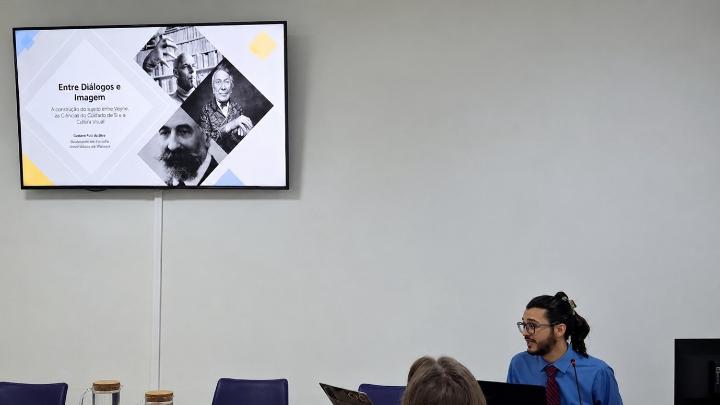
This project supported my participation as a paper presenter at the international conference After the Death of the Human: Michel Foucault’s 100th Anniversary, hosted by the University of Lisbon, Portugal, on 18–20 June 2026. The conference marked the centenary of Michel Foucault’s birth and reassessed his contribution to understandings of subjectivity, knowledge, power, ethics, aesthetics, and the problem of the human after the “death of man.”
My paper, entitled “Among Gifts and Image: Paul Veyne’s Maussian Critique of Foucault’s Concept of Care of the Self,” examined how Paul Veyne’s engagement with Marcel Mauss’s theory of the gift reshapes his dialogue with Foucault. It brought together philosophy, classical studies, anthropology, and intellectual history by reading Greco-Roman subjectivation through the practices of euergetism, reciprocity, prestige, image-making, and symbolic obligation. The paper argued that Veyne’s Maussian approach complicates Foucault’s account of the care of the self by showing that ancient subjectivity cannot be understood only as an ethical relation of the self to itself, but must also be situated within social, material, and communicative systems of exchange.
The intended outcomes were: to present and receive feedback on a developing article manuscript; to strengthen my international research profile as an Early Career Researcher; to build academic networks in Foucault studies, classical reception, and Lusophone intellectual contexts; and to develop the paper for future journal submission, potentially to Foucault Studies or another peer-reviewed venue.
Summary of project outcomes
The main activity completed was the presentation of my accepted paper at the University of Lisbon conference. The paper was delivered as part of an international programme dedicated to Foucault’s centenary and to the contemporary implications of his work for questions of subjectivity, power, ethics, and the post-human condition.
The presentation enabled me to test a central argument from my current doctoral research: that Veyne’s reading of ancient social practices, especially Roman euergetism, introduces a Maussian and anthropological dimension into debates on Foucault’s care of the self. Rather than treating subjectivation as an exclusively philosophical or ethical process, the paper reframed it as a cultural technology shaped by gifts, public image, prestige, speech, hierarchy, and reciprocal obligations. This allowed me to bring together materials from Roman history, anthropology, and Foucauldian philosophy in a way that directly responded to the conference’s interdisciplinary aims.
The key outcomes were:
- I presented my research to an international audience working on Foucault, philosophy, political theory, history, anthropology, and related fields.
- I received feedback that will inform the development of the paper into a publishable article.
- I strengthened my academic links with the Portuguese-speaking scholarly community, which is particularly important for my professional development as a Brazilian Early Career Researcher.
- I consolidated the connection between my doctoral project and broader debates on Foucault’s legacy, especially around ethics, aesthetics of the self, governmentality, and the critique of stable notions of “the human."
- The activity reinforced existing institutional connections between the University of Warwick and the University of Lisbon, one of Warwick’s recognised international partners.
There were no major changes from the original plan. The project was completed as proposed: I attended the conference, presented the accepted paper, participated in scholarly discussions, and gathered material for further development of the research.
Has the project supported further interdisciplinary work
Yes. The project directly supported further interdisciplinary work by allowing me to develop a research argument situated at the intersection of philosophy, classical studies, anthropology, intellectual history, and political theory. The paper used Mauss’s theory of the gift to reinterpret Veyne’s account of Roman euergetism and to reassess Foucault’s concept of the care of the self. This generated a productive framework for thinking about subjectivation not only as an ethical practice, but also as a social and symbolic process mediated by public image, prestige, reciprocity, and institutional power.
The conference also helped me clarify how this research can speak to contemporary debates on governmentality, and the erosion of stable humanist categories. In that sense, the award facilitated the development of a future article project on Veyne, Mauss, and Foucault, as well as a possible contribution to Warwick’s research culture through a Department of Philosophy Work in Progress seminar or related presentation.
The activity also strengthened my engagement with Lusophone academic networks. As a Brazilian researcher working in the UK and Australia, participation in a major Foucault conference in Portugal helped consolidate my integration into Portuguese-speaking academic debates while maintaining a strong connection to Warwick’s international research environment.