
How you've made a difference to Warwick
Your feedback, comments, and suggestions are the key to shaping the future of our University. Through surveys like the NSS, we gain invaluable insight into your student experience, empowering us to create meaningful improvements together. Your voice drives our commitment to making our community better every step of the way.
Thanks to your input, we’ve transformed your feedback from the NSS into real action. Explore the list below to see the improvements and initiatives we’ve introduced, as a result of the NSS and wider feedback:
University-wide actions:
You Said
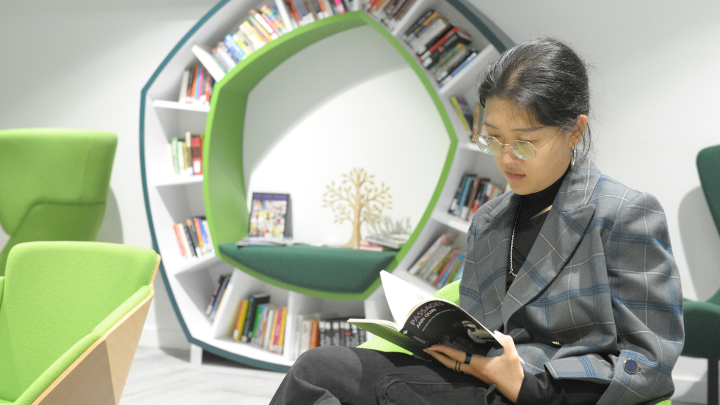
You asked for more quiet study spaces.
We did
We created a sensory study room on the 2nd-floor extension of the Main Library, designed for a calm and focused environment. This refurbished space features new furniture, including height-adjustable desks and all-in-one desktops. We’ve added comfortable seating options and ergonomic pods to support individual learning. We also created the ‘Breathing space’ relaxation room, a space for quiet reflection and a break from study.
You said
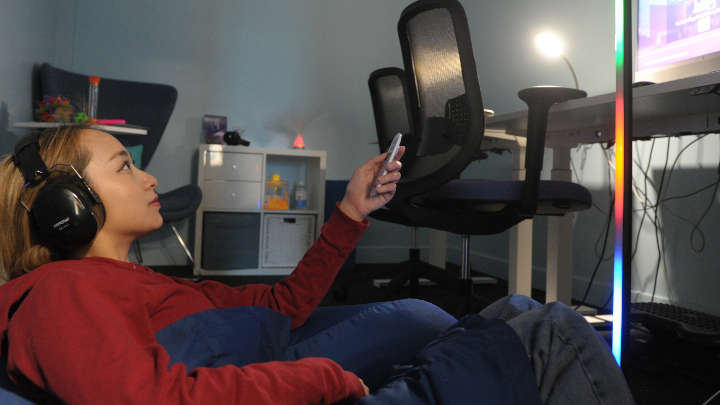
You asked for improved accessible space.
We did
We’ve enhanced accessible spaces across all five floors of the library. We refurbished and repainted these areas to create a more welcoming atmosphere, introduced new height-adjustable desks, and upgraded IT equipment for improved access. Additionally, we installed sensory equipment, such as sensory lamps, to enhance comfort. A new accessible room and a bookable online meeting room will be coming soon to the 2nd-floor extension!
You said
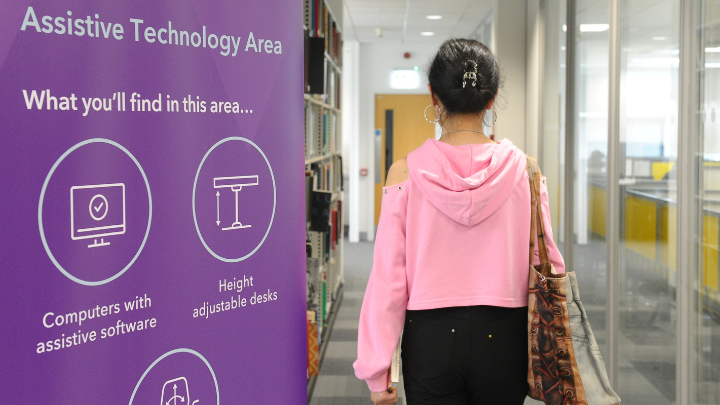
You asked for more assistive technology.
We did
We upgraded the assistive technology area on the first floor with new assistive software. We also introduced a new assistive technology space on the 2nd-floor extension, featuring height-adjustable desks and specialised software in a quiet setting to support diverse needs.
The Nook was created in response to student feedback around having dwell spaces on campus. This is an essential space to decompress and escape the pressures of university life:
- Pause: Take time out, make a cuppa, swap a book, have a chat, or enjoy a quiet moment.
- Meet: Join friendly gatherings like the Community Lounge and Global Café, where you can share experiences, get creative, and make new friends.
- Discover: Explore what’s happening across the University and make the most of your Warwick experience.
Students created mood boards of how they wanted the space to look and feel, which shaped the design and facilities offered in the space. Following its opening in Term 1 of 2025-26, the space is now regularly used by students and hosts weekly Together at Warwick events. Hear from students:
"Having a space on campus not centered on academics or spending money is really nice - it offers a chill 3rd place."
"A little cozy getaway really helps to make the campus feel safer and more welcoming, rather than a bustling hub of 'do something or you shouldn't be here'."
"It’s a very quiet safe space, and a good place to go when overstimulated."


Personal tutoring plays a key role in supporting your academic success at Warwick. To make sure it continues to meet students’ needs, the University carried out a Personal Tutoring Review during the 2024/25 academic year.
The review was shaped by extensive consultation with students and staff across the University, including surveys, forums, Students’ Union engagement, and departmental discussions. Student feedback played a central role in identifying what works well and where clearer expectations were needed.
Unitu is a collaboration between the University and the Students' Union, and has been rolled out to a number of departments in 2025-26. It is an online platform that aims to help universities to improve the student experience by effectively engaging with the student voice in real time.
Students can post issues, questions, ideas, or praise; posts can be to the private board, for just students to see and Course Reps to raise on their behalf at SSLC meetings. Posts can also be added to the the public board, for staff to address directly and quickly. Some issues can be resolved without waiting for the next SSLC meeting.
Using Unitu, feedback around teaching and learning is escalated efficiently to academic staff, providing transparent and actionable results. So far in the 2025/26 academic year, Unitu has hosted:
1100 active student users
64 posts raised on a range of topics
134 comments made
- 24% by students
- 42% by student course reps
- 34% by departmental staff
241 votes cast
Over 5500 views on posts
The roll out of the Warwick Award is a result of your feedback. The Award is an opportunity for you to build and showcase the skills you have developed at Warwick, ready for life after graduation.
The University’s student wellbeing strategy group utilise NSS feedback, where it has been particularly helpful in understanding how we can continue to improve accessibility and support students needing reasonable adjustments.
Departmental actions:

Careers Showcase for Health and Medical Sciences, Life Sciences and Chemistry
The Careers Showcase event was created in 2024 in response to student feedback and requests for more industry-specific employer events for Chemistry, Life Sciences and Health and Medical careers.
Following the success of this event, it was then held again in October 2025, with over 280 students in attendance.
What you said has helped us to implement the following changes:
- Established an SSLC for each programme rather than each year
- Collaborated with SSLCs and LingSoc to clarify the roles of each group
- Expanded Lecture Capture and other asynchronous resources to support learning beyond module meetings
- Increased opportunities for advice and feedback outside of class
- Introduced new optional modules, including Language, Society & Power, Dialects, and Multilingualism and Culture
- Implemented major structural changes to LCC (which will become the BA Professional and Intercultural Communication in 2025) and LML based on your feedback.
- Began consultation with students on updates to ELL
- Simplified and clarified assessment procedures, including removing cover pages and standardising word count and style guide requirements across modules.
- Removed automatic penalties for submissions below the word count
- Enhanced training on academic writing and referencing, including new content in ET120 and ET315 and additional sessions provided by Tilly
- Intervened when feedback was delayed or assignment deadlines presented issues
- Introduced ‘self-certifications’ for late submissions and ensured automatic implementation of reasonable adjustments
- Extended all summative deadlines after Christmas by at least one week and moved the dissertation deadline to Term 3
- Increased focus on career skills and opportunities, including bespoke updates in the triweekly newsletter (led by Clare Halldron) and sessions on applying academic skills to job applications
- Delivered DSeP sessions on understanding and using feedback to improve coursework
- Established an Academic Integrity Lead to coordinate policies across the department
- Expanded module-specific and assignment-specific guidance on using AI
- Developed an online module on AI policy, now used across the university
- Included SSLC representation at undergraduate staff course meetings
We created an NSS action plan following your feedback including: departmental culture, research openness, curriculum design, and community engagement. The 'We are Chemistry' (WaC) programmeLink opens in a new window was created by a team from the department where students and staff work as equal partners to build an inclusive culture that engages all students, empowers diverse voices, and fosters community trust.
Here are some of the actions taken:
You said: you wanted a social space you could access and/or work in between classes
We did: set up two common rooms in the department
You said: issues with the cost of living preventing you from attending events
We did: offer all our activities for free, and ensure that they are catered
You said: you wanted more career support
We did: we worked with students to offer more sessions on CV writing, job applications and industry networking (several of which were organised and led by students themselves)
You said: you wanted more resource access to support your study
We did: updated our book provider to OUP to offer better access to 100s more textbooks
You said: assessment quality is inconsistent
We did: initiated a systematic year review to improve assessment, where the DUGs and DSEP teamwork with module organisers to adjust their assessment and feedback based on previous student feedback
You said: feedback periods are too limited
We did: introduced an end of year feedback form, to allow for module evaluation that can include the context of revision, coursework feedback and the exam. These are then used to feed into our new module review process
You said: it can be hard to know what events are on
We did: ensured reminder emails are sent frequently, introduced the student event’s calendar to make tracking events easier and have introduced Patch Notes at the start of lectures and in the DCS atrium in order to present a weekly summary of the important events
You said: the weekly student update requires students to click on a link and download a pdf document. This introduces additional friction, and makes students less likely to read the email
We did: The department now includes key bullet points directly in the lead email body
You said: The amount of times that you have to verify on the Microsoft Authenticator app when in labs is out of proportion
We did: A solution to allow unlocking without two-factor authentication (if recently active) is being worked on and is scheduled for release in January
You said: you are inspired by lectures that are intellectually challenging and engaging
We did: returned to in-person lectures across all year groups this academic year, allowing lecturers to adapt their delivery based on student reactions and provides the opportunity for immediate questions and clarifications, fostering a deeper understanding of the teaching materials
--
You said: online exams are stressful, prone to technical problems, and you have concerns about academic misconduct
We did: introduced in-person exams on all modules in the 2024/5 academic year to improve the fairness, rigor and effectiveness of our department’s assessment processes
--
You said: you appreciate frequent Support and Feedback classes and enjoy the interactive and personalised learning opportunities they provide
So did: introduced weekly Support and Feedback classes on all core Micro, Macro and Quantitative modules in 2024/25
--
You said: you would like more internships or practical experience during your course
We did: launched a new BSc Economics and Management degree programme in partnership with Warwick Business School. This programme includes an optional work placement year, allowing students to gain practical experience before completing their studies at Warwick in their final year. We also produced new Voluntary Year Out guidelines, designed to make students more aware of the opportunities and support we offer and to make the process easier to navigate.
--
You said: improvements should be made to how teaching is scheduled, and you disliked last minute information about timetabling changes
We did: redesigned the timetable construction process so that the Term 1 and 2 timetables are published before the start of term and class sign up is opened for both terms at the beginning of the academic year.
--
You said: you would like more resources pre-arrival and during Year 1 for those without a background in economics and more support with the transition from Year 1 to Year 2
We did: have continued to develop our academic resources for offer holders and new students, with the Refresher Maths Moodle course extended to include Statistics. We also created bridging resources for Micro and Macro to support progression and help students transition smoothly into their second year.
--
You said: you wanted more information about what each module would be about
We did: have now provided short videos where the module leaders provide an overview of their modules. We also held a module fair to give students the opportunity to learn more about the optional modules available.
You said: you would like more advice on how to improve your future assignments
We did: introduced a new assignment feedback sheet with greater focus on ‘feed forward’
--
You said: that you’d prefer to have a named specialist route on your degree title to help with career and further study prospects after graduation
We did: have planned to shortly introduce new ‘pathways’ for the BA Education degree, allowing specialist routes based on your module choices
--
You said: you have provided us with various module feedback
We did: implementing plans to revamp the first-year curriculum to provide a more obvious theoretical foundation and deal with some existing overlapping topics. We are also adapting the second-year policy module to have a more global outlook, and a greater focus on how to analyse and interpret education policy
You said: NSS comments and departmental feedback mechanisms highlighted the need to reinforce skills training throughout the programme.
We did: We strengthened skills training across every year. We introduced History Study Cafés, where students work on their assessment with the support of a tutor. Staff also run Academic Writing Support sessions that focus on every aspect of written assignments. We also launched a new co-curricular module to facilitate the transition to higher education: “Unlocking History: research, Writing, and Success”.
You said: you wanted more career guidance and signposting of employability opportunities
We did: increased focus on careers and employability events by:
- Fundamentally reshaping how skills and careers are explicitly embedded across our degree courses, via a review of our current curriculum
- Establishment of a Departmental Lead on Employability, with a remit to work with colleagues to consider how best to embed employability and provide additional opportunities for students to develop transferable skills and career planning
- Creation of an event with Warwick Enterprise, highlighting opportunities and transferrable skills gained through degrees in History
- Organised an annual alumni event, inviting past students from the department to speak about how their History degree has helped support their career development
--
You said: you needed more wellbeing and support resources, through departmental feedback mechanisms, such as via the Student-Staff Liaison Committee (SSLC) and specific module feedback and NSS comments
We did: introduced additional wellbeing events and support resources by:
- Holding an information session for 'Accessing support at Warwick’ online with a recording and transcription subsequently made available online
- updating information and support being provided to students identified through the department’s processes for monitoring student attendance and progress
- a review of departmental communication around and support for Reasonable Adjustments, in line with the university’s approach and policies
You said: If you attended the law Careers Fair... What was helpful, what was missing?
We did: All comments were collated and passed directly to the Careers Team and raised formally at the SSLC meeting
You said: some of the student spaces were uninviting and dull
We did: improved student study spaces with new furniture and are planning an art competition to enhance the environment with your work
--
You said: you would like to see more industry partners on campus and careers events that were relevant for Life Sciences students
We did: we hosted the first Life Sciences, Chemistry, and WMS careers showcase
--
You said: The Apple MAC’s are difficult to use in the ICL suite (especially the mouse)
We did: upgraded the Apple Mac computers and replaced all mice for standard mice for better usability. In addition we will be running sessions on Mac use for beginners prior to exam periods
--
You said: I really like how in LF127 Marwan Albuhtori has been giving these weekly interactive exam-style moodle quizzes... It’s really helping with confidence and revision
We did: The Undergraduate Teaching Management Committee discussed this praise and the Programmes Director will encourage other Module Leaders to trial/adopt this method
We did: conducted a summer 2024 internship on inclusivity, focusing on the student voice
We did: shifted initial module feedback to earlier in the term and revamped feedback forms
You said: you wanted more support and guidance
We did: improved the ways in which students can access advice and guidance by:
- Launching the Study Skills Moodle pages, where you can find tips on how to write essays, explanations of our marking criteria, and lots more
- Offering Philosophy Study Skills Link opens in a new windowsessions in Terms 1 and 2, which have been recorded to be re-watched later
- Offering more accessible essay and assessment support
- Publishing staff office hours in more places, including online, to make it easier for you to contact our academic staff and meet with module tutors.
- By introducing a new Personal Development form, designed to facilitate your personal tutor meetings and help you keep track of your development.
- By timing Term 3 Personal Tutor meetings to coincide with choices you will be making about your course (e.g. module selection).
-
You said: you wanted more engaging teaching
We did: took additional steps to offer the highest quality learning experience by:
- Responding to requests for modules on topics you are particularly interested in. Modules list can be accessed here
- Rewarding outstanding teaching performances by staff and teaching assistants with nominations for the Warwick Awards for Teaching Excellence
- Making all of our module reading lists available online
- Encouraging the development of a more inclusive curriculum and supporting staff to diversify their reading lists
- By involving the SSLC in the departmental teaching planning process
- By introducing a Philosophy Teaching Exchange for staff and graduate students who teach, to facilitate exchange of best practice in teaching and learning, and training in academic technology
-
You said: you wanted better assessment guidance and feedback
We did: clarified our marking criteria and improved the ways in which we give students feedback on their work by:
- Adding an explanation of our marking criteria to the Study Skills Moodle pages and by offering study skills sessions on how to write a philosophy essay
- Developing more detailed guidelines for staff on how to offer helpful comments on your work
-
You said: we could improve the sense of community
We did: invested in developing our community of staff and students and in enhancing the student voice by:
- Offering more Departmental support to the SSLC
- Introducing student representatives on the Departmental Equality and Welfare Committee (EWC)
- Introducing a weekly Philosophy Community & Opportunity newsletter sent by the Director of Student Experience and Progression
- Relaunching the Departmental Instagram account with news about Departmental and student-community activities
- Supporting the creation of the Warwick Philosophy Black Voice Network and facilitating its work with the SSLC and the EWC
- Offering Departmental support to PhilSoc and Pharos Magazine
- Introducing the Philosophy Events Committee and Student Events Fund Link opens in a new windowand working in partnership with the students to co-create the events calendar in the Department
-
You said: you wanted more careers support
We did: improved the career development support available to students by:
- Working with our career consultant, who is happy to answer your careers related questions
- Developing an online resource for career development support – see our Philosophy Employability Moodle
- Including career events within our Study Skills sessions
- Providing examples of career paths chosen by Warwick Philosophy graduates and making them available to you
- Introducing an opportunity for you to spend a year in employment during your studies
-
Holding an annual Work Experience for Philosophers information session featuring current Philosophy students who have completed work experience opportunities (e.g., Work Placement Year, Warwick Internship Programme)
You said: detailed feedback, including verbal feedback, helps you make progress academically
We did:
- included the names of markers on all feedback sheets. This allows you to obtain additional verbal feedback, helping to clarify anything you do not understand
- promoted feedback as something received when writing an essay or revising for an exam (for example, talking through a plan for an essay or exam answer in an advice and feedback hour)
- Made formative feedback sheets designed to provide comprehensive feedback, indicating areas for improvement and providing comments on seminar performance
--
You said: exam feedback is important to you (in line with the Students’ Union Campaign for Departments to provide exam feedback)
We did:
- PAIS remains one of the only Warwick departments to give individual written feedback on all exams
- We go further than just written comments: we give students an opportunity to talk through their exam feedback with the marker
- Our feedback sheets for exams are designed to give feedback on each individual exam answer, as well as an overall assessment
- Pioneered the use of Tabula and are now using it throughout our programmes to publish feedback electronically
--
You said: the purpose of ‘office hours’ to be clearer and to indicate the kinds of support you can receive from academic staff
We did: re-named office hours ‘advice and feedback hours’, thereby indicating the seriousness PAIS attaches to feedback and the variety of forms feedback to you can take
--
You said: you would like even clearer marking criteria
We did:
- Ran a dedicated workshop on the PAIS marking criteria.
-
Have defined the headings/categories of the marking criteria to make them clearer for students
-
Developed revised and more detailed marking descriptors as outlined in the PAIS Undergraduate handbook. This allows you to understand the marking criteria before you tackle assignments and have been updated to reflect the new 20 point marking scale
--
You said: you would like us to focus more on skills and 'employability' and the ways in which a PAIS degree develops the knowledge and skills you will need for the future
We did:
Curriculum-Embedded Skills
- We’ve added clear information to Moodle module pages showing the skills you gain from each PAIS module - so you can see how your learning connects to your future.
- We actively support theWarwick Award, which recognises core skills and appears on your HEAR transcript. You can earn points through taking a number of PAIS modules and co-curricular activities.
- Each category of our new and clearermarking criteriacorresponds to a key set of transferable academic skills that students will continue to develop during their studies in PAIS.
- Digital Literacy - equipping students with the skills to navigate and critique emerging technologies
- We expanded our Quantitative Methods offering. These modules are designed to equip you with tools that are highly sought after across a wide range of careers.
- We introduced Practical Skills based modules for finalists (International Development in Action: Practical Skills for Impact, and European Public Affairs: A Practical Skills-Based Approach).
Co-Curricular Skills Development
- We expanded our study abroad opportunities and work placement opportunities and put together new online resources - and information sessions - to fully inform students of these opportunities.
- We run annual PAIS Policy Hackathons, where students collaborate in teams to tackle real-world policy challenges and present their solutions to expert judges from government, industry, and civil society.
- Our PAIS student ambassador scheme continues to grow. Ambassadors develop leadership, communication, and teamwork skills while supporting the department.
- We've appointed an increasing number of finalist student research assistants, following a competitive application process amongst our students. The successful applicants work alongside our academics on research projects and enhancing teaching and the student experience.
- We host an Undergraduate Dissertation Conference, giving you the chance to present your work and build confidence in your research and communication skills.
Career Development & Pathways
- We run an annual PAIS Alumni and Future Skills event, where former students share how their degree helped shape their careers.
- Our PAIS Employability and Skills Series includes events with external speakers. There are also bookable sessions with our Senior Careers Consultant and dedicated support through our student experience team member focused on employability.
- We extensively updated our careers, employability, and internship webpages to help you explore opportunities and plan your next steps. This includes information on requesting references.
- Even if you aren’t successful in applying to our ambassador or research assistant schemes, we offer constructive feedback - helping you reflect, improve, and build confidence for future applications.
- We run information sessions on undertaking postgraduate study, alongside extensive online resources. These help you explore further academic pathways and understand how your PAIS degree prepares you for advanced study - supporting your long-term goals and future development.
- We offer funding support for students to attend conferences and personal development opportunities — helping you take initiative and grow professionally.
--
You said: high quality academic support was important to you, particularly in terms of teaching staff supporting your learning
We did:
Academic Skills and Assessment Support
- We have run very well-received academic support sessions on essay writing and exam technique for all year groups.
- We updated ouracademic support webpages,with a dedicated section on essay writing and exam resources
- Summative essay titles are announced and submissions opened from Term 1 on Tabula to help students organise their time and workloads from the start of the year.
- We have worked with module directors to stagger summative deadlines - including in term 3 - where we can.
Study Choices and Progression Guidance
- We have run an MA information session and a dissertation information session to support decisions on study choices.
- We have introduced a new online 'study choices' guide, covering module choices, assessment choices, outside options, languages, and postgraduate study etc.
- We have introduced an additional personal tutor meeting in term 3 for all undergraduates (with a focus on future module choices and support for exams)
Personal Tutoring and Student Communications
- We developed a clearer who to contact guide and a student email policy. Taken together these better enable students to contact academic and professional services colleagues and receive tailored support.
- We developed new personal tutor guidelines to ensure meetings are as productive as possible for you. We also updated our personal tutor page to make the role clearer and answer questions you may have.
Mitigating Circumstances and Student Support Processes
- We have updated our mitigating circumstances page to make the process clearer to students. We have named the members of the mitigating circumstances panel. We have clarified how students can find out how they have been applied. The process is now online based, via Tabula, making it easier for students.
--
You said: you would like additional library resources to help you in your studies
We did:
- Each year we look at our module evaluation results and direct library resources to where your feedback tells us they would be valued the most
-
The Library recently secured a new £34,993 x 3 year deal for access to the Oxford Politics Trove collection of e-books
-
The Trove collection will be particularly useful for the core modules where OUP key texts have never been available in an e-format for purchase, via the other e-book providers we use
--
You said: you would like the highest quality online resources
We did:
- We continue to develop our PAIS Undergraduate webpages
- The entire PAIS website has been reconfigured and rebranded
- We moved across our module websites to Moodle and introduced Talis Aspire reading list software across all our modules
- We appointed an Academic Technologist. This role is targeted to further enhance resources on Moodle. We redesigned our module websites in response to student feedback
--
You said: you would like the student voice to be heard ‘loud and clear’ in PAIS
We did:
Strengthening Student Experience Leadership
- We appointed a Director of Student Experience and Progression and expanded the Student Experience Team.
Enhancing Student Voice and Participation
- We have run focus groups and Head of Department discussion lunches so our finalist students can provide their input on developing PAIS, based on their experience of 3 or 4 years with us.
- We invite students to presentations given by Teaching Fellow applicants so that they can help decide on the teachers of the future (and in the process gain experience of the kind of presentations they may need to give when applying for jobs).
- We have expanded student representation on key departmental committees - our Education Committee, and Equality and Diversity Committee. We invite SSLC reps to departmental staff meetings (Department Board). Course Reps actively contributed to our Institutional and Teaching Learning Review (ITLR) submission and the ITLR process in the University more widely.
- We have set up an SSLC forum bringing together Course Reps from single honours and joint degrees to discuss shared concerns and facilitate improvements.
- Moved the module feedback process online and set aside time in lectures/seminars for you to complete it so that it is easier than ever for you to give us your feedback on your modules.
Curriculum Development and Inclusivity Work
- We set up a Decolonising the Curriculum Working Group, co-chaired by a student. We also set up a Liberating the Curriculum Scheme. Through collaboration with students several modules have been revised.
- We are actively working with students as partners on our curriculum review
Improving Communication and Student Planning
- Following feedback from finalists, we communicated the date of Graduation earlier to students. This enables you to plan ahead with your families and friends.
--
You said: you would like PAIS to provide an even more friendly and sociable environment community of students and staff
We did:
- We now have one of the biggest common rooms on campus - also with a kettle and microwave. We installed a printer, more table and chairs, and additional plug/mobile phone sockets
- We hold regular drinks for students in the Dirty Duck/Fusion and pizza and drinks events for finalists
- We hold a big social event in the Copper Rooms each March for all our students. This has featured a pub quiz, a performance by our PAIS Department band, The Plagiarists, and academics DJ'ing .There has been free food and drink
- We have become much more active on social media - including Instagram and LinkedIn
You said: you wanted more community-building
We did: started weekly wellbeing sessions in the common room with food. We also implemented vertical tutoring for improved student support, where students from different year groups are mixed together in the same tutor group. This approach aims to foster a stronger sense of community and support among students of varying ages.
We did: further developed our engagement strategy to improve the attendance and engagement with lectures.
You said: while on modules in other departments you felt you had no voice
We did: we approached all partner departments for our joint programmes to have an SSLC rep on their SSLC panels. WBS, CS, and Maths have a confirmed Stats student rep
We did: integrated intercultural training into a Year 1 module
We did: revised the second-year assessment structure
We did: enhanced the mentor scheme and improved departmental communication, including user-friendly webpages
You said: We want more opportunity to gain places on our preferred optional modules.
We did: Increased capacity on modules with higher student demand to avoid disappointment. For the second year in a row students have got their 1st choice of modules for all running modules with no irreconcilable clashes.
You said: You wanted more convenient timetables.
We did: ‘Smart timetabling’ options have been deployed to make a timetable more convenient for students with commonly chosen modules being timetabled in proximity to each other.
You said: You would like more information to inform module selection and the associated application process.
We did: Improvements to the Module Fair and module application processes working in conjunction with the SSLC. This has increased information, advice, guidance (including further video content from Module Leaders) has aided the application process, and the shaping of the Module Fair.
You said: Understanding how you can fulfil your potential during your assessments is key to fulfilling your potential.
We did: More WBS resource is concentrated on Assessment & Feedback than ever before including Undergraduate Programme feedback quality checks, and a senior cross-School Working Group aiming to further improve feedback and aid student understanding of feedback.
You said: you wanted clearer communication from the department
We did: we re-launched the WMG student newsletter, sent weekly by the WMG Student Experience Team to full-time undergraduate students. This newsletter highlights key opportunities and important information for students. Additionally, we introduced a monthly newsletter for undergraduate degree apprentices to help them feel more connected to the WMG student community
What you said has helped us to implement the following changes:
- Launch of the Beehive facility for anatomy and clinical skills learning
- Implementation of live timetabling
- Improvements to academic days including prescribing teaching and learning resources
- Improvements to pre-finals revision block including increased clinical focus and teaching from clinicians
- Development of the MTC Student Support Hub
- Collaborative redesign of assessment diet across Year 1 and Year 2 core modules, working with students, staff, and the HMS external examiner to reduce clustering and volume of assessment deadlines while maintaining academic standards and a strong commitment to integrative learning.
- Redesign of written examination questions to be explicitly patient or population case driven, reflecting the principles and structure of case-based learning.
- Increased number of structured and timetabled revision sessions delivered by module leads, improving consistency of preparation opportunities across modules.
- Introduction of taught sessions on assessment literacy to ensure that expectations, marking processes and feedback use are transparent and well understood by students.
- Embedded clear careers cues within all CBL cases and formally timetabled careers and skills sessions to support students in making links between curriculum content and future pathways.
- Introduced pre-module timetable meetings to ensure alignment between Tabula, room bookings, and the MyWarwick app prior to module delivery, making timetable information clearer and more reliable
- Currently working with the Senior Tutor and Personal Tutors to promote a developmental approach to feedback, supporting students to use feedback longitudinally as they progress through the course.
- Pilot session with Warwick Enterprise to support students in exploring non-traditional and entrepreneurial career pathways
-
The Phase 3 team is now actively working with teaching staff to ensure slides are uploaded ahead of lectures for Academic Days to allow students time to prepare
-
Staff have reminded students about space usage and are in the process of adding new, clearer signage in the MTC and Beehive areas to manage differing noise expectations in these areas