
News
Welcome to our News Page. Read on for updates on what the Energy and Sustainability Team has been up to!
Year in Review – Our Biodiversity Successes in 2025
2025 was a busy year for us and we are very proud of what we achieved.
We undertook structured surveys of five groups:
- We are grateful to Warwickshire Mammal Group and Tanya Carey who enabled us to carry out two small mammal surveys in 2025. This year’s surveys informed the decision to lay the overgrown hedge off the Spine Route, with the aim to restore and boost its value to wildlife.
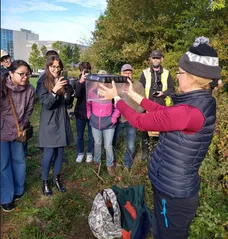
- We recorded 132 species during the four moth surveys in 2025, with 86 species new to our list! A huge thank you to Dan Hall for sharing his expertise and enthusiasm for these fascinating creatures with us.
- 2025 marked the second year of our riverfly surveys on campus, with which we contribute to the work of The Riverfly Partnership to monitor the health of river environments in the UK.
- Our amphibian and reptile surveys showed excellent results with the confirmation of breeding grass snakes at a survey site near one of the biggest ponds on campus, which indicates a healthy aquatic habitat.
- In 2025 we also started collecting data on butterflies on two transect routes. This first survey season yielded 17 species in the two areas.
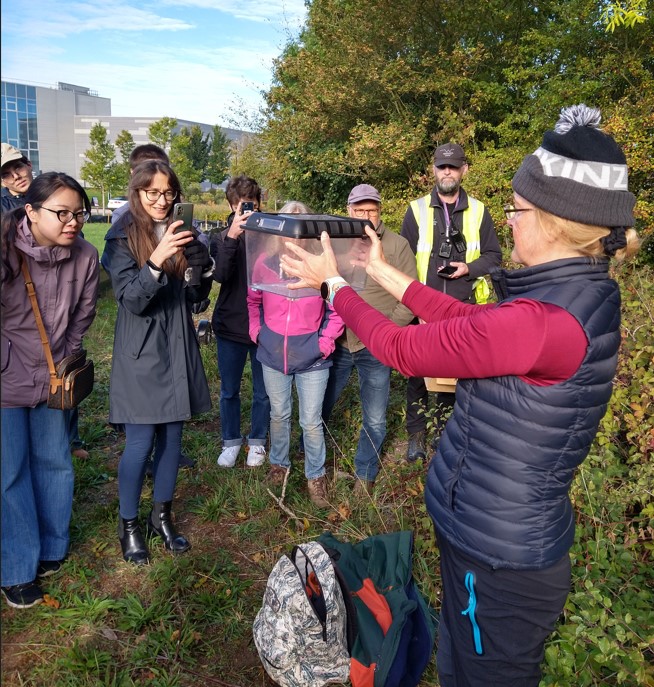
We also undertook a hedgehog footprint tunnel survey at Gibbet Hill and both the tunnels and the accompanying wildlife trail cameras confirmed the presence of these elusive mammals on site. Our wildlife trail cameras also captured them near Sherbourne Residences. We have a number of hedgehog houses dotted around on campus, so if you see one, make sure you don’t disturb it in case it’s got a tenant.
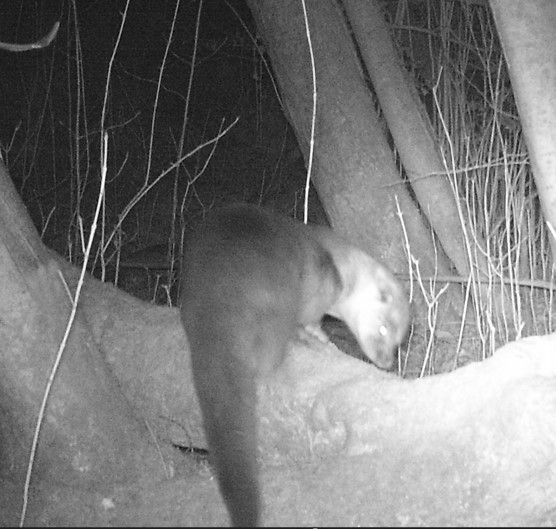 Our wildlife trail cameras didn’t just help us with hedgehog sightings this year. Thanks to them, we now know that campus is home to otters, water rail and tawny owls, among others.
This year we also found out that we are lucky enough to have harvest mice on campus. A group of hard-working volunteers undertook our first ever harvest mouse nest survey, which enabled the University to contribute to the National Harvest Mouse Survey database.
We continued our popular Biodiversity Walk event series, including walks with a focus on birds (thank you, Laura Craddock and Rosalyn Palmer!), fungi, bats, butterflies, and a new Autumn Colour addition this year to celebrate our collaborative work with the Grounds and Gardens Team.
Altogether, over 390 people participated in our biodiversity-related events in 2025!
Talking about collaboration, our monthly Warwick Wombles Litter Picks continued with the support of the Waste and Recycling Team. In 2025, 150 staff and student volunteers attended 13 litter picks and collected 247.7kg litter from green spaces, making the campus safer for wildlife.
Nature Conservation Volunteers and Warwick Volunteers organised additional litter picks off campus, contributing to the University’s bid in this year’s Big Hog Friendly Litter Pick Challenge.
As a result of all these combined efforts, for the first time ever, the University of Warwick has been crowed winner in the universities category! Well done to all, what an amazing achievement!
We also hosted the first Wild Warwick this year, ran the Warwick at Night event series to celebrate the University’s 60th anniversary, contributed to the National Hedgehog Monitoring Programme, and created an Autumn Biodiversity Trail.
Other significant milestones included signing the Nature Positive Pledge, and releasing 30 white-clawed crayfish into the NAIC rill.
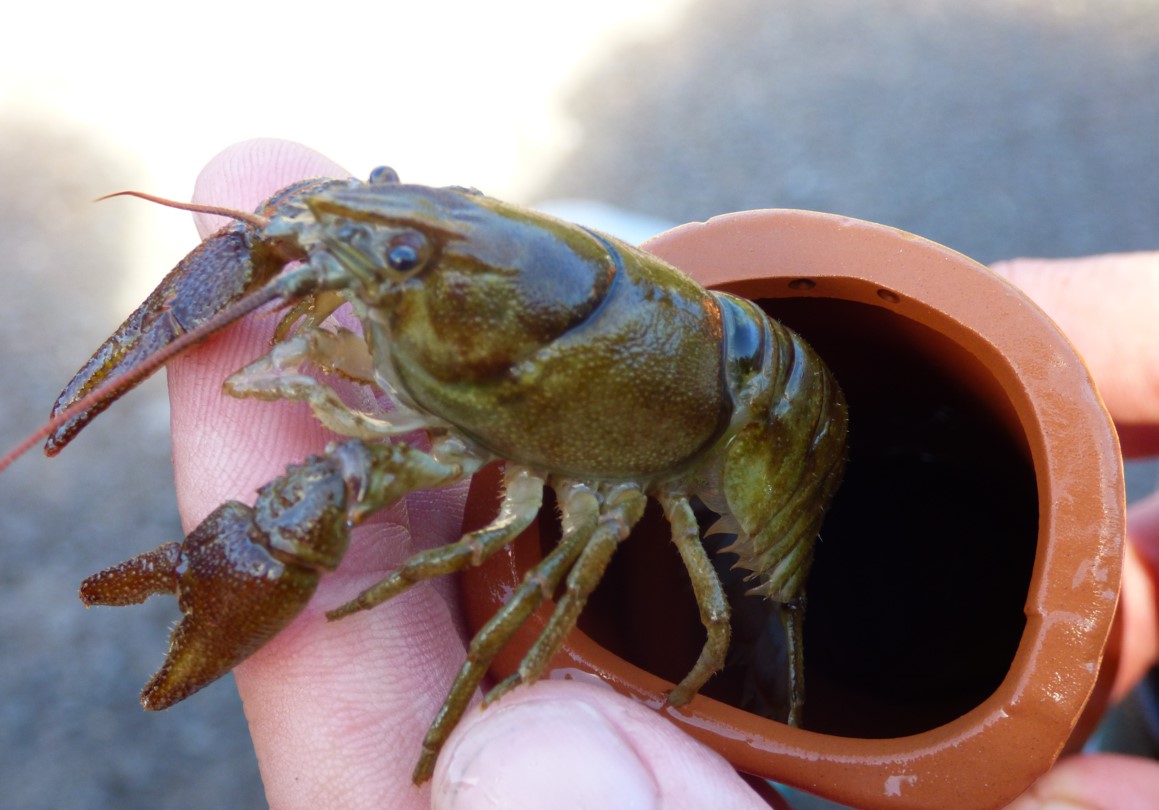
White-clawed crayfish are the only native crayfish in the UK but are under threat from the invasive non-native signal crayfish that not only outcompete white-clawed crayfish in their natural environment, but also carry crayfish plague, which can have devastating effects on the native species. The University collaborated with Warwickshire Wildlife Trust, Coventry City Council and Natural England on this important reintroduction project to create an ARK site on campus where populations can establish and, if successful, some individuals can be translocated to other suitable sites to help ensure the survival of the species. Find out more about the project here.
Are you curious how all this compares to 2024? Click here to find out!
A big thank you to all who spent time with us this year and supported our work. As you can see, your participation is invaluable and together we are making a real difference for wildlife – we hope to see you again next year!
Share Your StoryLink opens in a new window
Write for our blog or news page and get your story published.
Stay Connected
Follow us on LinkedIn, Facebook and Instagram for the latest updates on our environmental sustainability initiatives.
Become a StaffLink opens in a new window or StudentLink opens in a new window Green Champion to receive our monthly newsletters
Get involved in sustainability initiatives, raise awareness and identify opportunities to create a more sustainable campus.