
John Wisdom's Patent of Admission
Warwickshire County Record Office CR1600/LH19/14
This patent outlines the reasons for Brother John Wisdom’s admission to the hospital. It records how he had been ‘undone by the rebells’ after being caught up in the violence of the Irish Rebellion of 1641 and, in recognition of his loyal service, granted a place.
The glimpses of Wisdom’s experiences as an Irish refugee in this patent are tantalising yet frustratingly brief, making it difficult to build a fuller picture of his life. Leicester’s signature and the Sidney seal at the bottom remind us how Wisdom’s admission was bound up with networks of patronage.
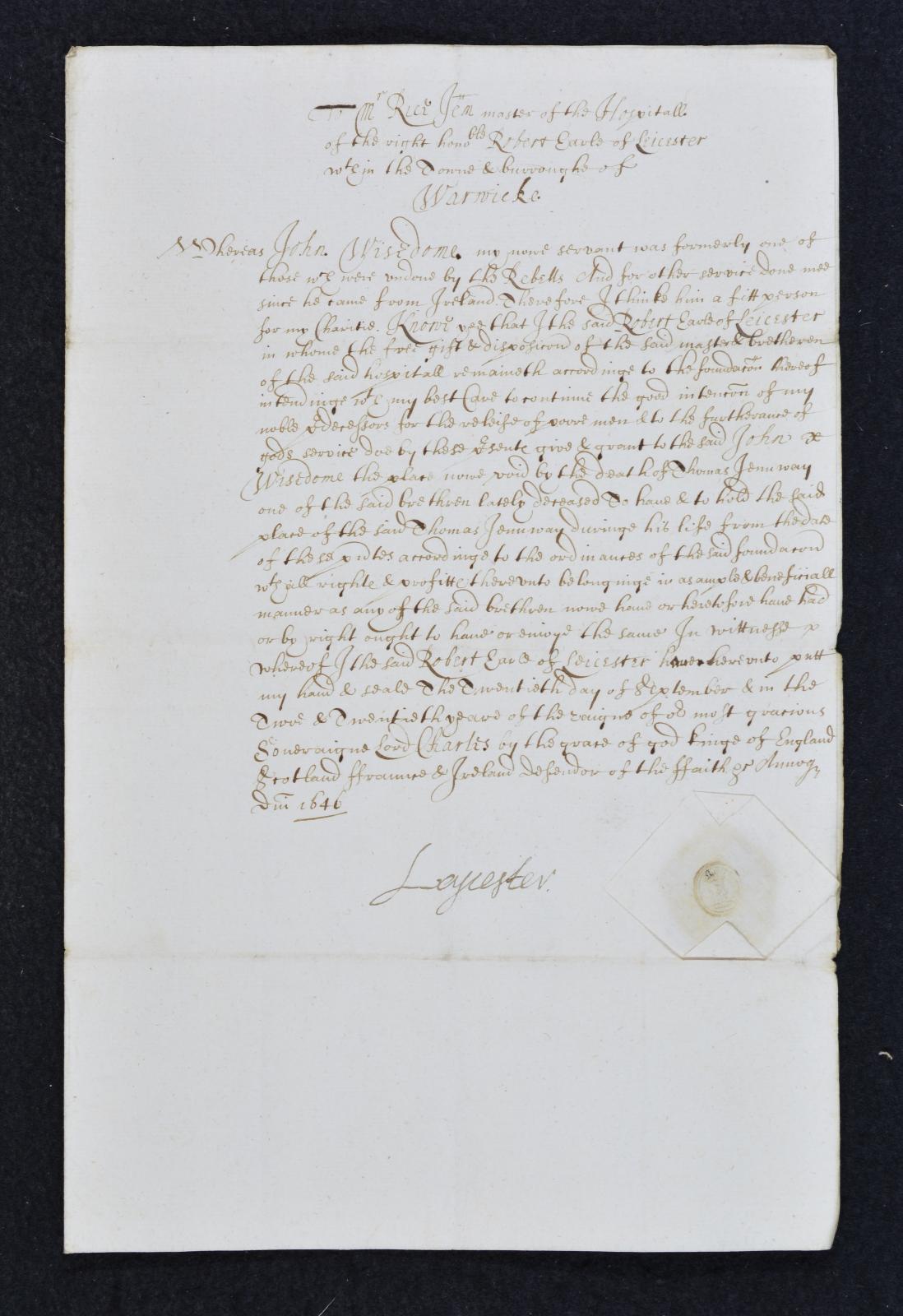
To Mr Rice Jem, master of the Hospital of the right honourable Robert Earl of Leicester within the town & borough of Warwick
Whereas John Wisdom, my new servant was formerly one of those which were undone by the rebels. And for other service done me since he came from Ireland. Therefore I think him a fit person for my charity.
Know you that I the said Robert Earl of Leicester in whom the free gift & disposition of the said master and brethren of the said hospital remain[s] according to the foundation thereof intending with my best care to continue the good intention of my noble predecessors for the relief of poor men and to the furtherance of God’s service do by these presents give and grant to the said John Wisdom the place now void by the death of Thomas Jemeway one of the said brethren lately deceased.
To have and to hold the said place of the said Thomas Jemeway during his life from the date of these patents according to the ordinances of the said foundation with all rights and profits thereunto being in as ample and beneficial manner as any of the said brethren now have or heretofore have had.
Leicester.
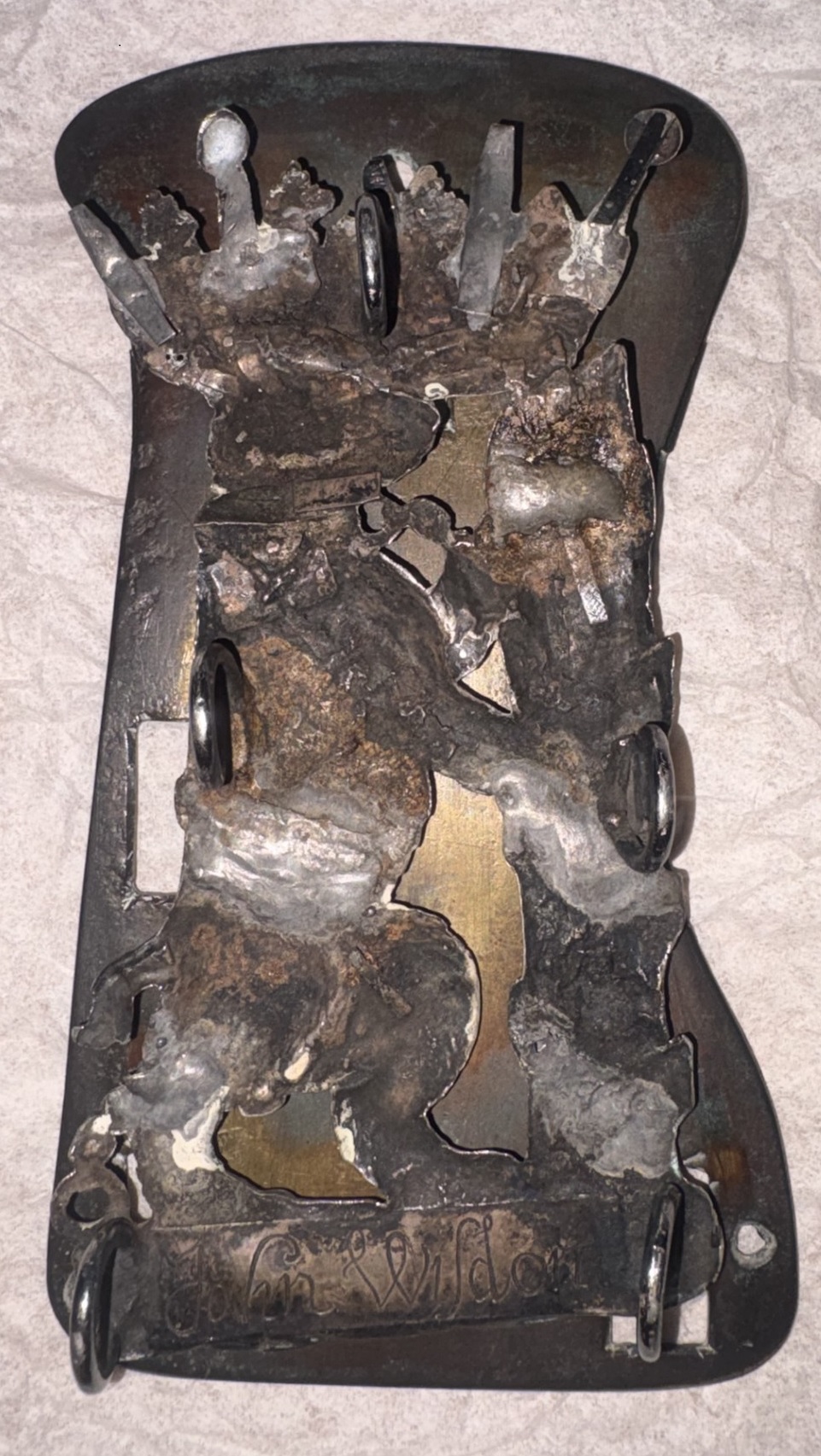
On the right is John Wisdom's original silver badge (c.1665), from the Lord Leycester's collections, prominently displaying the Dudley emblem of the bear and ragged staff, which would have been worn on the left sleeve of his gown.
The badges date from April 1665, when the master and brethren first decided to introduce them, although they were not required in the original statutes. Passed from one brother to the next after death, they materially and symbolically linked successive generations of almsmen. Five of the original twelve badges still survive.