
Reinvention Journal Special Issue - Call for Papers

Special Issue
AI and the Final-Year Research Experience: Transatlantic Perspectives
Papers are invited for submission to the established and peer-reviewed journal Reinvention, for a special issue on how artificial intelligence is changing what it means to do final-year undergraduate research.
The call is open to all undergraduate researchers, from any discipline and any institution. The issue will be fully open access, so it is free to submit and free to read. Submissions will be peer-reviewed and supported by a student-led transatlantic Editorial Board from Elon University and the University of Warwick.
The special issue is scheduled to publish June/July 2027. It sits alongside a companion special issue of Perspectives on Undergraduate Research and Mentoring (PURM), exploring the same questions from the academic staff perspective.
Key dates:
-
October 2026 to early January 2027 develop your submission.
-
Submission deadline midnight (UK time)
6 January 2027. -
Review and revisions between January to April 2027.
-
Publication June/July 2027.
What we're looking for
The final-year project is where many students first work as researchers. In the US, this might be a capstone or a senior thesis. In the UK, a dissertation. Generative AI has entered every stage of that process, often faster than guidance, supervision or assessment has kept up. We want to hear from the students doing that work. This issue is not a home for research that simply happens to involve AI, we want work on how AI shaped the process or experience of doing final-year research.
Who can submit
Current undergraduate students and recent graduates, broadly within a year of finishing their degree.
Submissions should be based on undergraduate work. We are happy to consider exceptions. Get in touch if you are unsure.
We welcome submissions from any discipline and any institution.
Submissions might explore:
-
Choosing a topic, framing a question, or searching the literature with AI.
-
Using AI in data collection, analysis, coding, or modelling.
-
Writing, drafting, and responding to feedback.
-
Supervision, and how AI changed conversations with supervisors or advisors.
-
Academic integrity, disclosure, and institutional policy in practice.
-
Access and equity: who has the tools, the skills, and the confidence to use them.
-
Confidence, identity, and belonging as a researcher.
-
Disciplinary differences in how AI is used and judged.
-
Differences between US and UK approaches to final-year research.
-
Deciding not to use AI, and why.
These are starting points, not limits.
Accepted formats
Research articles |
Original research. 2,000-5,000 words, excluding abstract, keywords, glossary, references and appendices. Abstracts are 200-250 words. |
Critical reflections |
A reflective account of your own final-year research experience, grounded in relevant literature. 500-1,000 words, excluding abstract, keywords, glossary, references and appendices. Abstracts are 200-250 words. |
Book reviews |
Reviews of books on AI, research, or higher education. Around 500-1,000 words. Co-authored reviews and paired reviews offering different perspectives are welcome. |
How to submit
Submit through the Reinvention online platform at Submissions | Reinvention: an International Journal of Undergraduate Research.
There is no separate submission route for the special issue. Please submit through the standard form and include a cover page stating “Special Issue: AI and the Final-Year Research Experience”, followed by your paper’s title, your name, institution and contact email.
The following pages will include a 200-250 word abstract, keywords, glossary, main text, references and any appendices. Research articles should normally include an introduction, methodology, results, discussion and conclusion.
Given the theme, we ask all authors to include a short statement describing how, if at all, they used AI tools in preparing their submission.
Before submitting your paper please:
- Review your own paper, check it is written for an interested reader who is not necessarily in your field of study.
- Visit the journal website and read a selection of recent papers.
(Reinvention: an International Journal of Undergraduate Research)
- Read the Submission Guidance (Reinvention Submission Guidance)Link opens in a new window
- Read the Style Guide (Reinvention Style Guide)
Review process
Submissions are first reviewed by the student editorial team, who will give developmental feedback. Articles that progress then go to academic peer review, followed by copy editing. Authors will need to be available to respond to feedback at points during the process.
We see review as part of the experience. You will get constructive feedback designed to help you develop as a writer and researcher, whatever the outcome.
Editorial Board
Elon University: Zach Conklin, Alyssa Collins and Chris Guider
University of Warwick: Reinvention Editorial Board with Sam Shakhar, Editor for Vol. 19 and 20.
Publication support: Dr Tom Ritchie and Jenna Nilson
University of Warwick, with Student Research Support, Education Academy
Contact via: reinventionjournal@warwick.ac.uk
Questions?
Any questions contact the Special Issue Editorial Board via reinventionjournal@warwick.ac.uk
Book a 15-minute meeting with the Editorial Board hereLink opens in a new window.
Zach Conklin
Zach Conklin is a sophomore at Elon University pursuing a dual degree in Finance and Entrepreneurship alongside an MS in Business Analytics. His research interests sit where markets, data, and policy meet. He has co-authored an AI ethics policy brief and competed in the Federal Reserve's Fed Challenge. In his entrepreneurship coursework, he evaluates early-stage ventures and weighs their strengths and risks. He works in an admissions records role and serves as President of the Pickleball Club. As an editor, he brings an analytical eye and a commitment to clear, rigorous writing.

Chris Guider
Chris Guider studies Business Analytics and Economics at Elon University, with interests in business, economics, public policy, and how data shape the world. His undergraduate research has examined the NFL’s dynamic kick-off rule, using statistical modelling and machine learning to evaluate its effects on game outcomes. He has competed in the Federal Reserve’s Fed Challenge. Outside the classroom, he serves as Speaker Pro Tempore in Elon’s Student Government, President of the Club Golf Team, and a Speech coach. As an editor for a special volume of Reinvention exploring AI’s impact on undergraduate research, he hopes to foster curiosity and evidence-based discussion.
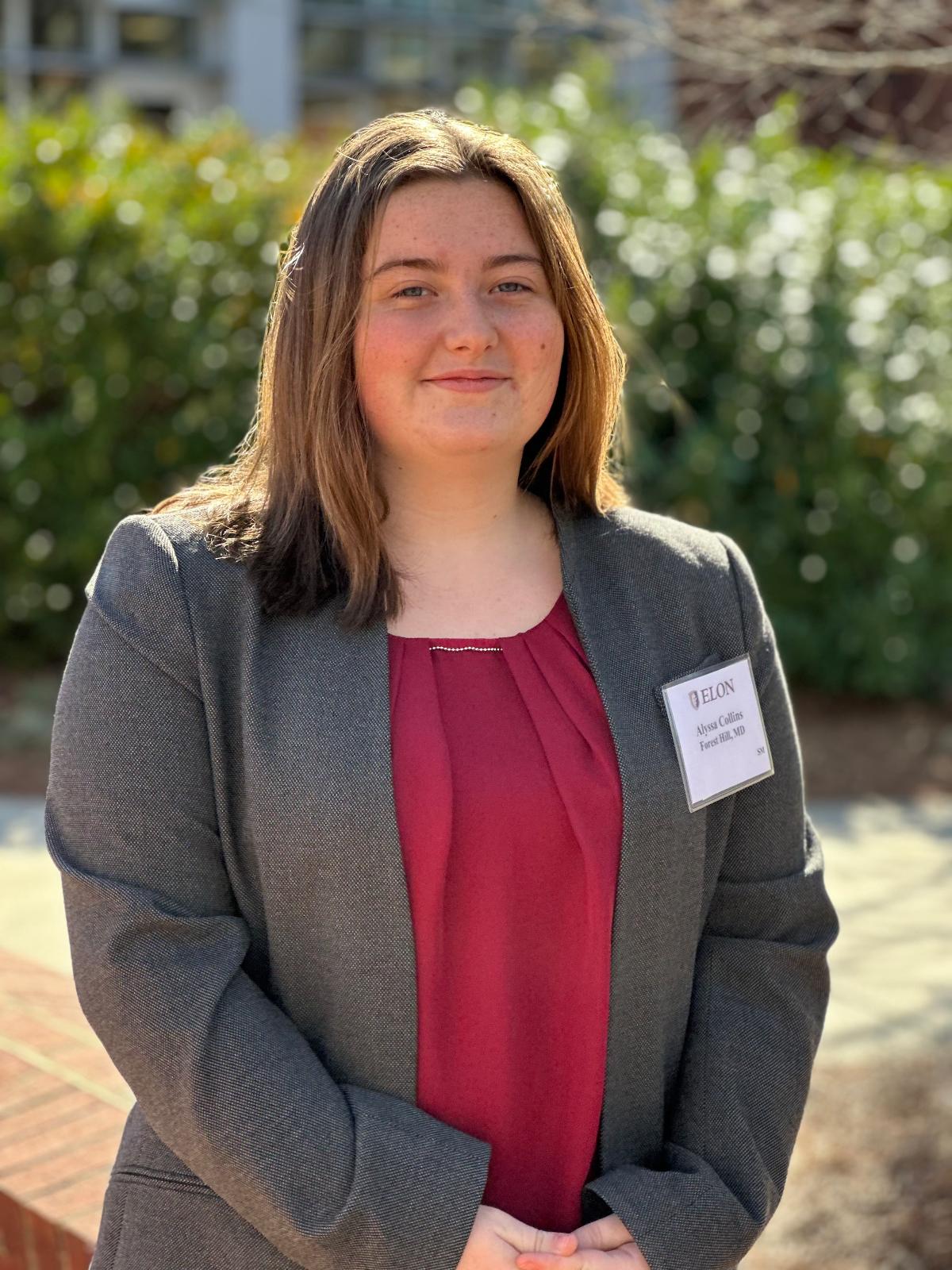
Alyssa Collins
Alyssa Collins, an Elon Teaching Fellow and North Carolina Teaching Fellow, is a senior at Elon University majoring in Mathematics with Teacher Licensure. As a future math teacher, she explores how generative AI can deepen, rather than replace, students’ mathematical thinking. Her work with Elon’s Center for Engaged Learning includes a guest appearance on the Making College Worth It podcast. Her fall 2026 presentation at the North Carolina Council of Teachers of Mathematics (NCCTM) examines how AI-assisted reflection shapes Calculus I students’ understanding, self-awareness and problem-solving.

Dr Tom Ritchie
Dr Tom Ritchie is a Reader and Director of Student Experience in the Department of Chemistry at the University of Warwick. A historian by training, his work focuses on belonging, student partnership and the ethical use of AI in higher education. He was a US-UK Fulbright Scholar at Elon University, where he worked on AI and belonging in course design, and he founded the Centre for Belonging in Education. He co-created The AI Revolution module at Warwick, hosts the AI Ethics Now podcast, and is co-editing the companion special issue of Perspectives on Undergraduate Research and Mentoring (PURM) on mentoring, belonging and generative AI. He is a Senior Fellow of the Higher Education Academy and led the team that won a CATE award in 2025.

Jenna Nilson
Jenna Nilson is a PhD candidate in Education Studies at the University of Warwick. Her work focuses on multilingual and arts-based pedagogies in language teaching and learning, but she also has a passion for supporting undergraduate work. She has taught with various departments across Warwick including Student Opportunity, Chemistry, Computer Science, Applied Linguistics and the Institute for Advanced Teaching and Learning. She has also helped to develop case studies on interdisciplinary teaching and learning for the Warwick International Higher Education Academy.