
Overcoming Barriers to Support Interdisciplinary Education at Warwick
Overcoming Barriers to Support Interdisciplinary Education at Warwick
Debbi highlights that, in her experience, the primary barriers to interdisciplinary teaching at university level are usually “institutional.” She believes it is crucial to “get rid of some of those barriers or find ways to get around them” to support interdisciplinarity at the university. She points out that these barriers are not unique to Warwick but are prevalent in other universities as well.
One significant challenge she identifies is the need for tutors to modify assignments to support interdisciplinary teaching due to the differences in CATs across departments. For instance, in Warwick Medical School, postgraduate modules are usually 20 CATs, while in the School of Engineering, their modules are 15 CATs. Therefore, she shares, “we had to change the assignment and what they did.” She further shares that most people will argue that the CATs are just “different” and “will not try to make it work if one school has a module of 20 CATs and another a module of 15 CATs.” She recommends that instead of calling it out to be an “impossible” challenge to resolve staff members can be “a bit more innovative as we were with different assignments (and therefore notional hours) for the two groups which allowed for two groups to share teaching but have different module codes.” Therefore, she highlights that a major obstacle in promoting interdisciplinary teaching is “having different systems in place.” Another challenge she mentions is the complexity of student timetables, describing them as a “nightmare.” She acknowledges that, while resolving these institutional barriers is critical, implementing these changes is challenging due to already entrenched processes in place.
She further highlights that “people understand interdisciplinarity differently” which is also a barrier to supporting interdisciplinary teaching. Therefore, she recommends “getting one understood definition so that everyone's saying the same thing” as a crucial starting point. Moreover, she asserts that disseminating this information and “making that known to other people” is also really important.
To overcome these barriers, she stresses the necessity of gaining “buy-in” from the top management and “really getting them to push it as part of the university's education strategy”. She states, “I do think that buy-in from the top structures is really, really important.” She emphasises that university leadership must communicate that interdisciplinarity is not just encouraged but is an integral part of the university’s strategy. People “have” to incorporate it otherwise, “nobody's going to go out of their way to then start looking at how we might do it.”
Finally, she shares that once a common definition of interdisciplinarity has been established and it has become a “have” rather than a “want,” it is crucial to guide people on how to practice it. Providing resources, guidance, and support is essential for them to effectively incorporate interdisciplinarity into their work.
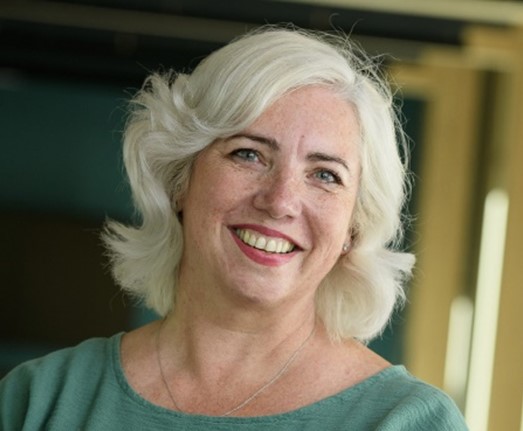
Debbi Marais
Director of Postgraduate Education,
Warwick Medical School
