
From Education Studies to Wellbeing: Building an Interdisciplinary Student Community at IATL
Introduction
Although Wiki notes that she really enjoyed her experience in Education Studies, when it came to the third year of her undergraduate studies at Warwick, she was curious to explore beyond her department. Wiki came across IATL’s website and immediately took an interest in Dr Elena Riva’s module Understanding Wellbeing. Wiki learned about well-being from a variety of disciplinary perspectives, like economics and biology. Here, Wiki developed her understanding of the importance of interdisciplinarity: “We can't just try and solve a well-being crisis by looking at psychology because there's so much to it.” She then went on to help produce content for the online version of the module, as well as work as a project officer in the IATL department.
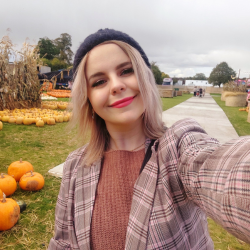
Wiki Jeglinksa

Principles of Practice
Learning from Students Across Disciplines
Wiki speaks about the benefits of a collaborative approach to the wellbeing module. She says that she “really loved meeting different students from different departments.” Students in Understanding Wellbeing were purposefully put into groups with students from various disciplinary backgrounds and they “got to come together and produce ideas.” Wiki found this “really meaningful.”
Building Critical Thinking, Flexibility and Playfulness
In addition to building her critical thinking skills, Wiki gained valuable insights on how “you don't have to be an expert in everything to be able to talk about it and think about it.” In her student-devised assessment for the Wellbeing module, Wiki had the flexibility and freedom to decide what she wanted to focus on. Inspired by her own interest in reading, she chose to explore one of her passions by creating a research poster on the benefits of reading for pleasure. She argues that “we should enjoy assessment. It should be like a showcase of everything you've learned.” Wiki further adds about the sense of “playfulness” developed through interdisciplinary opportunities that seek to combine students’ perspectives and passions.
Working as a Co-Creation Officer
Although Wiki cautions that co-creation can often be thrown out as a buzzword, Wiki reflects that her experience of working as a co-creation officer at IATL was “amazing.” Wiki worked on a team with three other students from Global Sustainable Development, Law and Medicine. Wiki highlights that “we brought ourselves and our experiences of work” to help the department promote its modules through meeting with student reps and engaging with social media. Wiki also says that the role helped her to decide what she wanted to do after graduating from her Masters's programme. She found a path working in higher education, where she currently holds a position on the Alumni Development team at Warwick.


Moving Forward
While Wiki shares that interdisciplinary modules have increased in their visibility since her time as a student, she still says that it would be “good if people just knew about it…even from when you're applying to Warwick, knowing that you'll be able to do something different.” Wiki didn’t find out about the IATL modules until her third year of studies and there were a variety of other modules that piqued her interest that she could have taken if only she had found out about IATL sooner. Wiki offers the idea of “taster sessions” or seminars for IATL modules, so that students can get an idea of what interdisciplinarity entails before committing to a “whole module.”

