
Embracing Anti-Disciplinarity: A Paradigm Shift in Higher Education
Introduction
Cath describes herself as having “always been an interdisciplinary teacher,” having taught interdisciplinary modules at IATL since its inception. As a guest lecturer, she was involved in some of the initial Identity modules at IATL. Since 2015, she has designed and co-convened the interdisciplinary MA module “Ways of Knowing: Gender, Bodies, Power,” which explores alternative modes of knowledge production within universities and disciplines. She also teaches sociology modules, notably “Queering Sociology,” which utilises an interdisciplinary approach drawing on the “anti-disciplinarity” of queer studies, a concept she elaborates on later in the case study.
She asserts the importance of openness in interdisciplinary learning and teaching. She believes tutors should not fixate “too much” on “what should be,” but rather focus on “what feels right.” She advocates looking up to others who integrate interdisciplinary work or practice and examining the resources they employ.
Reflecting on her own teaching practice, Cath finds that “interdisciplinarity has always been so instinctive” to her due to her background and years of experience as an interdisciplinary scholar. While it comes naturally to her, she acknowledges that those approaching it from different disciplinary perspectives may need to explore resources such as those offered by IATL or learning circles to understand what approaches work best.
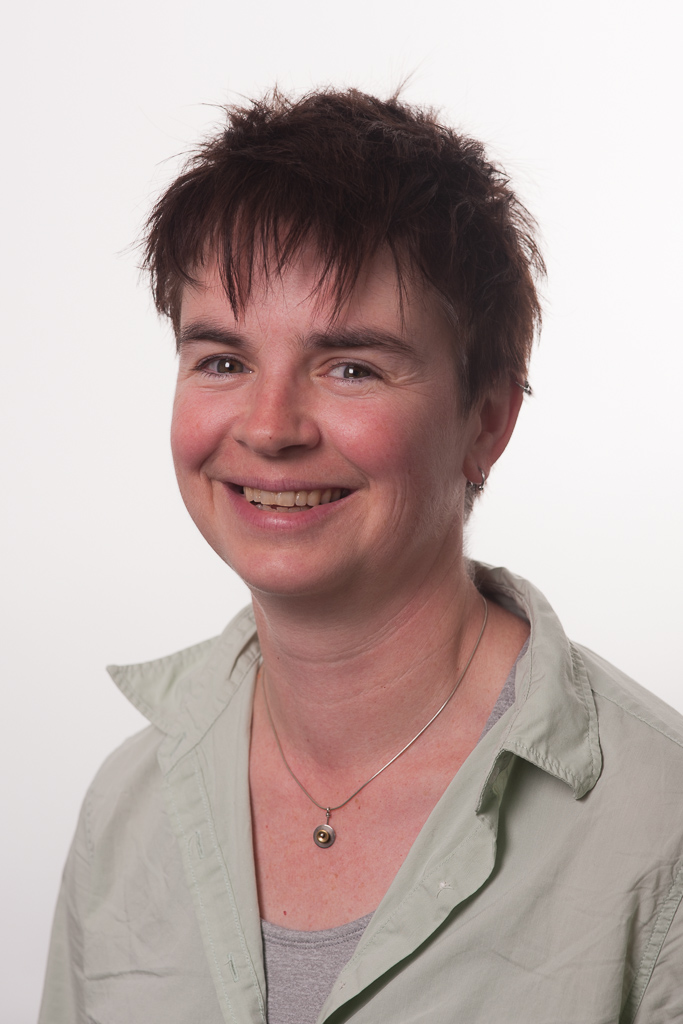
Dr Cath Lambdert

Principles of Practice
Becoming Anti-Disciplinary
Cath highlights that queer theory and some feminist theories, which form the foundation of her teaching and research, are critical of disciplines themselves. These theories “deconstruct what we mean and understand by disciplinary knowledge,” acknowledging that “disciplines are a social construct.” According to her, disciplines are not “naturally occurring phenomena” but rather “we create disciplines in order to serve certain disciplinary practices.” Consequently, she is “quite critical” of the very concept of discipline and how “education can be disciplining.”
She suggests that creating disciplinary structures is not always desirable and should be approached with constant awareness. In her modules, using concepts such as queer feminist theory brings a stance that questions “what disciplines actually are and if we should be trampling down disciplinary boundaries rather than working within them or reproducing them.” Cath emphasises that she works with resources she considers anti-disciplinary, meaning they are “critical of those disciplinary boundaries,” which to “some extent” involves interdisciplinary work. She acknowledges that “interdisciplinary” doesn't always “mean the same thing” to different people.
Decolonising Our Curriculum
For Cath, interdisciplinarity means being “constantly critically aware of our own disciplinary processes and practices.” However, she believes that we cannot truly claim to be interdisciplinary or anti-disciplinary because “those things are in themselves disciplinary processes.” To integrate interdisciplinarity within her university modules, she reflects on the implications of her role in knowledge production. She considers “who and what to draw on,” “where to go for inspiration and resources,” and how her “own disciplinary kind of upbringing and creation as an academic” influence her choice of literature.
She further stresses the importance of shifting our mindset to decolonise the curriculum. This involves investigating the colonial practices we reproduce when selecting familiar and traditional curriculum materials. She suggests that instead of focusing on how critical or unusual a reading or resource is, we need to find ways to go “beyond very traditional sort of texts and text-based material.”
Interdisciplinarity, according to Cath, requires constantly critiquing our decision-making and pedagogy, keeping them under “constant review.” This scrutiny applies to various aspects of education: “putting together curriculum material,” teaching methods, classroom construction, spatial organisation, and the engagement of students within these spaces. Additionally, she highlights the increasing role of technology in mediating teaching practices and its implications for interdisciplinarity. She believes that interdisciplinarity is “not just about the content, it's also about the pedagogy.”


Moving Forward
Overcoming Barriers at Warwick
Institutional Challenges
Cath reckons that despite the university “setting out” interdisciplinary teaching and learning as its strategic direction, its processes remain inherently disciplinary. She argues this issue is not unique to Warwick but prevalent in “many universities.”
She acknowledges the benefits of university structures at Warwick that allow autonomy to departments. However, she points out that formalising interdisciplinary approaches is often “quite a lot of work” and “really hard” because it necessitates working against, rather than with, existing university structures. According to her, the primary barriers are “structural and institutional,” requiring careful consideration and effort.
She emphasises that undertaking interdisciplinary initiatives at the university level demands “much more resourcing” and “much more willingness” to support different practices. However, she notes that sometimes the university is not “willing to go there” due to the challenge of requiring departments to change or adapt to implement new bureaucratic processes.
Student Perspective
At the student level, Cath acknowledges efforts to reintroduce a “cross-disciplinary, cross-faculty studies” approach but notes that current curricula often lack flexibility. Many students are constrained to their own departments, unable to take courses outside of them. She highlights that students need to gain approvals and undergo an entire process to even take courses offered by IATL, where, at times, the choices are also limited. Therefore, it becomes “impossible for students” to take interdisciplinary modules.
She suggests overcoming this challenge of introducing interdisciplinary learning by enabling students to engage with it naturally, without even recognising it. She proposes adopting a “liberal arts approach,” reminiscent of the university's early days when students were required to take courses across different faculties. During that era (1960s), there was a strong belief that students needed a well-rounded scholarly approach. She presumes that such an approach can help improve interdisciplinary learning at student level within the university.
