
Practicing How and Facing Why: Interdisciplinary Challenges in Higher Education
Introduction
Sarah iterates that due to her educational background, she has an interdisciplinary approach to “everything.” This stems from a career in teaching, beginning with her days as a primary school teacher “expected to cover 11 different subjects” to her current role at the university. Therefore, for her, “any modules that I teach I wouldn't expect to teach it from just one discipline.”
Throughout her past experiences, she has also been involved in co-creating and co-delivering various modules. While designing and delivering these modules, she has observed how people usually approach ideas from “different angles” and how “very different sorts of disciplinary knowledge” are presented for discussion. She acknowledges that this can be “scary” but “exciting” at the same time.
In her pedagogy, she always reflects on how she can bring the “best” out of the “different disciplinary angles.” Typically, a concept in education studies requires one to broaden the context of their learning by looking at multiple disciplines, including but not limited to psychology, sociology, history, economics, and law. This, according to Sarah, is what really excites her about interdisciplinarity.
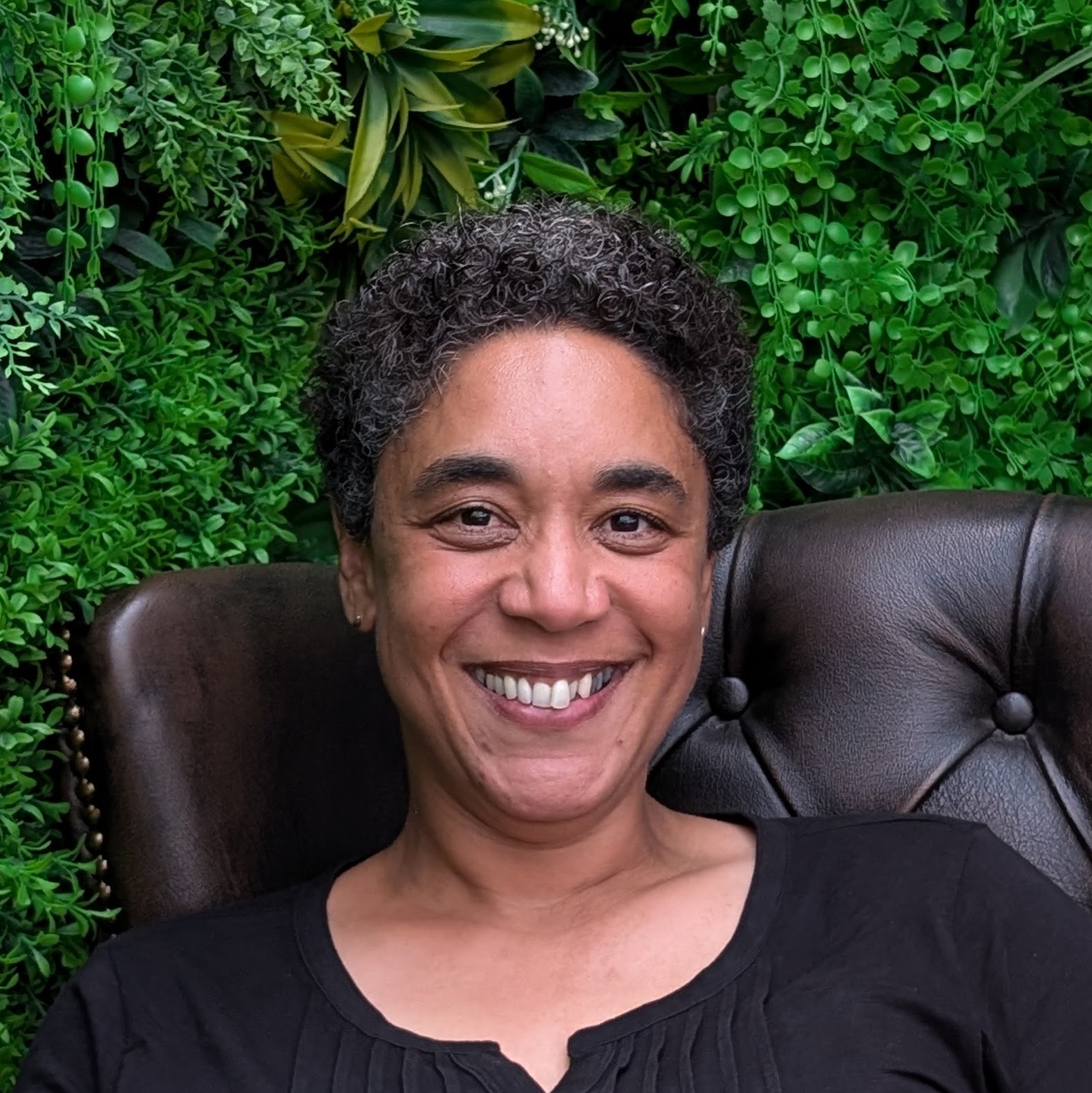
Dr Sarah Dahl

Principles of Practice
Challenging Rather Than Accepting Perspectives
Sarah shares that at the start of her modules, she asks students to “acknowledge their strengths” and their “knowledge base” but also to “challenge” them. According to her, she doesn't “just teach” but ensures that “students are questioning and challenging and not just accepting” facts. She acknowledges that this “always takes a bit of breaking down of walls.”
This becomes particularly “exciting” for her when students from different disciplines, such as education, psychology, and global sustainable development, come together to study a joint module. These students bring “totally different backgrounds,” which prompts them to question each other's perspectives and fosters an environment of critical thinking, sparking “light bulbs” during discussions. Listening to other perspectives leads students to realise how ideas can be seen in “different ways,” helping them appreciate the significance of these varied viewpoints.
Questioning the Why in Interdisciplinary Learning
One of Sarah’s favourite quotes from module evaluations in her teaching experience has been when a student said, “you taught me the word why?” This is of importance to Sarah because she believes that questioning the why behind ideas is what develops arguments and critical thinking which is “the basis for interdisciplinarity”. According to her the reason we draw on different disciplines is “to challenge what we think from one particular perspective”, so her aim within her pedagogy is empower students to say, “but why and to be able to answer that or think it through from those different elements” to build up a more holistic picture.
Interactive Role-Playing Using Facebook
To foster interdisciplinarity among students within a module comprised of different disciplines, Sarah engaged them in a “fun activity.” Students created fake Facebook profiles, role-playing as particular theorists. Other students then visited their classmates' profiles to like and comment on the posted information. This required students to think critically and engage with the posts, which Sarah shares was “really good” for the students as it helped them grasp what each theorist was saying in a “dry subject.”
By role-playing as particular theorists, students often challenged the perspectives and ideas of others, helping them realise the “strengths and weaknesses” of their own theories. This exercise required students to use interdisciplinary skills because they had to translate “across genres.” They had to challenge knowledge across disciplines, as sometimes they would role-play a theorist from a different discipline.


Moving Forward
Challenges for Interdisciplinary Education
University Level
According to Sarah, the “structures in place” at the university, particularly the absence of an “agreed credit framework” across departments, pose a key barrier to interdisciplinarity. She highlights that some departments use a credit system based on “multiples of 10,” while others, such as the education department, typically have modules worth 15 or 30 credits.
She observes this lack of coherent structures as a challenge in her role as the Director of Postgraduate Taught Studies. For instance, if the Education department has a joint degree with the Applied Linguistics (AL) department, students are required to take 30-credit modules. However, the AL department uses the 10-20 credit model, making it hard for students to take modules in AL. If they manage to take a 20-credit module in AL, they will still need 10 more credits to complete their 30-credit requirement, necessitating another 15-credit module. As a result, Sarah notes that “our students are always over-catting” because “sometimes our students have to do 5 credits more than they can count towards their degree to avoid being under-credit.”
Another barrier she identifies is that “departments are almost set up quite independently of each other,” resulting in “no natural way for departments to have those conversations” about collaborating to create a module that “suits both groups of students” or co-teaching a module. Practical matters, such as “income,” also hinder collaboration. The university expects departments to meet certain income targets, so “when we let a student go and take a module elsewhere, another department is getting income for that student.” This is acceptable if “we then get a student from another department coming in.” Integrating interdisciplinarity is “really difficult and challenging,” with many political issues to address in terms of cross-departmental cooperation. She states that working within “faculties” is easier than “across faculties,” as “going across departments is one challenge” and “going across faculties is another challenge.”
Lastly, Sarah shares that she is “very passionate” about ensuring she has a diverse cohort, which is “really important” to her so students can interlink topics and facilitate a crossover of ideas, although this approach complicates the “timetable” and makes people “grumpy with her.”
Subject Level
Sarah highlights challenges at the subject level, particularly questioning “how do we actually properly do interdisciplinarity?” She stresses the importance of having the “time” and “space” to have “conversations to allow for the synergies to happen across departments”. However, this is a challenge when the university stresses “you've got to get this many students and if you put on a joint degree or if you start swapping modules too much, you're going to lose some of your students. So, we're not going to do that. You're going to water down what you can offer to the students”. Sarah asserts that the university gives “conflicting messages” when they say “do interdisciplinarity. But you have to meet all of these criteria as well”.
Student Level
At the student level, she points out that “when you are a student on a particular degree, you have to demonstrate that you have enough modules and credits in that kind of area.” Therefore, when it comes to interdisciplinary studies, some students might simply choose a module from another discipline, but “that might be counted as interdisciplinarity, but it's not really adding anything to their expertise in their discipline.” She emphasises that there is a lack of a “shared understanding of what interdisciplinary studies might mean.”
Furthermore, if students “were to go out and do a very different” module there is “always a worry” because “those credits don’t count towards” their expertise in their core discipline, which departments consider important to ensure that “students transcripts look like they are a student from that discipline”.
Sarah further believes that although there has been an increase in the focus on interdisciplinary studies in recent years, and there are “IATL modules that are meant to sort of really support that interdisciplinarity,” these modules do not “address the issue of how students' transcripts will appear.” She acknowledges that while these recent efforts are a positive sign, much more work needs to be put in if the university is to practically implement its interdisciplinary strategy.
