
TIA Centre: News
To see our previous half-yearly newsletters click here.
TIA at ECDP 2026
European Congress on Digital Pathology (ECDP), Graz, Austria
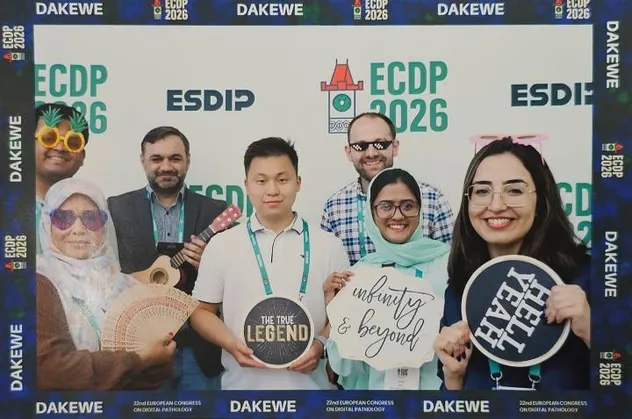
The TIA Centre was out in full force again at the 22nd European Congress on Digital Pathology (ECDP) 2026, this year held in Graz, just a few kilometres from Arnold Schwarzenegger's birthplace. With temperatures regularly exceeding 30°C, attendees enjoyed not only a packed scientific programme but also the opportunity to experience one of Austria's most picturesque cities, famous for its historic Old Town and the iconic Schlossberg clock tower overlooking the city.

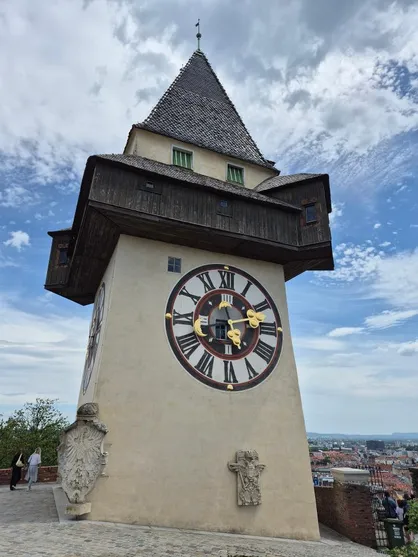
ECDP remains one of the premier events in digital and computational pathology, bringing together researchers, clinicians, and industry leaders from around the world. This year's meeting was particularly notable for the introduction of the first-ever "Week of Computational Pathology", which included a two-day summer school prior to the main conference. I was pleased to co-organise this new initiative, which aims to further support training and community building within the field.
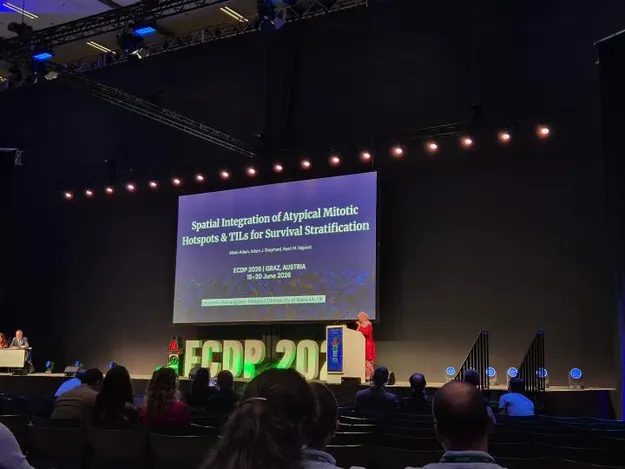
The conference also highlighted the breadth of research connected to the TIA Centre, including presentations from visiting researchers Hafsa Akebli and Afzan Adam, who delivered oral presentations on work conducted during their time at the Centre under the supervision of Prof Nasir Rajpoot and me.
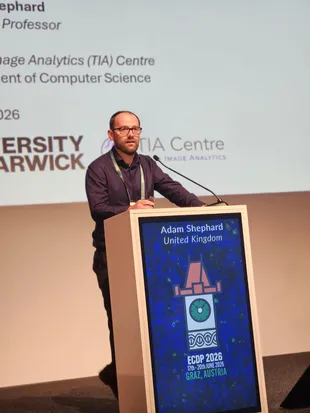
Alongside presenting research, TIA members were actively involved in the conference programme. I moderated a scientific session and delivered an invited presentation on the MIDOG challenge as part of a new joint session between MICCAI, ESDIP, and ASDIP entitled "Challenges in Computational Pathology: How to Assess and Compare Performances". The session generated lively discussion around benchmarking, reproducibility, and evaluation standards across computational pathology challenges.
As is usually the case, ECDP was not only an excellent scientific meeting but also a great opportunity to socialise and reconnect with colleagues from across the computational pathology community. I ended up watching the England vs Croatia match on the first evening with some researcher and exhibitors I had only met earlier that day, alongside colleagues from Pathology News.
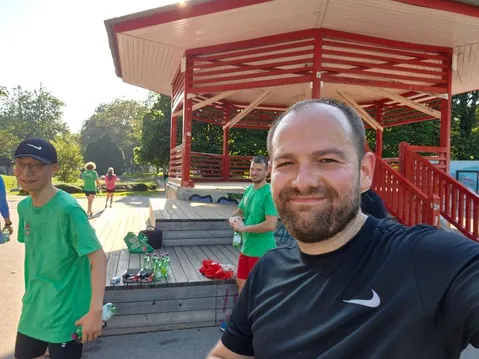
There were plenty of organised social activities throughout the week. Numerous conference attendees (me included!) joined an early-morning 6 km social run along the river at 7am one day, making quite a sight in our bright green running tops as we worked our way through Graz and along the river before the first talks of the day. Inti Zlobec also organised a conference jazzercise session which, unfortunately, I wasn't able to attend, though it seemed to be well received by those who managed to make it.
Thursday evening's conference gala dinner was held at the spectacular Schlossberg venue overlooking the city. Perched on top of Graz's famous hill beneath the iconic clock tower, the venue offered panoramic views across the city and provided a fantastic setting for an evening of networking, good food, and conversation.
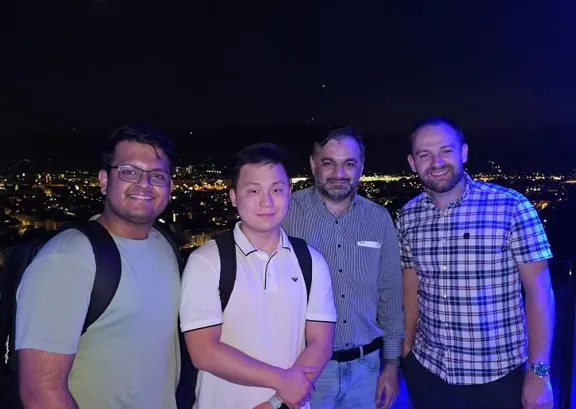
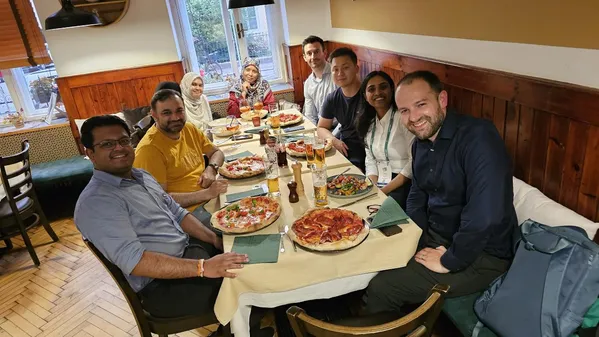
The TIA Centre team also enjoyed the opportunity to catch up outside the conference programme, including a dinner together in the city centre. It was particularly lovely to see Afzan Adam again following her secondment with the Centre.
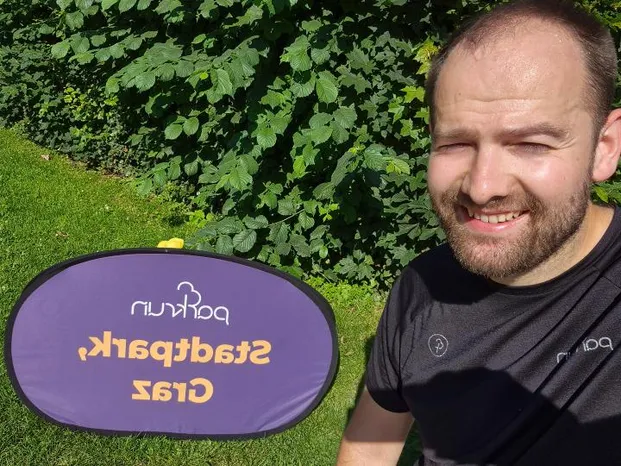
As for me, I couldn't resist taking part in the local parkrun while visiting a new city. Saturday morning saw me at Stadtpark parkrun in Graz. Admittedly, a 9am start felt a little ambitious after the gala dinner the night before, but it would have been rude not to.
The journey home, however, was somewhat less relaxing. Severe thunderstorms delayed our flight from Graz by three hours, causing us to miss our connection in Vienna. By the time we were rebooked onto a later flight to the UK, we had also missed the last trains back to Birmingham. The adventure ended with a late-night coach journey to Coventry followed by a taxi home. Still, conference travel would be far less memorable if everything went entirely according to plan.
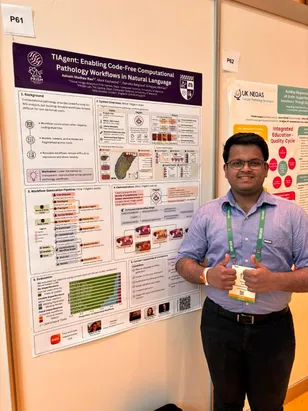
Aakash: "It was a privilege to attend ECDP, my first conference as a PhD student, and present a poster on TIAgent, a multi-agent system for generating computational pathology workflows from natural-language requests. Engaging with experts across machine learning and pathology provided valuable feedback that will directly shape my work, while the wider programme broadened my understanding of the field and gave me the opportunity to learn from the researchers driving its progress."
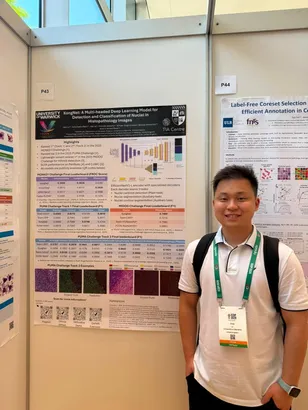
Jiaqi: "I recently had the fantastic opportunity to attend my second ECDP conference, I presented a poster on my work, KongNet, a state-of-the-art model for nuclei detection and classification. I’m also delighted that KongNet has recently been accepted for publication in Medical Image Analysis! The conference was a great experience, and I especially enjoyed meeting collaborators and connecting with other researchers in the field in person."
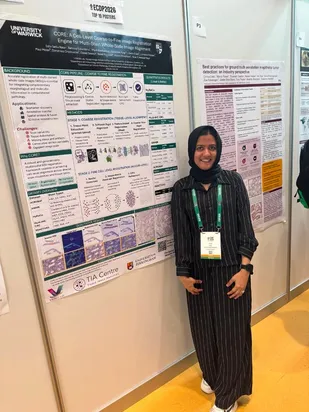
Esha: “It was a pleasure to attend ECDP in Graz. The conference provided an excellent opportunity to engage with researchers and clinicians from around the world, learn about the latest advances in computational pathology and AI for digital pathology, and discuss our research with experts in the field. The discussions and feedback were extremely valuable and opened up opportunities for future collaborations. During the conference, I presented three posters. My poster, "CORE: A Cell-Level Coarse-to-Fine Image Registration Engine for Multi-Stain Whole-Slide Image Alignment," was selected as one of the Top 10 Posters out of more than 200 poster presentations. This work focuses on developing a coarse to fine registration framework to accurately align multi-stain whole-slide images at the cellular level, enabling improved multimodal tissue analysis for computational pathology. Overall, ECDP was a highly rewarding experience that allowed me to showcase our research, receive constructive feedback from the international digital pathology community, and gain insights into the latest developments in the field.”
The TIA Centre was delighted to contribute to ECDP 2026 through invited talks, oral presentations, posters, moderation and educational initiatives, and we are already looking forward to continuing the tradition next year at ECDP 2027 in Rotterdam.
Contributions from the TIA Centre:
Adam Shephard [Invited Speaker, Moderator and Summer School Co-lead]: The MIDOG Challenge: A Competitor’s Perspective
Hafsa Akebli [Oral Presentation]: Multimodal Oncology Agent for IDH1 Mutation Prediction in Low-Grade Glioma
Afzan Adam [Oral Presentation]: Spatial Integration of Atypical Mitotic Hotspots and Tumor-Infiltrating Lymphocytes for Survival Stratification in Breast Cancer.
Esha Nasir [Poster Presentation x3, and Top 10 Poster]:
· CORE: A Cell-Level Coarse-to-Fine Image Registration Engine for Multi-Stain Whole-Slide Image Alignment
· Immune Cell Classification in Renal Multiplex Immunofluorescence Images Using Deep Learning: Application to Cytomegalovirus-Associated Nephropathy
· Efficient Classification of Atypical versus Normal Mitotic Figures Using LoRA-Fine-Tuned Foundation Models
Aakash Rao [Poster Presentation]: TIAgent: A Multi-Agent System for Generating Computational Pathology Workflows from Natural-Language Requests
Jiaqi Lv [Poster Presentation]: KongNet: State-of-the-Art Nuclei Detection and Classification
By Adam Shephard
Newsletters
Newsletters from 2024/25: