Dr Jason Anderson
Jason Anderson's Warwick page on Symplectic ElementsLink opens in a new window
About
Associate Professor (University of Warwick), teacher educator and author with experience supporting teachers in both language teaching and mainstream education in over 30 countries worldwide.
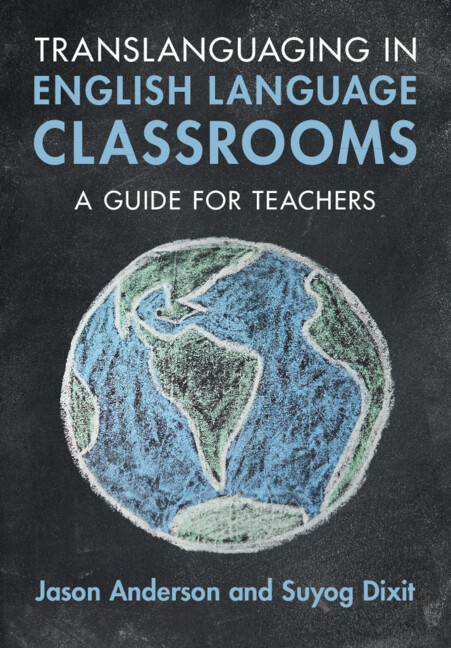
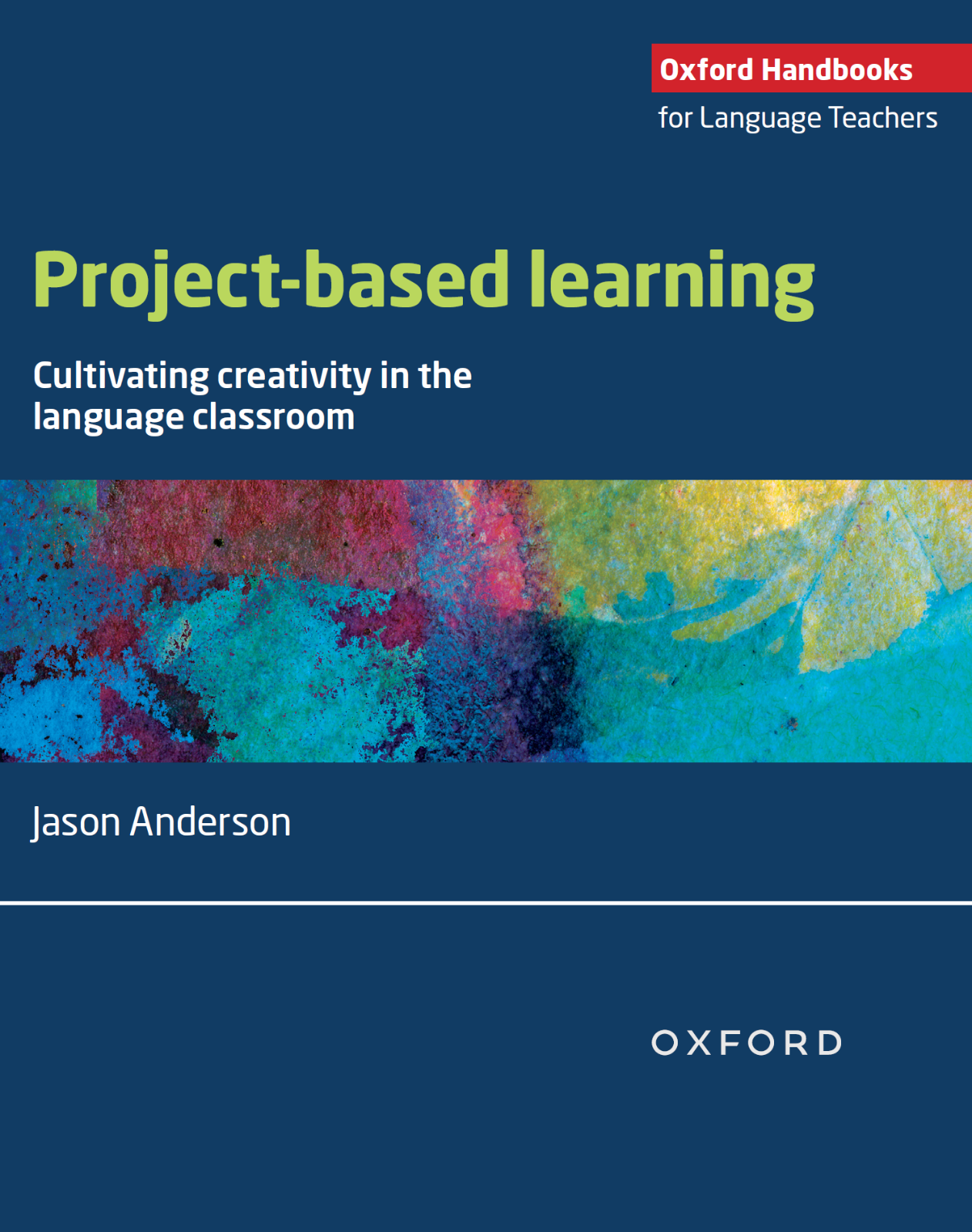
My work focuses on developing research-informed approaches to teaching and teacher education and making these accessible to teachers and teacher educators internationally. My publications include five teacher resource books, five teacher education books, several commissioned reports and over 50 research, theory and practical articles, for which I have won several awards (two British Council ELTon awards; the Christopher Brumfit Essay Prize; the Trinity College London Chairperson's Award; the King's College London Hans Prize in Education; and the British Council Master's Dissertation Award). My two latest books are practitioner-oriented guides to translanguaging pedagogy (Cambridge University Press) and project-based learning (Oxford University Press). I also offer a wide range of free resources for teachers through my personal website.
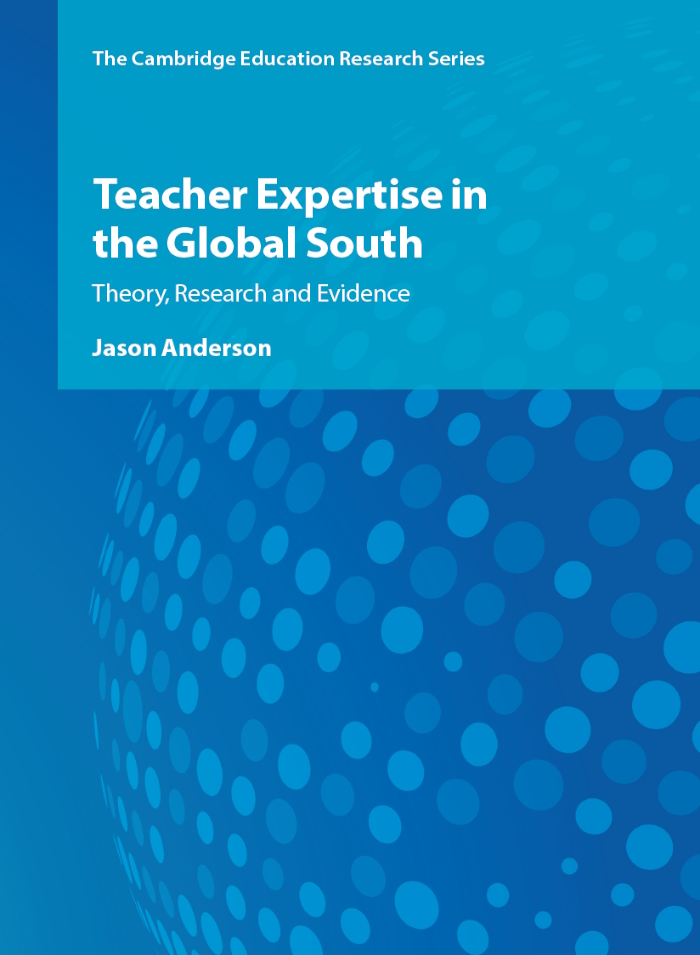
My background is as an English language teacher (for 25 years), alongside roles as a teacher educator (pre-service and in-service) and materials writer. Since 2017, I have worked as a researcher and lecturer at the University of Warwick in both language teaching and mainstream education. My ESRC-funded PhD (2018–2021) and Postdoctoral Research Fellowship (2021–2022), both at Warwick, focused on teacher expertise in the Global South, working with expert teachers to understand and document the knowledge, practices and qualities underpinning effective teaching in diverse contexts that had been largely neglected. Outputs from this research have included academic publications, collaborative work with participating teachers, teacher-development initiatives, and my Cambridge Education Research book Teacher Expertise in the Global South: Theory, Research and Evidence.
A central part of my work involves sharing research and practical knowledge with teachers beyond the university through publications, freely available resources, talks, workshops and collaborations with professional and public organisations. I have worked internationally for national ministries of education, private institutions and third sector organisations including UNICEF, the British Council and Trinity College London, particularly across the Global South. I have given over 150 talks to teacher and academic audiences, online and face-to-face, including invited plenary and keynote addresses at events in the UK, Austria, Bangladesh, Bolivia, Egypt, India, Indonesia, Morocco, Saudi Arabia, Turkey and Ukraine. I am currently involved in work supporting teachers and teacher educators in Ukraine through the Fund of the President of Ukraine and the Ukrainian Association of Teachers of English as a Foreign Language, alongside ongoing collaboration with teacher organisations internationally. I am also founding series editor of Delta Publishing's award-winning Ideas in Action series, chief editor of ELTED (English Language Teacher Education and Development) Journal, a member of the editorial board for Language Teaching, and a standing member of the Oxford University Press ELT Expert Advisory Board.
My personal website includes freely available resources for teachers and an updated list of talks, including recordings of selected talks, many available through my YouTube channel.
Research interests
My research focuses primarily on teachers, teaching and teacher education, particularly the knowledge, practices and professional learning that contribute to effective teaching in diverse contexts. A major strand of my work has investigated teacher expertiseLink opens in a new window, particularly in the Global SouthLink opens in a new window, where teachers' experiences, challenges and expertise remain comparatively under-researched. I have also researched teacher reflection, teacher beliefs, teacher experiences and continuing professional development, with a particular interest in how research can contribute to teacher learning and educational practice.
I am interested in both pre-service and in-service teacher education, including pedagogy, lesson planning, curriculum design, materials development, teacher research and formative assessment. Within language teaching, my research and writing also examine methodology, including communicative language teaching, project-based learning, cooperative learningLink opens in a new window, PPPLink opens in a new window, CAP(E), TATE Link opens in a new windowand other structuring frameworks, as well as multilingualism and translanguaging in the classroom.
Methodologically, my research draws on qualitative, quantitative and mixed methods approaches, alongside participatory case study research and action research where appropriate. I am particularly interested in approaches that recognise teachers as knowledgeable professionals and, where possible, involve them actively in the research process and the generation and dissemination of professional knowledge. I have published on research methodology in areas including systematic review methodology, teacher research, case study research and survey design. Further online resources:
Personal websiteLink opens in a new window | Personal blogLink opens in a new window | Twitter: @jasoneltLink opens in a new window | ORCIDLink opens in a new window | ResearchGateLink opens in a new window | YouTubeLink opens in a new window | Google ScholarLink opens in a new window
Publications
Anderson, J. & Dixit, S. (2026). Translanguaging in English Language Classrooms: A Guide for Teachers. Cambridge University Press. https://doi.org/10.1017/9781009776813Link opens in a new window
Anderson, J. (2026). Project-based learning and task-based language teaching: continuities, differences and the potential for integration. Educational Linguistics (Advance Online Publication). https://doi.org/10.1515/eduling-2026-0004 Link opens in a new window
Anderson, J. (2026). Commentary to Rampton (1990), ‘Displacing the “native speaker”: Expertise, affiliation, and inheritance’. In A. Cogo, ‘ELT Journal 80th anniversary virtual issue’ (pp. 438–439). ELT Journal, 80(4), 429–449. https://doi.org/10.1093/elt/ccag015
Anderson, J., & Dixit, S. (2026, June 11). Translanguaging: A practical theory for learning in English language classrooms. Fifteen Eighty Four. Cambridge University Press. Click here.Link opens in a new window
Anderson, J. (2026). Project-based learning: Cultivating creativity in the language classroom. Oxford University Press. Click here.Link opens in a new window
Anderson, J. & Kerr, P. (2026). The use of L1 in English language teaching. Cambridge Papers in English Language Education. Cambridge University Press. https://www.cambridge.org/sites/default/files/media/documents/WP_L1_ELT_CPELE_WEB.pdfLink opens in a new window
Anderson, J. & Smith, R. (2026). Teacher research in TESOL. TESOL Quarterly, 60(2), 767-786. https://doi.org/10.1002/tesq.70114Link opens in a new window
Dikilitaş, K., Eryılmaz, R., Mukherjee, K., Serra, M., & Anderson, J. (2026). The emergence and significance of meta-identity in the professional development of experienced teacher-researchers. Teacher Development, 30(2), 458-477. https://doi.org/10.1080/13664530.2025.2515916
Anderson, J. (2026). Metasummary: examining the potential of a methodologically inclusive approach for conducting systematic reviews of educational research. Educational Review, 78(1), 103-123. https://doi.org/10.1080/00131911.2024.2401079Link opens in a new window
Anderson, J. (2026). Sleepwalking into superdiversity: A translanguaging perspective on The DfE 2025 Curriculum and Assessment Review Interim Report. The Language Learning Journal, 54(1), 142-152. https://dx.doi.org/10.1080/09571736.2025.2551931Link opens in a new window
Anderson, J. (2026). Teacher Research. In H. Nesi & P. Milin (Eds.), International Encyclopedia of Language and Linguistics, 3rd Edition (Vol. 9) (pp. 31-36). Elsevier. https://doi.org/10.1016/B978-0-323-95504-1.00082-XLink opens in a new window
Kamali, J. & Anderson, J. (2025). Narrative self-observation: A new framework for teacher professional development and identity research. European Journal of Teacher Education (Advanced Online Access). https://doi.org/10.1080/02619768.2025.2563113Link opens in a new window
Anderson, J. & Kamali, J. (2025). Narrative Lesson Planning. Modern English Teacher, 34(5), 64-67.
Ončevska Ager, E., & Anderson, J. (2025). Affordance-based lesson planning in pre-service teacher education. ELT Journal, 79(1), 1-11. [Editor's Choice article] https://doi.org/10.1093/elt/ccae048Link opens in a new window
Dixit, S. A., & Anderson, J. (2025). Translanguaging: A view from the South. Linguistic Approaches to Bilingualism, 15(1), 66-71. https://doi.org/10.1075/lab.24046.dixLink opens in a new window
Anderson, J. (2025). Language teacher expertise research: A theoretical case and research agenda. Language Teaching, 58(1), 69-86. https://doi.org/10.1017/S0261444824000168Link opens in a new window
Mukhopadhyay, L., & Anderson, J. (2024). Multilingual education and translanguaging pedagogy in Indian classrooms: Discussing applications and challenges with Jason Anderson. Journal of Education, Language and Ideology, 2(2), 372-382. https://zenodo.org/doi/10.5281/zenodo.15237761Link opens in a new window
Anderson, J. (2024).Reimagining educational linguistics: A post-competence perspective. Educational Linguistics, 3(2), 258-285. https://doi.org/10.1515/eduling-2023-0009Link opens in a new window
Anderson, J. (2024). The translanguaging practices of expert Indian teachers of English and their learners. Journal of Multilingual and Multicultural Development, 45(6), 2233-2251. https://doi.org/10.1080/01434632.2022.2045300Link opens in a new window
Anderson, J., & Mahapatra, S. (2024). From "Difficult Circumstances" to the "Global South": An appraisal of terms used to describe disadvantage in education in the Global South. FORTELL, 49, 7-23. https://www.fortell.org/wp-content/uploads/2024/10/Fortell-July-2024-7-23.pdfLink opens in a new window
Anderson, J. (2024). Translanguaging: A paradigm shift for ELT theory and practice. ELT Journal, 78(1), 72-81. https://doi.org/10.1093/elt/ccad057Link opens in a new window
Anderson, J. (2023). Teacher expertise in the global South: Theory, research and evidence. Cambridge University Press. https://doi.org/10.1017/9781009284837Link opens in a new window
Anderson, J. (2023). TESOL textbook content in the global South: Challenges and opportunities for appropriate and sustainable learning. In A. Smarti, S. Iannuzzi, L. Horvath and M. Sinclair (Eds.), NISSEM Global Briefs, Vol. 4: Doing more with language teaching (pp. 370-399). NISSEM. (click hereLink opens in a new window)
Anderson, J. (2023). Forty years of research on expert teachers: What we know and why it's important. Modern English Teacher, 32(3), 48-52. (click hereLink opens in a new window)
Anderson, J., & Taner, G. (2023). Building the expert teacher prototype: A metasummary of teacher expertise studies in primary and secondary education. Educational Research Review, 38, 1-18. https://doi.org/10.1016/j.edurev.2022.100485
Anderson, J. (2023). Can teacher case study research be participatory? Critical reflections on the approach adopted for an English language teacher expertise study in India. TESOL Quarterly, 57(1), 298-309. https://doi.org/10.1002/tesq.3183
Anderson, J. (2023). Translanguaging in the ELT classroom. Modern English Teacher, 32(2), 46-50. (click hereLink opens in a new window)
Mahapatra, S. K., & Anderson, J. (2023). Languages for learning: A framework for implementing India's language-in-education policy. Current Issues in Language Planning, 24(1), 102-122 . https://doi.org/10.1080/14664208.2022.2037292Link opens in a new window
Anderson, J. (2023). The myth of a theory-practice gap in education. ELT Research: IATEFL Research SIG Newsletter, 38, 1-7. (click here)Link opens in a new window
Anderson, J. (2023). Researching and Developing Teacher Expertise in the Global South: Local and Transferable Solutions. In: Khan, R., Bashir, A., Basu, B.L., Uddin, M.E. (Eds), Local Research and Glocal Perspectives in English Language Teaching (pp. 399-417). Springer Link. https://doi.org/10.1007/978-981-19-6458-9_25
Anderson, J. (2023, May 10). The missing half of the expert teacher: Learning from teacher expertise in the global South. Fifteen eighty four: Academic perspectives from Cambridge University Press. https://cambridgeblog.org/2023/05/the-missing-half-of-the-expert-teacher-learning-from-teacher-expertise-in-the-global-south/ Link opens in a new window
Anderson, J. (2022). What's in a name? Why ‘SLA’ is no longer fit for purpose and the emerging, more equitable alternatives. Language Teaching, 55, 427-433 . https://doi.org/10.1017/S0261444822000192
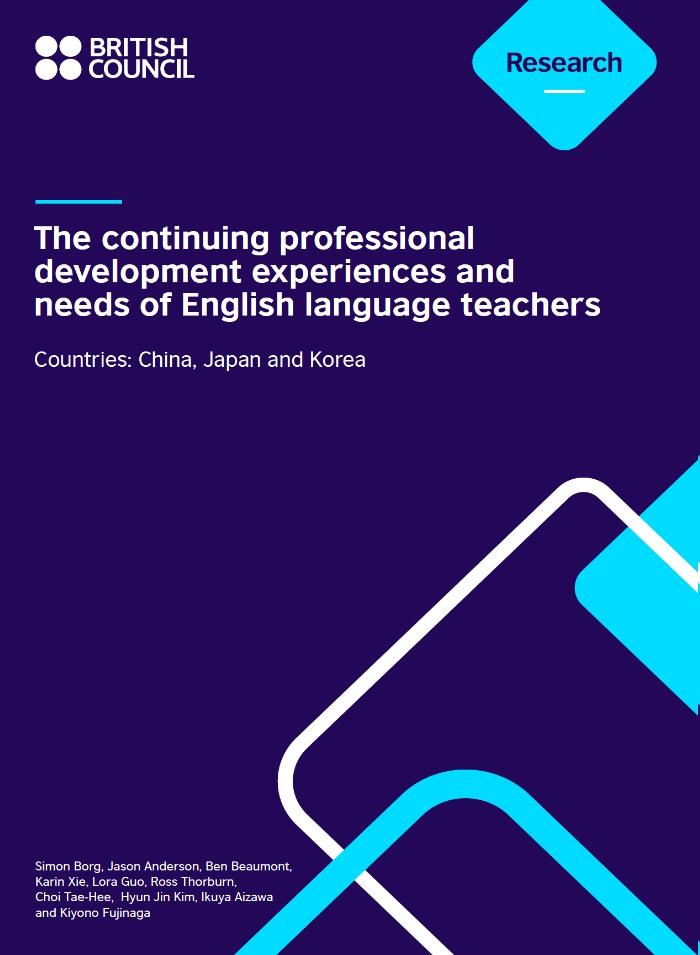
Borg, S., Anderson, J., Beaumont, B., Xie, K., Guo, Y., Thorburn, R., Choi, T., Kim, H. J., Aizawa, I., & Fujinaga, K. (2022). The continuing professional development experiences and needs of English language teachers (Countries: China, Japan and Korea). British Council. https://www.teachingenglish.org.uk/sites/teacheng/files/2022-10/CPD_experiences_needs_English_language_teachers-China-Japan-Korea.pdfLink opens in a new window
Anderson, J. (2022). In need of rebranding: Why we should change terminology from 'young learners' to 'pre-primary', 'primary' and 'secondary learners' of English. Modern English Teacher, 31(4), 6-9. (click here)Link opens in a new window
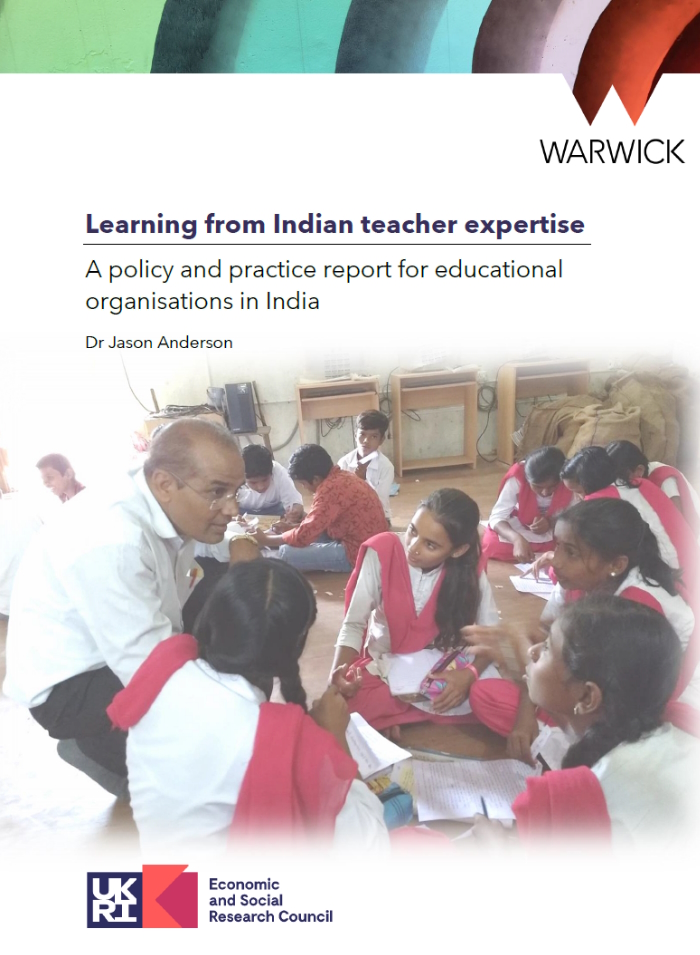
Anderson, J. (2022). Learning from Indian teacher expertise: A policy and practice report for educational organisations in India. University of Warwick. http://dx.doi.org/10.13140/RG.2.2.21551.61609
Anderson, J. & Lightfoot, A. (2022). Exploratory survey research. In K. Dikilitaş, & K. Reynolds (Eds.), Research methods in language teaching and learning: A practical guide (pp. 182-199). Wiley Blackwell. (click here)Link opens in a new window
Anderson, J., Padwad, A., & Smith, R. (2021). Language teaching in difficult circumstances. In H. Mohebbi & C. Coombe (Eds.) Research Questions in Language Education and Applied Linguistics (pp. 111-116). Springer. https://doi.org/10.1007/978-3-030-79143-8_21Link opens in a new window
Anderson, J. (Ed.) (2021). Our English Club resource book: A resource book for teachers working in English Clubs across Africa. British Council. https://www.britishcouncil.com.sn/sites/default/files/our_english_club_resource_book_2021.pdf
Anderson, J. (2021). Eight expert Indian teachers of English: A participatory comparative case study of teacher expertise in the Global South. [Doctoral dissertation, University of Warwick]. Warwick WRAP. http://wrap.warwick.ac.uk/159940/
Anderson, J. & Lightfoot, A. (2021). Translingual practices in English classrooms in India: Current perceptions and future possibilities. International Journal of Bilingual Education and Bilingualism, 24(8), 1210-1231. https://doi.org/10.1080/13670050.2018.1548558
Anderson, J. (2021). English Club Resource Book (English Connects). British Council. https://www.britishcouncil.com.sn/sites/default/files/british_council_english_resource_book_31_3_2021_print-compressed.pdf
Anderson, J. (2021). The effective teacher of English: Beliefs of Indian teachers. In K. Dixit, V. Joshi, R. Chakrakodi, N. Khan, K. Mukherjee, & M. Mane (Eds.), Teaching English in multilingual contexts: Selections from the fifth AINET International Conference, Hyderabad, 10-11 January 2020 (pp. 21-36). AINET. (click here)Link opens in a new window
Anderson, J. (2021). The book I always refer to: Training foreign language teachers by Michael J Wallace (review) Modern English Teacher, 30(3), 80-82. (click here)Link opens in a new window
Anderson, J. (2021). Using activities effectively. English Teaching Professional, 133, 8-11. (click here)Link opens in a new window
Anderson, J. (2021). A framework for project-based learning in TESOL. Modern English Teacher, 30(2), 45-49. (click here)Link opens in a new window
Anderson, J. (2020). Reflection: Key concepts in ELT. ELT Journal, 74(4), 480-483. https://doi.org/10.1093/elt/ccaa039
Anderson, J. (2020). ‘Buying in’ to communicative language teaching: the impact of ‘initial’ certification courses on the classroom practices of experienced teachers of English. Innovation in Language Learning and Teaching, 14(1), 1-14. https://doi.org/10.1080/17501229.2018.1471082
Anderson, J. (2020). The Effective teacher of English: An exploratory qualitative study of Indian English teachers’ beliefs. English Language Teaching Education and Development, 23, 10-20. http://www.elted.net/uploads/7/3/1/6/7316005/2_anderson_2020_the_effective_teacher_of_english-indian_teachers_beliefs.pdf
Anderson, J. (2020). The TATE model: A curriculum design framework for language teaching. ELT Journal, 74(2), 175-184. https://doi.org/10.1093/elt/ccaa005
Anderson, J. (2020). A response to Ellis: The dangers of a narrowly-focused SLA canon. ELT Journal, 74(2), 195-197. https://doi.org/10.1093/elt/ccaa016
Anderson, J. (2020). Nomination. Modern English Teacher, 29(4), 47-50. (click here)Link opens in a new window
Anderson, J. (2020). Deconstructing jigsaw activities. In T. Pattison (Ed.) IATEFL Conference
Selections. (pp. 52-54) IATEFL. (click here)Link opens in a new window
Anderson, J. (2020). Interactive reflection. English Teaching Professional, 127, 4-6. (click here)Link opens in a new window
Anderson, J. (2020). Making class debates meaningful. Modern English Teacher, 29(2), 35-38. (click here)Link opens in a new window
Anderson, J. (2019). In search of reflection-in-action: An exploratory study of the interactive reflection of four experienced teachers. Teaching and Teacher Education, 86, 1-17. https://doi.org/10.1016/j.tate.2019.102879
Anderson, J. (2019). Activities for Cooperative Learning: Making Groupwork and Pairwork Effective in the ELT Classroom. Delta Publishing/Ernst Klett Sprachen. (click here)Link opens in a new window
Anderson, J., & Lightfoot, A. (2019). The School Education System in India: An Overview. British Council. https://www.britishcouncil.in/sites/default/files/school_education_system_in_india_report_2019_final_web.pdf
Anderson, J. (2019). Topsy-turvy teacher training: An attempt to blend top-down and bottom-up approaches to in-service language teacher education. The Teacher Trainer, 33(3), 21-24. (click here)Link opens in a new window
Anderson, J. (2019). Recentring ELT: India at the centre of the multilingual turn? In S. Mohanraj (Ed.), ELTAI: An Epic Journey of 50 Years (pp. 144-146). Chennai, India: ELTAI Chennai. (click here)Link opens in a new window
Anderson, J. (2019). Cooperative learning: Principles and practice. English Teaching Professional, 121, 4-6. (click here)Link opens in a new window
Anderson, J. (2019). Deconstructing jigsaw activities: Modern English Teacher, 28(2), 35-37. (click here)Link opens in a new window
Anderson, J. (2018). Reimagining English language learners from a translingual perspective. ELT Journal, 72(1), 26-37. https://doi.org/10.1093/elt/ccx029
Anderson, J. (2018). The role of initial teacher training courses in the professional development of experienced non-native speaker English language teachers. English Language Teaching Education and Development, 21, 37-46. http://www.elted.net/uploads/7/3/1/6/7316005/-anderson_2018.pdf
Anderson, J. (2018) Context, analysis, practice: The hidden paradigm in contemporary ELT. In Pattison, T. (Ed.) IATEFL Glasgow Conference Selections (pp. 98-101). IATEFL. (click here)Link opens in a new window
Anderson, J. (2018). 'The future of training', or The elephant that swallowed the room. International House Teacher Training. https://www.ihlondon.com/blog/posts/2018/the-future-of-training-or-the-elephant-that-swallowed-the-room-jason-anderson/
Anderson, J. (2018). Worth a thousand words. English Teaching Professional, 117, 55-56. (click here)Link opens in a new window
Anderson, J. (2017). A potted history of PPP with the help of ELT Journal. ELT Journal, 71(2), 218-227. https://doi.org/10.1093/elt/ccw055
Anderson, J. (2017). A fundamental dichotomy in ELT methodology: A response to May Pang. ELT Journal, 71(1), 92-95. https://doi.org/10.1093/elt/ccw071
Anderson, J. (2017). Context, analysis and practice. IATEFL Voices, 256, 4-5. (click here)Link opens in a new window
Anderson, J. (2017). Thinking CAP. Modern English Teacher, 26(3), 13-15. (click here)Link opens in a new window
Anderson, J. (2017). Trinity CertTESOL Companion: A Guide for English Language Teachers. Delta Publishing/Ernst Klett Sprachen. (click here)Link opens in a new window
Anderson, J. (2017). Peer needs analysis. English Teaching Professional, 113, 49-51. (click here)Link opens in a new window
Anderson, J. (2017). CAP - Context, analysis, practice: A lesson planning model for language teacher education. IATEFL Teacher Training and Education SIG Newsletter, Spring 2017, 15-18. (click here)Link opens in a new window
Anderson, J. (2016). Initial teacher training courses and non-native speaker teachers. ELT Journal, 70(3). 261-274. https://doi.org/10.1093/elt/ccv072
Anderson, J. (2016, November 10). What to consider when teaching English in large classes. British Council Voices. https://www.britishcouncil.org/voices-magazine/what-consider-when-teaching-english-large-classes
Anderson, J. (2016). Internet jigsaws. Modern English Teacher, 25(2), 38-40. (click here)Link opens in a new window
Anderson, J. (2016). Intentions and signposts. English Teaching Professional, 105, 4-6. (click here)Link opens in a new window
Anderson, J. (2016). A qualitative study into the role of initial teacher training courses in the professional development of experienced non-native speaker teachers of English. [Master’s thesis, King’s College London]. (First prize winner of the British Council ELT Master’s Dissertation Award 2017) https://www.teachingenglish.org.uk/sites/teacheng/files/mda2017_winner_jason_anderson_king_s_college_london.pdf
Anderson, J. (2016). Why practice makes perfect sense: The past, present and future potential of the PPP paradigm in language teacher education. English Language Teaching Education and Development, 19(1), 14-22. http://www.elted.net/uploads/7/3/1/6/7316005/3_vol.19_anderson.pdf
Anderson, J. (2015). Teaching English in Africa. A guide to the practice of English language teaching. East African Educational Publishers. (Winner: British Council ELTON Award for local innovation 2016) (click here)Link opens in a new window
Anderson, J. (2015). Affordance, learning opportunities and the lesson plan pro forma (Editor’s Choice). ELT Journal, 69(3), 228-238. https://doi.org/10.1093/elt/ccv008
Anderson, J. (2015). The uniqueness of gameplay. English Teaching Professional, 96, 4-6. (click here)Link opens in a new window
Anderson, J. (2015). Secrets and lies. Modern English Teacher, 24(3), 60-62. (click here)Link opens in a new window
Anderson, J. (2014). Speaking Games. Photocopiable Activities to Make Language Learning Fun. Delta Publishing/Ernst Klett Sprachen. (click here)Link opens in a new window
Anderson, J. (2006). Role Plays for Today: Photocopiable Activities to Get Students Speaking. Delta Publishing/Ernst Klett Sprachen. (click here)Link opens in a new window
Anderson, J. (2004). Teamwork: Interactive Tasks to Get Students Talking. Delta Publishing/Ernst Klett Sprachen. (click here)Link opens in a new window