From Global Agendas to Local Practice: CPREF's Approach to Peacebuilding
(17th July 2026)
As the international community reflected on twenty years of the United Nations Peacebuilding Architecture during the inaugural UN Peacebuilding Week, we take the opportunity to reflect on the defining approach of the new Centre for Peace, Reconstruction and Equitable Futures (CPREF) at the University of Warwick: connecting rigorous research with grassroots peacebuilding through partnerships with international organisations, civil society and local communities.
UN Peacebuilding Week took place from 22-26 June 2026 and focused on partnerships for Innovation, Inclusion and Impact. At CPREF equitable, sustainable and impactful partnerships are at the core of our work. CPREF was established on the premise that today's conflicts require more than traditional diplomacy. Sustainable peace depends on combining high-level negotiations with locally owned initiatives, interdisciplinary research, innovative methodologies and meaningful public engagement. This vision underpins the Centre's work on mediation, governance under crisis, displacement, reconstruction and equitable futures.
Illustrative of this approach, CPREF members initiated as well as strengthened a series of engagements during UN Peacebuilding Week.
In Cyprus, discussions with United Nations colleagues explored current opportunities for dialogue and confidence-building in one of the world's longest-running peace processes. Beyond negotiations themselves, conversations examined how comparative research, civic participation, evidence-based policy design and innovative institutional mechanisms can contribute to more durable settlements. A series of events were supported by the Centre and the Inclusive Peace project including a panel at Ledra Pallas on deliberative peace-making civic assembles, a full day event stakeholders event at SeeD (Centre for Sustainable Peace and Democratic Development) and various meetings with the UN and foreign embassies (led by Warwick Alumna Dr. Ilke Dagli and Prof. Neophytos Loizides PI Inclusive Peace). These events reflected one of CPREF's central objectives: strengthening the relationship between research evidence and practical policymaking while ensuring that local voices remain central to peace processes.
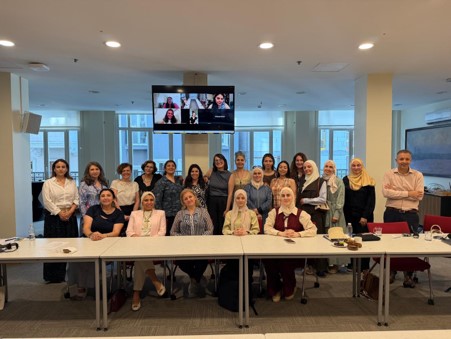
This emphasis on practice continued in Istanbul through the Mediterranean Women Mediators Network Training Programme on Negotiation, Mediation and Women's Leadership for Peacebuilding in Syria, supported by Italy's Ministry of Foreign Affairs and Warwick’s PeaceReturn project (Professors Betul Celik and Neophytos Loizides). The programme brought together Syrian academics, humanitarian practitioners, civil society organisations, mediators and lawyers from across Syria, Türkiye and Europe to strengthen practical skills in negotiation, mediation and inclusive peacebuilding. Participants worked through negotiation simulations, mediation exercises and collaborative project design using practical tools developed through Warwick research—including Café Diplomatico simulations and explored trust-building, interest-based negotiation, local ownership and collaborative problem-solving. The programme concluded by developing new collaborative research and policy initiatives, including survey experiments on mediation preferences, public attitudes towards return/returnee policies and power-sharing, artificial intelligence applications for mediation support, and expanded networks of women mediators across Syria.
The activities in Cyprus and Istanbul (followed by an EWIS panel in Izmir) exemplify CPREF's distinctive research model. Rather than treating research, teaching and policy engagement as separate activities, the Centre seeks to integrate them. Equally important is the Centre's commitment to interdisciplinarity. The challenges of peacebuilding increasingly extend beyond political agreements to encompass education, governance, law displacement, technology, public health, trauma, economic recovery and institutional resilience. CPREF brings together expertise across these fields while working closely with international organisations, governments and civil society to co-produce practical solutions.
Further activities were continued in collaboration with the UK Foreign, Commonwealth and Development Office. CPREF members finalised a series of research primers designed to inform participatory and partnership approaches to monitoring and evaluation in overseas development assistance. These primers were written by part of a global network of academics, researchers, policymakers and importantly communities living in fragile and conflict affected contexts. CPREF foregrounds people-centred approaches as well as the advancements of ethical and participatory research design.
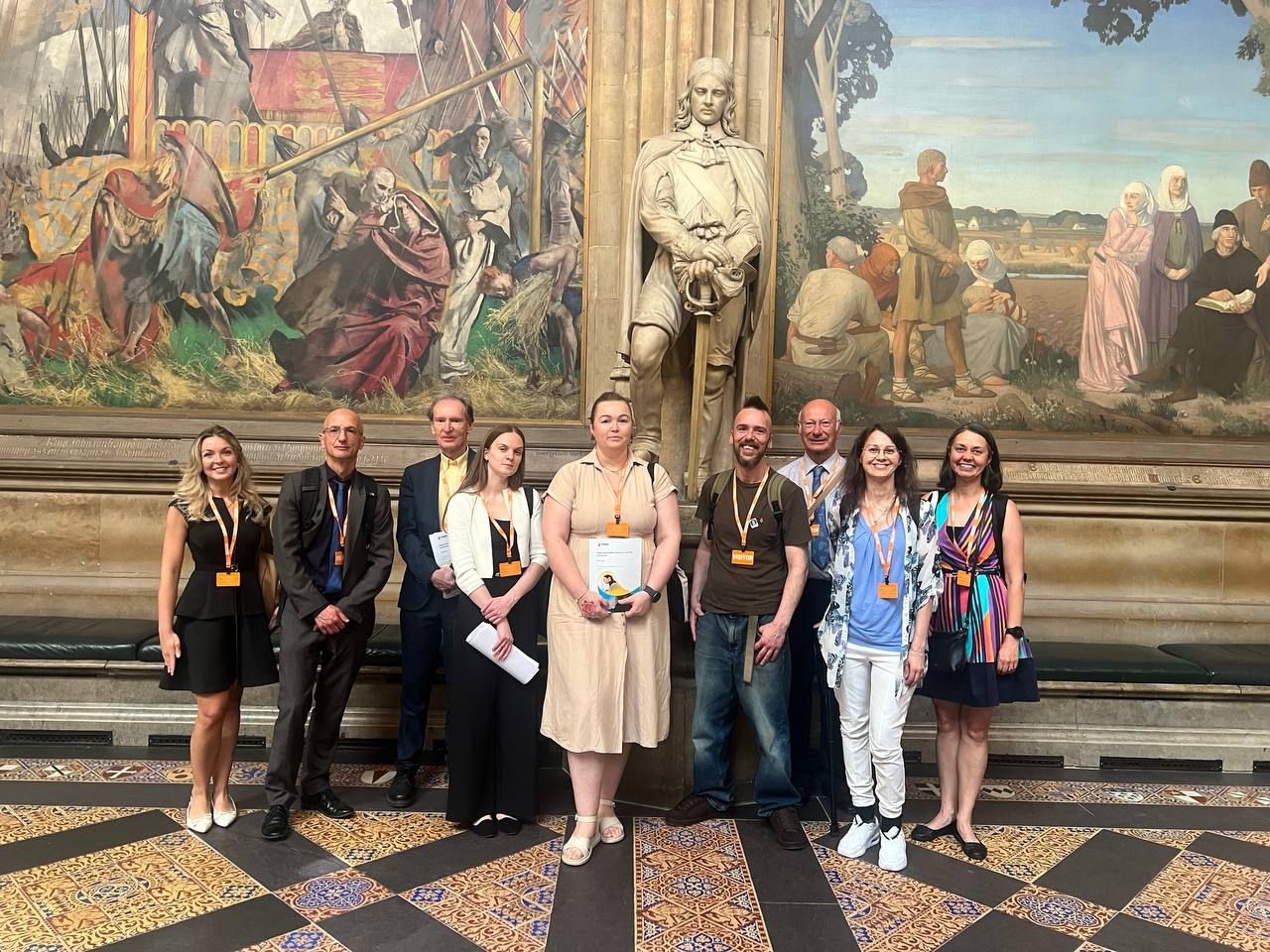
This commitment to translating research into practical impact also extended to Warwick's work with communities affected by conflict in the United Kingdom. On 29 June, the University co-organised a parliamentary roundtable at the House of Commons on Supporting Disabled Ukrainians in the UK, sponsored by Matt Western MP and organised by Professor Robin Goodwin and Olena Orlova. Bringing together disabled Ukrainians, parliamentarians, government officials, academics and civil society organisations, the event examined the challenges disabled refugees face in accessing housing, healthcare, employment and welfare. Warwick researchers presented findings from an ongoing national study, while policymakers and community representatives explored practical ways to strengthen long-term support and inclusion for disabled Ukrainians in the UK.
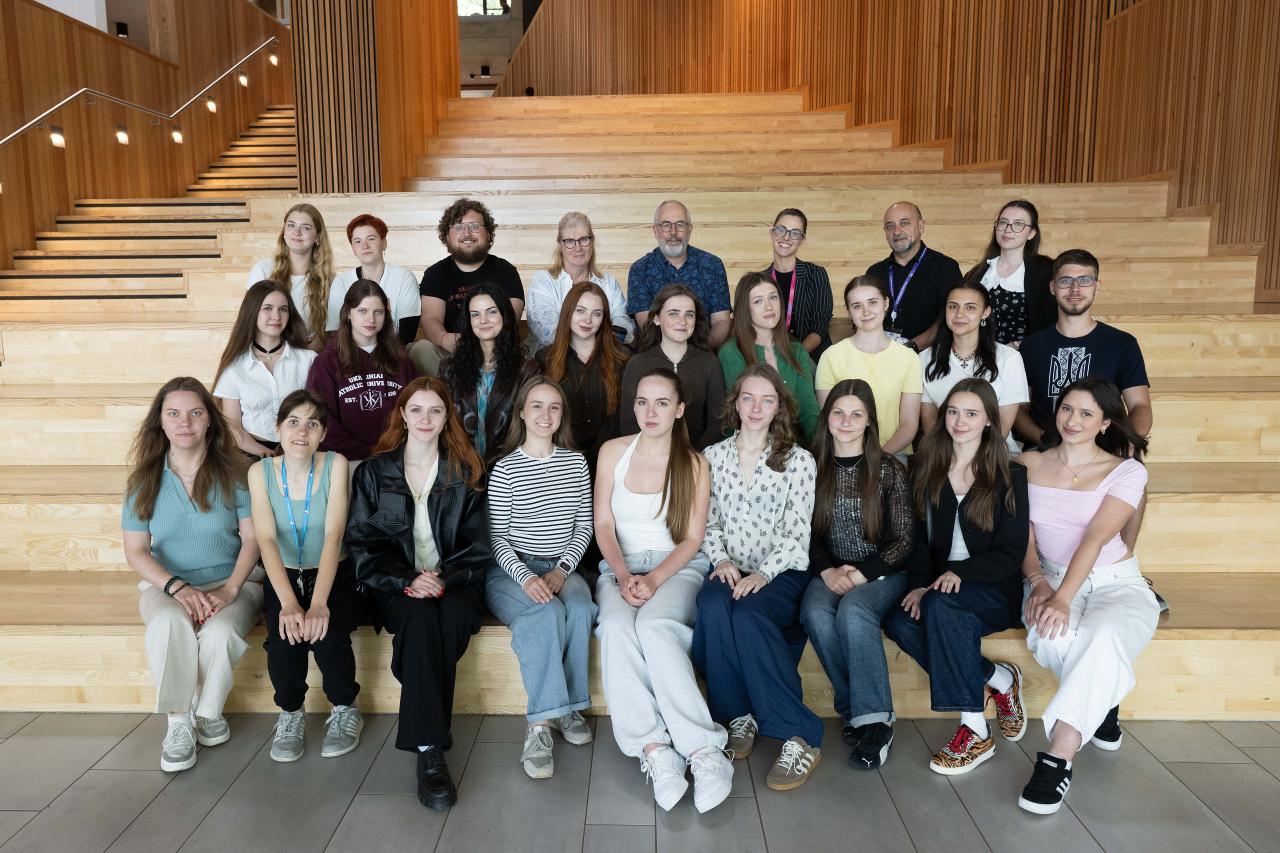
Warwick also continued its long-standing support for Ukrainian higher education. In June, Professor Christopher Mick and colleagues welcomed 22 students from the Ukrainian Catholic University for the fourth Summer School since the full-scale invasion. Combining academic learning with cultural exchange, the programme explored the impact of war, displacement and national identity through lectures, educational visits and student presentations. The programme concluded with a lecture by Professor Gwen van der Velden on the role of universities in post-war recovery, reinforcing Warwick's commitment to supporting Ukraine's higher education sector and strengthening academic partnerships during a period of continuing conflict and reconstruction.
The timing of this work alongside UN Peacebuilding Week, highlights a broader ambition within international peacebuilding moving from externally driven interventions towards locally owned, evidence-informed and inclusive approaches. Women's leadership, citizen participation, innovative methodologies and long-term institutional capacity could and should become central components of sustainable peace.