
Departmental news
New paper looks at how narratives of the pandemic affected palliative care
A new paper by Associate Professor John MacArtney and colleagues in the Primary Care and Community Network, Warwick Applied Health, takes an in-depth look at how different narratives of the pandemic affected hospice palliative care in the first two-years of Covid-19.
How the cookie crumbles: University of Warwick X- ray tech used to reveal the secrets of baking the perfect biscuit
WMG at the University of Warwick and Cadbury have used powerful X-ray scanning equipment to uncover the secrets of how the structure of biscuits, which is essential for the perfect ‘crunch’, forms.
The discoveries have been released to mark National Biscuit Day this Wednesday, 29th May. Biscuits are the UK’s favourite sweet treat, with the average person in the UK eating around six a week.
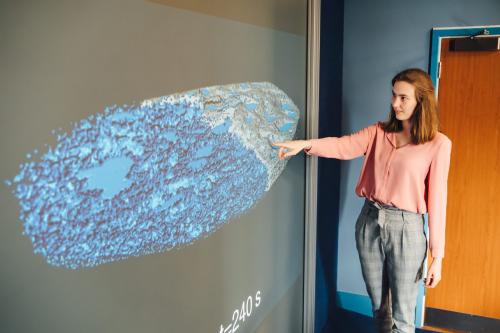 WMG researchers scanned biscuits in a bespoke oven as they baked, imaging the inside of the biscuit to reveal how the porous structure, essential for the perfect ‘crunch’, forms during the baking process.
Associate Professor at WMG’s Centre for Imaging, Metrology and Additive Technologies, Jay Warnett, said that this was just the beginning for the technology:
“Joining forces with Cadbury, we're cracking the code to the perfect biscuit. Through our X-rays, we're helping uncover the ideal baking time, thickness, and recipe for the ultimate eating experience”.
“But our research doesn't stop there; we're diving deeper into the world of biscuits and baked food and hope to continue working with Cadbury for a long time to come”.
Researchers at WMG, who were approached by Cadbury, constructed an oven from scratch inside an X-ray CT scanner – a similar machine to what you might find in a hospital.
Using the latest algorithms, the imaging process was sped up to scan the biscuit every 20 seconds throughout the baking process. When put together, the WMG and Cadbury teams could observe the biscuit baking over time.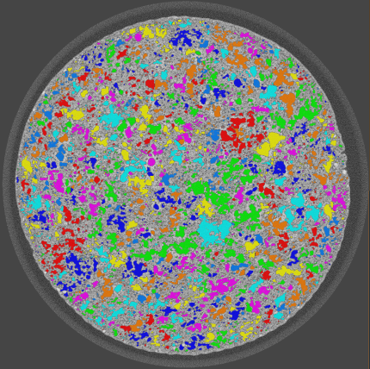
Principal Scientist at Cadbury, Thomas Curwen, is excited for the future of biscuit development:
“The latest algorithms have allowed us to watch and quantify the baking process inside the biscuit in greater detail than ever before. This capability will help us determine the function of different ingredients in more detail and how the structure that forms controls the eating experience. I am excited by what we can learn and how this will help us deliver the great tasting biscuits of the future.”
The research process, which was led by Dr Warnett and Research Fellow Dr Evelien Zwanenburg, has proved the concept possible, and is therefore likely to be the first step before a larger project later this year.
This future work aims to extend the work across other biscuit varieties and baked goods.
WMG ranked top 20 in the world in prestigious QS International Trade Education Rankings
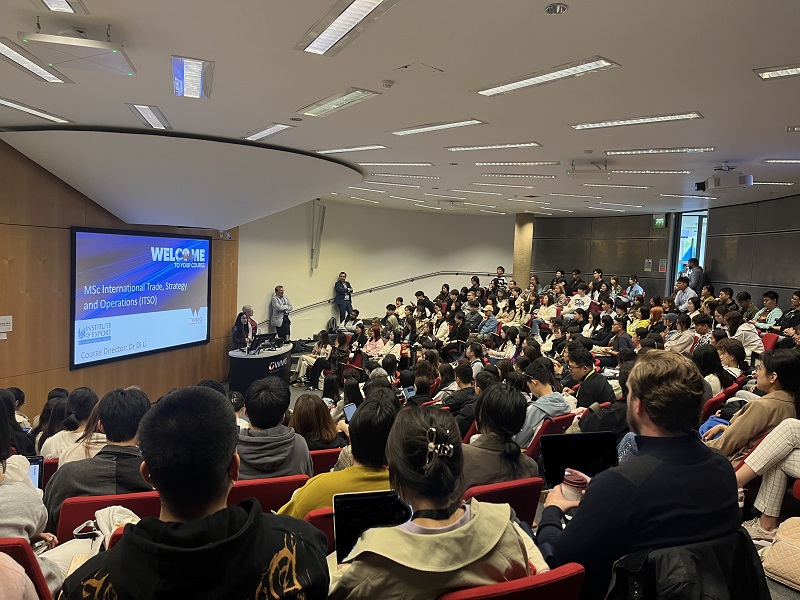 According to the QS International Trade Rankings 2024, WMG at the University of Warwick’s MSc International Trade, Strategy and Operations (ITSO) programme has been rated 16th in the world and 3rd in the UK in terms of trade education.
The ITSO programme has also been identified by QS as one of the top two specialist trade courses in the world.
The highly prestigious QS rankings evaluate courses on six key indicators: Trade Programme; Graduate Outcomes; Industry Engagement; Innovative Teaching; Reputation; and Research.
Professor Dan Nunan, Associate Dean (Postgraduate Education), at WMG said: “I’m delighted to see WMG has, once again, been ranked amongst the leading providers in the world for international trade education. This recognition is a true testament to our incredible community of staff and students here at WMG, and the many industry partners who contribute to the design of our courses.”
Dr Di Li, Course Director for the ITSO at WMG, said “The MSc ITSO programme is an interdisciplinary course that integrates the three principal pillars of international trade, strategy, and operations management within global trade and business management. Students learn cutting-edge knowledge and tools, whilst develop the ability to employ them for tackling contemporary challenges faced by industries in response to the rapidly changing environment.”
Find out more about WMG’s International Trade, Strategy and Operations Master’s Programme here: MSc International Trade, Strategy and Operations | University of Warwick
See the full QS Rankings here: https://www.topuniversities.com/international-trade-rankings-mba-masters?page=0
Martha Turvey wins best oral presentation at the British Liquid Crystal Society conference
Martha Turvey (Third year postgraduate student in the Ultrasound Group) has been announced as the winner of the best oral presentation prize at the British Liquid Crystal Society conference in April.
WMS hosts collaborative event on palliative care
Warwick Medical School has hosted an event on palliative care, collaborating with NHS partners, building relationships and providing opportunities for discussion and networking.
Best Thesis Prize awarded for the TIA Centre for the Fifth Time
The Tissue Image Analytics (TIA) Centre is delighted to extend its congratulations to Dang Vu for winning the 2024 Best Thesis Prize for the Department of Computer Science. Dang is a former PhD student from the TIA Centre and his thesis was entitled “Handcrafted Representations for Whole Slide Images”.
On winning his award Dang has said “Winning this award is a great honour and a wonderful acknowledgment of my research. I'm grateful for the support and guidance I've received from my advisors and colleagues throughout this journey. This recognition inspires me to continue working hard and contributing to the field of computer science and medical research”.
The award for Dang comes on the back of former students from the TIA Centre winning 4 previous Best Science Faculty Thesis awards in previous years :-
2015 - Adnan Khan
2017 - Korsuk Sirinukunwattana
2019 - Talha Qaiser
2021 - Simon Graham
Bariatric surgery for spontaneous ovulation in women living with polycystic ovary syndrome: the BAMBINI multicentre, open-label, randomised controlled trial
Polycystic ovary syndrome (PCOS) is the most common cause of anovulatory infertility. Obesity exacerbates the reproductive complications of PCOS; however, the management of obesity in women with PCOS remains a large unmet clinical need. Observational studies have indicated that bariatric surgery could improve the rates of ovulatory cycles and prospects of fertility; however, the efficacy of surgery on ovulation rates has not yet been compared with behavioural modifications and medical therapy in a randomised trial. The aim of this study was to compare the safety and efficacy of bariatric surgery versus medical care on ovulation rates in women with PCOS, obesity, and oligomenorrhoea or amenorrhoea.
Read the paper hereLink opens in a new window.
Marie Skłodowska-Curie Doctoral Network - Doctoral Candidate Position - apply today!
PhD in Engineering, Topic: Acoustic and mechanical metamaterials for biomedical and energy harvesting applications
Work commenced to host the 1.2 GHz NMR spectrometer
In May, building work has begun in preparation for the UK’s first 1.2 GHz NMR spectrometer. The spectrometer is funded by the UK Research and Innovation (UKRI) and will be provided by Bruker, with some additional MAS probes from Phoenix.