
Departmental news
Protein biomarkers predict dementia 15 years before diagnosis – according to new study
In the largest study of its kind, scientists have shown how protein “biomarkers” predict dementia 15 years before diagnosis.
The research, published today in Nature Aging, shows how profiles of proteins in the blood accurately predict dementia up to 15 years prior to clinical diagnosis. These are known as biomarkers, which are molecules found in blood, other body fluids, or tissues that is a sign of a normal or abnormal process, or of a condition or disease.
In the study, scientists from The University of Warwick and Fudan University, Shanghai used the largest cohort of blood proteomics and dementia to date, including blood samples from 52,645 healthy participants recruited from UK Biobank – a population-based study cohort.
Blood samples collected between 2006 and 2010 were frozen and then analysed 10-15 years later by the research team who analysed them between April 2021 and February 2022. Until March 2023, a total of 1,417 participants went on to develop dementia – and these people’s blood showed dysregulation of protein biomarkers.
Of 1,463 proteins analysed, aided by with a type of artificial intelligence known as machine learning, 11 proteins were identified and combined as a protein panel, which the researchers have shown to be highly accurate at predicting future dementia. Further incorporation of conventional risk factors of age, sex, education level and genetics, showed for the first time the high accuracy of the predictive model, measured at over 90%*, indicating its potential future use in community-based dementia screening programs.
Proteins (for example Glial Fibrillary acidic protein, GFAP) had previously been identified as potential biomarkers for dementia in smaller studies, but this new research was much larger and conducted over several years. Known as a longitudinal analysis (a study conducted on a sample of participants over a number of years), the researchers were able to show the differences and trajectories between those with dementia and controls across 15 years.
An early diagnosis is critical for those with dementia. New drug technology can slow, or even reverse the progress of Alzheimer’s, but only if the disease is detected early enough. The drug lecanemab is one of two new treatments for the disease.
Lead author Professor Jianfeng Feng, from the Department of Computer Science, University of Warwick, hopes future drugs may be developed to interact with the proteins identified in the study.
Professor Feng emphasised that the combination of artificial intelligence and protein analysis offers a promising avenue for precision medicine. This is highly important for screening mid-aged to older individuals within the community who are at high risk of dementia. “This model could be seamlessly integrated into the NHS and used as a screening tool by GPs”, said Professor Feng.
Professor Wei Cheng, a co-corresponding author from Fudan University, explained that this research builds on the team’s previously developed dementia prediction model which used variables, such as age, presence of a certain gene and mother’s age at death. “Compared to our previous work, the newly developed protein-based model is obviously a breakthrough”, he said.
Another corresponding author Professor Jintai Yu, a neurovegetative disease specialist from Fudan University, added: “The proteomic biomarkers are more easily to access and non-invasive, and they can substantially facilitate the application of large-scale population screening”.
He also pointed drawbacks of previous risk models, which were primarily depended on intricate and difficult-to-obtain biomarkers using procedures such as lumbar puncture or complex imaging methods meaning their widespread use is hindered because of the invasive procedures and the high cost of carrying them out.
Read the study here: https://www.nature.com/articles/s43587-023-00565-0Link opens in a new windowLink opens in a new window
Notes to Editors
The University of Warwick signed a Memorandum of Understanding with Fudan University in 2022 and the two Universities work together designing and developing new research projects and run staff and student exchanges.
*The Area Under the Curve (AUC) figure is used to measure how good a model performs. A model whose predictions are 100% wrong has an AUC of 0.0; one whose predictions are 100% correct has an AUC of 1.0. this study had an AUC of over 0.9.
Case studies
The University works closely with people with dementia and their families at a Dementia Café, set up by Warwick Medical School. Should you wish to speak to a case study, please get in touch.
Media contact
University of Warwick press office contact:
Annie Slinn 07876876934
Communications Officer | Press & Media Relations | University of Warwick Email: annie.slinn@warwick.ac.ukLink opens in a new windowLink opens in a new window
MEng e-voting project published in a journal paper
As part of a 2021/2022 MEng group project, Horia Druliac, Matthew Bardsley, Chris Riches, and Christian Dunn implemented a fully functional end-to-end (E2E) verifiable online voting system and conducted a successful trial among the residents of New Town in Kolkata, India during the 2022 Durga Puja festival celebration. This was the first time an E2E online voting system was built and tested in India. The feedback was overwhelmingly positive. Full details about the implementation, the trial and the voter feedback are written in a paper, published in the Journal of Information Security and Application. A free version of the paper is available on IACR e-print as a technical report. Also, see the earlier news item about this Durga Puja trial.
Professor Feng Hao, who supervised this group project, commented: “This is great teamwork. The four MEng students worked relentlessly for nearly a year, with good assistance from Luke Harrison and Professor Bimal Roy. The e-voting system was developed at an industry standard and worked flawlessly during the Durga Puja trial. Several government officials from India also helped us, providing invaluable support for the trial. We sincerely thank them in the acknowledgement section of the paper.”
Meet Ally Caldecote our Outreach Officer
We spoke to Ally Caldecote, our Outreach Officer to find out a bit more about the work she does.
Major initiative ‘Transport + Energy Skills’ announced
- Partnership with the WMG, University of Warwick, to kick off year-long skills theme for the news and events brand, with active support from MPs and industry leaders.
Transport + Energy has announced a new initiative, Transport + Energy Skills, in partnership with WMG at the University of Warwick. The project will highlight the sectors’ shortage and provide insight, information exchange and solutions to progress a major re-skill, up-skill and new-skill of workers, to fit the way industries are changing and ensure UK companies are competitive.
Announcing the new partnership, Alec Peachey, Founder and Editorial Director of Transport + Energy said: “We are really excited about this launch, which tackles one of the most important issues we are facing in our sectors – skilling up our workforce to ensure UK companies are fit for the future.”
Dr Benjamin Silverstone, Skills and Workforce Transformation Specialist, will spearhead a series of articles in which he will speak to leaders to gain their insight into how skills needs are evolving, while digging into practical solutions and making a call to action for companies to take up this opportunity and respond to change.
“I once wrote that skills are the currency with which future opportunity will be bought. This is truer now, than ever, but what is different is that we all now have a voice in how we generate that wealth,” commented Dr Silverstone.
The aims of the articles will be to drive access to effective training to remain competitive, provide guidance on the impact changes will have, initiate a shift in high-quality training and development as well as promote consistency, to make the workforce’s skills transferrable.
Recognising the crucial need to mobilise industry to act to future proof the UK workforce, Matt Western MP, Shadow Higher Education Minister, Chair All Party Motor Group said:
“The green transition in transport and energy will transform thousands of jobs, creating new opportunities and life choices right across the country. We need our people to be well-equipped for these changes. I look forward to hearing from leaders in the field on what is needed to deliver the skilled transport and energy workforce of the future.”
The widespread importance of Transport + Energy Skills is also being actively supported by government:
“In order to maintain the UK’s leading position in net zero and energy transition, we must plan for the significant changes that will be required in the workforce. Over the next decade, for example, we will need to secure thousands of new jobs in battery manufacturing and train hundreds of thousands of mechanics to service electric vehicles. Transport + Energy’s initiative to bring together industry, colleges and providers to discuss how to deliver these vital skills is essential and I will do all I can support these aims,” commented Mark Pawsey MP.
Find out more about the WMG Skills Centre here: WMG Skills Centre : University of Warwick : Short Courses
Claudia Stein led panel discussion 18th February 2024
Dr Claudia Stein, will be leading a panel discussion between historians and filmmakers on the occasion of a new film, "The Devil's Bath", based on an early modern publication on suicide and ritual murder.
The film was selected for the Competition at the 74th Berlin International Film Festival, where it will compete for the Golden Bear. The film has its world premiere on February 20, 2024 at the Berlinale.
Warwick Medical School Prizegiving celebrates student and staff success
The 2024 Warwick Medical School Prizegiving Evening took place on Thursday 8 February, celebrating the fantastic work and achievements of our undergraduate and MB ChB students over the last year and recognising teaching and personal tutoring excellence amongst our staff.
Students inspired at Engineering Industry Day
On Wednesday 7th February, the Outreach Team at WMG, University of Warwick hosted an Engineering Industry Day.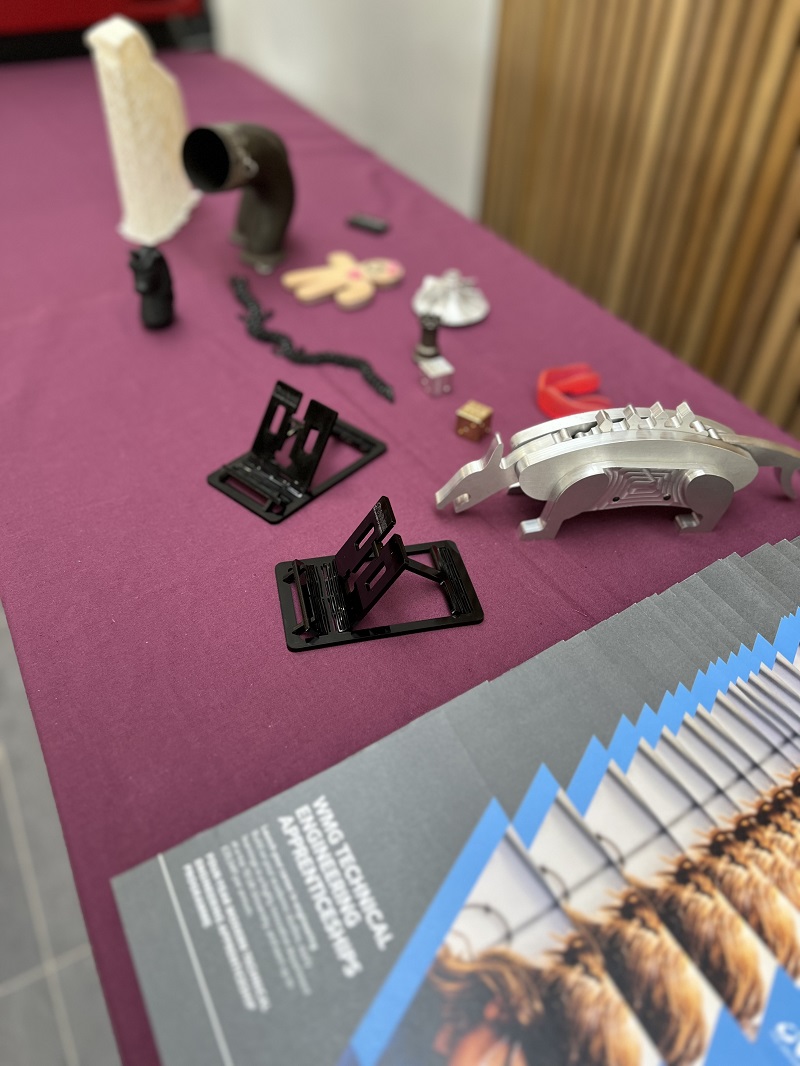
The Team welcomed over 100, year 9 and 10, pupils who were identified by their teachers as students, from groups under-represented in engineering and STEM careers, with an interest and a potential to do well in those subjects.
The students came from schools across the West Midlands region including the WMG Academies for Young Engineers in Coventry and Solihull; Barr’s Hill School and Community College; Bishop Perowne C of E College, Foxford Community School, Meadow Park School and Nicholas Chamberlain School.
The group was welcomed by Professor Margaret Low, WMG’s Director of Outreach and Widening Participation; Dr Phil Jemmett, WMG’s Widening Participation Co-ordinator; Caroline Cannon, WMG Outreach Project Officer, and Rebecca Sanderson Senior Programme Manager for Schools from the Royal Academy of Engineering. They were introduced to the various industry partners before heading over to the Degree Apprenticeship Centre (DAC).
The event was supported by the High Value Manufacturing Catapult through the Inspiring Young Engineers project which aims to foster a positive culture of engineering in young people and create the future engineering workforce.
At DAC the students had the opportunity to chat with representatives from industry partners including; Aston Martin; Balfour Beatty; Bentley; Bosch UK; Capgemini, Collins Aerospace; Honda; National Grid ESO; Polestar; Ramboll; 3P Innovations; SMP Alliance; Severn Trent and Lisi Aerospace.
The industry partners gave advice and guidance about the skills and knowledge required to become an engineer, and a snapshot of what an engineer is and might do in a variety of roles.
 Along with their teachers the students heard more about the research being carried out at WMG. They also had the chance to see the student projects including Warwick Racing, Warwick Moto, Warwick Submarine, Warwick Robotics and CyberWomen@Warwick, and chat to WMG apprentices.
They also received information from the School of Engineering about how they can study to become an engineer and learnt more about the Degree Apprenticeship route into engineering too.
WMG’s Outreach Project Officer, Caroline Cannon, who organised the event, explained: "We know that role models are an important part of outreach and STEM enrichment sessions, but it is daunting for students to approach and talk to industry professionals. This event was designed to show the vast array of engineering opportunities from different sectors of the engineering industry and give them a valuable interaction with positive role models.”
Paula Carmichael from WMG Academy for Young Engineers said: “I just wanted to say a massive thank you for today, it was a really good event that had just the right number of activities versus talks. I know how much hard work goes into this, from lost property to keeping the talks to the right timings, there was a great mix of companies and stands over the breaktime. Much better than a normal career fair, certainly the way forward.”
Dr Phil Jemmett from the WMG Outreach team said: “When we talk about engineering and how it could fight global challenges or make life easier for people, it's easy to forget the engineers who work on these massive projects. Events like our Industry Day aim to link young people up with those very engineers who are working on some of the biggest challenges our society faces. We want to inspire young people to imagine themselves as engineers in the future and picture what they would design to help our planet."
Find out more about WMG’s Outreach programme here: https://warwick.ac.uk/wmgoutreach
Group physical and mental health rehabilitation improves life quality for people with long covid
A new study led by our Clinical Trials Unit has found that an online rehabilitation programme improves quality of life for adults with long Covid.