
Departmental news
PhD position in Quantum Learning Theory at the University of Warwick, UK (Application deadline: January 1, 2024)
One funded PhD position is available in the group of Dr Matthias C. Caro, who will join the Theory and Foundations group in the Department of Computer Science at the University of Warwick, UK, in Fall 2024. Candidates interested in the interactions between quantum computing and learning theory are encouraged to apply.
The Warwick CS theory group has strong ties with the Centre for Discrete Mathematics and its Applications (DIMAP) and, together with DIMAP, is one of the leading theory groups in Europe, with regular publications in top international conferences and journals in theoretical computer science. Moreover, the successful candidate will become a part of the exciting, interdisciplinary research initiative Warwick Quantum. Overall, the Department of Computer Science at Warwick offers an excellent research environment. It was ranked 4th in the latest UK research assessment in Research Excellence Framework (REF) in 2021.
Pettifer Prize 2023
The 22/23 Pettifer prize has been awarded to Connor Johnson for best overall examination performance.
University of Warwick teams up with Ca’ Foscari University in Venice to create museum exhibitions of the future
The University of Warwick is collaborating with Ca' Foscari University of Venice to analyse Roman artefacts in a history project which could change the face of museums for the 21st century.
Warwick is working with historians at Ca’ Foscari to scan and analyse artefacts from ancient Roman and pre-Roman Venice, including in 3D and VR forms.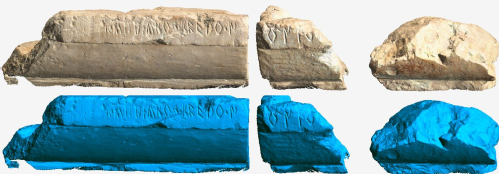
Researchers hope that these artefacts, scanned into 3D and virtual reality (VR), could revolutionise how people experience historical items, including in museums.
Rather than studying items in glass cases, artefacts could instead be scanned and produced using 3D printing or VR technology so visitors can hold and experience history in a whole new way.
This is especially vital when the items themselves are fragile or extremely old, meaning the originals can’t be held or examined by the public.
The collaboration between Warwick and Ca’ Foscari is focused on over 30 items related to religion from the Roman settlement of Altinum – the ancestor of the city of Venice.
Altinum is larger than Pompeii but remains mostly unexcavated, with researchers suggesting a trove of artefacts may be there waiting to be discovered.
The items themselves are from the Roman period and before, including from the Venetii natives who were assimilated into the Roman Empire over centuries.
The artefacts are being analysed by historians at Ca’ Foscari, with engineers at Warwick using cutting edge imaging technology to scan the items in incredibly high definition.
This helps historians read writing from the period and is especially vital when some artefacts have been damaged or are fragmented.
Academics at Warwick and Ca’ Foscari presented their findings at a conference in Venice on Friday (24th November), highlighting the potential of the combined arts knowledge of Ca ‘Foscari and the technology of WMG.
 Professor Mark Williams, Head of the Centre for Imaging, Metrology and Additive Technology (CiMAT) at WMG commented: “This is an excellent example of universities working together, including across the arts and sciences. This scanning technology has truly exciting possibilities, including for the future of historical learning and we were delighted to be able to assist our Venetian colleagues in bringing a small section of their history to life”.
Associate Professor Lorenzo Calvelli, a historian at Ca’ Foscari University, said: “These artefacts represent the very beginnings of Venice from over two millennia ago, and we are very pleased to be able to bring this history to a wider audience, both here in Italy and in the UK.
“It has been excellent to meet and collaborate with colleagues from Warwick, and I am very excited about our future plans to dive deeper into the treasure trove of artefacts that is waiting for us in Altinum”.
Altinum developed over the course of the Roman Empire into a booming trading hub, particularly know for valuable amber and horses which were prized across Europe. Eventually, refugees from Altinum are believed to have contributed to the founding of Venice in the wake of the fall of the Roman Empire.
Professor Rachel Moseley, Chair of the Faculty of Arts at Warwick, commented: “This is an excellent example of science and the arts working together to create exciting new possibilities.
“Every day, we see scientific advances allowing us to delve deeper into history in a way which recently we would have thought was impossible. Equally, the arts give science that grounding and philosophy to make these advances tangible to the public.
“I’m delighted that our new base of Warwick Venice Centre has brought all these excellent researchers together and is already encouraging collaboration in a hugely positive way.”
Millions awarded to University of Warwick to turbocharge UK’s battery production
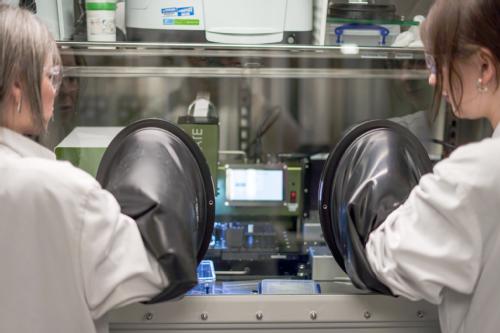 The University of Warwick has been awarded millions of pounds to boost British production of crucial materials for electric car batteries.
The £12 million in funding has been awarded by the Faraday Battery Challenge to the High Value Manufacturing Catapult at WMG at the University of Warwick, and CPI at NETPark (North East Technology Park), in County Durham.
It will be used to create the new Advanced Materials Battery Industrialisation Centre (AMBIC).
The Centre will bridge the gap between academic research and battery production and will focus on how batteries can be made to work more efficiently, as well as on equipment and skills development.
The Centre is needed to help the UK develop the electric vehicle batteries of the future, with reduced costs, more sustainable materials and improved performance.
Electric vehicle batteries make up around half the cost of a new electric vehicle, so reducing the cost of their production is crucial to lowering the cost of EVs to parity with combustion engine vehicles.
The funds are part of a wider investment strategy by the Faraday Battery Challenge and the High Value Manufacturing Catapult to ramp up Britain’s battery production and infrastructure to boost the UK’s domestic battery supply chain.
Professor David Greenwood, CEO of the WMG High Value Manufacturing Catapult Centre said: “Cathode and anode active materials make up more than 50% of the value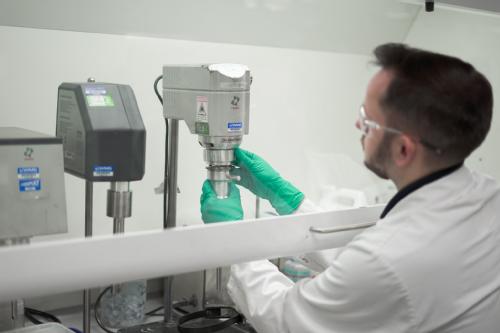 of an automotive battery cell.
“For the UK to take its great academic research into production, and to capture the billions of pounds of resulting economic value in the UK, we need facilities which allow Britain to scale up and fully evaluate new materials. This investment, alongside the combined skillsets of CPI and WMG will provide that capability for the UK.”
The funds are specifically to help turbocharge the scale up of battery materials manufacturing within the UK. Only by producing batteries on a wider scale domestically can the EV industry make sure there is no bottleneck in supply and demand. By strengthening UK supply chains of battery materials, WMG is working with UKBIC and others to create a more resilient supply chain.
Thomas Bartlett, Challenge Deputy Director for the Faraday Battery Challenge, said: “AMBIC will bring together two emerging regions of battery innovation and manufacturing; the North-East and Midlands, under one facility to de-risk and accelerate battery materials scale up in the UK.
“Through the Faraday Battery Challenge’s £12m investment in the High Value Manufacturing Catapult we will establish a truly world-class facility to support the growth of a battery materials supply chain. With AMBIC and previous investments in cell, module and pack scale-up at UKBIC and R&D in the wider ecosystem, the UK will now be in a position to support businesses from “powder to pack” and from lab to commercial scales.”
Katherine Bennett, CEO of the High Value Manufacturing Catapult, said: “The next generation of battery technologies are critical to the green energy transition and a major opportunity for UK manufacturing. Realising that potential will require combining our collective expertise and this investment from the Faraday Battery Challenge is a brilliant example of that in action.
“In CPI and WMG, the Advanced Materials Battery Industrialisation Centre has two centres that are at the very forefront of chemical processing and battery cell development; together they can turbo charge battery materials scale-up.”
Frank Millar, Chief Executive Officer at CPI, said: “The Advanced Materials Batteries Industrialisation Centre will enhance the UK’s existing competitive advantages in batteries technology, and it stands to become a catalyst for the UK to address some of the biggest challenges we face as a nation. By giving innovators the opportunity to harness our expertise we can tackle issues such as climate change, while growing a sector that will be vital to the future of the economy.”
New Clinical Education Hub opens its doors to students for the first time
Warwick Medical School’s brand-new £4.2m Clinical Education Hub has opened its doors for the first time to students, offering state-of-the-art, purpose-built spaces for Clinical Anatomy and Clinical Skills.
WMS commits to trialling sexual violence training for medical students
Warwick Medical School have committed to the addition of specialist training on sexual violence awareness and communication skills for their second-year medical students in the 2023/24 academic year.
Conference run by WMG students inspires and empowers women in cyber security
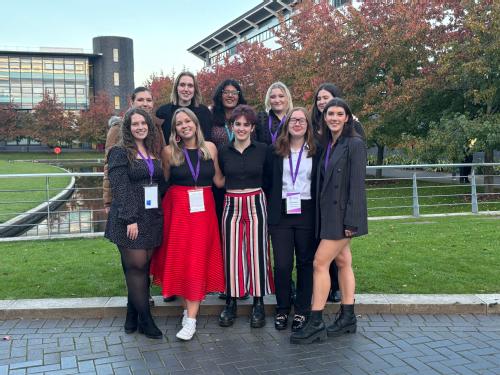 WMG students put diversity and inclusion in the spotlight at The CyberWomen Conference 2023 last month. With over 200 industry professionals, academics, and students coming together to learn, network, and collaborate, the second annual conference was a resounding success.
This year the Conference was jointly organised by two branches of CyberWomen Groups Community Interest Company (CIC), CyberWomen@Warwick and CyberWomen@Coventry. CyberWomen@Warwick is a student-led initiative, founded by staff at WMG’s Cyber Security Centre in collaboration with students on WMG’s Cyber Security undergraduate and postgraduate programmes. The initiative aims to inspire more women into the cyber security industry and promote inclusivity and positive change within STEM.
The Conference welcomed cyber security experts from across the UK, including Chani Simms, Illyana Mullins, Vanessa Eyles, Janette Bonar Law, and Matt Treadwell, who shared insights and facilitated interactive workshops, providing attendees with a chance to delve deeper into the cyber security industry.
Alongside inspiring talks, the Conference also offered an Opportunities Hub to connect non-profit organisations with students and industry professionals, showcasing the diverse opportunities within the cyber security sector.
Elise Ghent, BSc Cyber Security student and President of CyberWomen@Warwick, said: “It was an amazing day, a really great turnout, and hopefully more eyes on why diversity in cyber security is important. A big thank you to everyone that attended, as well as the support that we have had along the way from so many different people.”
To keep the audience on their toes, prizes (sponsored by cyber security training platform, TryHackMe) were up for grabs through several social media competitions.
Building on the achievements of the inaugural CyberWomen@Warwick Conference, the 2023 event represents another step forward in promoting diversity, knowledge, and collaboration within the cyber security community.
Dr Elizabeth Titis, Assistant Professor and Academic Lead for CyberWomen@Warwick, said “I am extremely proud of CyberWomen@Warwick. I have been involved in this fantastic initiative from the outset and have seen it grow exponentially. This event is evidence that with appropriate support our girls can do absolutely remarkable things!
"Congratulations to all the students and staff involved who together worked on CyberWomen@Warwick to address the gender gap in cyber security by creating long lasting career choices for women."
History Repeats Itself: The Relevance of Historical Pandemics to the Medical School Curriculum
The dramatic global impact of the coronavirus pandemic has increased consideration on epidemiological progressions of pandemics. Measures implemented to reduce viral transmission have been largely historical, comparable in nature with the 1918 and 2009 influenza pandemics, demonstrating the importance of clinicians’ awareness on historical pandemics.
Read the paper here.
2023 Christmas Lectures tickets
The Christmas Lectures are back this year and audiences can challenge AI to write a Christmas card, discover how animals inspired engineering, explore the colour spectrum, be surprised by snow and wish Sir Isaac Newton a Happy Birthday!
The lectures are based at Warwick Arts Centre and take place on Thursday 30 November and Thursday 7 December. Get your tickets.Link opens in a new window
New book published by WMG duo to tackle meaningful game design
Congratulations to Assistant Professor in Technology Management and Systems Engineering, Dr Devon Allcoat; and Head of eLearning, Chris Evans at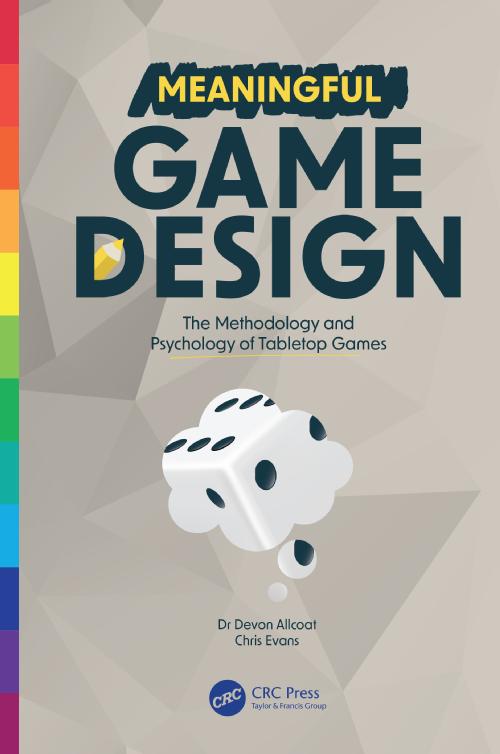 WMG at the University of Warwick, who have co-authored a new text book entitled ‘Meaningful Game Design.’
Routledge, publisher of professional and academic books, approached Dr Allcoat and Mr Evans after hearing about specific modules that form part of WMG’s e-Business Management and Games Engineering full-time Master’s programmes, and the Institute for Advanced Teaching and Learning's (IATL) undergraduate offerings.
The book provides readers with the tools and methods with which to create effective tabletop games. It covers the design and development process guiding readers through the necessary mechanics, messages, and motivations of games that must be understood in order to build successful tabletop games, including educational games for teaching or training.
It includes chapters on design methodology, narrative, accessibility and playtesting, and aims to support students on game design courses, as well as appealing to designers, teachers and hobbyists.
Dr Allcoat explains: “This book teaches core principals of game design, applicable to all types of games. In our increasingly digital age, it discusses hybrid games and digital elements, but doesn’t forget the human component, also exploring psychology and accessibility.”
Meaningful Game Design is widely available online and in book shops. A 20% discount code EFL03 is available if purchased directly via www.routledge.com. This code expires on 31 December 2023.