
Departmental news
Economics ranked 1st in the Good University Guide 2024
The Department of Economics is proud to announce that for the second year running we have been ranked top of the specialist subject table for Economics in the Times and Sunday Times Good University Guide 2024.
The Good University Guide, published annually in September by the Times and Sunday Times, provides British university rankings based on five categories: teaching quality, student experience, research quality, entry points and graduate prospects.
We have achieved a high overall score (with 93.9% for graduate prospects) which puts us ahead of the LSE, Cambridge, Oxford and St Andrews.
We have been ranked in the top 5 amongst UK's departments of Economics over the last few years, and reaching the top position four times previously: in the Good University Guides 2023, 2020 and 2015.
Our recent achievements also include high positions in other important league tables: 22nd place in the world in the QS World University Rankings 2023 for Economics and Econometrics as well as 4th place in the Complete University Guide 2024 published in June 2023.
Professor Ben Lockwood, Head of Department of Economics, said:
"I am delighted to hear we have retained the top position in this popular league table. This external recognition highlights the Department’s success in producing world class academic research and giving students excellent learning experience. It also reflects the hard work and commitment of our staff and students in all areas of our work."
Related items
The Times and The Sunday Times Good University Guide 2024Link opens in a new window
Economics ranked 4th in the Complete University Guide 2024Link opens in a new window
WMG charges ahead with battery research
WMG, at the University of Warwick, has received a share of £19 million from the Faraday Institution - the UK’s flagship institute for electrochemical energy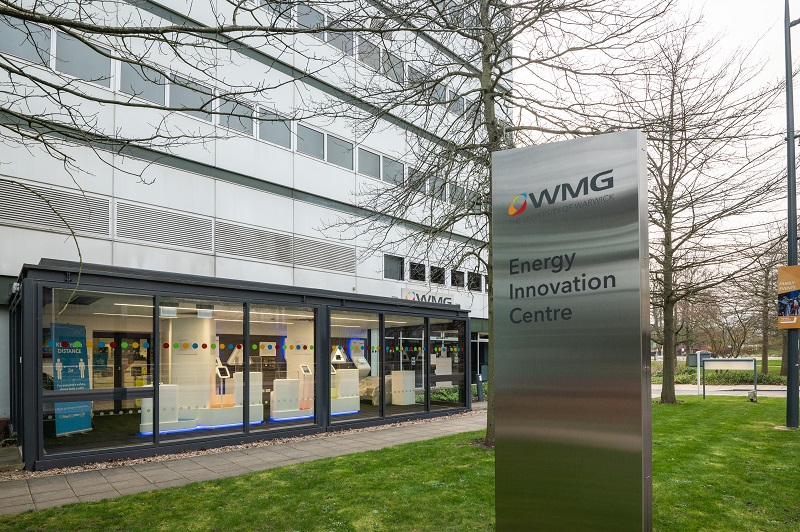 storage research.
The funding has been allocated to four key battery research projects aimed at delivering an impact for the UK. These existing projects across three different research areas — next generation cathode materials, electrode manufacturing and sodium-ion batteries — have been reshaped to focus on the areas with the greatest potential for success.
WMG is taking a key role in two of the four, reshaped projects entitled FutureCAT and Nextrode.
WMG’s Professor of Battery Innovation, Louis Piper, will now co-lead FutureCAT, a battery cathode research project, focusing on understanding novel redox processes as a route to stabilise both high capacity, high performance, nickel rich and emerging cathodes and scalable designer morphologies. The project will build on its success in developing reliable, scalable routes to deliver a longer lifetime, high-energy/power cathodes, essential for electric vehicles.
Whereas in Nextrode, a battery electrode project, WMG is one of six university partners, led by the University of Oxford, alongside six industry partners. Researchers at WMG will investigate ways to make electrodes for Li-ion batteries unlocking the electrochemical potential.
Professor Pam Thomas, CEO, Faraday Institution, commented: “The Faraday Institution remains steadfast in its commitment to identify and invest in battery research initiatives that hold the greatest potential for making significant societal, environmental, and commercial contributions. This announcement signals the completion of our latest round of project refocusing, enabling us to allocate even more effort towards those areas of research that offer maximum potential in delivering transformative impact.”
James Gaade, Research Programme Director commented: “We are pleased that the reshaping process has bolstered the capabilities and expertise of researchers on the four projects. The realignment includes a focus around research into sustainable manufacturing methods and materials, and the need to further develop and scale up manufacture of promising materials discovered in the first three years of the projects.”
Project information
FutureCat – High nickel content, high performance cathode materialsLink opens in a new window
FutureCat, co-lead by WMG’s Professor Louis Piper, and the University of Sheffield’s Professor Serena Cussen is targeting step-changes in:
- Understanding novel redox processes as a route to stabilise both high capacity, high performance, nickel rich and emerging cathodes. The project continues its focus on doped and dual-doped lithium nickel oxides (LNO) (both polycrystalline and single crystals), including use of protective coatings. The team will also investigate the use of polyanionic cathodes, use modelling to inform the search for new candidate materials, and research designer electrolytes with the intention of stabilising the interphase layer.
- Scalable designer morphologies. The project will build on its success with doped-LNO in developing reliable, scalable routes to deliver a longer lifetime, high-energy/power cathodes through the use of gradient morphologies, co-doped cathodes (with the aim of delivering reversible discharge capacities exceeding 220 mAh/g), single crystal particles and thin coatings.
- Materials delivery: The scale up of the high nickel W-LNO material previously developed by FutureCat is being transferred to the Degradation project for testing in industry-relevant pouch cells. FutureCat will continue to investigate the manufacturing scale-up of other Ni-rich cathode materials, down-selecting promising active materials based on earth-abundant elements. Research includes the use of laser patterning to increase power densities, investigation of cracking as a failure mechanism to determine routes to resilient cathode manufacture, atomic layer deposition of coatings to improve electrode longevity, and optimisation of cycle life through the use of electrically conductive binders.
Nextrode – electrode manufacturingLink opens in a new window
Nextrode is focused on researching, understanding and quantifying the potential of smart electrode manufacturing to reduce manufacturing costs and improve the performance of batteries. Benefits could be realised in both mature material systems already used commercially and in new emerging high performance battery systems. The project is developing new practical manufacturing innovations – including traditional slurry cast electrodes and novel low or no solvent electrodes – that could deliver the benefits of smart electrodes to the industrial scale and improve sustainability of processes.
The project is researching the underpinning manufacturing science that could alleviate constraints in electrode manufacturing through engineering particle design and improved understanding of the relationship between powder properties and deposition/calendering techniques. Nextrode is designing manufacturing process steps and using advanced in-line measurements to enable slurry casting to be brought under closed-loop control. Researchers are manufacturing new arrangements of anode and cathode materials, identifying conditions where benefits are maximised and developing cells that expand the energy-power-lifetime design space.
The new phase of research projects described will progress over the two years from 1 October 2023 to 30 September 2025.
Find out more about WMG’s Electrochemical Engineering research here: Electrochemical Materials (warwick.ac.uk)
For more information on the Faraday Institution, visit www.faraday.ac.ukLink opens in a new window
Warwick Law School welcomes new Assistant Professor
Warwick Law School welcomes new Assistant Professor to our community.
Luminita Olteanu joins us from LSE Law School where she taught courses in intellectual property law.
Dr Farzana Meru appointed as a member of the University Gender Taskforce
Dr Farzana Meru has recently been appointed as a member of the University Gender Taskforce.
Farzana was invited by the Gender Taskforce (GTF) to become a member due to her knowledge and expertise on gender related issues.
The Gender Taskforce champions and oversees the advancement, implementation, and further development of gender equality at institutional level in line with the Gender Statement of Intent catalysed by the Women in Academia workshops and reports to the university social inclusion committee.
Farzana tells us about why she accepted the invitation to become a member:
“I have always been interested in gender issues within Physics and STEM. I have also personally experienced (negative) gender related issues as a female Physicist and have mentored others through their challenges too. I am keen to use my experience that I have gained – both lived and through operational activities that I have been part of – to enable positive gender-related initiatives at the university’s strategic level.”
Warwick Law School welcomes new Leverhulme Early Career Fellow
Warwick Law School welcomes a new Leverhulme Early Career Fellow to our community.
Marina Velickovic joins us from Kent Law School where she was previously a Lecturer.
Warwick Law School welcomes new Assistant Professor
Warwick Law School welcomes new Assistant Professor to our community.
Joshua Pike joins us from the London School of Economics where he was a LSE Fellow teaching and researching in tort law and jurisprudence.
WMG’s Professor Khastgir quoted in parliamentary inquiry’s call for action on self-driving vehicles
 Today (Friday 15th September), the House of Commons Transport Select Committee released its cross-party report on self-driving vehicles, calling for urgent legislation to be proposed by the Government to support innovators, regulate this emerging technology sector, and give the public confidence in the safety of connected and autonomous mobility.
Professor Siddartha Khastgir, Head of Verification and Validation at WMG, University of Warwick, who gave evidence to the inquiry and is quoted in the report, said:
"The Transport Select Committee is right to say self-driving vehicles (SDV) are a British success story and that our domestic innovators have energy, creativity, and expertise.
"To secure this progress, we need to ensure consumers can be confident of the safety of SDVs, because, as I told the Committee we can have the safest technology, but if we cannot convince the public, they will never use it.
"So, I’m delighted the Committee is calling for the Government to ‘bring forward and pass comprehensive legislation in the next parliamentary session’ to put in place a robust regulatory framework For SDVs, and I look forward to working with industry, ministers, civil servants and parliament to ensure the public can be confident in the safety of the next generation of transport innovation."
Professor Khastgir provided written and oral evidence to the Transport Committee’s Self-Driving Vehicles Inquiry. His evidence has been referenced (significantly) in this report, including the use of the Operational Design Domain (ODD) to design driving conditions so that SDVs can be tested and operate safely; the importance of ‘informed safety’ that the technology developers need to equip the users about the capabilities and limitations of the self-driving technology so they can use the technology safely.
Read the report here: https://committees.parliament.uk/committee/153/transport-committee/news/197460/legislation-needed-to-continue-great-british-success-story-of-selfdriving-vehicles/Link opens in a new window
Bhattacharyya Award finalists “inspiring and diverse examples” of innovative and impactful partnerships between industry and universities
· Improved footballs for use in the World Cup and new technologies for defence against biological and chemical attack are examples of outcomes from six industry–academia partnerships shortlisted for this year’s annual Bhattacharyya Award
· Winning partnership will be announced at awards ceremony in Birmingham on 24 October 2023
The Royal Academy of Engineering has shortlisted six exceptional industry–academia partnerships from across the UK for this year’s Bhattacharyya Award.
The Bhattacharyya Award 2023 and a cash prize of £25,000 will be presented on 24 October 2023 to the team who best demonstrate how industry and universities can work together.
The Bhattacharyya Award is a tribute to Professor Lord Kumar Bhattacharyya KT CBE FREng FRS, the Regius Professor of Manufacturing at the University of Warwick and founder of WMG who advocated for greater collaboration between industry and universities. Funded by the Department for Science, Innovation and Technology, the annual Bhattacharyya Award is open to UK universities and colleges that have demonstrated a sustained, strategic industrial partnership that has benefitted society and is deserving of national recognition. Industry–academia partnerships from any academic discipline are eligible for the Bhattacharyya Award.
This year’s shortlist illustrates the sheer diversity of challenges that can be successfully addressed through collaboration between universities and industry, including national defence against biological and chemical attack, the supply of drinking water, nuclear decommissioning, high-speed global communications, high-performance sportswear and equipment, as well as other challenges like decarbonisation that can be tackled through the power of process systems engineering.
The full shortlist of finalists is as follows:
University of Hertfordshire and the Defence Science and Technology Laboratory (Dstl)
New technologies for defence against biological and chemical threats
The collaboration between the University of Hertfordshire and the Defence Science and Technology Laboratory (Dstl) is focused on next generation devices and systems for monitoring and identifying biological and chemical threats. The collaboration aligns with the University of Hertfordshire’s objectives to stimulate enterprise and innovation, taking a pioneering approach to the transfer of knowledge from academic research to business and government. For Dstl, the collaboration has been central to its mission to explore, sustain, grow and evaluate state-of-the-art technological capabilities to develop protective measures against hazardous biological materials.
Imperial College London, UCL and the Sargent Centre Industrial Consortium
Unleashing the power of process systems engineering research
The Sargent Centre is the world’s largest multidisciplinary research centre in Process Systems Engineering, combining a deep understanding of chemical and biochemical processes with the ability to make fundamental advances across a wide range of systems and digital technologies for the benefit of society and industry. Bringing fundamental research advances to practice is deeply embedded in the Sargent Centre’s approach. For over 30 years, Sargent Centre researchers and process industry partners (e.g., ABB, BP, Eli Lilly and Company, Petronas, Pfizer, Procter and Gamble, Siemens, Shell, Syngenta) have collaborated to address challenges in manufacturing, decarbonisation, energy efficiency, optimisation, data science, multi-scale modelling, risk and uncertainty. This has resulted in successful spin-out creation and software licensing, with tools used across the pharmaceutical, agrochemical, consumer goods, food and energy sectors.
Loughborough University and adidas
Sports equipment and clothes for improved performance, safety and inclusivity
Since 2002, the Loughborough University and adidas cross-disciplinary teams have advanced engineering knowledge that has brought iconic products to market and been translated beyond the global sports sector for wider societal impact, making sport safer, more accessible and allowing people to perform at their best whilst developing the adidas talent pipeline.
The collaborative research has influenced all adidas major tournament footballs since 2004, and the analysis of short duration collisions in football has benefited other sports including new International Standards for cricket helmet performance that have eliminated facial injuries among professional helmeted batters. Another innovation is the first-ever sweat body maps of males, females and children to inform the company’s sector-leading clima® product range. This breakthrough underpins the first virtual Human Thermal Model which enables organisations worldwide to optimise product design for multiple populations across a range of industry sectors.
University of Sheffield and the UK water sector
Keeping drinking water crystal clear
Ageing infrastructure and the complexity of interacting physical, chemical and biological processes occurring within the vast hidden water distribution systems leads to discolouration, an indicator of water quality deterioration, and the number one service contact by consumers. Over the last two decades, by combining world-leading knowledge with a fundamental understanding of the processes and delivery of practical tools and techniques, the University of Sheffield has built the ‘Prediction and management Of Discolouration in Distribution Systems’ (PODDS) consortium across the UK water sector to address these challenges. This innovative partnership has helped the sector achieve improved levels of service without increasing costs, delivering more than 35% reduction in customer contacts regarding water discolouration and increased operational efficiency through better targeting of limited resources.
UCL Optical Networks Group and worldwide telecommunications industry
High-speed ultrawideband and low-delay optical communications networks for the cloud
Optical fibre communication networks underpin global communications, carrying over 95% of all digital data. The work of the Optical Networks Group has been key to the development of this critical high-capacity, low-delay, resilient and secure communications infrastructure. By deeply embedding their industrial collaborators within the group's research, the group has achieved society-wide impact, including a 100,000-fold increase in optical network data capacity, the doubling of transmission distances, and world record data rates, using its one-of-a-kind laboratories and expertise. Since the group was founded in 1994, it has become the centre of a web of over 60 leading international industrial laboratories and companies, across all telecommunications sectors: network operators and content providers (e.g., BT, Deutsche Telecom, Microsoft, KDDI), equipment and device manufacturers (Oclaro (now Lumentum), Nokia Bell Labs, Xtera, ADVA, Mitsubishi, Infinera) and optical fibre manufacturers (Corning, OFS).
University of Manchester and Nuclear Decommissioning sector
Providing expertise for quicker, safer nuclear decommissioning
The UK has been a nuclear nation for 75 years and has accumulated one of the largest. most complex nuclear legacies on Earth. Since 2002, Government has focused on cleaning up this legacy, a programme of work that will last over 100 years and cost over £140 billion. The Dalton Nuclear Institute coordinates the UK’s most comprehensive nuclear academic community, at The University of Manchester, to deliver skilled people, impactful research and support for Government policy development. The Institute’s research has, among other beneficial impacts, led to changes in effluent treatment at Sellafield and reduced discharges to the environment by 50-90%. The team have also developed robots for high hazard settings, including one of Time Magazine’s 200 best innovations for 2022; and improved the management of the UK’s separated plutonium stockpile. In a sector with a critical shortage of experts, the Institute also provides a vital pipeline of talent.
View the videos of the shortlisted partnerships.
Professor Dame Ann Dowling OM DBE FREng FRS, former President of the Royal Academy of Engineering and Chair of the judging panel for the Bhattacharyya Award, said: “The six finalists for this year’s Award are inspiring and diverse examples of successful collaboration between academia and industry—it’s terrific to be able to highlight and to celebrate their innovation and impact and I hope they will provide inspiration for others. We know that there are other great partnerships like these between universities and colleges and industries across the UK in all sectors but that we need many more if we are to fully reap the economic and societal benefit of our research investment and capability.”
The winner of the Bhattacharyya Award will be announced on the evening of 24 October 2023 at a ceremony at the Edgbaston Park Hotel in Birmingham that will showcase the shortlisted partnerships. Anyone wishing to attend should contact awards@raeng.org.uk for more details.
Notes for editors
- WMG, University of Warwick, is a world leading research and education group, transforming organisations and driving innovation through a unique combination of collaborative research and development, and pioneering education programmes. As an international role model for successful partnerships between academia and the private and public sectors, WMG develops advancements nationally and globally, in applied science, technology and engineering, to deliver real impact to economic growth, society and the environment.
- The Royal Academy of Engineering is harnessing the power of engineering to build a sustainable society and an inclusive economy that works for everyone. In collaboration with our Fellows and partners, we’re growing talent and developing skills for the future, driving innovation and building global partnerships, and influencing policy and engaging the public. Together we’re working to tackle the greatest challenges of our age.
Media enquiries to: Pippa Cox at the Royal Academy of Engineering Tel. +44 207 766 0745; email: Pippa.Cox@raeng.org.uk
MB ChB Student Success
The latest release of UK Foundation Programme Office data from 2021 reveals that our MB ChB finalists performed very strongly in their applications to the Foundation Programme, with 98.59% being allocated to one of their top 5 choices. This was the second highest rate in the UK.