
Departmental news
New podcast series rethinking the history of the British working class
Featuring Warwick's Laura Schwartz and Somak Biswas, this new podcast series comes out of the 'Writing Labour History in Brexit Britain' network:
https://warwick.ac.uk/fac/arts/history/people/staff_index/lauraschwartz/labourhistorybrexitbritain/
WMG announces new partnership with global engineering company
WMG, at the University of Warwick, has announced a new two year research partnership focusing on sustainable high-performance sealing materials.
Researchers at WMG’s Link opens in a new windowInternational Institute for Nanocomposites Manufacturing (IINM), led by Dr Chaoying Wan, will be working with experts at James Walker to develop the next generation of sealing compounds which will be compliant with future per- and poly- fluoroAlkyl substances (PFAS) regulations.
In February 2023, the European Chemicals Agency announced a proposal for the European Economic Area that will effectively lead to a ban on all PFAS materials, due to their persistence in the environment.
This research project will use high quantity techniques to develop and identify novel elastomer compounds that comply with proposed PFAS regulations, for use in critical industrial applications drawing on WMG’s expertise in elastomer and polymer technology.
The new technologies developed will have a high impact on a wide range of industries from transportation, oil/gas, semiconductor to hydrogen storage and wind turbines.
Conventional high performance sealing compounds rely on PFAS, as these materials are resistant to extremes of temperature and aggressive chemicals. PFAS are essential to the semi-conductor, aerospace, petrochemical, defence and nuclear industries for example, and there are currently no suitable replacement materials available. Alternative sealing materials are urgently needed to substitute PFAS.
Dr Mike Eason, Technical and Quality Director at James Walker commented: "Industrial dependence on PFAS elastomers is a global issue with supply chain impact already seen. I am delighted that we will work with Dr Wan and her team to identify and develop materials which will help industry be compliant with the proposed regulations. This partnership will accelerate James Walker’s development of seal materials for critical industry. WMG has small scale, advanced, mixing capability, with knowhow regarding nanofillers and polymer science that will allow James Walker to rapidly design, manufacture and screen bench-scale test formulations.
“I believe the combination of James Walker’s history and expertise in critical industrial sealing together with WMG’s state of the art capabilities will enable rapid development and commercialisation of materials. James Walker is committed to developing solutions to the PFAS regulations faced by global industry."
Dr Chaoying WanLink opens in a new window, Reader of Functional Polymers and Nanocomposites at WMG, University of Warwick explains: "Collaborating with James Walker to develop alternatives for PFAS seals is an important and exciting opportunity. Our elastomer research facility is supported by High Value Manufacturing Catapult CentreLink opens in a new window (HVMC), equipped with the latest technology, including a rubber process analyser (RPA) with wide temperature range - it is the only one in the UK, and one of only a few in the world with the capability to simulate dynamic elastomer performance at very low temperature.
“This function is extremely useful to compare differences in formulation design for applications such as high pressure or low temperature sealing. I am very much looking forward to working with the James Walker team on the development of new material options for high performance sealing applications and advancing our knowledge of polymer formulation and performance."
Find out more about WMG’s Nanocomposites research here: Nanocomposites (warwick.ac.uk)
PhD Student Stephen Brown wins Cruickshank Prize 2023
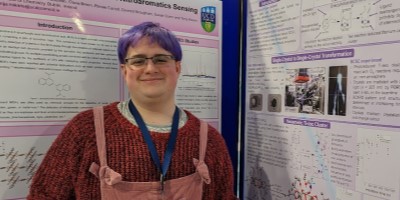
For the second year running, PhD student Stephen Brown (Pike Group) has been recognised by the British Crystallography Association for great scientific communication. Read moreLink opens in a new window
Pivoting to COVID research during lockdown – an interview with Professor Rudo Römer, theoretical physicist
The worldwide COVID pandemic was a crisis unparalleled in recent history. The efforts of scientists and researchers around the world in mobilising to find vaccines, treatments, and explanations were equally unparalleled. In this article, we tell the story of one such research collaboration using their collective expertise in protein-modelling to help build a picture of the SARS-CoV-2 virus structure. Moreover, using modern collaborative writing tools, they were able to write up and publish their work during the height of the pandemic.
New Warwick research is helping scientists preserve cells
New technology, covered in JACS AuLink opens in a new window, could improve the cryopreservation of cells, tissue culture and 3D cells models used in a variety of applications, including research, medical therapies and agriculture. Read moreLink opens in a new window
Spotlight on Newton Fund Research at Warwick
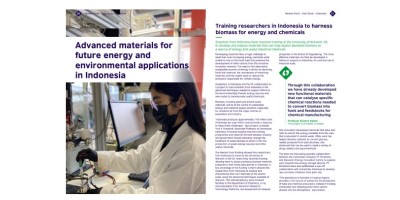
A Warwick case study, "Advanced materials for future energy and environmental applications in Indonesia" features in a British Council e-book highlighting innovative and collaborative Newton Fund funded research.
Journal of Consumer Policy Editors’ Meeting at Warwick Law School
The editors of the Journal of Consumer PolicyLink opens in a new window (JCP) held their annual meeting (the first in-person meeting since 2019) at Warwick Law School on 21 April 2023. Editors discussed current submissions and plans for forthcoming issues, as well as socialising and sightseeing in Coventry and its surrounding towns.
Lacuna Magazine publishes student story on the impact of Black role models and Black creative spaces
Xaymaca Awoyungbo, a final year undergraduate student studying History at the University of Warwick, has written an article for our Lacuna magazine titled: "If you can see it, you can be it: The impact of Black role models and Black creative spaces." Xaymaca speaks with author Sandra A Agard and explores Britain’s young Black creative networks.
Professor Celine Tan contributes to consultation on JET-IP
Professor Celine Tan from Warwick Law School contributed to the South Africa Presidential Climate Commission (PCC) Consultation on the Just Energy Transition Plan (JET-IP). The JET-IP is part of a multi-country funding initiative, the Just Economic Transition Partnership (JETP), by a coalition of developed countries to support a number of developing countries' transition away from dependence on coal and other fossil fuels.
The European World 1500-1800: An Introduction to Early Modern History Fourth Edition
Drawing on Warwick’s longstanding core module for the period, numerous early modernists have collaborated on a textbook which first appeared in 2009. Now in its fourth edition, The European World 1500-1800: An Introduction to Early Modern History (London: Routledge, 2023) has been adopted by many universities and used by generations of students across the globe.

To mark the latest updates, which include two new chapters – on ‘Environments’ and ‘Food & Drink Cultures’, a fresh ‘all colour’ look and additional print as well as online features, Beat Kümin (editor) and William Rupp (assistant / website editor) have recorded a teaser & full video introduction at the historic church of Berkswell just a few miles from campus.
We hope that it will whet your appetite to find out more about The European World on the Routledge homepage and our companion website!