
Departmental news
Warwick Medical School hold inaugural Graduation event for successful education partnership
Graduands from around the World and their families gathered on Saturday 1 April at University of Warwick to enjoy a truly wonderful event celebrating the first cohort of students graduating from Warwick-iheed partnership programmes.
The ceremony was presided over by the University of Warwick Vice Chancellor Stuart Croft alongside several iheed colleagues including CEO and Founder Tom O’Callaghan. The event celebrated the hard work, dedication and achievement of the students, but also created an opportunity to celebrate the success of the partnership itself - To read the full news item click here
Economic History Society Annual Conference 2023 held at Warwick
The Department of Economics was this year's host for the Economic History Society (EHS) Annual Conference. Founded in 1926, the EHS is a registered charity aiming to promote the study of economic and social history.
The conference took place from 31 March to 2 April in Ramphal where over 250 delegates from around the world gathered to present over 100 papers by academics, 37 papers by new researchers, and 22 posters by graduate students.
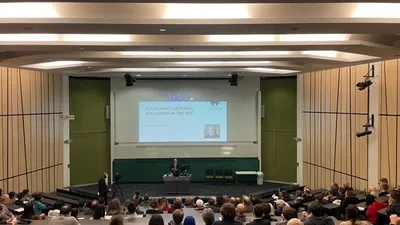 The programme of the conference featured multiple parallel sessions including Reforms in Eastern Europe, Economic Geography, The Legacies of Colonialism, Social Mobility and Exclusion, Agricultural History, Health, and Political Economy, just to name a few.
Presenters from Warwick Economics were, in order of appearance:
New researcher sessions
- Jinlin Wei, PhD student, Financial development and patents during the First Industrial Revolution: England and Wales.
- Cora Neumann, PhD student, Women's property rights and fertility: Evidence from 19th and 20th-century United State.
- Yuchen Lin, PhD student, Gender equalisation meets unequal gender norms: University co-education in 1920s China.
Friday plenary session
- Professor Daniel Sgroi, Measuring national wellbeing in the past. This lecture is available to watch on the EHS webpage Plenary LecturesLink opens in a new window.
Academic sessions
- Professor James Fenske, Decolonisation and the efficiency of public goods provision: Evidence from India.
- Professor Bishnupriya Gupta, Conflict and gender norms: Evidence from India.
- Dr Gianni Marciante, former PhD student now Post-doc at the University of Bologna, Women's education and fertility in Italy at the onset of the demographic transition.
- Dr Eric Melander, former PhD student now Assistant Professor at the University of Birmingham, Brexit and the Blitz: Conflict, collective memory, and Euroscepticism.
The Tawney lecture titled Putting women back into the early modern economy: work, occupations, and economic development was delivered on Sunday by Professor Jane Whittle (University of Exeter).
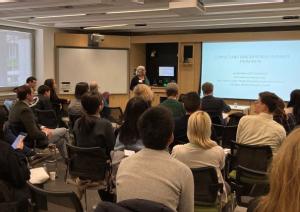 The Saturday pre-dinner reception was offered by the Department of Economics at Warwick, and it was followed by the Conference dinner where the president, Professor Phillip Schofield (Department of History & Welsh HistoryLink opens in a new window, University of Abertstwyth), who announced prizes for best poster, new researcher paper, and best paper published in the Economic History Review. After dinner, networking continued with a Pub Quiz organised by Warwick students.
A group of staff and PhD students from the Department of Economics provided support to the conference organisers. Dr Claudia Rei from the Department of Economics, who was the local organiser, said:
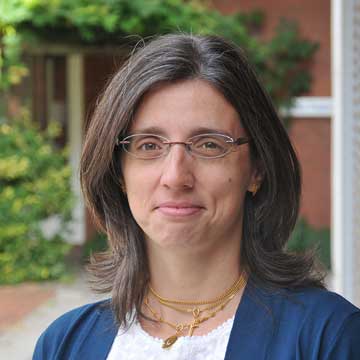
"I'm very pleased that the Economic History Society chose Warwick as the host for their Annual Conference. It was a great opportunity for the economic History field, and our students in particular, to come together to share their research findings, and to develop new personal and professional connections."
Fruit Fly helps Warwick Scientists Understand human heart development
Dr Timothy Saunders and team have been awarded almost £300,000 by the British Heart foundation to study Fruit Fly Hearts!
Read more here:
Fruit fly helps Warwick scientists understand human heart development - BHF
Battery technology research collaboration initiated between OXECO and WMG, the University of Warwick
- OXECO and WMG at the University of Warwick will conduct a 15-month research programme into lithium-ion battery coatings
- Research is expected to advance next generation active materials and coating foils used to create electrodes
- The partnership aims to improve lithium-ion battery performance, longevity, and manufacturing
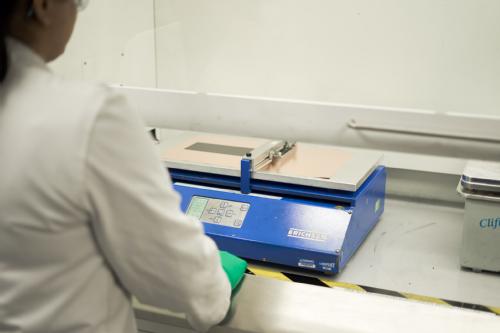 OXECO, a spin-out of the University of Oxford, has partnered with WMG at the University of Warwick, for a 15-month collaboration on lithium-ion battery technology. The partnership aims to advance the lithium-ion battery industry by leveraging WMG’s research on battery cell development and optimisation, alongside OXECO’s unique technology platform.
The research programme aims to enhance the performance, longevity, and ease of manufacturing of lithium-ion batteries by focusing on the preparation of active materials and coating foils used to create electrodes.
The programme is expected to yield transformative results in the improvement of current lithium-ion batteries and be a significant step towards the development of more efficient, reliable, and sustainable energy storage solutions.
This partnership will further OXECO’s aim to leverage innovative surface chemistry to accelerate our net-zero future. Jon-Paul Griffiths, founder and Chief Technology Officer at OXECO, commented that: “This is a remarkable opportunity to help steer the progress of battery technology - a crucial industry for the realisation of a sustainable energy economy. WMG has exceptional proficiency and credibility in battery research, coupled with the ability to manufacture from bench to pilot scale.
"This marks the initial phase of our efforts towards the integration of ONTO™ chemistry into lithium-ion batteries, and we are also delving into other domains of our chemistry for diverse applications in batteries, such as separator membranes. Our team is dedicated to forging a path towards cutting-edge technological advancements that will shape the future of energy storage solutions.”
WMG has an international reputation for working successfully with industry, with a history of partnering with pioneering entities, including Lotus, Aston Martin, JLR, BAE Systems, IBM, and Plug and Play, as well as the latest technology innovators.
Dr Mark Copley, Chief Engineer in WMG's Electrochemical Materials and Manufacturing team, concluded: “We are excited to be partnering with OXECO. This collaboration will draw on the University’s extensive expertise in battery technologies and OXECO’s chemistry to improve battery performance and longevity and help the global transition to sustainable power solutions through innovative research and training.”
About OXECO
OXECO is a chemistry technology company that designs, develops, and manufactures thin coatings and materials for the transport and clean technology sectors. The company’s core innovative technology controls the way that surfaces behave using cutting-edge carbene chemistry. This technology was born in the University of Oxford’s Department of Chemistry and developed over more than two decades.
George Freeman MP, Minister for Science, Innovation and Technology visits WMG at the University of Warwick
George Freeman MP, Minister of State in the Department for Science, Innovation and Technology has visited the University of Warwick.
The Minister was given a tour of the Centre for Imaging, Metrology and Additive Technologies where he heard about WMG’s ground-breaking research in advanced measurement techniques (metrology), Micro-CT scanning and additive manufacturing (3D printing).
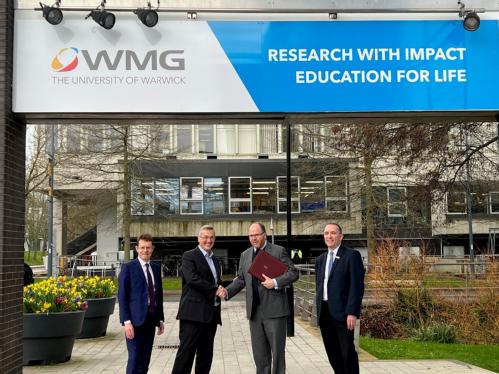
Professor Mark Williams explained how the University is working with a team in Kharkiv, Ukraine, to develop software that rapidly identifies life-threatening injuries so they can prioritise who needs emergency surgery soonest.
Minister of State at the Department of Science, Innovation and Technology, George Freeman, said: “This ground-breaking digital advanced imaging software is one of the outstanding technologies being developed by Warwick University researchers & companies in the Warwick manufacturing & engineering cluster, but also the range of applications of these digital technologies to deliver transformational improvements from cutting NHS waiting times, one of the PM’s Top 5 priorities, to advanced digital twin manufacturing, to forensic & materials science. This is world class digital innovation supporting transformational innovation here in the West Midlands cluster being developed by Mayor Andy Street with local Universities & businesses.”
Stuart Croft, Vice Chancellor of the University of Warwick said: “I’m delighted to welcome the Minister to our campus and to be able to showcase some of our ground-breaking research to him.
“We have a proven track record of working closely with a wide range of partners to find solutions to real world challenges which have a tangible impact on society.
“The research we have shown him today, to speed up the triaging process for injured people, is just one example of how our research can have positive impact. We’re helping to save lives in emergency situations through this new technology.”
Professor Mark Williams, WMG at the University of Warwick, said: “As well as being useful in other emergency situations such as earthquakes, the research is also applicable to doctors in trauma wards – already stretched by pressures experienced by the NHS – who need to triage patients quickly.
“At WMG, we will be using 3D imaging to create replicas of human anatomy and shrapnel wounds. These will act as ‘test objects’, which experts in computer science can then use to calibrate their technology and AI programme.”
Based in the International Manufacturing Centre at WMG, CIMAT hosts Metrology, X-ray Computed Tomography, and Additive Manufacturing capabilities. There is a wide range of scanning technologies for the 3D characterisation and validation of complex internal and external architectures, including high resolution laser scanning, microfocus CT and immersive visualisation. The additive technologies capabilities include the development and application of advanced functional metallic and multi-material solutions for exploitation in the high value manufacturing sector.
WMG is considered a leading international role model for successful collaboration between academia and the public and private sectors by successive UK Governments.
Medherant to develop world’s only testosterone patch for menopause

A company born out of ground-breaking research at Warwick has raised millions to develop a testosterone patch for people suffering from low libido and reduced zest for life due to the menopause. Read moreLink opens in a new window
Warwick Medical School named hub university for Schwartz rounds in the Midlands
The NHS is investing £490,400 to help universities in the Midlands establish Schwartz Rounds for their health and social care students and staff. Fourteen Midlands-based universities have accepted the offer to begin working with the Point of Care Foundation to establish Schwartz Rounds, and Warwick Medical School has been named as the midlands hub university. To find out more about Schwartz Rounds and read the full news item click here.
WMG awarded funding for key battery research
WMG, at the University of Warwick, has been awarded a share of £29 million funding, from the Faraday Institution, to develop new insights into electrochemical energy storage.
The three WMG research projects are entitled Extending Battery Life; Battery Modelling; and Battery Safety - crucial research areas as the UK powers ahead with transport electrification.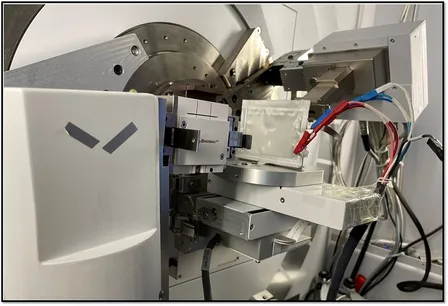
The Faraday Institution, a leader in energy storage research, has announced investment in a total of six key battery research projects aimed at delivering commercial impact. These existing projects on extending battery life, battery modelling, recycling and reuse, safety, solid-state batteries, and lithium-sulfur batteries, have been reshaped to focus on the areas with the greatest potential for success.
Professor Pam Thomas, CEO, Faraday Institution, commented: “The Faraday Institution is committed to identifying and investing in the most promising and impactful battery research initiatives. This project refocusing is an important part of that process, and allows us to direct even more effort towards those areas of research that offer the maximum potential of delivering societal, environmental, and commercial impact.”
Business and Trade Minister Nusrat Ghani said: “Growing the battery industry is vital to positioning the UK as the best location in the world to manufacture electric vehicles.
“This funding will help businesses become more innovative and productive, helping to create more skilled, high-wage jobs across the UK, future-proofing our economy and supporting our ambition towards a cleaner, greener future.”
The funding for these projects came from the Faraday Battery Challenge, delivered by Innovate UK for UK Research and Innovation.
WMG project details
Extending Battery Life
The Faraday Institution’s Degradation project, a centre of excellence in understanding degradation mechanisms in lithium nickel manganese cobalt oxide NMC811-graphite batteries, is expanding to investigate other systems of industrial interest. Researchers will apply their knowledge and new characterisation techniques to investigate the degradation of systems comprising silicon-rich composites and those using anode-free architectures. On the cathode side, the project will investigate the higher nickel content NMC, lithium manganese iron phosphate (LMFP), and tungsten-doped lithium nickel oxide (LNO). Tungsten-doped LNO is a promising material with high capacity that was developed by the Faraday Institution’s FutureCat project. Researchers will also investigate new electrolyte formulations compatible with the anode and cathodes under study and their impact on degradation.
The project will also include new pouch cell fabrication activity at WMG, which will allow researchers from across the project to access reproducible and reliable cells to perform degradation studies at more industrial-relevant scales. Pouch cells to be fabricated will include tungsten-doped LNO cathode developed at the University of Sheffield.
The project is led by Co-Principal Investigators Professor Dame Clare Grey, University of Cambridge, and Professor Louis Piper of WMG. The team also includes researchers from the universities of Birmingham, Newcastle, Oxford, Sheffield, Southampton, Imperial College London and UCL.
Battery Modelling
The Multi-scale Modelling project has been refocused to further develop parameterisation methods and techniques for next-generation models and modelling of batteries beyond lithium-ion. Researchers will focus on methods to determine accurate input parameters for models that define ageing and that accurately represent what happens at battery interfaces, which could support the growth of the Battery Parameterisation eXchange (BPX) standard being formed by the Faraday Institution.
Additionally, the project aims to grow the capabilities of PyBaMM, an open-source physics-based model, to enable better health and performance prediction at cell and pack level, linking to commercial software, and growing the PyBaMM community. The project will also develop ‘PRISM’, an industry-focused equivalent circuit model framework integrated with and complementary to PyBaMM, which will incorporate machine learning approaches.
The project is led by Prof Gregory Offer, Imperial College London, with additional researchers from the universities of Birmingham, Bristol, Oxford, Portsmouth, Southampton and Warwick.
Battery Safety (SafeBatt)
SafeBatt is investigating the science behind cell and battery failure using advanced instrumentation, imaging and high-speed techniques to characterise failure modes and investigate the interplay between cell ageing, degradation and safety. Cell-to-cell failure propagation is being studied and detection methods and mitigation strategies to prevent thermal runaway and propagation are being developed and demonstrated. A model that can predict thermal runaway and simulates the external flow of gas, heat and ejecta during failure will be developed, informing the design of safer battery systems.
The project will also conduct tests in larger format cells and at module level to help industry and other stakeholders understand how EV and micro-mobility battery packs and static energy storage systems fail in real-world scenarios. This builds on previous research that identified a potentially explosive vapour cloud, observed under certain conditions of lithium-ion cell failure. This research will continue to inform the project’s international dissemination activities (where SafeBatt researchers are playing a leadership role globally) and provide a central point of access for industry, government bodies and fire services seeking knowledge and engagement on lithium-ion battery safety related issues.
Led by Prof Paul Shearing of UCL, SafeBatt also includes researchers from the universities of Cambridge, King’s College London, Newcastle, Sheffield and Warwick.
Research in these areas will progress over the next two years to 31 March 2025.
Tiny materials have huge solar energy applications
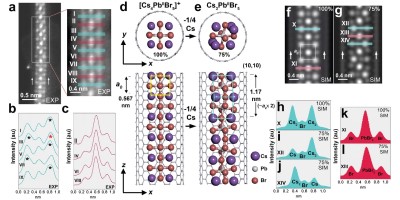
Tiny materials one hundred thousand times smaller than the width of a strand of hair could be used to improve solar cell technology. Read more...Link opens in a new window
AI triaging of shrapnel wounds developed through UK and Ukraine partnership
Researchers in the UK and Ukraine are teaming up to develop artificial intelligence (AI) that will help treat those wounded by shrapnel.
Scientists at WMG at the University of Warwick and the Kharkiv National University of Radio Electronics (NURE) in Ukraine are developing AI software that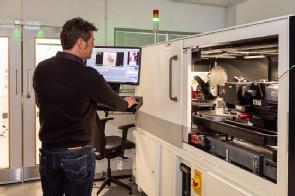 will help medics understand which patients require immediate treatment, due to life-threatening wounds that might not be obvious with the naked eye. The state-of-the-art technology enables users to feed data from a CT scan to a computer programme, which will help medics make quick decisions on which of the injured require most immediate treatment.
The project is one of 33 being discussed at the House of Lords this evening, to mark the one-year anniversary of the Twinning initiative – an institution-to-institution collaboration model which allows universities around the world to support their Ukrainian counterparts in real, concrete ways. It is funded by a £5m grant from Research England, administered by Universities UK International (UUKi).
Professor Mark Williams, WMG at the University of Warwick, said: “A huge problem for medics dealing with many severely injured people at the same time is the rapid identification of life-threatening injuries so they can prioritise who needs emergency surgery soonest. This is why we’re developing software with the team in Kharkiv to help address this issue. As well as being useful in other emergency situations such as earthquakes, the research is also applicable to doctors in trauma wards – already stretched by pressures experienced by the NHS – who need to triage patients quickly.
“For WMG’s part of the project, we will be creating phantom models using 3D imaging – replicas of human anatomy and shrapnel wounds. These will act as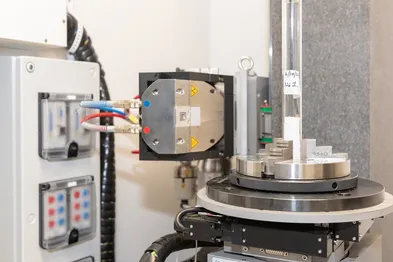 ‘test objects’, which experts in computer science can use to calibrate their technology and AI programme.
“It is very exciting to be able to bring our expertise in Additive Manufacture at WMG to deliver a rapid solution to such an important humane need, allowing us to truly exploit the incredible advantages in speed of response and material complexity offered by this technology.”
Anastasiya Chupryna, coordinator of Radio Electronics-Warwick Allied Research and Development (REWARD) project at NURE said: “We would like to thank our partner Warwick University for supporting us in joint research activities. Within this project NURE and Warwick University will be able to solve extremely important problems. We believe that practical results of these projects will demonstrate significant impact and innovation solutions for society.”
WMG is considered the leading international role model for successful collaboration between academia and the public and private sectors by successive UK Governments. The WMG specific research is funded by a £179k grant from UUKi.
More here https://www.ukri.org/news/research-england-invests-in-uk-ukraine-university-twinning-scheme/
Ends
University of Warwick press office contact:
Annie Slinn
Communications Officer | Press & Media Relations |
Email: annie.slinn@warwick.ac.uk