
Departmental news
Territorial Bodies: World Culture in Crisis - Conference Report
Territorial Bodies: World Culture in Crisis 2023 - Report
We would like to thank the Humanities Research Centre at University of Warwick for generously funding Territorial Bodies: World Culture in crisis 2023, a one-day interdisciplinary conference which took place at university of Warwick on 25th February 2023.
Territorial Bodies
Territorial Bodies: World Culture in Crisis 2023 was based around the notion of ‘territorial bodies’, a concept which drew inspiration from the Latin American feminist transnational concept of ‘body-territory’, which has been used as a ‘strategic’ tool to engender new forms of global solidarity, linking multi-form violence at various scales (Gago, 2020: 95). By bringing together interdisciplinary research, we hoped to critically evaluate the terms “body-territory” as a lens through which to critique overlapping forms of violence in an era of socio-ecological crisis. In particular, we invited critical discussion surrounding the extent to which the ‘territorial body’ offers an analytical tool for addressing urgent social, ecological, and political challenges, from ecological breakdown to the rise of statelessness, to violence against women and racial exploitation.
The conference brought together 55 delegates from across the world, synthesising diverse research from various disciplines such as geography, sociology, history, visual arts, comparative literature, politics and international relations. The conference programme encompassed wide-ranging perspectives on the concept of ‘territorial bodies’, from the extractive plunder and dispossession of land, to the violation of gendered bodies, to the exploitation of racialised bodies and uneven flows of migration.
The conference included two keynote addresses from field-defining interdisciplinary scholars, Dr. Lauren Wilcox and Prof. Kathryn Yusoff. Dr. Lauren Wilcox’s keynote entitled “On the map, the territory, and the body” unpacked the “entanglements of ‘the map,’ ‘the territory’ and ‘the body’ in modern international and political thought in order to provide an understanding of their co-constitution”. Prof. Kathryn Yusoff’s address entitled “Geologic Bodies, Planetary States”, argued that Geologic Life substantiates a key “analytic for geography that positions inhuman forces in political terms as preceding biopolitical concepts of life and understanding changes of state as a political domain”.
The day also included eight panel discussions on themes including Embodied Extractivism; Aquatic Bodies; Gender; Body, Space; Mining Bodies; Travelling Bodies; Bodies and Accumulation; Reimagining Territories and Travelling Bodies. The papers presented in these panels concerned varied research interests and geographies, from, “The Science of Mining in the Himalayan Rivers” (Saumya Pandey), to “The Case of Sperm Smuggling in the Occupied West Bank” (Gala Rexer), to “Aquatic territorial bodies as submerged sites of ecological (re)existence and peace” (Beatriz Arnal Calvo), and so many more. Each of the papers presented brought new perspectives to bear on the notion of “territorial bodies” as a framework for deciphering crisis in the twenty-first century.
Outcomes
Our hope is that the conference will lead to an edited collection via the Warwick Series in the Humanities, Routledge. We have already released a call for papers for this collection. The edited collection is tentatively entitled Territorial Bodies: World Culture in Crisis.
We were also fortunate enough to receive additional support from The Centre for Women and Gender; BCLA and GRP (connecting cultures). This funding allowed us not only to deliver the conference but also to provide travel bursaries and fee reimbursement for our speakers.
EV-elocity project recognised at prestigious engineering awards
The EV-elocity project, involving engineers and researchers from WMG at the University of Warwick, has won a Collaborate to Innovate Award, from The Engineer magazine, in the Energy & Environment category.
The Awards celebrate the very best engineering collaborations and innovations across the UK.
EV-elocity is a research and development project looking at increasing the uptake of electric vehicles by helping consumers to monetise their investment using vehicle-to-grid (V2G) innovation.
With vehicle-to-grid (V2G) technology, electric vehicle (EV) batteries could store electricity - when there is an abundant supply - to power homes and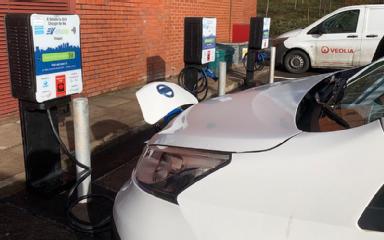 businesses and to discharge it back to the national grid when it is most needed.
Researchers at WMG developed a new model that quantified the degradation in the vehicle’s battery because of different EV charging strategies. The model highlighted that it was possible to manage the battery to mitigate much of the degradation and it was possible to even extend battery life through proper control and battery conditioning.
This enables better use of renewable energy, lower carbon footprint, less pressure on the grid and financial savings, which can help electric vehicle owners pay back their investment.
The EV-elocity project has deployed V2G chargers in a range of locations across England as part of large-scale trials to gain technical, customer and commercial insights on the emerging technology. It is also investigating if, and how, additional use from V2G charging may affect EV battery life.
Professor of Systems Modelling, James Marco, explains: “One of the unique aspects of EV-elocity, was the integration of EV technology with future energy infrastructure, such as vehicle-to-grid, to demonstrate at scale how novel methods of EV charging can provide multiple benefits for both the consumer and the environment.”
The project, led by Cenex, a not-for-profit consultancy specialising in delivery of low carbon vehicles and energy infrastructure projects also involves the Universities of Nottingham and Warwick; Leeds and Nottingham City Councils; and CrowdCharge, a platform that integrates and optimises smart electric vehicle charges.
EV-elocity is funded by the Department for Business Energy and Industrial Strategy (BEIS) and the Office for Zero Emission Vehicles (OZEV), in partnership with Innovate UK, part of UK Research and Innovation.
Read more about the award-wining EV-elocity project here: EV-elocity Project | vehicle-to-grid (V2G) innovation with electric vehicles
'Butterfly' helps students spread their social wings
In the next feature in our series focusing on our undergraduate entrepreneurs, we meet the team behind Butterfly, a new app taking flight on campus.
Alex Reid, Zain Mobarik and Josh Okusi (pictured above, left to right) are a team with an ambitious vision – they plan to “put the social back into social media” with their app, Butterfly.
Second year Economics student Alex and his friends were workshopping ideas for a new sorting algorithm Josh had developed. They realised that they had a bigger vision than simply ranking undergraduates according to their popularity – why not make an app that would help to bring digital friendships off the screen and into the real world?
Alex explains: “We all felt that social media has lost its way – far from being social, these days it is about passive scrolling and the consumption of entertainment, often far removed from our own day to day lives.
“We decided to create a social media app that is grounded in our community, with all the content shared on the app being relevant to the real lives of its users – and which puts the focus on enabling friendships in the real world.”
Butterfly is only available to users with a Warwick student email, which keeps the content grounded in the realities of campus life. As well as creating their profile pages – the Butterfly ‘Flashcard,’ – and posting thoughts and confessions, users can chat with their course-mates or explore societies and campus events before deciding to attend, taking a bit of the anxiety out of trying something new.
Regular giveaways and prizes keep the community engaged, and there are perks for registered users such as discounts. Alex says “We now have over 60 discounts at partner stores, exclusive to Butterfly users. Our partners now include Kasbah, Tenpin, Phat Buns, Royal Pug, and Boom Battle Bar Coventry.”
“We also have a fantastic partnership with Benugo,” Alex added. “Butterfly users can get 10 per cent off anything on the menu and we ran a competition last year where the app’s most enthusiastic users won a free meal with a plus one. That really captured our ethos of supporting students to grow their real-life friendships.”
Commenting on the app, first year student Sofia said: “Butterfly has completely changed my university experience at Warwick. It has built my confidence and encouraged me to go to loads of events.”
Since its launch in September last year Butterfly has been downloaded 3,000 times. Its creators have won Warwick’s Student Enterprise Competition and been accepted onto Google’s Startups for Cloud Programme.
The app is available in the App StoreLink opens in a new window and Google PlayLink opens in a new window .
Two domestications for grapes
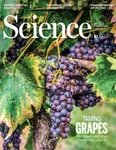 Professor Robin Allaby gives his perspective in Science, on the evolutionary events that led to grape domestication. The article made the front cover.
Read the paper (3 March 2023)
The Power of Storytelling by Alumna Ruth Ntumba
Ruth Ntumba (BA History, 2021) has spent her first 18 months since graduating helping drive engagement and culture at one of the world’s leading media corporations, Warner Brothers Discovery. Ruth shares why you should go at your own pace and trust your gut instinct when searching for your next role.
Read this interesting piece hereLink opens in a new window
Winners announced in the Warwick Future Economist essay competition 2023
We are excited to announce the winners of this year's Warwick Future Economist competition jointly organised by the Department of Economics at Warwick and the Warwick Economics Society. They have been selected out of 68 entries for the outstanding quality of their economics essays.
The overall winner of the competition is Harrison Sargent from Arden Academy in Solihull, whose essay explains how nudge theory can be used to increase voter participation in the next general electionLink opens in a new window. Congratulations to Harrison who will receive the top cash prize of £250.
We also congratulate the following students in the joint-second place who receive £50 cash prize each:
- Jacob Jones, Arden Academy
- Eden Haycock, Heckmondwike Grammar School
The collaboration between Warwick Economics Society (with nearly 3000 student members from over a hundred different disciplines) and the Department of Economics at Warwick has been going strong for many years, as we combine our aims to widen access and increase diversity within the subject of economics. Tolu Odejide and Joel Cooper from Warwick Economics Society and final year students on the BSc in Economics degree, commented about the competition:
Tolu: "We were really impressed with the efforts participants had put in. I think it's really important for students to get excited about what economics can offer them."
Joel: "It's the little things like this that can make a massive difference to these young people. To engage seriously with the discipline, give themselves the opportunity to be creative with their ideas, can provide the foundations for future studies. Providing opportunities like this continues to be essential to raising the profile of economics in all schools and among all under-represented groups within this field."
Warwick Future Economist Competition was set up in order to raise the awareness of economics as a subject that is concerned with understanding the major global problems of our time, such as inequality, globalisation, healthcare, climate change and many more. The topics of the essay competition had been selected from the three key areas of economics: macroeconomics, behavioural economics, and environmental economics, and challenged the young students to write how economics can help understand better the cost-of-living crisis, voter participation in a general election and the climate crisis.
Chris Mason, Acting Head of Economics & Business and EQP Coordinator at Arden Academy in Knowle, Solihull, said:
"We are delighted that two Arden Academy students have been recognised for their hard work and achievement in placing first and second in the Warwick Future Economist competition. It's clear that, given the choice of questions, the competition enables young, budding economists the opportunity to stretch themselves beyond that of their A level specification.
"As part of my role as a class teacher of economics, I seek to enlighten students, so that they can see how economics applies to their everyday life, and what is happening in the world around them. I am passionate about making the economics curriculum accessible to all - if we can lift the understanding of economics across all demographics, the society in turn will benefit."
Dr Lory Barile, Associate Professor and Widening Participation Lead in the Department said:
"It was exciting to work with Warwick Economics Society on this competition and see high participation and good quality of work from young students. We hope that some of them will be pursuing further academic study to become economists and we wish them all the best in pursuing their dreams. We will continue to work with student societies on similar initiatives to increase the awareness of what economics is and what economists do."
Congratulations to the winners from all of us in the Department of Economics and the Warwick Economics Society.
Inhibiting Ice Growth Using Polyproline
The GibsonGroup, in collaboration RCSI (Dublin), have demonstrated that polyproline is a structurally simple mimic of antifreeze glycoproteins. The GibsonGroup have a large interest in developing materials which can control ice growth/formation, and their application in biotechnology. This is inspired by antifreeze proteins, which can be challenging to obtain and are not suitable for scale up. The antifreeze glycoproteins are known to adopt a PPII helix in solution, and in this latest work the team show that polyproline itself is sufficient for ice binding and inhibiting ice growth, when it has sufficiently high molecular weight. This is significantly simpler than using a glycoprotein and supports growing evidence that the ‘hydrophobic’ face of AFGPs binds the ice, rather than the glycans, and that hydrogen bonding to the ice is not always essential for activity. Finally, this also shows that bio-renewable resources can be used to obtain ice growth inhibitors which themselves could be biodegradable.
Read the paper hereLink opens in a new window.
Warwick WOW award presented to Christmas Lecture Team
On Thursday 9 February, Professor Stuart Croft (Vice-Chancellor) visited the department to present a Warwick wow award to Ally Caldecote (Outreach Officer) and Tishtrya Mehta (post-doctoral researcher) for their continuous hard work and dedication to the annual Christmas Lectures. The Christmas Lectures take place in early December at Warwick Arts Centre, and have been running for 12 years. To date, over 17,000 people have attended.
We spoke to Ally, founder of the Christmas Lectures who said:
"It is an honour to see the appreciation for the Christmas Lectures! They are a labour of love each year with lots of different people coming together to showcase fantastic science and scientists. As a physics department we are deeply committed to sharing what we do with as many as possible and if we can do it wearing Christmas jumpers and Santa hats then that's just a bonus!"
Alongside Ally, Tishtrya plays a pivotal part in the Christmas lectures each year. She said:
"Being a part of the Christmas Lectures Team has been such a highlight of my time at Warwick - I've loved watching the most incredible shows put together by passionate and talented scientists and technicians and learning about the most bizarre and wonderful research, such as the secret life of Brussels sprouts!
It's a joy to see the lectures being awarded and to hear the well earned praise for Ally Caldecote and Paul Warwick (China Plate Theatre) who have been indispensable in making the lectures so full of life and loved by so many."
The wow award celebrates amazing work, projects, and achievements at the University.
Find out more about the university award and watch the video.Link opens in a new window