
Departmental news
Chemistry Work experience 2024 a great success!
From July 10th to July 12th, we have welcomed 40 A-level students to the Department for a three-day Work Experience Placement for a taste of a career in chemical sciences.
New paper about the force generating mechanism of kinesin molecular motors
Sumiyoshi et al. is a collaboration addressing a question Robert Cross and Jun Yajima first asked themselves almost 20 years ago – would monomeric kinesin molecular motors tethered via surface loops still drive microtubule gliding? It turns out yes! Scanning a dsDNA tether across all exposed loops reveals a core mechanical cycle of the kinesin-1 motor domain that underlies, and is amplified by, linker docking.
DCS Summer BBQ
The Department of Computer Science celebrated the end of the academic year with a staff BBQ, along with some games of rounders and a tug of war.
Thank you everyone for your hard work this year!
Scientists make breakthrough in development of fridge-free storage for vital medicines
Scientists have developed a new approach to store and distribute crucial protein therapeutics without the need for fridges or freezers.
The breakthrough, published in the journal Nature, could significantly improve accessibility of essential protein-based drugs in developing countries where cold storage infrastructure may be lacking, helping efforts to diagnose and treat more people with serious health conditions.
The researchers, from the Universities of Manchester, Glasgow and Warwick, have designed a hydrogel – a material mostly made of water – that stabilises proteins, protecting its properties and functionality at temperatures as high as 50°C.
Skills England: Expert comment from Dr Ben Silverstone
Expert comment from Dr Ben Silverstone, Associate Professor, Workforce Transformation Strategy and Policy at WMG, University of Warwick
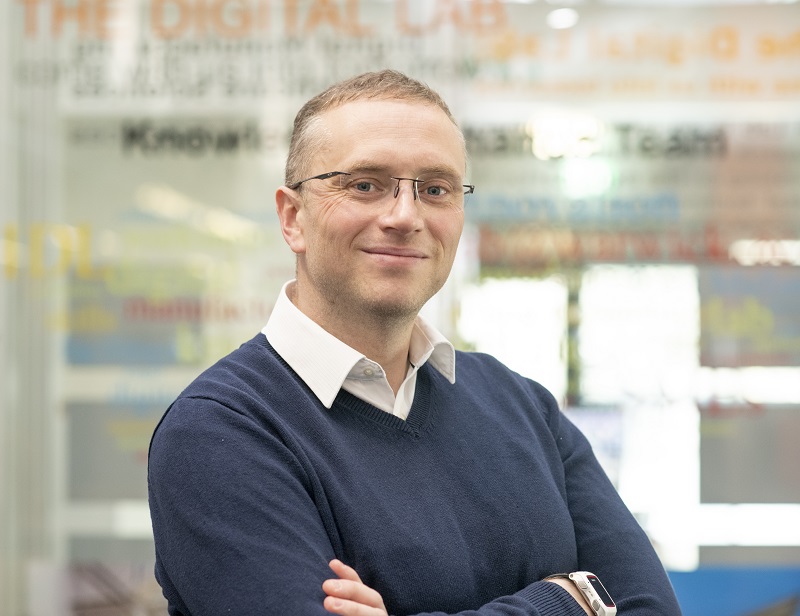 “WMG welcomes the establishment of Skills England as a body to simplify and accelerate the skills system in the UK. As our economy is transformed, over the coming decades, the relationship between industry, education and government is critical in ensuring that the immediate needs of industry are met. Hand in hand with this, the further devolution of skills budgets to local areas will be essential in ensuring that place specific provision can be brought to bear, in a funded capacity, where businesses require support to meet local needs as part of a regional and national strategy.
“Investment in the further education system is much needed, and represents a critical, and widespread, recognition of the role that it plays in supporting businesses. The commitment to supporting young people is vital, but this does not go far enough.
“There is also a huge number of employees in the workforce in need of re skilling and upskilling - it is critical that the role of further education is not diminished in this capacity. We call upon the Government to make colleges bastions of industrial capability through skilling the existing workforce.
“Finally, the Apprenticeship Levy is in desperate need of change. We welcome commitments to expand its use. Enabling businesses to spend their levy contributions on impactful training, alongside high-quality apprenticeships, will increase investment in the workforce and prevent valuable funding from disappearing from the skills landscape where it goes unspent. We urge the Government to go further, and to allow levy paying organisations to transfer up to 100% of their unspent levy into their supply chain to support an integrated approach to capability development, helping to anchor industry in the UK.”
King’s Speech: Expert comment from Simon Webb
Expert comment from Simon Webb, Chief Technology Officer, at WMG at the University of Warwick
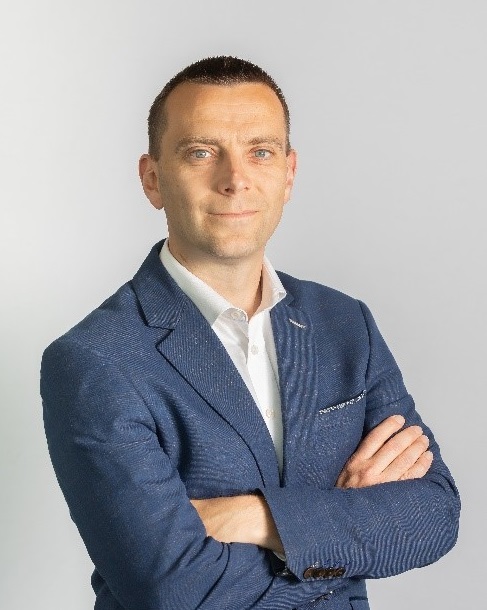 "The announcements in the King’s Speech of a new industrial strategy, supported by a revived Industrial Strategy Council and devolved local growth plans, demonstrate a welcome commitment to growing the UK economy through long-term innovation, increased infrastructure delivery and building economic opportunity across the whole country.
"The support for 'sustainable growth by encouraging investment in industry, skills and new technologies' will be vital for UK economic success in key areas such as the decarbonisation of future transport and advanced manufacturing.
"As it looks to develop the Industrial Strategy, the government will need to consider the current needs of businesses and address their real world challenges. This is particularly important for SMEs and microbusinesses who may need additional support to improve their productivity and sustainability. The announcement of local growth plans and an Industrial Strategy Council are welcome steps to engaging with business on these issues.
"At WMG, we look forward to working with government and our industry partners to help deliver on these vital missions."
Dr Arun Advani recognised as high flier with UKRI Future Leader Fellowship award
Tax expert Dr Arun Advani’s ambitious research agenda has been backed by the UK’s national research funding body with the award of a prestigious Future Leaders Fellowship.
Founded in 2018, the FLF scheme aims to provide long-term support to talented researchers investigating complex problems with funding, career development and skills training. Around 500 fellows have been appointed since the scheme began.
Dr Advani will become the University of Warwick’s third Future Leaders Fellow and the first from the Faculty of Social Science.
The award will support new research from Dr Advani into the use of trusts and other ‘split ownership’ structures by the wealthy, the impact of such schemes on inequality, and whether the taxation and regulation of trusts should be reformed.
Dr Advani is widely recognised as an expert on the complex and arcane UK tax system. The award will enable him to bring his skills to bear on this under-researched topic, which is also a feature of wealth management in the USA and in Commonwealth countries.
He explains: “Trusts are a key tool in wealth management and tax planning. While they can offer benefits such as protection for minors or others who are unable to manage their own finances, they can also be exploited as a means of concealing the true ownership of assets and a way of evading tax. They also make it difficult to accurately assess wealth inequality, a key issue for the new UK Government.
“We found with our work on non-doms that a major barrier to reform is the lack of real, robust data. Without quantitative evidence it is difficult for policymakers to model the outcome of reforms.
“This project will close the evidence gap in the area of trusts and work up practical, implementable reforms.”
Congratulating Dr Advani on his Fellowship, Head of Department Professor Ben Lockwood said: “Arun is committed to using his research to achieve real-world change. He has been at the forefront of research into UK tax issues for the best part of a decade and has developed an outstanding reputation as analyst and commentator on tax and equality issues.
“This Fellowship award will allow him to lead an entirely new area of study in the understanding of inequality and tax policy, and establish the UK as the global hub of wealth trust research.”
18 July 2024
Future engineers recognised as Design & Make celebrates five years of inspiring the next generation
A major competition organised and run by the Manufacturing Assembly Network (MAN) with support from WMG at the University of Warwick, designed to get more young people involved in manufacturing, has recognised the talented engineers of the future.
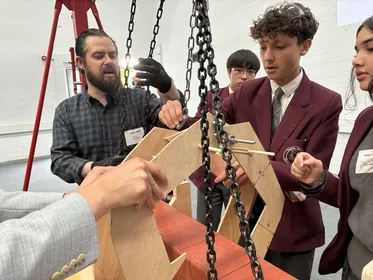 The Design & Make Challenge 2024 attracted nearly 100 pupils from 15 schools in what is one of the largest independent STEM events ever held in the UK. It was hosted at the University of Warwick’s Innovation District.
Southam College, Barclay Academy and Lawrence Sherriff High School took the main prizes, winning the Efficiency, Innovation and Manufacturing Awards respectively. The Awards focused on the way they tackled a challenge to use a box of simple materials, to build a device, that could securely lift a metal block with nothing more than a pulley system.
The students split up into teams of four to design, test and build their solution, working closely with apprentices from the eight MAN companies and engineers from WMG’s SME Group.
Dr Mark Swift, Director of SME Engagement at WMG, University of Warwick said:
“Design & Make connects young people with dynamic manufacturers whilst they are still at school and making future career decisions – this is critical for addressing the UK's engineering skills gap and fostering a culture of innovation.
“Early exposure and practical experience help to inspire the next generation of engineers, equipping them with the necessary skills to ultimately develop new technology and grow our world leading manufacturing sector."
Austin Owens, Managing Director at Grove Design and Co-Chair of the Manufacturing Assembly Network commented: “What a fantastic way to celebrate the fifth year of the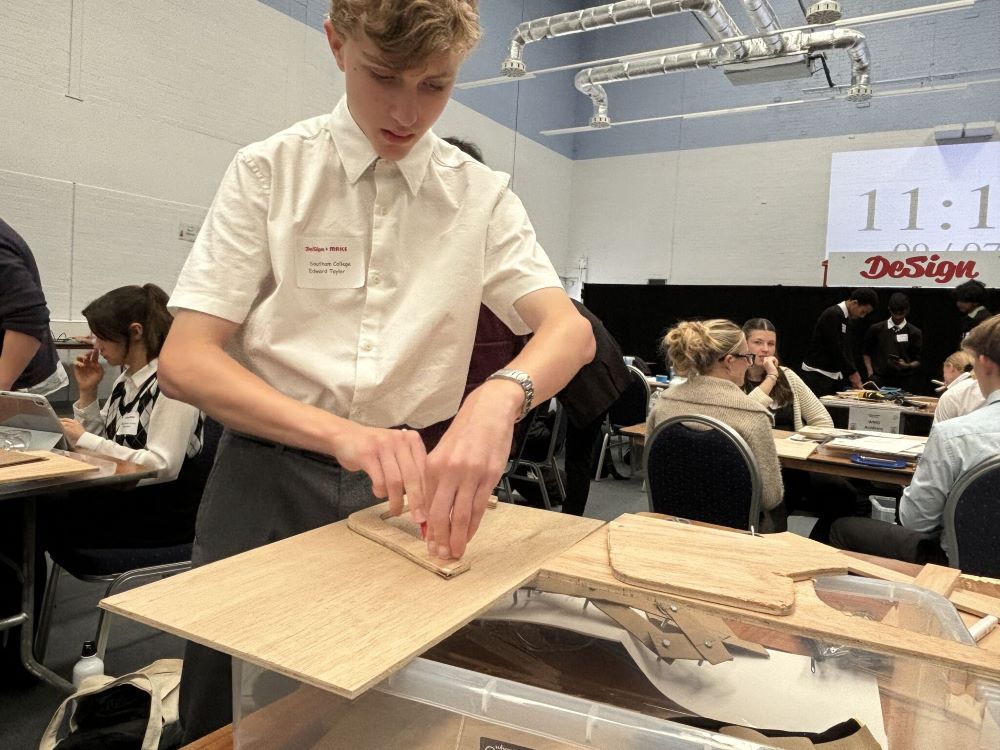 Design & Make Challenge, with the biggest turnout of students we’ve ever had – that really shows the appetite to learn more about a possible career in industry,”
“The competition is all about inspiring young people to get hands-on with design and engineering skills, working together to come up with a solution that then competes with other schools in terms of efficiency, innovation and design for manufacture.”
“We’d love to make the competition even bigger and are urging other manufacturers, funders and schools to come forward and get involved. Together we can start to bridge the skills gap industry continues to battle against.”
Southam College, Barclay Academy and Lawrence Sherriff High School each received a 3D Printer as part of their prize package, which was sponsored by 3DPrint UK. These will be taken back to each of the schools and used to develop additive manufacturing and design skills.
There was a fourth prize given out to recognise the different careers in engineering, with Thomas Telford UTC beating off competition to win the ‘Communications’ Award.
This saw the Shropshire school praised for the way it told the best story of the day through the use of social media, with a single post racking up more than 347 likes and over 2000 views in just a few hours.
For more information on WMG’s SME Group visit SME Support - WMG - University of Warwick
More details on MAN can be found at www.man-group.co.uk or follow MAN Group on LinkedIn.
The Maxine Berg Prize of 2024
Many congratulations to graduate Sara Akhavan-Malayeri, the Maxine Berg Prize winner of 2024! Her dissertation entitled "The Fight over the Five ‘Soviet-born Wives of British Subjects’: the Impact of Anglo-Soviet Marriages in Early Cold War Britain” was awarded Best Dissertation in the Field of Global History. Sara was also awarded the Final Year Undergraduate Iain Smith Single-Honours Prize set up by a bequest from Emeritus Reader Iain Smith.
The other 2024 prize winners are:
- Jacob McVaddy - Final Year Undergraduate Felix Dennis Dissertation Prize
- Richard Gregory - Final Year Undergraduate Roger Magraw History Joint-Honours prize
- Jade McFarlane - Final Year Undergraduate Year Abroad Reflective Assignment Prize.
A massive congratulations to the other prize winners and all Warwick History graduates 2024!
Find full details of the History prizes awarded at the end of each year here.
Credit for female screenwriter airbrushed from Hollywood history
Professor JE Smyth's upcoming publication is featured in an article by the Guardian about Mary C McCall Jr, the female screenwriter airbrushed from Hollywood history.
Professor Smyth's new book, "Mary C McCall Jr: The Rise and Fall of Hollywood's Most Powerful Screenwriter", will be published in September and aims to restore Mary C McCall Jr’s reputation as one of the film industry’s most important figures.