
GHCC member spotlight: Dr. Camilo Uribe-Botta on global history of 19th-century Latin America
By Camilo Uribe-Botta. Published on July 24, 2026
Camilo Uribe-Botta is currently a Teaching Fellow at the School for Cross-Faculty Studies (Liberal Arts), and is an alumnus of the Department of History at Warwick. Dr. Uribe-Botta is an environmental historian with a particular interest in the role of plants as actors in history from a global perspective, and is currently turning his PhD thesis into a book.
Diplomats, Plants, Animals and Sports in a Global Latin America in the 19th century
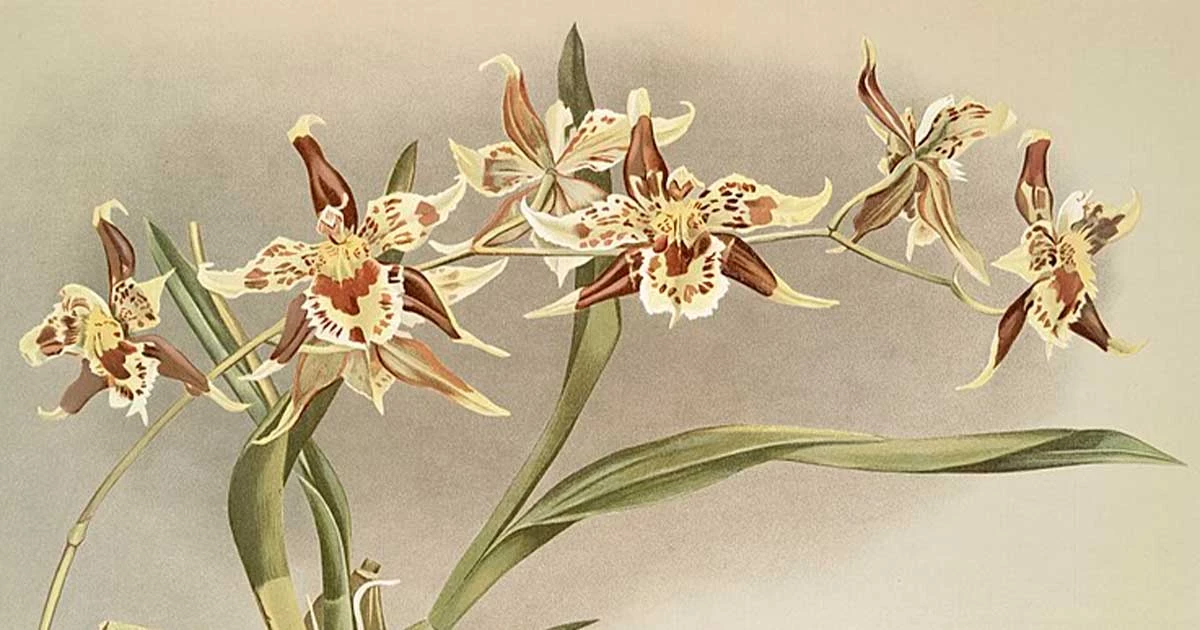
My research on the commerce of Colombian orchids in the United Kingdom during the Victorian era led me to unexpected actors and connections in a region that has not been at the centre of anglophone global history studies for a long time: Latin America. As I previously analysed in this blog, Latin America has a complex history of formal (Spanish and Portuguese) and informal (British and United States) imperialism, as well as unequal relationships in trade, knowledge, and the movement of people. Additionally, the nineteenth century offers a unique perspective on the region, showing how the newly independent countries entered a global context, fostering new relationships with Europe, Asia and Africa.
My research on plants also led me to think about animals and people. By consulting the British diplomatic archives of the consuls in Colombia, I had the privilege of delving into British interests in the country and the unexpected global connections they established. For example, in 1878, the British Foreign Secretary requested seeds of the arracacha plant from his ambassador in Colombia to introduce it to India and Sri Lanka. The document traces all the correspondence between the diplomats, as well as a batch of seeds and plants in a Wardian case from Colombia to London, to be later introduced in Sri Lanka, where the introductions of this long-awaited new crop were a failure. This unexpected connection between Colombia and Colombo caught my attention and led me to wonder if other unexpected global connections might have existed.
Currently, my interests have led me to new plants and also to animals. On the plant side, I am currently researching tagua, also known as ivory nut. This nut grows on a palm native to southwestern Colombia and northern Ecuador, and its colour, texture and hardness resemble ivory. Its exploitation during the nineteenth century was initially managed by Black communities on Colombia's Pacific coast and eventually by European (mainly German) companies that obtained government licenses. And you might ask, what was tagua used for? Its primary use was in the fashion industry: buttons. The shift from rudimentary, fragile wooden buttons to hard, durable tagua buttons revolutionised the fashion industry in the 19th century, particularly for men. Sturdy metal buttons, once luxury items, became decorative elements on military uniforms, while most men's clothing began using durable tagua buttons until the introduction of plastic buttons in the 20th century. Once again, an unexpected global connection through a nut emerged from Latin America.
Recently, Colombia and the United Kingdom commemorated their 200 years of diplomatic relations, which began when His Majesty’s Government recognised the new independent Republic of Colombia in 1825; it was the first country in Hispanic America with which the United Kingdom established diplomatic relations. I’ve not only written a short book chapter about the beginnings of these relationships, but also, by coincidence, last year I also had the great pleasure of proofreading and writing the epilogue of the forthcoming book by Colombian academic Alberto Gómez Gutiérrez on the history of horse racing in Colombia (the first horse race in Colombia also took place in 1825) thanks to many British soldiers and diplomats based in Colombia in the early 20th century. This fascinating book may emerge from the author’s personal interests, but it also sheds light on new actors in the global history of Latin America: animals and sports. While I’m not particularly a sports person, I’ve found, through this book, a new lens on global history that complements an emerging and rich global historiography.
Selected publications
- Uribe Botta, Camilo. "Millones de plantas, manías vegetales: la transplantación de orquídeas en los siglos XIX y XX." Iberoromania. 2025.
- Uribe Botta, Camilo. “Libros de orquídeas en el siglo XIX. Entre la maravilla, la ciencia y el comercio.”
Revista Cuadernos de Literatura. Vol 29. 2025.
-
Uribe Botta, Camilo. “Colombia, orquídeas y el imperio (informal) británico. 1840-1900. Entre la deuda y la ciencia.” En Laurent, Muriel; Borda, Sandra; Jaramillo Mutis, Diego (eds.) El comportamiento internacional de Colombia en el siglo XIX. Interlocutores, actores y temáticas. Universidad de los Andes; Universidad Externado de Colombia. Bogotá D.C. 2024. Pp. 333-367. (book chapter)