Examinations
Examinations introduction
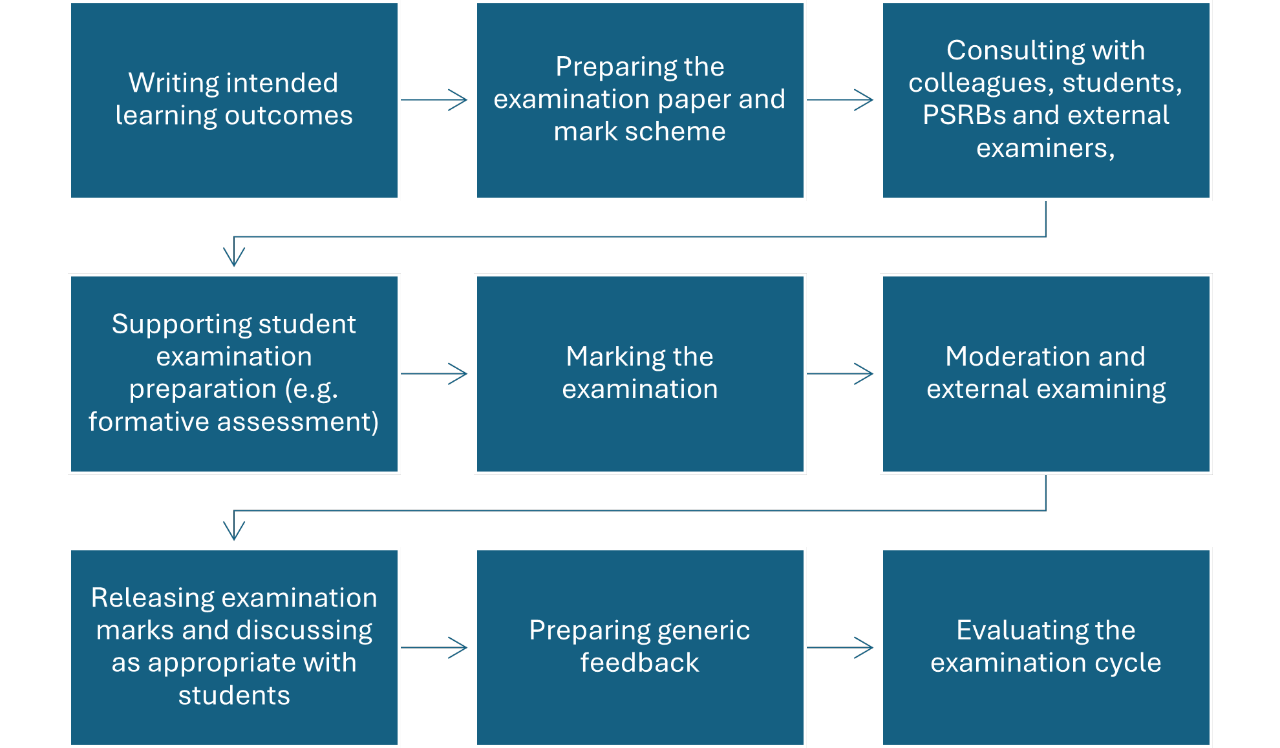
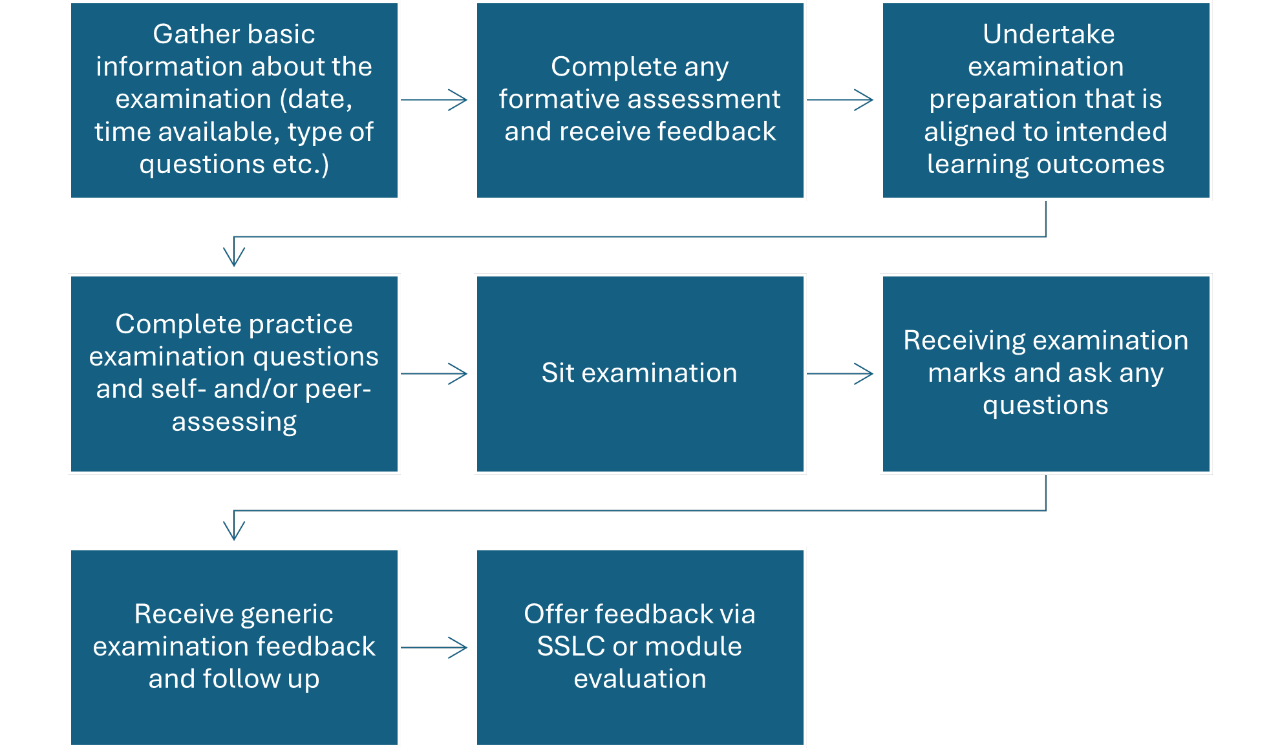
Examinations have a long history as a method for assessing students and were often adopted by default. Taking a step back and looking holistically across a programme or module, as well as reflecting on the relative advantages and disadvantages of the approach, can help improve assessment design and students’ overall experience of assessment.
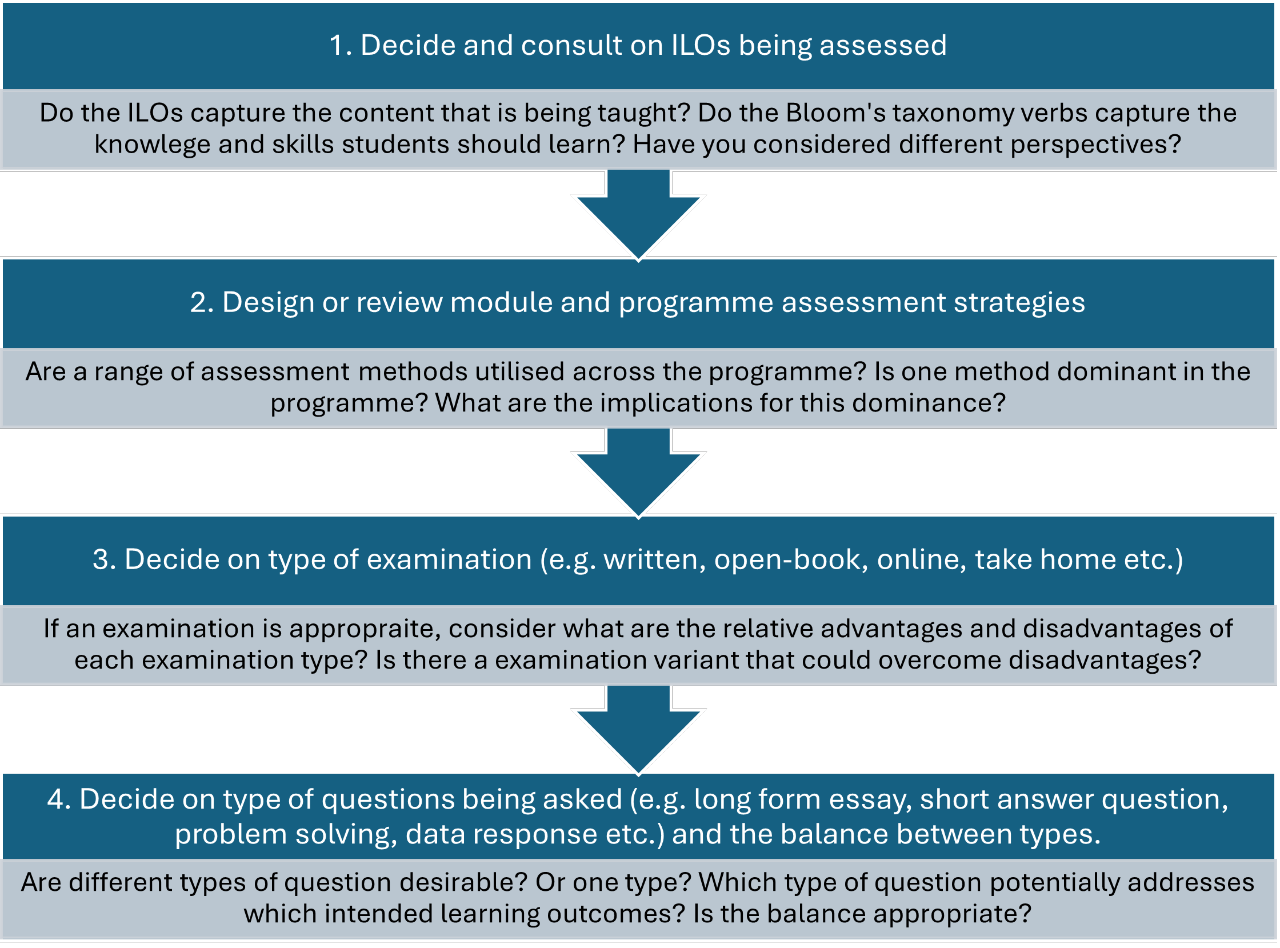
Here we explore a range of different types of examination that could be adopted, as well as variations within each of these methods - each type has variants and relative advantages and disadvantages to be weighted: Written Examinations; Open-book examinations; Digital examinations; Objective tests (Short-answer and Multiple choice questions), Oral examinations (Vivas), Practical or Competency based examinations and Time-limited examinations.
When designing examinations, it is important to start with the intended learning outcomes (ILOs) as they define the knowledge, skills and understanding being assessed and this helps to narrow down the most suitable assessment method. The design process set out below is intended to support decision making and draw upon a range of different considerations.