
ReadWriteWeb

Inspired Entertainment and bet365 are continuing a long-running collaboration around virtual sports, with both companies agreeing to a new multi-year extension that focuses on expanding betting features and rolling out new digital products.
Under the renewed deal, Inspired will keep supplying its portfolio of virtual sports to the global online betting operator while also developing technology intended to make simulated sports betting feel more like wagering on live matches.
One of the first projects tied to the extension will be an upgraded Virtual Soccer product that introduces Bet Builder functionality. The companies plan to release the feature in time for the 2026 FIFA World Cup, one of the most active periods for sports betting worldwide.
Bet Builder tools allow bettors to combine several outcomes from a single match into one customized wager. In traditional sportsbooks the feature powers same-game parlays, where multiple selections from the same event are bundled together. Bringing that mechanic into virtual sports, Inspired says, should help bettors to design more personalized wagers while keeping them more engaged with the simulated events.
Inspired brings live-style betting mechanics to virtual sports via bet365
Both companies say the aim is to reduce the gap between betting on real sporting events and wagering on computer-generated competitions by introducing familiar sportsbook features into the virtual environment.
"We are delighted to sign this multi-year extension with bet365, reinforcing our long-term partnership and shared commitment to innovation in Virtual Sports," said Brooks Pierce, President and CEO of Inspired Entertainment.
"By combining our Virtual Sports expertise with bet365's global reach and customer insight, we will continue to deliver products that resonate with players and drive value for operators, particularly around major global sporting moments such as the 2026 World Cup."
bet365 drew attention to the strong performance of Inspired's virtual content across its international markets and said the upcoming Bet Builder option should make the experience feel closer to betting on real competitions.
"We are pleased to extend our partnership with Inspired," said a bet365 spokesperson. "Inspired is an established and trusted long-term partner, consistently delivering Virtual Sports content that performs well across our various markets. The introduction of Bet Builder functionality within Virtual Soccer allows us to offer customers a more engaging experience while aligning Virtual Sports more closely with live sports betting mechanics."
The renewed agreement comes during a period of continued expansion for Inspired's virtual sports division. In recent updates to investors, the company reported steady growth in its digital segment and pointed out strong demand for virtual sports content among regulated operators worldwide.
Inspired has also been broadening its lineup of simulated competitions. The company recently introduced new virtual games based on hockey, basketball and esports, adding to a portfolio that already includes football, horse racing and other fast-cycle events designed for continuous betting.
Featured image: Canva / Inspired Entertainment / bet365
The post Inspired Entertainment extends bet365 virtual sports partnership ahead of World Cup appeared first on ReadWrite.

A federal judge in Ohio has denied prediction-market exchange Kalshi's request for a preliminary injunction that would have blocked state regulators from enforcing Ohio's sports-gambling laws against the company's sports-event contracts.
Chief U.S. District Judge Sarah D. Morrison of the U.S. District Court for the Southern District of Ohio issued the decision on Monday (March 9). The judge concluded that Kalshi failed to meet the demanding legal standard required for the "extraordinary" relief of a preliminary injunction.
The ruling allows Ohio regulators to continue enforcing state sports-betting laws while the lawsuit proceeds in federal court.
The decision also adds momentum to a widening national legal battle over whether sports-related prediction contracts are federally regulated financial derivatives or unlawful sports betting under state law.
Ohio court rejects federal preemption argument as part of Kalshi request for injunction
Kalshi operates a federally approved designated contract market that lets users trade contracts based on real-world outcomes. The company has expanded those offerings to include sports-event markets, allowing traders to speculate on results such as tournament outcomes or championship winners.
In its lawsuit, Kalshi argued that the Commodity Exchange Act gives the Commodity Futures Trading Commission exclusive jurisdiction over these types of contracts. The company said that federal authority should preempt state gambling laws.
Ohio regulators argued the opposite, saying the sports contracts function like traditional sports wagers and therefore fall under the state's regulatory system.
Judge Morrison sided with the state at this stage of the case. The opinion added that Kalshi had not shown the Commodity Exchange Act governs the sports-event contracts at issue.
The court warned that accepting Kalshi's interpretation would create sweeping consequences across the sports betting industry.
"If that is true, then all contracts for payment based on the outcome of a sporting event — all sports bets — would be forced onto [designated contract markets] like Kalshi," the court wrote. "In the absence of congressional intent to effect such a sea change, that result is absurd."
Because Kalshi failed to demonstrate that federal derivatives law applies, the judge said the company had not shown a likelihood of success on the merits, one of the core requirements for obtaining a preliminary injunction.
Even if the Commodity Exchange Act applied, the court added, Kalshi had not shown that federal law would override Ohio's gambling regulations.
"History reveals no evidence that Congress intended to preempt state sports gambling laws," Morrison wrote.
The court also pointed to concerns raised by tribal gaming groups that filed an amicus brief supporting the state. According to the opinion, treating sports-event contracts as swaps could have "a seismic impact on Indian tribes' authority to regulate gaming on tribal land."
Citing Supreme Court precedent, the judge added that Congress does not "hide elephants in mouseholes," signaling that lawmakers would need to speak clearly before dramatically reshaping the regulatory structure governing sports wagering.
The Ohio ruling places another federal court alongside several others that have rejected Kalshi's federal-preemption argument. Courts in Maryland, Massachusetts, and Nevada have also sided with state regulators in similar disputes.
The case stems from events beginning in early 2025, when Kalshi introduced sports-event contracts tied to competitions such as NCAA basketball and professional golf tournaments.
Shortly afterward, the Ohio Casino Control Commission warned the company that it appeared to be operating an unlicensed sportsbook and threatened enforcement action if the contracts remained available in the state.
Kalshi responded by filing suit against state officials seeking to block enforcement.
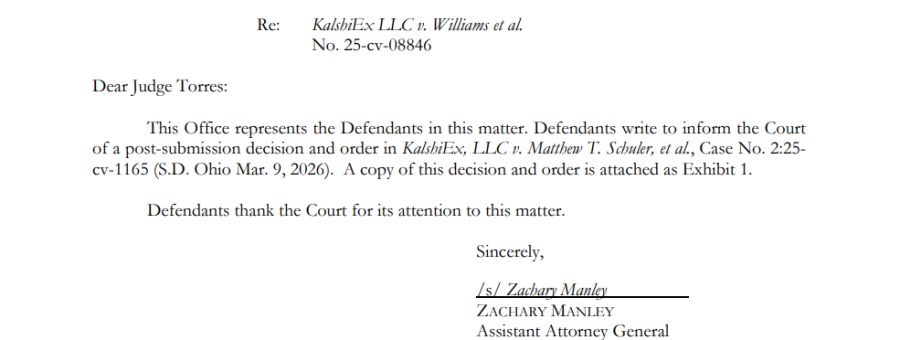
The legal fight is also spreading into other jurisdictions. On the same day as the Ohio decision, the New York Attorney General's Office notified a federal judge in Manhattan of the ruling, filing it as supplemental authority in its own case against Kalshi.
Featured image: Kalshi / Canva
The post Ohio federal judge rejects Kalshi injunction over sports event prediction markets dispute appeared first on ReadWrite.

Major League Soccer has permanently banned two former players after investigators concluded they gambled on league matches and passed along insider details to other bettors.
The league announced Monday (March 9) that Derrick Jones and Yaw Yeboah received lifetime suspensions for violating MLS gambling rules. Neither player is currently signed to a club, but the league said their conduct during the 2024 and 2025 seasons broke policies designed to safeguard the sport's competitive integrity.
The case began when betting integrity monitors flagged unusual wagering tied to soccer matches. After receiving those alerts, MLS hired the law firm Patterson Belknap Webb & Tyler LLP to carry out an independent review. During the investigation, both players were placed on administrative leave.
Investigators determined that Jones and Yeboah were involved in extensive gambling activity tied to soccer, including wagers connected to matches involving their own teams. The review also found the players placed bets on specific events that could occur during games.
One example cited by the league came from an October 19, 2024 match. Investigators said both players wagered that Jones would receive a yellow card in that game. According to MLS, Jones was indeed shown a yellow card during the match.
The investigation also uncovered signs that the players may have shared confidential information with other bettors. That included discussions about plans to draw yellow cards in matches. Even so, the league said investigators did not find evidence that any of the betting activity altered the final outcome of a game.
MLS response to lifetime ban of players over betting scandal
MLS Commissioner Don Garber said the decision reflects the league's determination to protect the sport as legal sports betting continues expanding across the United States.
"Major League Soccer remains steadfast in its commitment to match integrity," Garber said. "The League will continue to enforce its policies, enhance education efforts, and advocate for the elimination of yellow card wagering in all states to protect the integrity of our competition for clubs, players, and fans."
League policy prohibits players, coaches, and team employees from betting on soccer in any form. The rules also forbid sharing non-public information that could affect betting markets.
Yellow card wagering has drawn particular scrutiny because a single player can influence that outcome directly. Regulators and leagues across multiple sports have raised concerns that those bets create opportunities for manipulation.
The MLS case also arrives during a broader period of attention on gambling scandals in sports. Lawmakers, including Rep. Tim Walberg, have warned that recent illegal betting cases involving athletes and sports organizations point out the need for stronger oversight and integrity protections.
College sports have also faced similar issues. In a separate federal case, former basketball player Jalen Smith recently pleaded guilty for his role in an NCAA point-shaving scheme tied to sports betting, underscoring how gambling activity can reach athletes at multiple levels of competition.
MLS said its investigation relied heavily on betting integrity monitoring systems that track suspicious wagering patterns across legal sportsbooks.
The lifetime suspensions mean Jones and Yeboah are permanently barred from participating in Major League Soccer in any role. The league said the punishment followed a review of the investigative findings under its disciplinary procedures.
MLS did not announce any additional discipline connected to the case.
Featured image: Hayden Schiff via Flickr / CC BY 2.0 / Jay eyem via WikiCommons / CC BY-SA 4.0
The post MLS issues lifetime bans to two former players over betting scandal appeared first on ReadWrite.

Jalen Smith, one of the alleged fixers of a sprawling basketball point-shaving operation, admitted in federal court in Philadelphia that he played a key role in the scheme that stretched from U.S. college programs to a professional league in China.
Appearing before U.S. District Judge Nitza I. Quiñones Alejandro, the 30-year-old from Charlotte, North Carolina, pleaded guilty to bribery in sporting contests, conspiracy to commit wire fraud, and wire fraud. He also admitted to a separate charge of possessing a firearm as a convicted felon, according to the U.S. Attorney's Office for the Eastern District of Pennsylvania.
Federal prosecutors say Smith worked as a central organizer in a network of so-called fixers who bribed basketball players to intentionally underperform during games. By manipulating individual performances and final margins, the group placed bets through sportsbooks designed to cash in when teams failed to meet expectations against the point spread.
Investigators say the operation ran from about September 2022 through February 2025 and targeted both NCAA Division I men's basketball games and contests in the Chinese Basketball Association.
Authorities say the scheme initially took shape overseas. After early profits fixing games in the CBA, organizers shifted their focus to American college basketball, especially during the 2023–2024 and 2024–2025 NCAA seasons.
Smith became one of the main coordinators. Prosecutors say he helped recruit players, manage betting strategies, and distribute bribe payments tied to manipulated performances.
Alleged role of Jalen Smith in basketball point shaving scheme
According to investigators, the conspirators approached players directly or through contacts in the basketball world. They used text messages, phone calls, and social media to offer bribes typically ranging from $10,000 to $30,000 per game in exchange for playing poorly or ensuring a team failed to cover the spread.
Prosecutors say the group deliberately focused on athletes whose bribe payments would "meaningfully supplement, or exceed," their legitimate opportunities to earn money through name-image-likeness deals.
With betting markets available across dozens of states and millions of dollars wagered on college games each season, authorities say gamblers increasingly look for inside access to players who can influence outcomes without necessarily losing games outright.
Smith and other fixers would then place large wagers against the recruited players' teams. If the bets hit, conspirators sometimes traveled to campuses or nearby cities to hand over cash payments.
Court filings say the broader scheme involved more than 39 players from at least 17 NCAA Division I teams and included attempts to manipulate more than 29 games.
At times, prosecutors say Smith contacted players during games to ensure the plan stayed on track. In one example, he texted a recruited athlete during halftime and urged him to underperform in the second half, saying the game "need[ed] to be a blowout," that the player was "supposed to be . . . losing" and that the team needed to get "blow[n] out next half."
In February 2024, two Nicholls State players agreed during FaceTime calls with Smith and other conspirators to ensure their team would not cover the spread against McNeese State in exchange for about $20,000 each. Before the game, the fixers placed roughly $100,000 in wagers on McNeese State to cover.
During the February 17 matchup, one of the bribed players scored zero points as McNeese State defeated Nicholls State 74–47, allowing the conspirators to win their bets. Shortly afterward, Smith traveled to Louisiana and arranged the delivery of about $32,000 in cash to the players as their payment for helping manipulate the game.
Investigators believe millions of dollars in wagers were placed as part of the operation, while hundreds of thousands of dollars were distributed to players who participated.
Smith also admitted to illegally possessing a firearm. When investigators searched his Charlotte residence in May 2025, they found a loaded Kahr Arms CT380 semi-automatic pistol despite his prior felony conviction.
The bribery charge carries a maximum penalty of five years in prison. Each wire fraud charge carries a potential sentence of up to 20 years, while the firearm offense carries a maximum penalty of 15 years.
Featured image: NCAA / Canva
The post Jalen Smith pleads guilty in sweeping NCAA basketball point shaving scandal appeared first on ReadWrite.
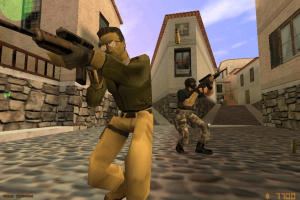
A new proposed class action lawsuit is accusing video game company Valve of running what plaintiffs describe as an illegal gambling operation inside several of its biggest games. The case, filed Monday (March 9) in federal court in Washington state, targets the company's long-running loot box systems in titles including Counter-Strike, Dota 2, and Team Fortress 2.
Two players, Alexander Flauto of Ohio and Jackson Meyer of Illinois, brought the complaint in the U.S. District Court for the Western District of Washington. They claim the system encourages players to spend real money on keys used to unlock randomized digital containers that can yield items with real-world resale value.
According to the filing, the mechanics behind those containers effectively mirror traditional gambling. Players pay to participate, outcomes depend on chance, and the resulting digital items can sometimes be sold for significant amounts of money on Valve's own marketplace or on third-party sites.
"Players pay real money—typically a few dollars—to open a virtual container called a 'loot box.' Inside is a single digital item… selected at random by the game's software, like the spin of a roulette wheel," the lawsuit states.
The plaintiffs say they personally lost money buying keys that unlocked items worth less than the cost of the purchase. Their lawsuit seeks to represent a nationwide class of players who allegedly experienced similar losses.
"We believe Valve deliberately engineered its gambling platform and profited enormously from it," said Steve Berman, Hagens Berman's founder and managing partner, who is representing the consumers.
"Consumers played these games for entertainment, unaware that Valve had allegedly already stacked the odds against them. We intend to hold Valve accountable and put money back in the pockets of consumers."
Federal class action lawsuit targeting loot box economy of Valve
The legal argument surrounds Washington state law, which defines gambling as risking something of value on the outcome of a game of chance in exchange for a possible reward. The complaint argues that Valve's system checks each of those boxes.
Keys used to open containers typically cost around $2.49. Once opened, the container awards a cosmetic item chosen at random from a pool of possibilities. Many of those items are common and relatively cheap, but a small number are extremely rare and can sell for hundreds or even thousands of dollars.
Loot boxes use the same psychological techniques as casino games—rewards delivered on unpredictable schedules to keep players spending, visual and audio effects designed to mimic the excitement of a slot machine, "near miss" animations that create the illusion of almost winning, and around-the-clock availability. These techniques are particularly dangerous for children and adolescents, who make up a significant portion of Valve's player base and who are especially vulnerable to developing gambling habits.
Flauto and Meyer et. al vs Valve Corporation
The lawsuit argues that the existence of a functioning secondary market gives those items real monetary value. Players can trade them on the Steam Community Market, where Valve collects transaction fees, or through outside marketplaces that specialize in virtual goods.
"Valve's loot boxes satisfy every element of this definition: users stake money… on the outcome of a contest of chance… and the items received are 'things of value' because they can be sold for real money," the complaint says.
If the court accepts that argument, the system could fall under Washington's Recovery of Money Lost at Gambling statute. The plaintiffs are also pursuing claims under the state's Consumer Protection Act, which could potentially expand damages.
The case arrives at a time when the virtual item economy tied to Counter-Strike has become enormous. Analysts estimate that players spend massive amounts opening containers in hopes of receiving rare skins and collectibles.
Recent reporting has drawn attention to how intense that demand has become. One analysis of Counter-Strike 2 activity suggested that players opened cases at such a pace that loot box sales generated more than $74 million in a single month. The steady stream of purchases has helped keep the system one of the most lucrative digital economies in gaming.
How the games allegedly simulate gambling mechanics
The complaint also focuses heavily on the presentation of the loot box experience itself. According to the filing, the design of the opening animation deliberately echoes the feeling of playing a slot machine.
When a player unlocks a case in Counter-Strike, the screen shows a horizontal strip of possible items sliding past rapidly before slowing to reveal the final reward. Rare items appear briefly as the sequence spins by, creating moments where it looks as though the player nearly landed on something valuable.
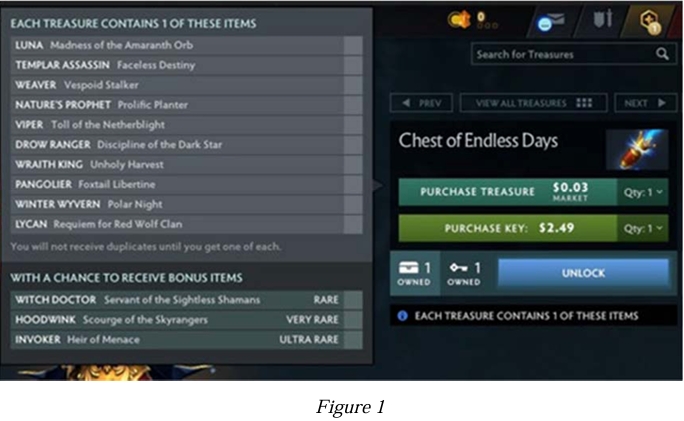
The lawsuit says this visual design produces the same kind of "near miss" effect that gambling researchers often associate with slot machines. The idea, according to the complaint, is that narrowly missing a desirable reward can motivate players to try again.
Researchers who study digital economies and gambling behavior have raised similar concerns in recent years. Academic work examining loot boxes has suggested that the systems share psychological characteristics with traditional gambling, including variable rewards and reinforcement loops.
The concerns have been amplified because many games that use randomized rewards are widely played by teenagers and younger audiences. Critics argue that the mechanics can normalize gambling-like behavior long before players are legally allowed to gamble.
Growing global scrutiny of randomized game rewards
Legal challenges to loot boxes are not limited to the United States. Governments and courts around the world have been wrestling with whether the systems should be regulated like gambling or treated as a standard feature of modern video games.
In New York, for example, the state attorney general has previously taken action against Valve related to skin gambling networks that allowed users to bet virtual items from Counter-Strike on third-party websites. That case focused on external betting platforms rather than the in-game loot box system itself, but it underscored how digital items can take on real economic value.
International rulings have also begun shaping the debate. In Austria, the country's Supreme Court has ruled in certain cases that loot boxes can qualify as illegal gambling when players pay money for randomized rewards that hold monetary value. That decision allowed some players to pursue reimbursement claims against game publishers.
Other jurisdictions have taken different approaches. Some regulators have opted for disclosure requirements, such as forcing publishers to reveal the odds of receiving specific items. Researchers studying the issue say the debate increasingly revolves around where the legal and societal boundaries should sit for monetized chance mechanics in games.
Scholars like gaming law researcher Leon Xiao have argued that policymakers face a balancing act. Completely banning the systems could disrupt a major revenue model for game developers, while leaving them unregulated raises consumer protection concerns.
Against that backdrop, the Washington lawsuit represents another attempt to test how existing gambling laws apply to modern video game economies.
The plaintiffs are asking the court to stop Valve from operating the loot box system and to award damages to players who allegedly lost money buying keys.
Featured image: Valve Corporation via Steam
The post Valve faces federal class action lawsuit claiming loot boxes run illegal gambling system appeared first on ReadWrite.