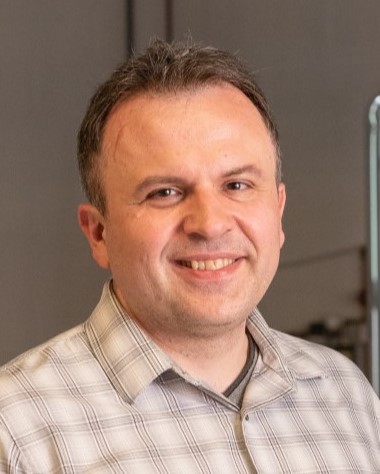
Lewandowski group uses integrated structural biology approach to study structure, dynamics and interactions of biological systems, especially related to natural products biosynthesis. Our main experimental techniques include solidstate and solution NMR. We also extensively use molecular dynamics simulations.
We do a lot of collaborative work. We are part of natural products biosynthesis grouping at Warwick. We are part of Howard Dalton Centre for Mechanistic Translational Enzymology. We are part of the solid-state NMR grouping.
In three words or phrases: collaborative, laid-back, spontaneous
Provision of Training
Your training will be involve mix of working with me and my experienced postdocs and PhD students.
Progression Monitoring and Management
I will expect you to take full ownership of your progression but come to me when you need help troubleshooting.
Communication
I am happy to discuss any issues that are impacting your ability to fulfil your potential or my/our expectations.
Meetings
PhD Students can expect scheduled meetings with me at least once per week. These meetings will be face-to-face. I am usually contactable for an instant response on every working day.
Work Patterns
Certain tasks in my lab need to occur at set times, and students need to be able to commit to a rota/timetable shared with other members of the team.
Notice Period for Feedback
I need at least 1 week's notice to provide feedback on written work of up to 5,000 words.
MIBTP Project Details
Primary supervisor for:
See the PhD Opportunities section to see if this project is currently open for applications via MIBTP.
Please Note: The main page lists projects via BBSRC Research Theme(s) quoted and then relevant Topic(s).
Deciphering acyl carrier protein dynamics in megasynthase enzymes by segmented isotope labelling and solid-state NMR
Fatty acid synthases (FASs) and iterative polyketide synthases (iPKSs) are giant multifunctional enzymes that operate as molecular factories, producing fatty acids and structurally complex natural products. Central to their function is the acyl carrier protein (ACP), a mobile domain that transports biosynthetic intermediates between catalytic centres. Despite its importance, the dynamic interactions that enable ACP to efficiently communicate with multiple enzyme domains remain poorly understood. This project will develop and apply innovative approaches to directly observe ACP behaviour within functioning megasynthases. While developed in the context of ACPs this novel approach should be generally applicable to studying domains in large multidomain proteins in a way that is not possible with any other techniques.
The project will employ recombinant expression to produce isolated 13C,15N-labelled ACP domains, which will be re-incorporated into their corresponding FAS / PKS using split intein-mediated protein ligation. This approach will permit selective observation of ACP domains within megasynthase complexes. Novel solid-state NMR spectroscopy including fastest in the world magic angle spinning and molecular dynamics simulations will be used to define how ACP structure and dynamics vary during interactions with different catalytic domains and in response to distinct tethered intermediates. The methodology will first be established in mammalian FAS before being applied to fungal iPKS systems. The project combines molecular biology, protein engineering, biochemistry and structural biology to address fundamental questions about how dynamic domain interactions control biosynthetic assembly lines. By revealing the molecular mechanisms underpinning ACP-mediated substrate trafficking, this work will enhance our understanding of nature's most complex biosynthetic machines and provide insights that could support future engineering of fatty acid and polyketide biosynthesis.