|
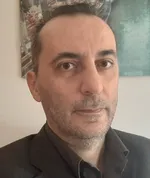
Prof. Sebastiano Battiato
University of Catania, Italy
The Mirage Problem: When AI-Generated Content Breaks Reality - and How Science Fights Back
|
Abstract: The rapid advancement of generative AI has fundamentally altered the landscape of multimedia authenticity, with text-to-image and text-to-video models now producing synthetic content of unprecedented realism. The forensic community faces a structural challenge: detection alone is insufficient in an ecosystem where generators evolve faster than detectors, adversarial counter-forensic techniques actively undermine recognition systems, and the human observers who interpret forensic evidence are themselves subject to systematic cognitive distortions. This talk examines the problem across three interconnected dimensions. The first is human: psychological research demonstrates that awareness of AI capabilities engenders measurable biases in forensic judgment — most notably the impostor bias, a pervasive skepticism that leads examiners to question even authentic media, compounded by automation bias when algorithmic outputs override critical reasoning. The second is technical: while deepfake detection and source attribution have advanced substantially, generalisation across unseen generators, robustness to post-processing, and interpretability of model decisions remain structurally open problems — and recent benchmarks reveal a persistent gap between academic performance metrics and operational forensic deployment. The third is adversarial: counter-forensic strategies, from imperceptible perturbations to anti-detection pipelines, evolve in parallel with detection methods, demanding that the field treat robustness not as an afterthought but as a design principle. These technical findings are situated within the current legal and normative landscape — including the transparency obligations of the EU AI Act (Article 50, enforceable August 2026), the fragility of watermarking standards, and the epistemic responsibilities of the expert witness in judicial proceedings. The talk also highlights ongoing community-building efforts — workshops, summer schools, and special issues — aimed at establishing shared scientific standards across research, law enforcement, and the judiciary. The talk concludes with an honest assessment of what current science can and cannot deliver: explainable results, quantified uncertainty, and the intellectual humility to communicate the boundaries of the knowable to courts, regulators, and the public.
Sebastiano Battiato is Full Professor of Computer Science at the University of Catania, Italy. His research interests include Computer Vision, Multimedia Forensics, Artificial Intelligence, and Digital Imaging, with particular emphasis on digital media authenticity, deepfake detection, AI-generated content, and forensic analysis of images and videos. He has published extensively in leading international journals and conferences, coordinated and participated in numerous national and international research projects, and is co-inventor of about 25 patents. His research has also led to longstanding collaborations with industry, institutions, law-enforcement agencies, and forensic practitioners. He is co-founder of the academic spin-off iCTLab, promoting technology transfer and innovative solutions in AI, Computer Vision, and Digital Forensics. Over the years, he has held several academic leadership positions at the University of Catania, including Coordinator of the PhD Program in Computer Science and Vice Rector, and he currently serves as Vice Director of the Department of Mathematics and Computer Science. He is co-founder and Director of the International Computer Vision Summer School (ICVSS) and the International Forensics Summer School (IFOSS) and has been actively involved in the international Computer Vision and Pattern Recognition community. Among his recognitions, he received the 2017 PAMI Mark Everingham Prize and was named IAPR Fellow in 2026.
|