
Research Projects
We have a portfolio of research projects covering a wide range of legal and socio-legal themes. Our staff engage in cutting edge, original research projects generating significant impact.
Click the titles to learn more:

Welcome to the International Justice Arts Network! We are an international collective committed to promoting the arts across all fields of justice-related efforts and welcome new members – see joining details below. We are a unique network that seeks to promote different levels of exchange on the relationship between arts (broadly conceived) and justice problems and see it necessary that those exchanges are not siloed but are widespread, assessable, equitable, and remain necessarily multi-stakeholder and global.

Creative Learning for Justice (CLJ) is a project led by Ana Chamberlen, Ruth Bernatek and Henrique Carvalho, co-organisers of the International Justice Arts Network. This project is funded by Warwick Innovations and it is also supported by the Centre for Critical Legal Studies.
This project will investigate how separated families in England and Wales make child arrangements, focusing on children’s involvement and outcomes. Child arrangements among separated families are underexplored, particularly outside formal legal systems. This is despite clear evidence that family separation increases risks of negative consequences for children, with post-separation relationships identified as a key risk factor. The Nuffield Family Justice Observatory has highlighted significant evidence gaps, including our understanding of outcomes for both the children involved in private law proceedings and the 90% of families navigating separation – and by extension, child arrangements – outside the courts.

Just Sentences deploys an innovative methodology to conduct a narrative analysis of sentencing remarks in England and Wales, paying particular attention to their aesthetic dimension and their cultural role. A key component of this study engages with people on the receiving end of these sentences, who most acutely feel their consequences and are uniquely positioned to reflect on their meaning and purpose, but who are seldom given the opportunity to express these thoughts and feelings.
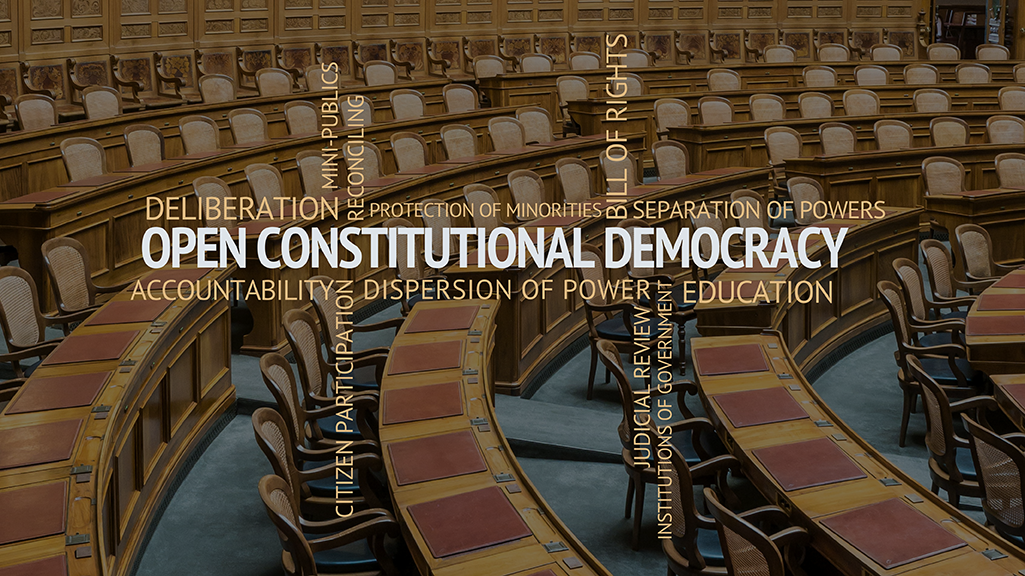
This Trans-Atlantic Platform project explores the crucial question of how contemporary theories of deliberative democracy can be reconciled with foundational constitutional institutions, including judicial review, the separation of powers, and bills of rights. Led by co-Principal Investigators Dr David Vitale (University of Warwick), Dr Michael Pal (University of Ottawa), and Dr Odile Ammann (University of Lausanne), the project is co-funded by the UK’s Economic and Social Research Council, the Social Sciences and Humanities Research Council of Canada, and the Swiss National Science Foundation.

This interdisciplinary research project investigates the temporal dynamics of indebtedness which leads many people to live invisible lives. Specifically, it asks in what ways is the burden of debt experienced amongst ethnic minorities in the UK’s consumer credit market by offering a qualitative analysis of their lived experiences.

This research explores the potentials and challenges afforded by arts and culture as a medium for building public trust and confidence in policing. Since 2021, we have been examining the unique partnership between West Midlands Police and the Coventry City of Culture Trust, evaluating the benefits and challenges of this collaborative endeavour, and exploring the broader potential beyond the City of Culture for police partnerships with artists and creative practitioners. We situate our analysis within the context of a widespread crisis in police legitimacy, considering the ways in which arts-based interventions can offer a democratising space in which mutual perceptions can begin to shift; and exploring the complexities and challenges of these endeavours, particularly for more vulnerable and seldom-heard communities.

This project explores the ambivalent and shifting governance of socially marginalised groups in the criminal and administrative justice domains. Alongside the punitive discourses and practices that have long dominated the governance of marginalised groups in England (and elsewhere), in the last decades we can also observe an emphasis on safeguarding and care emerging in various areas of law and public policy. While the former orientation focuses on danger, blame and punishment (the ‘punitive turn’), the latter stresses vulnerability, empathy and protection (the ‘humanitarian turn’).
‘The Vulnerable State’ aims to trace how these apparently competing logics, values and affects frame the discourses, policies and practices implicated in the contemporary governance of the socially marginalised. While they have been studied in isolation, we argue that these trends need to be conceptualised together, as a humanitarian-punitive complex. Their interrelation is especially evident in two areas of public policy: the criminal and the administrative/asylum justice systems. The growing concern about criminal exploitation has rekindled attention in criminal justice towards identifying and protecting ‘vulnerable’ individuals (either as victims or offenders, and often as both through emphasis on trauma informed practices). Meanwhile, in the administrative domain, which has been traditionally oriented towards social care and welfare, an opposite trend is apparent. Particularly in the context of asylum, the language of abuse and security threats has legitimised policies and practices aimed at restricting access to humanitarian protection.
This project has been funded by the Leverhulme Trust.

With funding from the Scottish Government, Professor Vanessa Munro has been working – together with Professor Sharon Cowan (Edinburgh) and Eamon Keane (Glasgow) – to explore the extent to, and ways in, which sexual history and character evidence is used in Scottish rape and attempted rape trials.
Through a combination of detailed case file analysis, preliminary hearing and substantive rape trial observations, and interviews with judges, lawyers, advocacy workers and rape complainers, the researchers set out to explore how the so-called ‘rape shield’ regime is currently being implemented in Scotland (in a context in which there has been no dedicated research on the topic for almost 2 decades). Bearing in mind the importance both the accused’s fair trial rights and the privacy and dignity of complainers, the researchers scrutinised the circumstances under which sexual history and character evidence was allowed to be adduced.
In their final report, published in April 2024, the team found that there had been substantial improvements over time, with a clear shift towards more a more restricted interpretation of what would be permitted to be asked of complainers. However, they also identified a number of areas where further improvement was needed to ensure faithfulness to the ‘rape shield’ regime throughout the trial and to better empower complainers in the process of being consulted in relation to their views on the evidence.
The report findings come at a pivotal moment, with the Scottish Government considering a number of reforms to the handling of serious sexual offence trials.
For decades, there has been a disconnect between increasing numbers of survivors reporting sexual violence and the rate at which those complaints have been proceeded against or prosecuted through the criminal justice process. Innovations in how evidence can be provided by complainants, improvements in victim support, and changes to substantive legal tests in relation to consent have all been important, but have not been sufficient to address this significant, and widening, ‘justice gap’.
Having sat on the Ministry of Justice’s End to End Rape Review as an Academic Member, Vanessa Munro was commissioned by the Crown Prosecution Service in England and Wales to review its initiatives to improve responses to rape complaints and complainants under ‘Operation Soteria’. Working with Alice King and Lotte Andrade Young, Vanessa has undertaken a large-scale qualitative fieldwork study across 5 CPS areas to review pilots intended to: improve partnership-working between police and prosecutors; ensure more timely, proportionate and higher quality rape investigations; encourage more robust and effective trial preparation and strategy; improve communication with and support for victims; and ensure appropriate training and professional development for staff within Rape and Serious Sexual Assault units.
In April 2023, the research team submitted an Interim Findings Report to the CPS, which was published alongside their revised National Operating Model for Rape in July 2023.
As new National Operating Models for the CPS and police are embedded, the research findings will be drawn upon by a number of stakeholders to assess challenges and opportunities in their implementation, and to review (much needed) progress in improving the justice journeys and justice outcomes experienced by victim-survivors.
In her work with REFUGE to explore the scale, mediators and moderators of suicidality amongst its client base (REFUGE report), Vanessa Munro identified significant shortcomings in the probing for, and handling of, disclosures of suicidality amongst professionals, and concerns about the ability of services to ‘join the dots’ in order to effectively identify those most at risk of domestic abuse related suicidality. Following on from this, in 2021, Vanessa secured some funding from the Home Office, under its Domestic Abuse Perpetrator Fund, to conduct further research – with Sarah Dangar of AAFDA and Lotte Young Andrade.
In 2010, Vanessa Munro (with co-author Sangeeta Shah) published a re-imagined version of the Court’s decision in R v DhaliwalLink opens in a new window as part of a ‘Feminist Judgments’ ProjectLink opens in a new window in England and Wales. In this, they argued that – contrary to what the court had initially concluded – psychological injury in the context of a domestically abusive relationship could constitute ‘bodily harm’ for the purposes of the Offences Against the Person Act 1861; and as such, could provide a foundation for manslaughter liability where as a result of such abuse a victim took her own life. In reimaging that decision, based on authority and knowledge as it stood at the time of the case in 2006, Vanessa was aware of the limited evidence base, particularly in the UK, regarding the links between domestic abuse and suicidality – an evidence base that was needed to develop compelling legal arguments about such abuse having caused the death of Gurjit Dhaliwal.
To address this, in 2018, Vanessa worked with colleagues at REFUGE to conduct research into the scale, mediators and moderators of suicidality amongst its client base in England and Wales. Across a sample of more than 3,500 clients, and with further information provided by a series of 20 semi-structured interviews, this report discovered that almost one quarter of clients had felt suicidal at one time or another with 18% having made plans to end their lives. Clients who experienced suicidality were particularly likely to also report feeling despairing and hopeless, with factors linked to drug and alcohol dependency and mental health likely to increase the risk of experiencing suicidality. Read the report.Link opens in a new window
This report has been cited widely by academics and practitioners since publication, and was used to support REFUGE’s campaigning including the launch of a billboard campaign in Leicester Square, London on World Suicide Prevention Day 2018. Vanessa has also built on this work in subsequent research with AAFDA.
Towards a grassroots politics of redistribution.
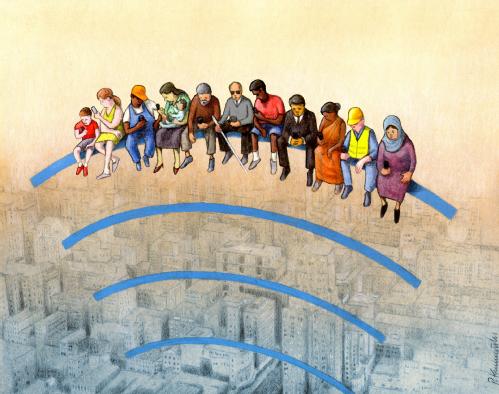
This project draws on socio-legal and critical political economy analysis, collaborative policy design, and prefigurative law-making methodology to conceptualise and enact a grassroots-inspired framework for transnational social security law that considers the risks and potential of digital technologies in implementing social protection schemes globally.

Jessica Bell has been awarded funding from the Data Trust Initiative to develop a pilot Data Trust for the Born in Scotland in the 2020s birth cohort study. Working with Co-investigators Professor Rebecca Reynolds (University of Edinburgh) and Dr Ann Hagell (Association for Young People’s Health), and bringing together insights from law, healthcare and research governance, the project explores how the ideas behind this new model of data governance can be put into practice in the health research context. A key aim of the project will be to investigate whether and how the legal mechanisms associated with trust law can be used to develop more participatory and trustworthy models of data governance in the digital era,
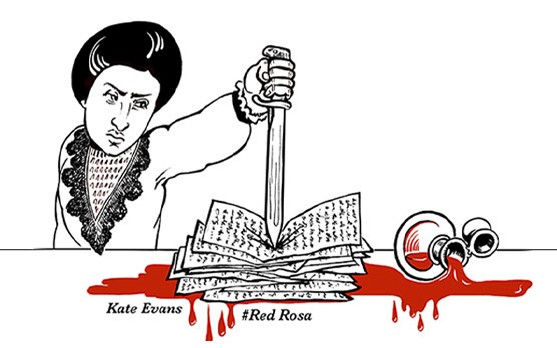
Last year marked the 150th anniversary of the birth of Rosa Luxemburg: a revolutionary theorist and political activist, whose work has provided important political economy critiques of imperialism, capitalism, nationalism and advocated for the collective commitment to social justice. While recent books have celebrated her life and intellectual and political legacy, engagement with her work in international law, although with some notable exceptions, has been largely marginal. Despite her sharp and insightful analysis of the nexus between colonialism and capitalist accumulation and her commitment to anti-militarism and internationalism, Luxemburg’s work remains less visible and prominent than male social thinkers.
Co-organised by Serena Natile and Christine Schwöbel-Patel.
Rajnaara Akhtar has been awarded a Nuffield Foundation research grant under the ‘justice’ stream for a project titled ‘When is a wedding not a Marriage? Exploring non-legally binding ceremonies’. Working with co-investigator Prof Rebecca Probert (University of Exeter) and research associate Sharon Blake, the project explores why ceremonies are being conducted outside the legal framework, the nature of such ceremonies, and the beliefs, practices, and preferences of those involved. A key aim of the research is to better understand how these weddings engage with the existing weddings law regime and how reform proposals might work.


The project explores the shifting and ambivalent logics of border control in the aftermath of the COVID pandemic. The pandemic made apparent the limits, tensions, and contradictions of border control as a form of governance. Border closures and securitisation reinscribed the sovereign state and its exclusionary potential, often exacerbating the vulnerabilities of migrant populations. Such exclusionary logic sometimes dovetailed uneasily with efforts to provide humanitarian assistance.
Through a multi-sited ethnography in three critical border areas (the UK-France maritime border, the Spain-Morocco land border, and the Chile-Bolivia land border), this project investigates how border control officers navigate the contradictory logics of border work between control and care. It will offer unique insights on emerging forms of humanitarian governance of precarious populations around the world, and the challenges for the exercise of state power that they evince. Through an innovative methodology and a carefully crafted dissemination plan, the project will lay the foundations for an ambitious research programme on state power in a globalised world.
Principal Investigators: Ana Aliverti; CoIs: Elisa García España and Roberto Dufraix,
This project has been funded by the British Academy (SG2122\210082).

This project aims to explore and promote respectful interactions around names. To create a culture of inclusivity within a diverse learning community, we need to develop practical skills and systems at both individual and institutional level to ensure students and staff are not required to change to fit in, and this includes ensuring that everyone can use the name they prefer and have that name respected.
Led by Professor Jane Bryan (Academic Lead, CVEP) we explore whether a lack of familiarity with the pronunciation and spelling of the names of others creates barriers to teaching and learning, and social interactions. We capture the experiences of both those encountering names with which they are unfamiliar and the experiences of bearers of names that many find unfamiliar, including those who adapt their names or adopt new names to navigate this issue.

Led by Dr Tara Mulqueen and funded by the Nuffield Foundation, this project will investigate legal needs that have emerged in the wake of the pandemic, the impact of increased reliance on digital technology and the role of public legal education (PLE) in improving access to justice for marginalised groups.
Legal needs have historically exceeded the capacity of traditional legal services. Cuts to publicly funded legal services and the shift to digital services have exacerbated this dynamic. The COVID-19 pandemic increased pressure to develop alternative ways for marginalised groups and communities to access justice. This coincided with the shift to early intervention and PLE (Public Legal Education) to curtail the number of litigants and prevent legal disputes escalating to crisis. Digital solutions have been proposed as a useful method for conducting PLE and other forms of intervention. However, there is a dearth of research to inform the development of this work and the potential ways in which digital services could intensify difficulties faced by vulnerable people.
This project has two interlinked elements:
- a local, qualitative legal needs study
- a public legal education workshop programme, both taking place in Coventry

James Harrison has been awarded a British Academy/Leverhulme Trust Senior Research Fellowships for the 2021-22 academic year. This fellowship will allow James to work exclusively for a year on a project entitled ‘Reconceptualising international trade law: In search of a bounded, socially embedded and re-connected regime’. The project explores problems associated with a ‘sprawling’ international trade law regime which lacks a coherent underlying rationale. The central aim of the project is to develop a new paradigm underlying trade policy that is more socially, developmentally and environmentally responsible, and more sensitive to the practical realities of how international trade is conducted. It builds on a previous empirical research project which was funded by the ESRC entitled
“Working Beyond the Border: European Union Trade Agreements and International Labour Standards”.
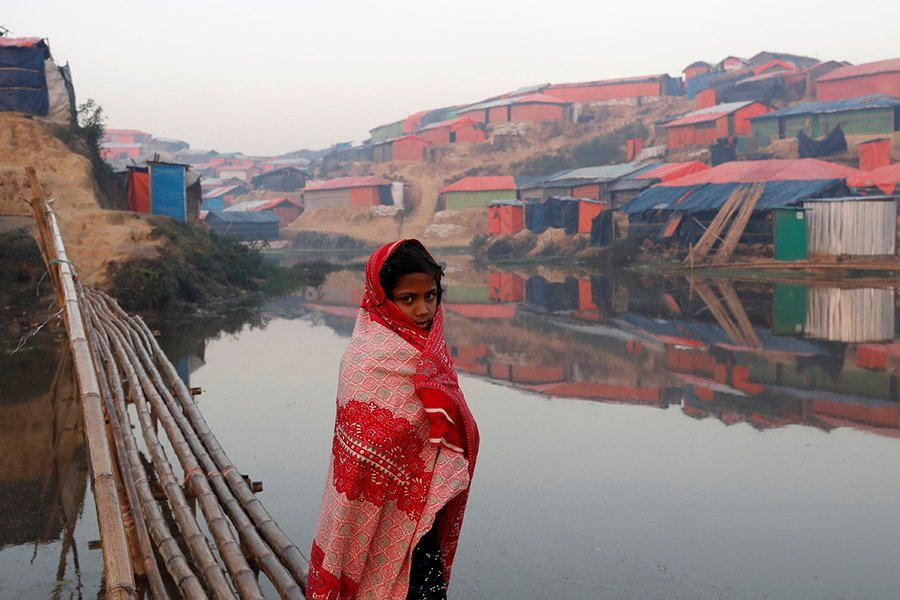
Simon Behrman has been awarded a British Academy/Leverhulme Small Research Grant of £9,752 towards his project. In recent years some 900,000 Rohingya refugees have fled to Bangladesh from Myanmar. Their situation is precarious as most are stateless and Bangladesh has no legal framework for people to claim refugee status. However, Rohingya children who have been born to at least one Bangladeshi parent, which accounts for around 36,0000 people, have a strong claim to citizenship under both Bangladeshi and international law. Yet citizenship rights have not been granted to most of these children.
The project will investigate why this failure has occurred, and what legal and political strategies can be mobilised to rectify it. The funding awarded will pay for travel to Bangladesh to interview affected refugees, along with lawyers, judges and NGOs involved in the process for applying for Bangladeshi citizenship, to gather first hand testimonies of the legal and bureaucratic difficulties they face in making these claims for citizenship. The trip will be combined with presenting the initial project findings at one of the major research centres on forced migration in South Asia, the Calcutta Research Group.
The initial aim of this project is to better understand what legal and administrative blockages are preventing eligible Rohingya refugee children from gaining Bangladeshi citizenship. However, it is also part of a much bigger research project on asylum in South Asia that he is working on. This wider research seeks to understand better the practices of asylum in a region that, on the one hand, has no specific refugee law framework, yet on the other hand has been and continues to be one of the largest refugee-hosting regions in the world. The focus of Simon’s research has always been on examining the gaps in international refugee law, and a critique of that legal regime as being fundamentally exclusionary in respect of most forced migrants. “What interests me about South Asia is that it has never had a refugee law framework, while at the same time it has been the site of some of the largest refugee movements in history, from Partition in 1947 through to the Bangladesh War of Independence in 1971, to more recent arrivals of refugees from Afghanistan and Myanmar.”
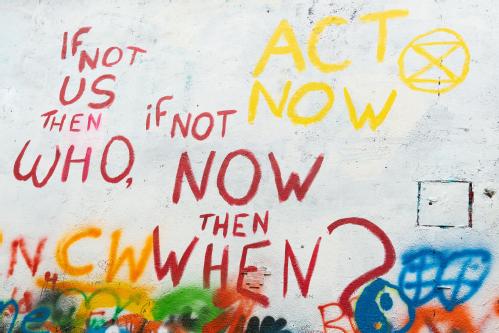
Sam Adelman has been awarded a British Academy senior research fellowship. The project will analyse the use of rights-based climate litigation in two developing countries: the constitutional right to a clean and healthy environment in South Africa and the rights of nature in Colombia. It will identify successful litigation strategies, and identify rights-based cases likely to be brought in future. It will analyse the role of rights-based litigation in protecting nature, promoting sustainable development, and protecting the human rights of particularly vulnerable groups such as women, children and indigenous peoples. It will analyse the role of human rights and climate litigation in protecting the rights of future generations. The research will assess the degree to which these provide models for climate litigation in other countries in the global South.

The Covid-19 crisis has exposed deep inequalities embedded in national and international socio-economic systems and legal frameworks. Over-stretched social services and an over-reliance on unpaid and precarious labour compensate for the inadequacies of social infrastructure, economic policies and labour regulation, instead of inspiring more social justice-driven approaches. The crisis can provide an opportunity to identify the limits of such systems and reimagine the policies that shape them. This project aims to bring together activists, academics and policy-makers to collectively reimagine a feminist recovery plan for Covid-19 and beyond by placing grassroots feminisms at the centre of policy-making, learning from the past and looking at the future.
This project is coordinated by Serena Natile and funded by the IRSF.

Dr Sharifah Sekalala, has been awarded 50,000 Euros by The Wellcome Trust and £5k ISRF grant to support her project: ‘There is no app for that, regulating health apps in Sub Saharan Africa.’
In 2018 an article in the Economist declared that data was becoming more valuable than oil. Migration usually refers to people, but the migration of data is becoming equally important with terms such as data colonisation becoming mainstream. Many health apps facilitate the migration of data. Whereas other kinds of transnational health data collection and transfer tend to be highly regulated (e.g., clinical trials) the migration of data generated by health apps is inadequately regulated.
This project analyses the gaps in this regulation and their impact. The project will map health apps in Kenya, Uganda and South Africa to examine the problem, organise networking events in order to agree on a consensus on the kinds of apps most likely to benefit from further study, and discuss how equitable frameworks might inform the development of improved regulation in this area, within a larger project that will include different stakeholders.
Webinar Report: Regulating Migration of Health Data in Africa | Findings Report: mHealth International Webinar on the Regulation of Data in Sub-Saharan Africa - June 2021

This project by Professor Alex Sharpe has involved exploring philosophical ideas (difference, authenticity, love), creative methodologies (William Burroughs cut-ups writing technique) and public debates (the proper relation between ethics, aesthetics and art) through the figure of David Bowie as guide. It has involved a series of public lectures on the legal category and social theory template Monster (Phoenix, Canberra, Brisbane, London (2016), Manchester, Keele (View Recording), Edinburgh (2017) and Sheffield (2018)) on the influence of William Burroughs writing methods on the creative output of the artist (5th Annual David Bowie Festival, Dublin 2020) on the concept of authenticity (6th Annual David Bowie Festival, Dublin 2021) and on the relationship between ethics, aesthetics and art in the context of Bowie's 'flirtation' with fascism (view video of Warwick Law School Virtual Public Lecture). The project will culminate in a book (a collection of essays) titled: David Bowie Outlaw, which will be written so as to be accessible to non-academic as well as academic audiences. The book will be published by Routledge in 2021.
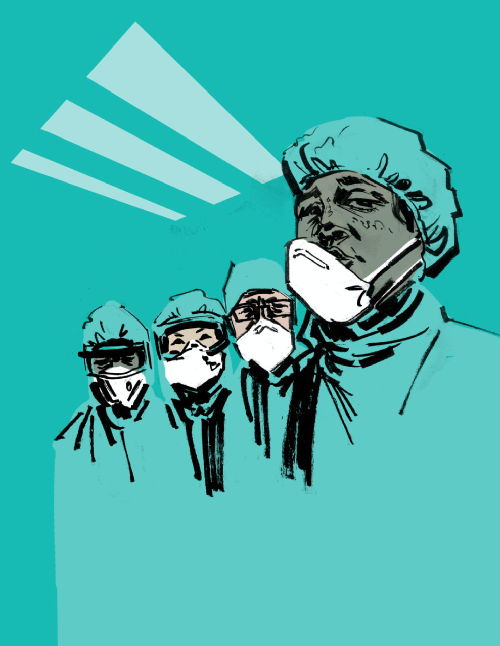
Sharifah Sekalala is currently undertaking two significant projects aimed at ensuring that human rights don’t get eroded in the national and international response to the coronavirus pandemic.
Supported by funding from the University of Warwick’s ESRC Impact Acceleration Account, Dr Sekalala will lead a project scrutinising the emergency laws introduced in the UK and around the world in response to COVID-19. The project team will submit evidence to the UK Parliament’s Joint Select Committee on Human Rights, which has announced an inquiry into COVID-19 and human rights, and also write a global human rights impact assessment on global emergency laws for the World Health Organisation Bulletin which is read by public health officials, legal counsels and policy makers.
Dr Sekalala will also write a series of blog posts and briefings aimed at helping the general public understand the social and legal impact of the crisis.
One of the first of these has been published by the Warwick Interdisciplinary Research Centre for International Development (WICID). In the current post of the “Think Development” blog, Dr Sekalala explores the “serious and structural gendered inequities in healthcare” highlighted by both the coronavirus pandemic and the Ebola crisis in West Africa.
She argues: “We use the language of heroism to obscure; the very nature of the ‘hero’ identity requires that only a few people can be identified as such, and those that do meet the criteria require self-sacrifice in order to do so. In reality, both in the UK and globally, the group of people who provide care is much bigger. At the bottom are people who we have severely oppressed, and we owe it to these carers to move beyond the metaphors, and to examine and document the experiences of the categories of carers in the COVID-19 crisis if we are to remove the structural barriers to caring for them.”
Dr Sekalala is an expert on the relationship between law, global health, and human rights. In 2019 she served as the only lawyer on the Nuffield Council on Bioethics working group on global health emergencies, advising on the ethics of medical research during pandemics.
The working group’s report was published in January 2020 just as the first reports of a new virus in Wuhan were emerging. She is now focused on COVID-19 and the potential for people’s human rights to be unintentionally or inadvertently breached as a result of the international response to the pandemic.

The Fair Chance Foundation Project researched access to Higher Education in Haryana, India, focusing on gendered social relations and differences in choices, obstacles and opportunities for young people between January 2017 and May 2022.
Our research has highlighted the importance of family members in decision making but also the challenges that families with little or no history of higher education face in supporting their young people in making choices and taking up opportunities. The project has a number of phases culminating in an impact and dissemination phase. This devised a programme of actions aimed at stimulating positive social change which built on the findings from the three project research phases. We worked with local partners to encourage the development of an outreach culture in Haryana, India (and beyond). The project produced a Policy Brief (PB) which was well received by local and national educational policy makers and an Outreach Activity Resource (OAR) (a toolkit) which was used by government colleges in Haryana to pilot ‘taster’ days. The PB and OAR have been recognised by local and national policy makers as contributing to the implementation of India’s National Education Policy 2020. The project focused on supporting the development of outreach activities within government colleges which provide higher education to the most disadvantaged communities and also to those young people who are the first generation of higher education students in their families.
Our ethos was collaborative: we worked with project partners in India and our wider consultative group of predominately early career researchers to co – develop each phase of the project and to co produce the PB and OAR.

This project by Dr Laura Lammasniemi project calls for new thinking on sexual consent as a legal concept. It explores how sexual consent was understood in every-day criminal trials before the legal definition of consent, and asks what that legal history can tell us about the very nature of this contested concept. The project is based on archival research on courtroom narratives in England between 1870 and 1956, leading up to the enactment of the Sexual Offences Act 1956. It will focus on criminal trials, and related appeals, in three areas: (i) rape, (ii) procurement for prostitution and trafficking, and (iii) sexual activity with girls under the age of consent to assess consent and capacity in different contexts. There was no legal definition of consent until 2003 and so at every trial the meaning of consent was evaluated and reinterpreted. Through historical analysis, the project will bring crucial insights on contemporary legal debates on sexual consent at a time when conviction rates are at an all-time low. The project utilises archival research to stage performance pieces to explore the performative aspects of determining consent. Through archival research and the performance pieces, it considers how consent can be created, or eradicated, as part of criminal trials, and whether the difficulty in defining consent is contained within the notion itself or within its translation into the court process.
The project is generously funded by the Leverhulme Trust. The initial stage of the project was funded by Warwick Research Development Fund.

Gary Watt has been awarded a Leverhulme Trust Major Research Fellowship. The award includes a grant of £175,554 to buy out Gary’s teaching for a period of three years allowing him to undertake a major research project.
For many years Gary has been committed in his teaching and research to the appreciation of law by the critical lights of the arts and humanities. He has published books on law and literature, Shakespeare and the law plus dress and law, and was also responsible for the creation of the Law and Humanities journal with Warwick Law’s Paul Raffield, which he continues to co-edit today. He is also general editor of the six-book series A Cultural History of Law, which is due to be published later this year. “The Leverhulme Fellowship gives me a sustained opportunity to pursue this passion for interdisciplinary work.”
Through the project, Gary will test his theory that law’s activities, especially advocacy and judgment in Common Law courts, are better appreciated as creative and artistic processes of production (production of persuasive narratives, satisfactory outcomes, plausible facts etc.) rather than as scientific processes of fact-finding and discovery of abstract truth. He will go on to ask whether this way of appreciating law can help us better understand how judgments are formed (that is per-formed) in courts of popular opinion through traditional and social media. He added “hopefully we will acquire a deeper appreciation of what it means to talk of ‘post-truth politics’, ‘fake news’ and ‘trial by twitter’.”

This project by Professor Ana Aliverti documents existing arrangements and practices in the policing of immigration status, and examines the everyday operation of immigration-police cooperation in England under the remit of Operation Nexus. Nexus aims to bring together operational and intelligence capabilities and resources in the police and immigration services to deal effectively with offending by foreign national citizens, reduce costs involved in pursuing them through the criminal justice system, and enhance public security.
Focused on two major regional police forces, the project will evaluate the joint enforcement operation between the police and the regional branches of the Home Office’s Immigration Compliance and Enforcement team. It will also examine the cross-border dimensions of migration policing in key migration sending countries. The ultimate objective of Ana’s research is to document and scrutinize how the new policy emphasis on foreign nationals in British domestic policing has brought to the fore the role of the police in mediating belonging and has legitimized extraterritorial interventions. Drawing on policing scholarship and post-colonial theory, her research will offer new insights on the internationalization of criminal justice and will chart a new, exciting research agenda on policing, mobility and globalization.
This project has been generously funded by the Leverhulme Trust and the University of Warwick’s Impact Fund.

Dr Sharifah Sekalala received £4,509 from ISRF towards her project 1-800-DOCTORS: Indian telemedicine, African patients and clinical care after Covid-19’. This is a small scoping study with Sarah Hodges from Warwick’s History department and Julia Hornberger in South Africa. It aims to analyse the increasing use of telemedicine from India in the wake of the COVID-19 crisis and how this is reinforcing an emerging field of India-Africa relations.
This research explores the long term effects of Covid-19, not on individual markets but rather on the very practice of medical care, world-over. Much attention has already been paid to the epidemiological, economic and political effects of our on-going COVID-19 crisis: mass death and illness, border closures across the world and a restructuring of everyday life. Here, public health, biomedical and life sciences and economists have been at the forefront.
“In our project we will use the tools of the critical medical humanities, to examine how the COVID-19 pandemic has accelerated as well as restructured practices and everyday patterns of accessing healthcare, through studying the contemporary history (Hodges), regulatory challenges (Sekalala) and cultural heft (Hornberger) of Indian tele-medicine and e-health practices as it has grown up over the continent over the course of the twentieth century.”
Africa, whether as a continent or as individual nations, typically figures in public speech and policy as an exemplar of crisis and underdevelopment. This is particularly marked when it comes to health. “The starting point of our project is that this stereotype hides profound truths. Rather than an emblem of “backwardness” [sic], we argue that for telemedicine and e-health, Africa is where the future of clinical care has already begun."
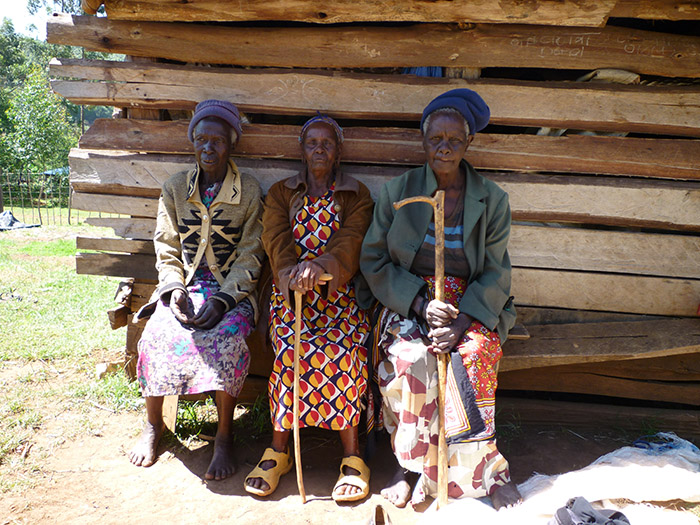
Professor Stewart research focuses on gender and ageing particularly in the context of Africa. She has been involved in a series of linked research projects since 2016. The first of these focuses on caring for older women in the changing socio-economic and political circumstances in Kenya, with a particular focus on the effects of the traditional, community and family customs of caring for older people, This led to a collaboration in 2017 with HelpAge International to create a policy discussion paper (together with Dr Lander) that explores the way in which intersecting inequalities affect life courses and gender relations in older age. More recently, with funding from University of Warwick’s Global Challenges Research Accelerator Fund, Professor Stewart has been exploring the wider continental impacts, and is expanding research to Ethiopia and Malawi. The next phase in the research is twofold. Firstly the production of a monograph. To prepare for this she hosted an intensive writing workshop for the co-authors in December 2019. Secondly to deepen understanding among African regional policy makers of the importance of adopting a life course perspective to gender and ageing and in the development of long term care policies and build support for further collaborative research (taking forward the recommendations from our 2019 workshop).
Funded by: Leverhulme Trust, British Institute in Eastern Africa, HelpAge International, University of Warwick’s Global Challenges Research Accelerator Fund, University of Warwick Institute for Advanced Studies; University of Warwick Economic and Social Research Council Impact Accelerator Award.
This project was run by Shaheen Ali. This research addresses the following questions: How is Islamic constitutionalism conceptualized, understood and applied in Muslim majority jurisdictions? What are the reference points of the informed Muslim regarding Islamic constitutionalism?
How many Muslims refer to the Medina Charter/Constitution as the starting point for Islamic constitutionalism? Are there any contemporary re-readings of the Medina Charter in Arabic language literature? If so, what views do they reflect regarding modern articulations of Islamic constitutionalism? How different or similar are these parameters and characteristics of Islamic constitutionalism in academic discourse? What level of commitment to Islamic constitutionalism is reflected in case law of Muslim states? To what extent do Muslims connect and/link constitutionalism with democracy? What challenges emerge as a result of this exploration and what are likely future possibilities and directions for an ‘Islamic’ state and government as a result of widespread ‘constitutional Islamization’?
This project was supported by Kuwait International Law School.
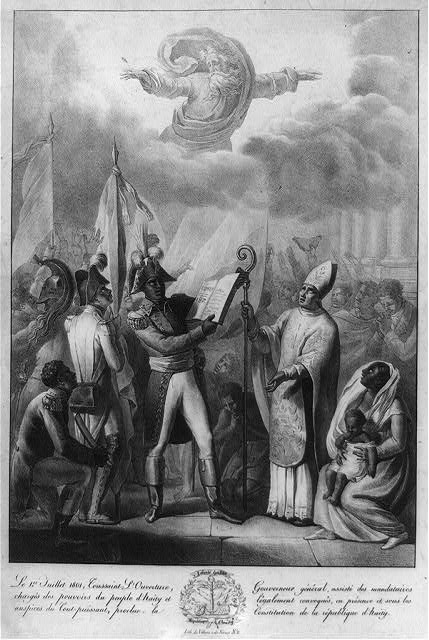
Dr Philip Kaisary received a Fulbright award, commencing in August 2015 at Vanderbilt University, Tennessee. This project will focus on the constitutionalism of the Haitian Revolution (1791–1804) and the interpretative archive it generated in the United States through 1865.
Philip will explore Haiti’s early constitutions in order to examine how the former slaves of St Domingue sought to codify in law their vision of freedom. This project will thereby provide a more complete critical picture of how constitutionalism, nationality, and citizenship figured in the jigsaw puzzle of Haitian, U.S., and Atlantic politics in this period, arguing that the birth of the world’s first black republic generated an enduring ideological inheritance and blazed a radical trail long into the 19th century Atlantic world.
This project was supported by Fullbright Commission.
This project by Dr Alan Norrie develops broader and narrower conceptions of ‘the blaming relation’ to address four central problems in criminal justice thinking. The core idea is of a relationship between (broader) ethical conceptions of freedom and solidarity and the (narrower) ways in which these are structured and shaped by modern socio-political relations to generate criminal justice forms. The relationship between the broader and narrower conceptions is then explored in the four problem areas. These involve in summary the relationship between criminal justice and (1) social reform/justice; (2) preventive justice; (3) historical (in) justice; and (4) restorative/transitional justice.
This project was supported by Leverhulme Trust.

This project by Professor Victor Tadros is concerned with the ethics of individual conduct in before during and after war. It is concerned with decisions whether to join the military, whether and how to participate in wars, when to follow orders, and what to do after the war is over. It looks at those decisions both from the perspective of soldiers deciding how to act, but also from the perspective of those who might respond to their actions either through preventive harm, or by holding them accountable for their actions.
This project is sponsored by Leverhulme Trust.