
What Hurricane Melissa means for climate migration
Published on 14th December 2025
Madison Sexon
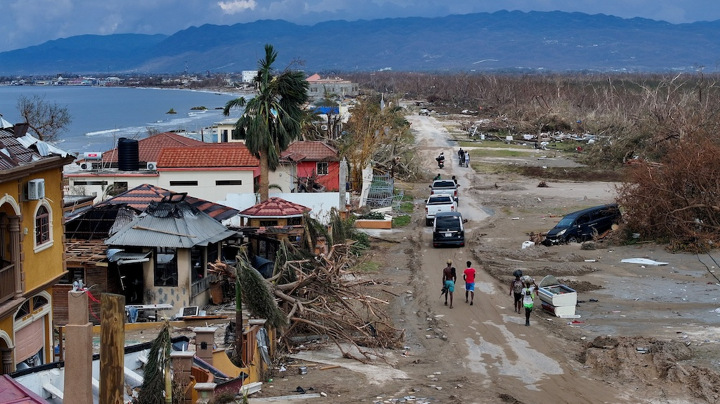
Maria Alejandra Cardona/Reuters: Damage in Black River, Jamaica after Hurricane Melissa
The UNHCR estimates that nearly 32 million people were displaced just by weather events in 2022 - and this number will rise even further in future years. The highest amounts of climate migration happen mainly in Global South countries with high levels of poverty, and often colonial histories. Increased sudden extreme weather events and slow-onset processes (e.g. desertification, ocean acidification) often compound with a lack of resources and climate-resilience in the poorest countries, and exacerbate existing inequalities to disproportionately affect marginalised groups. Hurricane Melissa caused catastrophic destruction in Jamaica in October, displacing thousands and likely having long term repercussions for the amount of climate refugees within Jamaica. I want to examine Hurricane Melissa as a recent example of the interplay of environmental and socioeconomic factors that create a cycle of climate migration in the most deprived countries, and why nothing is being done to stop it.
Hurricane Melissa was a Category 5 hurricane which made landfall in Jamaica in late October and caused catastrophic destruction. Due to rising temperatures heating the sea and changes to atmospheric pressure, Hurricane Melissa formed quickly and picked up record-breaking wind speeds and rainfall. Historically, healthy coral reefs could act as a buffer against storms and floods, however coral reefs around Jamaica have increasingly degraded due to pollution, ocean acidification, overfishing and increasingly catastrophic and frequent hurricanes.
Looking towards sociohistorical factors, Jamaica has been independent from the British Empire since 1962, which has left a system of wealth inequality and persistent racial structuring and colourism. Its economy is reliant on tourism and agriculture, with high levels of national debt, unemployment, and poverty. Both agriculture and tourism are highly fragile to climate-related factors, so it is increasingly harder to maintain these industries in the face of climate change and to keep rebuilding after severe weather events. Furthermore, the backdrop of poverty and lack of resources in Jamaica, which was still recovering from Hurricane Beryl in 2024, meant that there was not sufficient protection nor the resources to cope with destruction caused by Hurricane Melissa. In the aftermath of Hurricane Melissa, damages are equivalent to around one third of Jamaica’s GDP, with many communities cut off with no contact with other parts of the island or access to resources.
What does this mean for climate migration? Approximately 25,000 people have been displaced as a direct result of the hurricane, out of a population of 2.8 million. Aside from this immediate number, Hurricane Melissa destroyed significant parts of the agricultural sector due to floods, strong winds and rainfall, and high amounts of debris. High amounts of destruction will also halt income from tourism until transport and tourism infrastructure are rebuilt. This will leave a large amount of the population without work or livelihood, and likely will cause displacement of even more people and hinder ability to rebuild.
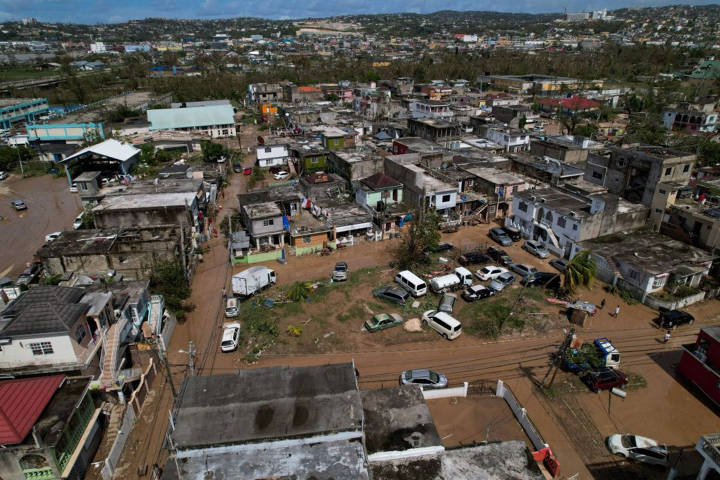
Sandra Stojanovic/Reuters: Catherine Hall community in Montego Bay, Jamaica, after Hurricane Melissa
Hurricane Melissa was a record-breaking storm, however we are increasingly seeing these records being broken every year as the climate emergency worsens without intervention. Hurricane Melissa was not a one-off but a dangerous precedent for what impoverished nations will have to face every single year. Creating a vicious cycle of climate displacement underpinned by colonial histories, socioeconomic inequality, and lack of ability to rebuild and maintain resilience.
On a global scale, what is being done to stop these cycles? Sidelining humanitarian aid given (although this has significant problems in itself), why isn’t anything being done by the global community to stop the root causes creating climate refugees? From a cynical viewpoint, why wouldn’t Western countries - with such anti-immigration administrations - want to slow the increase of climate migration, to stop it from spilling into their own countries?
The answer is the same to any question you could ask about climate change and social deprivation policies: global elites don’t want to address climate change or poverty, because it benefits their own interests. 71% of carbon emissions globally are emitted by only 100 companies. Addressing climate change and poverty means that corporations will have to address their business models based on exploitation of natural resources and human labour, which cause mass destruction to the environment and cycles of extreme poverty. Governments, NGOs, and international governance are increasingly intertwined with the private sector and underpinned by colonial roots. Thus, the cycle of exploitation continues without intervention from institutions that are supposed to represent the people. Aside from supplying aid and advancing their own development agendas, current Western institutions will not reduce inequalities, either globally or within their own nations.
Looking at climate migration from this global perspective seems hopeless: to focus on restorative and preventative solutions, I believe we should re-focus to Jamaica. Rebuilding efforts will be mammoth and costly, and it will likely take years to fully rebuild. However promoting community engagement and subsidies to rebuild would increase grassroots engagement and provide income to those displaced. Further on, rebuilding costs and pre-existing debt could be relieved by international funds and from the colonial institutions which left the country in this position initially. Diverse skills and livelihood options could be offered to local communities and marginalised groups. Damaged reefs could be partially restored, and existing ones conserved by limiting tourist and fishing activity. An international effort could be made to ban the use of fossil fuels and exploitative practices, instead of empty pledges. If all these policies were undertaken effectively, then record-breaking hurricanes might stop breaking records, and will have less of a catastrophic impact; community resilience would increase to sudden weather events; unequal social relations would improve; and the displacement of hundreds of thousands of climate refugees would be prevented.