
Departmental news
Solid state NMR shows how a wood modification boosts biomass conversion
Professor Ray Dupree, Dr Rosalie Cresswell and Dr Dinu Iuga are co-authors of a recently published paper in Nature Plants titled ‘Ectopic callose deposition into woody biomass modulates the nano-architecture of macrofibrils’.
University of Warwick hits the 'gold standard' in the latest Teaching Excellence Framework (TEF)
Warwick has achieved the highest possible rating across all three categories of student experience, student outcomes, as well for the overall assessment in the latest Teaching Excellence Framework (TEF).
WMG joins flagship electrification partnership
WMG at the University of Warwick, is part of a unique six-way partner collaborative research and development project led by Aston Martin.
Project ELEVATION has received £9m funding from the Advanced Propulsion Centre UK (APC) to supplement the research and development of Aston Martin’s in-house bespoke luxury battery electric vehicle platform.
Awarded following a competitive process, the government grant will support the development of Aston Martin’s luxury BEV platform and enable a route to net-zero, including investment in vehicle light weighting, a digital toolchain and electrification training.
Project ELEVATION is led by Aston Martin, and supported by the Manufacturing Technology Centre; Expert Tooling & Automation; Creative Composites; Fuzzy Logic Studio and WMG. The project will address the technical challenges of developing a lightweight, 800V traction battery pack and twin front electric drive unit (EDU) into a modular BEV platform with a bandwidth from supercar to SUV.
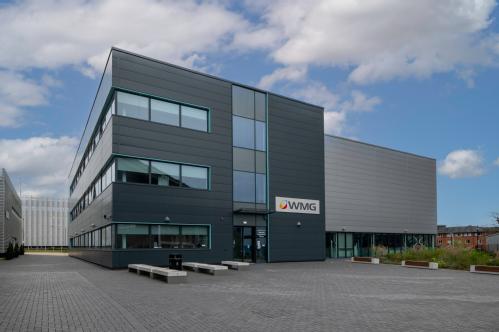 WMG’s role will focus on supporting the design, manufacture and life-cycle analysis (LCA) of the modular structural composite battery enclosure. Researchers in the composites group based in WMG's Materials Engineering Centre (MEC) will conduct materials evaluation and investigate automated high-volume composite manufacturing of hybrid structures using existing tooling and equipment to demonstrate attributes on early learning components. This knowledge will then be transferred to Creative Composites for manufacture of the project demonstrator components and provide LCA of the composite structure into the Manufacturing Technology Centre's holistic LCA model.
Roberto Fedeli, Group Chief Technology Officer of Aston Martin, said: “The award of funding from the APC is another major boost to our electrification strategy and constant strive for innovation. Providing further resources to explore the possibilities of our bespoke BEV platform, it will help achieve our ambition to be an in-house BEV technology leader in the ultra-luxury, high-performance segment. We look forward to progressing this project with our collaborative partners and thank the APC for their incredible support.”
Ian Constance, APC Chief Executive, said: “The 23rd round of our collaborative R&D competition coincides with the APC’s 10th anniversary. We’ve seen over £1.4 billion of investment into automotive projects since the APC was set up, and I am proud of the impact that we have made here in the UK. This latest announcement includes a diverse set of OEMs and suppliers that demonstrate the strength of UK automotive. They will further add to our portfolio of innovative projects and continue to drive the UK to deliver on its net zero ambition.”
Find out more about WMG’s composite light-weighting research here https://warwick.ac.uk/fac/sci/wmg/research/materials/acrc
Top Economics student research showcased on Warwick Monash portal
Nine exciting and original dissertations were published last week in the bi-annual Warwick Monash Economics Student Papers (WM-ESP) series.
The online portal showcases the best undergraduate and masters economics research at the two partner universities. The WM-ESP portal was launched just over 2 years ago and has had 56 papers submitted prior to last week's 9 submissions. Out of these 9 publications, 4 belong to Warwick students.
The series aims to provide insight into the issues that young economists are using their skills to understand and solve. Issues tackled so far include income inequality, obesity, climate change, human capital, boardroom diversity, and livestock vaccination rates in Vietnam.
Member of the WM-ESP Editorial Board Dr Atisha Ghosh said:
“We are very happy to announce the fifth round of the Warwick Monash Economics Student Papers (WM-ESP) series. The Department of Economics of the University of Warwick and the Economics Department at Monash University are very proud of their long history of collaboration with international partner universities, and the Monash Warwick Alliance reflects the belief in both Universities that the future will rely on strong links between peer Universities, reflected in faculty, student, and research linkages. This paper series reflects the first step in allowing our Undergraduate, Honours, and Masters students to learn from and interact with peers within the Alliance.”
Khushi Duggal looked at the relationship between child marriage and female educational attainment in India. She said:
"I am thrilled that my undergraduate dissertation has been selected for the Warwick Monash Economics Student Paper Series portal. It is an honour to have my paper published alongside such amazing research. Writing my paper was such an incredible experience, and I hope that it proves useful to other students and academics.”
Andy Lau had the paper titled "A model of online misinformation with endogenous reputation". He said:
"I am deeply honoured to have my undergraduate dissertation selected for the Warwick Monash Economics Student Paper Series. This recognition is invaluable to me, and it reinforces my passion for doing economic research."
Jan Szydlo's paper is "Forecasting credit dynamics: VAR, VECM on modern factor-augmented VAR approach": He said
"I was thrilled to hear that my paper has been chosen to be published in the Warwick Monash Economics Student Paper Series. Knowing that my work has been read and recognised for its quality by a group of outstanding editors is a great privilege. It validates all the effort I put into my research and encourages me to further pursue a research-related career in the field of Economics."
We congratulate all students selected and wish them further success in the future.
Related Links
Fourth suite of top Economics student research papers published on Warwick Monash portal
About Warwick Monash Alliance
Visit the portal here: Warwick Monash Economics Student Papers
In memory of Professor Nick Crafts – valued colleague, mentor and friend
- The Department is deeply saddened by the passing of Professor Nick Crafts, who died on 6 October 2023 after a long illness.
- Nick was a brilliant economist and one of the world’s leading economic historians, who will leave an enduring legacy. He was also the founding Director of the CAGE Research Centre.
- Further tributes to Professor Crafts can be read here.
Professor Crafts began his long association with the Department of Economics in its first decade, joining as a lecturer in 1972. While his career took him to a number of prestigious UK and US institutions, he rejoined Warwick as Professor of Economic History in 1988 and returned again in 2006. He retired from Warwick in 2019, moving to Brighton to be nearer his family and taking up a part-time position at the University of Sussex.
In 2010 Professor Crafts became the founding Director of the CAGE research centre, an ESRC-funded centre. During his 10 years as Director he oversaw the development of the Centre into a vibrant research community and personally contributed a large amount of impactful and policy-relevant research.
Nick's pioneering work on British economic growth in the Industrial Revolution made his early reputation. He became a specialist in the long-run sources of economic improvement in many regions. His insights into 20th century British economic history were widely sought by policymakers and his CV includes spells consulting for HM Treasury, the IMF and the World Bank.
He was elected a Fellow of the British Academy in 1992 and awarded the CBE for services to Economics in the Queen’s Birthday Honours List, 2014. In 2022 Professor Crafts was made a Fellow of the Economic History Association, and in 2022-23 he served as President of the Royal Economic Society.
Tributes to Professor Crafts follow:
Professor Ben Lockwood, Head of Department, commented:
“Nick and I were colleagues for over 15 years and we also both served on the REF2014 panel. During that time - and on many other occasions - I came to him for advice and always benefited from his wise counsel. His death is a great loss for both the Economics Department and the economics profession.”
Professor Mirko Draca, who succeeded Professor Crafts as Director of CAGE, comments:
“Nick was a phenomenon. Intellectually-driven rather than career-driven, able to move between the big picture and small picture with ease, unflaggingly energetic, down-to-earth, shrewd, streetwise, really damn clever and, at a personal level, thoughtfully humane. I will miss him so much."
Professor Jeremy Smith, Head of Department from 2016 to 2022, said:
"I am sure I will echo the sentiments of many colleagues when I say that Nick was a person I admired greatly. He was clearly a fantastic academic who was very highly respected in his field, but his involvement in activities beyond academia speaks volumes for the high regard in which he was held more generally.
"Nick understood the need to contribute to University life beyond through his teaching and research and contributed in a great many ways to the life and functioning of the Department. He was HoD when I was appointed and I am eternally grateful that he gave me a chance to contribute to the Department.
"When I took over as HoD, Nick was there to offer advice and guidance and to put me on the right path when I invariably made a wrong call. Being a HoD is not straightforward and dealing with the all different parties you answer to is never straightforward - I would therefore seek out Nick's advice, which was always considered, and was almost always the correct advice to follow. I will always be grateful to Nick for the guidance he offered me."
Professor Sascha Becker worked closely with Professor Crafts during his time as Director of CAGE. He wrote:
"Nick Crafts' death makes me incredibly sad. We spent nearly a decade together "running" CAGE at the Warwick Department of Economics as Director and deputy.
"Nick was born in the same year as my father, but from day one he treated me as his equal. We met or corresponded pretty much daily.
"Nick was such a wise man. A non-tribal economic historian. He was broad-minded and hugely respected by economists and policy makers alike. When he talked, the room listened.
"Witty, kind, wise.
"I will dearly miss you, Nick ❤️"
CAGE Research Director Professor Bishnupriya Gupta writes:
"Nick Crafts brought to economic history new ideas, new ways to think of old questions. As a colleague, mentor and friend, Nick was an inspiration to me and many others and helped us to grow as economic historians. He will be missed."
Professor Wiji Arulampalam writes:
"The passing of Nick came as a terrible shock to me. I came to know him when he joined the department. Although I did not work closely with him, I have attended many seminars where he had been either presenting or was in the audience. He always makes pertinent points. He was an immense scholar and I always valued his opinions. As the Chair of the department, he was always very professional and treated everyone fairly and equally. He will be very much missed."
Guillermo Carnicero writes:
I had the honour (and sadness) of being part of Nick Crafts's last cohort of students at Sussex during this year's spring term. He was one of the best professors I ever had and surely the best academic who ever taught me. It wasn't just that he was a real expert in the field of cliometrics - his lectures would always be engaging, and the work in the seminars would prepare us to be very good economists, putting evidence and sound analysis at the core of our work. Also, I knew I shouldn't miss the opportunity always to gain more insights and hear what he had to say about so many different topics in economic history, so I would regularly attend his office hours. I fully remember how he would come up with quotes from books written decades ago and spend a fair amount of time digging into their content to ensure I could get the most out of the question. The more I knew him, the more I realised that a real top academic and economist has to be humble because the learning journey is infinite, and there's so little we can get to know. He never came across as someone with ego, but with intellectual honesty and a profound desire to help everyone engage with the course. Looking back, I can say that what I learned with him at university shaped me the most as an economist, and his insights about the British economy and our discipline will always be at the core of my current career as a Fast Stream Economist in the Civil Service. Rest in peace."
Dr Olga Christodoulaki writes:
"I was fortunate and honoured to have Nick as one of my PhD supervisors at the LSE. His unique combination of academic skills and his wisdom as a person made him the best supervisor one could dream of having. I will always be grateful for the time, advice and guidance he offered me. I send my deepest condolences to his family."
Professor Guillaume Daudin, Professor of Economics at the University of Paris-Dauphine (LEDa-DIAL), writes:
"Nick Crafts changed my life. He accepted to look after my PhD based on the most flimsy evidence on my capacity to conduct one. That was quite a bet. But then, he was good at beating the odds! He was an exceptional PhD supervisor. In retrospect, I can hardly believe his generosity with his time. He made my time at the LSE under his supervision the most professionally fulfilling time of my life. I am deeply thankful. I feel a great loss. His family must feel a much larger one, and I fully sympathise with them and will keep them, and him, in my prayers."
Jose Gregorio Diaz-Bahamonde of the Pontificia Universidad Catolica de Chile writes:
"I send my sincere condolences from Chile. Professor Crafts' work is a fundamental reference for a better understanding of economic development. Reaching his academic rigor is a challenge for any serious researcher. We will miss him."
Dr Yannick Dupraz, Research Assistant Professor at the French National Center for Scientific Research (CNRS) based at the Aix-Marseille School of Economics (AMSE), writes:
"I will remember Professor Nick Crafts as an amazingly kind and generous mentor. He always took time to discuss research with me, and his insights were always so useful, even though I was working on a field, African economic history, a little bit far from his expertise (but was any field of economic history really far from his expertise?) Nick Crafts did so much for CAGE, for Warwick University, and for economics and economic history."
Professor James Fenske writes:
"I am saddened to learn of Nick's passing. I knew of him as an undergraduate, and I have known him since I was a PhD student. He had a major influence on my thinking - and the thinking of the whole profession - on some of the most important questions in economic history. He was a generous colleague and inspired multiple generations of students to take interest in our shared field."
Dr Alan Fernihough, lecturer in Economics at Queen's University Management School, and Research Associate at Queen's University Centre for Economic History, writes:
"I was very lucky to have had Nick as a PhD examiner, and I’ll never forget our post-viva conversation which was one of the best moments of my life. Nick was brilliant, and his knowledge of so many areas of economics and history was truly remarkable and made him both a legendary scholar and wonderful companion. His loss is a huge one for economic history. Please accept my deepest condolences."
Professor Alexander J. Field, Michel and Mary Orradre Professor of Economics at Santa Clara University, writes:
"I first got to know Nick Crafts in 1982-83, when he visited Stanford, where I had recently served as an assistant professor. Nick rented a house on Roosevelt Circle, less than half a mile from where we lived, and although I cannot say we kept up closely after that, we would from time to time see each other at academic conferences. Our research interests overlapped, and came increasingly to do so over the past quarter century, when I joined him in using the tools of growth accounting to explore the processes of economic advance. Both of us ended up influenced by and building upon the work of Moses Abramovitz. And both ended up giving an Abramovitz lecture at Stanford after Moe died, Nick in 2003 (I believe it was the first) and me in 2021 (I think the most recent). Finally, we shared a birth year, barely a month apart, which makes his passing have special significance for me. We will miss him."
Professor Sir Roderick Floud writes:
"I knew Nick as a colleague for over 50 years; he was an excellent economic historian and a genuinely nice person, always ready to debate and always taking comments seriously. He made really important contributions to many fields of economic history and certainly ranks at the very top of our profession. I was particularly impressed by the way that he developed an ability to communicate with a wide audience, exemplified by "Forging Ahead, Falling Behind and Fighting Back". He will be greatly missed."
Maureen Galbraith, Economic & Social History Society Secretary at the University of Glasgow, writes:
"I had the pleasure of working with Nick when he was President of the Economic History Society. I am very sorry for the family's loss. A lovely man - kind, funny, and a straight talker."
Dr Mario Cuenda Garcia writes:
"I recently obtained my PhD in Economic History at the LSE, and my passion for Economic History started nine years ago when as an undergraduate at the University of Warwick I was introduced to Professor Nick Crafts' research. Economic History became my research pathway. I remember having the chance to meet Professor Nick Crafts at the Warwick Economics Summit in person. I will always remember and cherish the moment I met and chatted with one of the most influential economic historians of all times. May he rest in peace."
Emeritus Professor of Politics Wyn Grant comments:
"I had the great privilege of teaching Making of Economic Policy with Nick for several years. I learnt a great deal from him, indeed I once told him that I intellectually pillaged his work for textbooks on economic policy. I was surprised to learn of his interest in the turf, he even wrote an article on it. Despite his great knowledge, I always found him down to earth and unassuming. A great loss as an academic and a person."
Emeritus Professor Mark Harrison remembers a valued colleague and friend:
“Nick and I must have met in 1967 -- we were in the same year as undergraduates (but in different colleges, and at that stage I did not know him well). Then he was a colleague at Warwick, several times, because he kept leaving and coming back (he often referred to himself as a repeat Warwick recidivist).
“As a colleague he was a steadying influence and a voice of reason, something that I linked with his inclination to take the long view in economic history. At least twice, I am sure, he gave me advice that made a difference. One thing I missed after Nick left for Brighton (or since the pandemic, which must have been roughly the same time) was being able to drop by his office and find out what he thought about the world. He was always sensible, and usually very funny. Anyway, I owe him a lot."
Professor Tim Hatton, Professor of Economics at the University of Essex, writes:
"I am shocked and deeply saddened by the news that Nick has passed away. He was an incredible scholar and a huge influence on many of us. I first met him when we both arrived at Warwick in 1972, him as a lecturer and me as a first year student. He was my personal tutor. We got on well and he persuaded me to take his second year course on the Industrial Revolution. The course material was simply a five-page single spaced reading list. His lecturing style was magnetic and, with wry humour, he expertly dissected the literature. It was a revelation and a road map to making sense of the diverse and sometimes turgid texts. He had an amazing command of the subject—just three years out from his undergraduate degree! (Something that really came home to me some years later when I tried to teach it myself). It was compelling stuff, and he is the main reason that I followed a career in economic history. He will be sorely missed."
Professor Alfonso Herranz-Loncán, Professor of Economic History at the University of Barcelona, writes:
Nick was the best Economic History teacher I ever had. His teaching and his generosity while he was my supervisor at the LSE were absolutely crucial for my further research career. I owe him so much, and his death has been a terrible shock. Hasta siempre, Nick
Warwick alumnus Tamas Hontvari (PPE, class of 2018) writes:
"When we came in as first year students we were blown away by the immense knowledge that Professor Nick Crafts had. His lecture was head and shoulders above any other and really set the benchmark for our undergraduate years. Many thanks for your inspiration and rest in peace Sir!"
Wolf-Fabian Hungerland, economist in Germany's Federal Ministry of Economics and Climate Action and research fellow at the Institute of Economic History of Humboldt-University of Berlin, writes:
"Just a few days ago I mentioned him once again as the best - and funniest! - professor I ever had. What I learned from his class on international economic institutions after World War I still serves as the backbone for my work now. RIP."
Warwick Economics alumnus Ali Jasem writes:
"Nick was genuinely one of my favourite professors. He did not just teach extremely well, but was very warm and generous with his time. I spent good amount of times in his office discussing history and they were amongst my best memories at Warwick. I will miss him, and wish his family and friends all the best in this difficult time."
Former CAGE Centre co-ordinator Helen Knight writes:
"I am so very sorry to hear of Nick's passing. He was a wonderful Director to work with - patient, wise and kind. He made me feel valued as a member of CAGE, and supported the development of my career by encouraging me to take opportunities to learn, travel and experience the world of academia. I will be forever grateful for my time working with him. My sympathies to his family, friends and colleagues."
Professor Sibylle Lehmann-Hasemeyer, Professor for Economic and Social History at the Economics Department of the University of Hohenheim, writes:
"His work and passion for economic history and understanding growth and its reversal have shaped and inspired me and my work since my PhD. My thoughts and prayers are with his family at this difficult time."
Dr Tim Leunig, Associate Professor, Department of Economic History, LSE, said:
"I first met Nick at the Edinburgh EHS conference when I was a grad student. I went to the conference dinner with Mary Mackinnon who was, I think, his former student. I had worked out that not everyone was interesting, and asked Mary to sit at a table with interesting people. She chose Nick's table. I had given a young researchers’ session, and Nick complimented me on what I had said. We talked for a while across the table, before I had to say that I didn’t know who he was and that he was not wearing his conference badge. People smiled around the table, and he put it on. But the print was small, so I asked him outright who he was. People smiled even more. "Professor Crafts. (pause) You may have heard of me". At that point I wanted the earth to swallow me up, but he said it with a smile, and obviously didn't mind. He went on to appoint me to my LSE post, and we were co-authors, ran EH101 together and had adjoining offices. He was a delight in every way, and I missed him when he left."
Dr Eric Melander, assistant professor in economics at the University of Birmingham, writes:
"'Please, Nick, show us another growth accounting table', I hear you say." For reasons unknown to me, these words, said tongue-in-cheek in a first-year undergraduate economic history lecture, are among my most vivid memories of Nick. Though said in passing, to me they encapsulate Nick's greatness: his wealth of knowledge on the big questions that really matter and his unfailing wit. I have benefited greatly from Nick's wisdom and generous advice. He will be missed."
Professor Stephen Morgan, Emeritus Professor of Chinese Economic History at the University of Nottingham, writes:
"So sad to hear of Nick's exit from this mortal world. He was so concise in his analysis grounded as always in theory. I learned a lot from reading his work and the occasional times I interacted."
Professor Robin Naylor said:
"I knew Nick from 1981 at University College Oxford and, with David Miles, took over his college tutoring role for a year when Nick was on sabbatical leave. Warwick Economics has benefitted greatly from Nick's academic work and profile, and from his leadership roles in the Department, both through CAGE and, prior to that, as Chair. Nick had a most remarkable intellect, and was very much one of a kind. He - and not least that knowing glint in his eye (half challenging, half conspiratorial) - will be much missed."
Professor Dennis Novy writes:
"Nick was the rare scholar you could truly look up to and respect. He was a towering figure in economics and a wonderful colleague. This is a big loss for our profession and beyond. We will sorely miss him."
Professor Andrew Oswald writes:
"Nick was wonderfully likeable. He treated me well from the very start of my time at Warwick, for which I was terribly grateful, and so often he had that penetrating intellect and smiling (occasionally almost impish) cheeriness that I always valued and I will always remember. He made a tremendous contribution during his life -- particularly to our Department.
Professor Nuno Palma, Professor of Economics at the University of Manchester, writes:
"I had many interactions with Nick over the years, and learned a lot from him. He was always cheerful and supportive, and will be remembered as one of the greats of his generation."
Dr Claudia Rei writes:
"I arrived at Warwick shortly before Nick retired, but I’ve known his work ever since I learned Economic History was a field within Economics. The profession has lost one of its greatest minds."
Professor Jonathan Reinarz, Professor of the History of Medicine at the University of Birmingham, writes:
"I met Professor Crafts while doing my PhD at Warwick in the History Department on the history of brewing. Periodically, I would attend the economic history seminars in Economics, and Professors Crafts, Broadberry and others, with their commitment to academic debate and open rigorous discussion, would remind me why I chose to study in the UK. When I finished my thesis, Professor Crafts invited me to lunch at his home and encouraged me to interview his neighbour, Ivy, who worked in the brewing industry for decades. It was nice to know he remembered me from his seminars and included me in his lunch plans as well. I recently watched a recorded lecture given by him at the Legatum Institute and his sharp and concise delivery was as impressive as ever. He was a collegial academic, who I have regularly remembered with gratitude over the years."
Dr Jose Rowell Corpuz, Assistant Professor of Economics, writes:
"As my PhD supervisor, Nick cared and made me feel valued as an academic and a researcher. He was so wise and knowledgeable and so humble at the same time. I have been collecting rejection letters from journal editors, but he told me to keep going with my research. He said that the key to publishing is persistence and that I should never give up. Professor Crafts was a great supervisor and mentor, and I will miss him so much."
Professor Mar Rubio Varas, Professor of Economic History at Universidad Publica de Navarra, writes:
"Nick profoundly impacted my life, leaving an indelible mark on both my academic journey and personal path. Initially, he guided me as my MSc tutor, and later, as my PhD supervisor. However, his influence extended far beyond academia, as he played a pivotal role in facilitating my year-long stay at UC Berkeley, an experience that unexpectedly transformed my family life, shaping it to this day. Nick possessed a unique blend of warmth, wit, and kindness. His remarkable memory allowed him to recall anything he had read, and his intellectual curiosity led him to explore subjects well beyond his theoretical expertise. This insatiable hunger for knowledge made him an invaluable source of wisdom. The loss of Nick is deeply felt within our profession, but its impact reaches even further, touching the lives of those fortunate enough to have known him."
Professor Daniel Sgroi writes:
"As an undergraduate in the early 1990s, I studied Nick’s brilliant reinterpretation of British economic growth. Years later it was with considerable excitement that I joined the faculty at Warwick and finally met Nick in person. Nick fulfilled all of my expectations and more: not only was he clearly brilliant but his wisdom and kindness proved invaluable over the years that followed. Nick welcomed me into CAGE, supported my work and provided me with a constant source of invaluable advice. The world will be a dimmer place without him, but Nick’s work remains pioneering and essential, and many generations to come will benefit from the trail that he blazed."
Professor James Simpson, Professor of Economic History at the Universidad Carlos III de Madrid, said:
"Nick was a good friend. I will greatly miss Nick's wit and intellect. A rare combination in academia. Thank you."
Dr Kevin Tennent Reader in Management at the School for Business and Society, University of York, writes:
"Sorry to hear about Nick's passing away. I was taught by Nick at LSE, and later contributed research to the work he did on railways. I learned a lot about teaching and economics from Nick. He was an excellent communicator, very good at explaining complex ideas, and always very down to earth."
Emeritus Professor Mike Waterson writes:
"Nick was a man of great intelligence and also great wisdom, a rare and valuable combination of qualities."
Professor Nikolaus Wolf, Professor of Economics and Economic History at Humboldt-Universität zu Berlin, writes:
"Nick was like a rock to me and to many others: extremely witty and successful yet unpretentious, honest and down-to-earth. You could simply rely on him. As a person and by his work Nick Crafts convinced many fellow economists and policy-makers that economic history has something to say - and that it is even fun to listen."
Dr Meng Wu, British Academy Postdoc Fellow in Economics at the Economics Department of the University of Manchester, writes:
"It is a great pity that I never talked with Nick. However, as a PhD student and a mother-to-be, I participated in the CAGE summer school in 2017 and learned how Nick excelled in his lecture on Britain's Industrial Revolution. Nick's work is essential reading for my students. Although he left us, he has sowed seeds for future economic historians for generations."
Dr Nicholas Zammit, Assistant Professor, University of Toronto, writes:
"Nick was one of my two PhD supervisors at the University of Warwick. He took a massive interest in my training and professional growth. He was always the person I looked to for advice. It always felt like Nick was in my corner fighting for me and pushing me to develop. I find it hard to express how significant his contribution was to my career and my life. Nick really shaped who I became as an educator and he inspired a continued passion for Economic History that has remained. I can hardly teach a single lecture in Economic History without mentioning some piece of wisdom, some funny sidebar or a deep insight that wasn't inspired by him or directly involving him.
"I had always planned to return to Warwick and let him know how much he had influenced almost everything I do. I expected that trip was coming and I would get the chance to thank him personally for everything. Unfortunately that was not to be. Hopefully this reaches someone that loves him and helps to paint the picture of how important he was to so many. My one example shows how he created ripple effects around the world that will continue for many lifetimes."
Further tributes to Professor Crafts can be read here.
Related articles
- Nicholas Crafts@70 – news feature about the 2-day academic conference held in 2019 to celebrate Professor Crafts’ 70th birthday.
- “Nick Crafts is the most distinguished British economic historian of his generation.” Tim Hatton reviews Forging Ahead, Falling Behind and Fighting Back: British Economic Growth from the Industrial Revolution to the Financial Crisis (Crafts, 2019) for EH.net
- NIESR Tribute - In Memory of Professor Nick Crafts CBE FBA - NIESR
- Brief obituary in The Times (subscription needed).
- Longer obituary in the Financial Times (subscription needed).
Enhancing Research Culture Bid Success
Dr Becky Notman, along with Co-investigators across the Chemistry Teaching and Learning, Student Experience and Postgraduate Student community, have been awarded £28k from Enhancing Research Culture Funds.
Student-led Programme drives Chemistry community engagement
We are Chemistry' student-led initiative showcased for Warwick's TEF Gold celebrationsLink opens in a new window and covered by Times Higher Education.Link opens in a new window
WMG alumnus appointed Honorary Fellow at the University of Warwick
WMG at the University of Warwick’s MSc Engineering Business Management alumnus, Kanishka Arumugam, has been appointed as an Honorary Fellow at the University’s Institute for Global Sustainable Development (IGSD).
Kanishka Arumugam is Co-CEO of EKKI Water Technologies, his family’s business, based in Coimbatore, India. The company efficiently and sustainably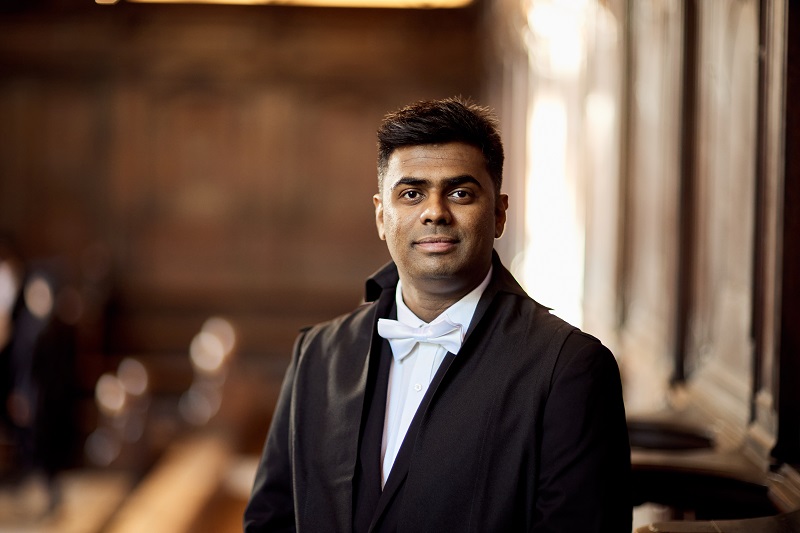 pumps and transports water for agriculture, building services, and utilities, exporting its products to more than 20 countries.
As part of his commitment to sustainable innovation, he is the driving force behind the first wastewater joint venture in collaboration with HOMA, a renowned global wastewater technology company.
Kanishka Arumugam also holds the distinction of being the youngest National Next-Gen President at the CII Family Business Network. He also serves as a Trustee in his family's educational institutions and actively engages in various advisory roles for international start-ups and institutions.
In his role as an Honorary Fellow, he will share his unique insights on how businesses can be a force for good; promote sustainability in the water industry; and support students in gaining a broader understanding of entrepreneurship and sustainable global development.
Professor Elena Korosteleva, Director of IGSD at the University of Warwick, commented: “We extend our warmest welcome to Kanishka to our Institute for Global Sustainable Development. We’re excited to have him bring a fresh perspective on sustainable development and bridge the gap between academia and business, particularly through his involvement with water and wastewater industry globally.”
Kanishka Arumugam, CEO of EKKI Water Technologies, added: "I am deeply humbled and honored by the privilege of being appointed as an Honorary Fellow at the University of Warwick, my esteemed alma mater, which ranks among the top 5% in the world.
“At Oxford University, I honed my leadership acumen and gained a deeper comprehension of human interactions, while the University of Warwick provided me with the resources for applied academia and instilled in me a passion for global competitiveness and sustainable development.
“My close interactions with the late Professor Lord Bhattacharyya and Professor Sujit Banerji at WMG have further emphasized, within the context of EKKI, the critical importance of sustainability and global competitiveness.
“Whenever I step onto the Warwick campus, I am inspired by the incredibly bright minds filled with curiosity and ambition. I eagerly anticipate contributing my best in the coming years within this unique learning environment alongside this brilliant faculty and state-of-the-art facilities."
Professor Steve Maggs, Director of Alumni and Industrial Engagement with Education at WMG said :“It’s great to see Kanishka supporting Warwick through the IGSD. Kaniskha’s remarkable achievements and commitment to positive change make him a fantastic ambassador for the University – this is a great example of the importance of maintaining a lifelong relationship with our former students and the positive opportunities those relationships can foster. Congratulations Kanishka!”
Other distinguished Honorary Fellows of the IGSD include esteemed members of the House of Lords, such as Baroness Sheehan and Lord Teverson. The University has a history of recognising accomplished individuals with connections to India, including prominent figures like Mr. Ratan Tata, the former Chairman of the TATA Group, Mr. Venu Srinivasan of TVS Motors, and Sir Ralf Speth, the former CEO of Jaguar Land Rover, all of whom have received Honorary Doctorates and Honorary Fellow titles from the University.
Find out more about the WMG Alumni community here: https://warwick.ac.uk/fac/sci/wmg/education/alumni/
Ukraine Summer School
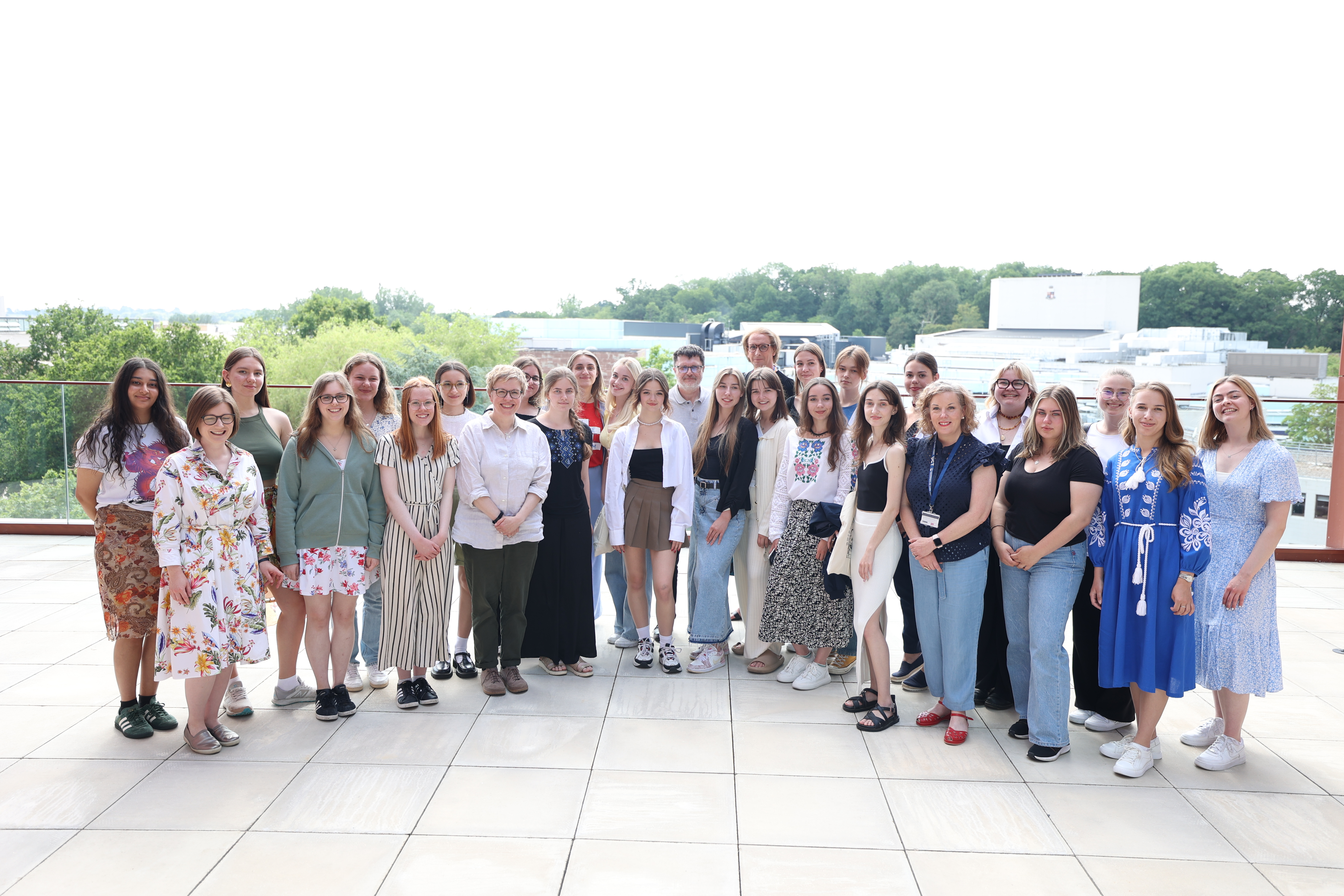
The History Department were honoured to co-host 20 students from the Ukrainian Catholic University (UKU) in Lviv with the English Department, from 12 - 25 June 2023. Read about the visit in a UKU article published back in July.
Meet the students and find out what was involved in setting up the Summer School:
- Ukraine Summer School: Student Perspectives: https://youtu.be/S9HxR7af6Do?si=D8bS-YCCTasP3m4e
- Organising the Ukraine Summer School: https://youtu.be/OLV4gYyJbrs?si=AmDny6in8QS5QU0w
Prime Minister Rishi Sunak visits University of Warwick for Horizon policy announcement
The Prime Minister visited the University of Warwick, on Thursday 7th September, where he announced the UK would re-join the EU’s flagship research scheme, Horizon.
The move means that UK-based researchers and innovators will be able to access funding from the £85 billion programme, in what has been widely hailed as a major boost for the higher education sector.
Rishi Sunak said it was the ‘right deal for the UK’ as he confirmed that the UK would be re-joining Horizon as an associate member.
The Prime Minister chose to make the major policy announcement at Warwick, which has a world-class reputation for science and innovation, and has close ties with research partners across Europe.
During the visit, he was given a tour of the university’s International Manufacturing Centre by Robin Clark, Dean of WMG, and Emma Flynn, the University’s provost.
Earlier, the Prime Minister had held a private conversation with university leaders, Sir David Normington (Chair); Professor Emma Flynn (Provost); Rachel Sandby-Thomas (Registrar), and Dr Chris Twine (Secretary to Council).
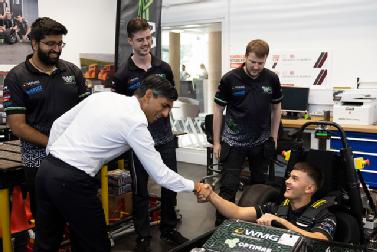 The International Manufacturing Centre – part of WMG - is one of the biggest buildings on campus, and at the heart of the University’s technological research and testing. A variety of projects have been undertaken with global companies to develop new products or improve processes at the centre.
Professor Emma Flynn, the University’s Provost, said: “We were delighted to host the Prime Minister today and welcomed the opportunity to showcase some of the cutting-edge technology and innovation we have here at Warwick.
“The fact the Prime Minister chose to come to Warwick to make such a major announcement on science funding gives me a sense of enormous pride in our brilliant academics and researchers, who have built our reputation as a world-leading university on science, innovation and research over many years.
“The announcement today on Horizon funding is fantastic news for Warwick and the wider university sector and will help drive research excellence and collaboration with our partners.
“This deal will make help us address and make a positive difference to the environmental, economic, and social challenges we all face.”
Sir David Normington, chair of Council and Pro-Chancellor, added: “We were delighted to welcome the Prime Minister to Warwick, and are grateful for his interest in our work at the University. Today’s announcement is great news for everyone. Allowing our scientists to work together, irrespective of borders, is in all of our interests.
“As a former civil servant, I also recognise the hard work of the negotiating team who secured this deal in the background, and they deserve great credit.”
The UK will also associate to Copernicus, the European Earth Observation programme. This will provide the UK’s earth observation sector with access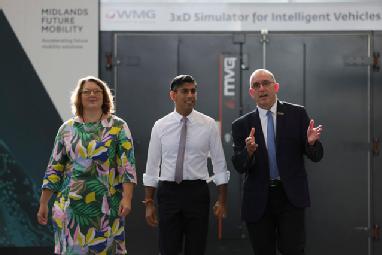 to unique data – valuable to helping with early flood and fire warnings, for example – and with the ability to bid for contracts, which they have not been able to access for three years.
The University of Warwick is ranked as one of the world’s best universities, with 92% of its research rated as world-leading or internationally excellent.